Media Release: Resilient Landscapes: Collaboration in a Changing Climate
For immediate release 24 August 2026
The message emerging from recent environmental gatherings is clear: “climate change is no longer a distant threat but a reality demanding action, cooperation and a far greater sense of shared responsibility,” says Cobus Meiring from the Garden Route Environmental Forum (GREF).
The recent Resilient Landscapes Forum, hosted at the Gourikwa Coastal Nature Reserve, followed closely on the Extreme Weather Reflection event hosted at Nelson Mandela University – both gatherings brought together people who understand that environmental resilience cannot be left to government alone.
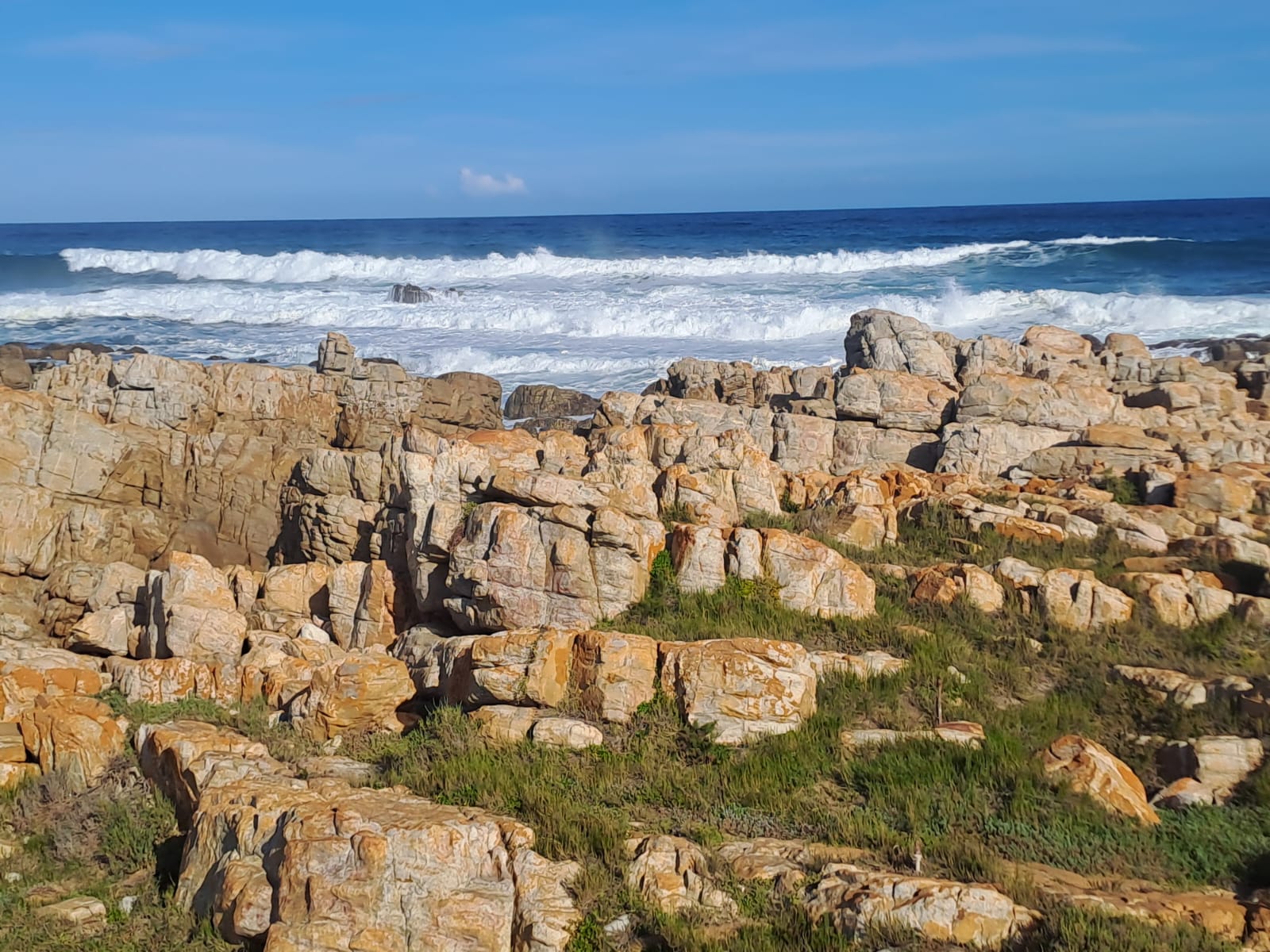
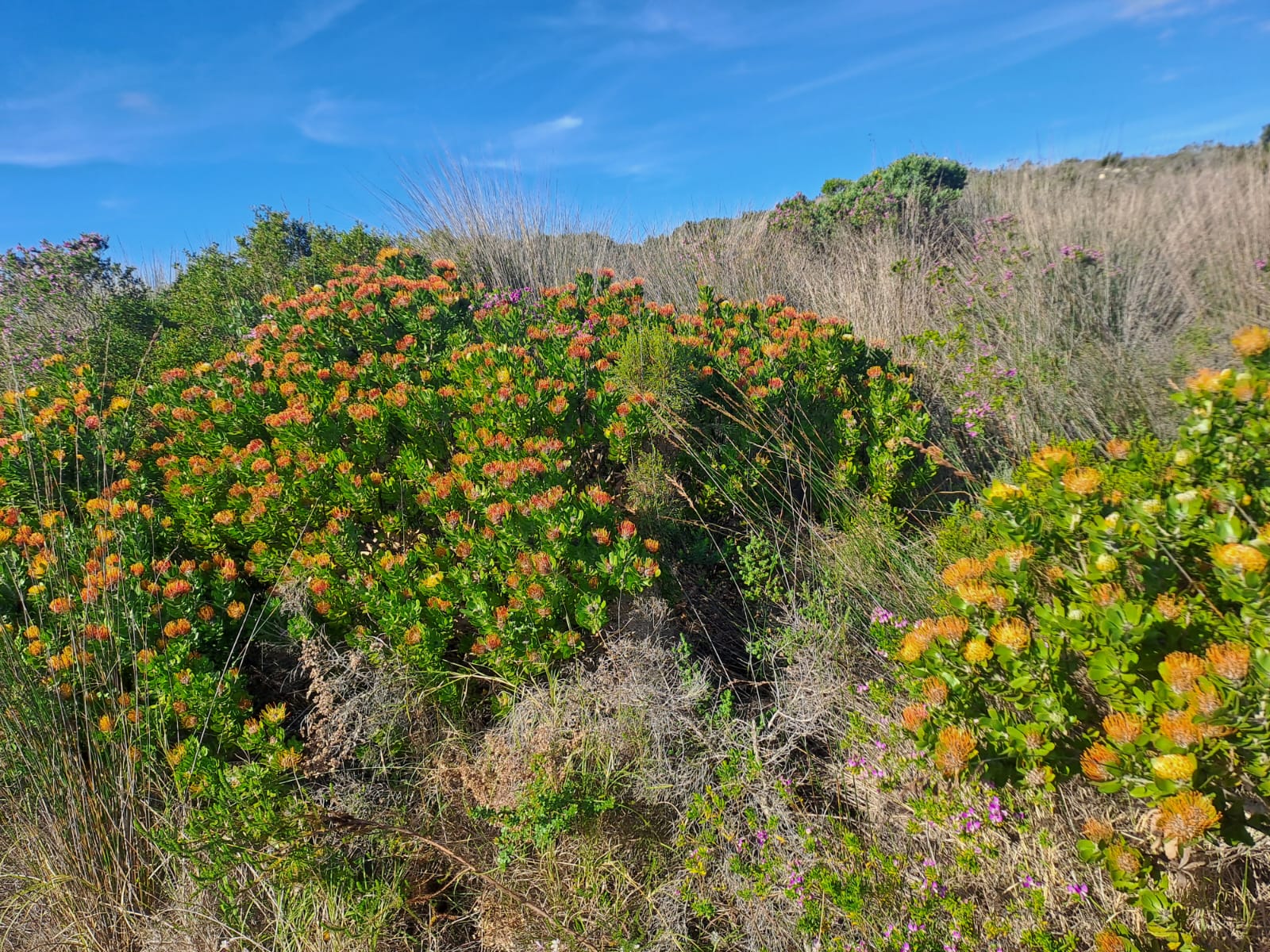
Gourikwa Coastal Nature Reserve showing the Southern Cape coastline and natural landscape with fynbos.
The urgency of these discussions is reinforced by growing global concern about increasingly unpredictable weather patterns and the potential influence of phenomena such as El Niño. Predictions for the Southern Cape do not inspire complacency. Changing weather patterns could bring prolonged drought, destructive floods, wild fire, severe winds and increasingly difficult conditions for both people and the environment.
“Civil society has a vital role to play in environmental management,” says Meiring who attended the event. Forum (GREF), who attended the event. “Forums, conservancies and similar structures provide essential platforms where land managers, academics, communities and government can meet, share knowledge and collectively respond to environmental challenges.”
Government simply does not have the capacity to manage every environmental issue. The protection of natural systems therefore depends increasingly on responsible landowners and land managers taking ownership of the landscapes under their care.
The implications extend well beyond conservation. Agriculture remains a primary driver of the regional economy, and farmers understand the potentially devastating consequences of prolonged drought. Cape Town’s near Day Zero experience demonstrated just how quickly a water crisis can become an economic and social crisis.
The Southern Cape’s coastline, Klein Karoo, forests, rivers, lakes and extraordinary biodiversity are irreplaceable natural assets. Their sustainable future cannot be taken for granted.
The resilience of the Southern Cape will ultimately depend not only on how well we respond to the next extreme weather event, but on how effectively we work together before it arrives. A better cared-for environment remains the foundation of a safer economy and a higher quality of life for all.
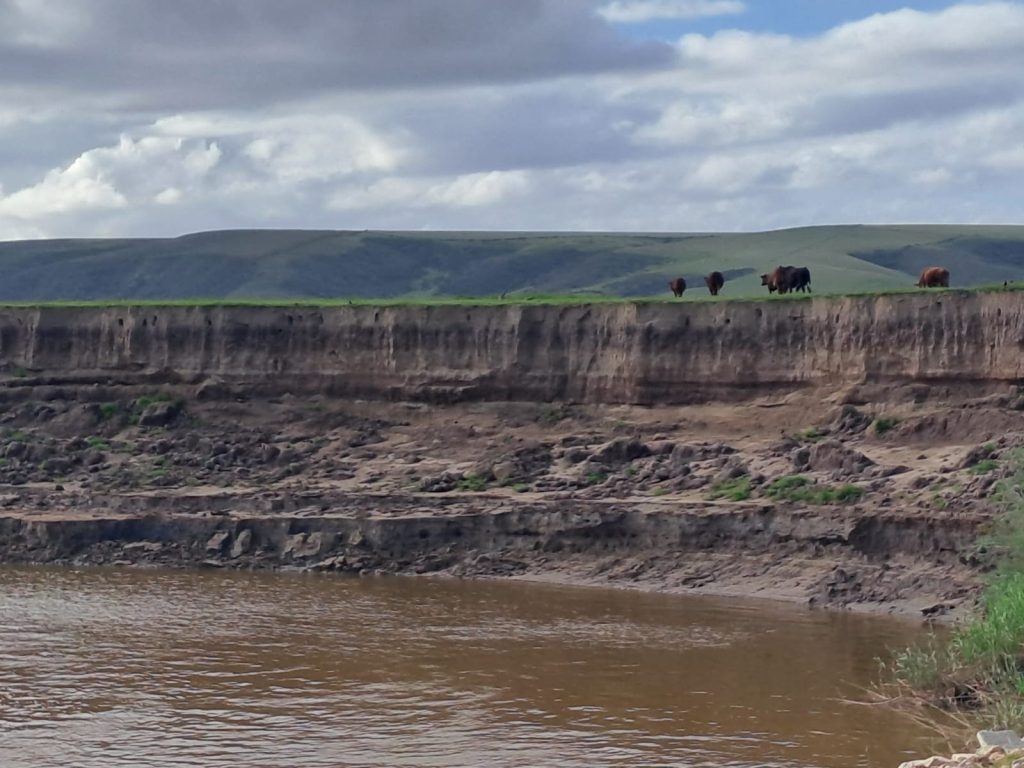
Feature Image:Recent Floods further damaged the eastern Gourits River bank near the estuary and washed away substantial volumes of valuable agricultural land.
The Garden Route Environmnetal Forum (GREF) is a public platform for environmental managers and a climate change think- tank (ww.grefecsf.co.za).
Media Release: Garden Route Skills Mecca National Skills Fund Launch – a focus on Hospitality and Tourism
18 September 2024
Today, 18 September 2024, the Garden Route District Municipality (GRDM) witnessed a historic moment with the official launch of the National Skills Fund Hospitality and Tourism Project for the Garden Route. This training project is coordinated by the Garden Route Skills Mecca (GRSM) – the first and only Skills Mecca at a municipality in South Africa.
The primary goal of the Skills Mecca is to create jobs and improve livelihoods across the district by offering work-based learning opportunities for unemployed individuals, helping them develop the skills needed to secure meaningful employment. In doing so, the programme also strengthens the local economy.
Attendees at the launch event included the Principal, her team and learners from Carpe Diem school, representatives from the National Skills Fund, CEOs of Sector Education and Training Authority and members of the business and tourism community, learners, councillors, officials, and other key stakeholders involved in the district’s skills development efforts.
Elzeth Grobler, Principal of Carpe Diem School.
GRDM Speaker, Ald. Georlene Wolmarans, facilitated the program during the launch.
Elzeth Grobler, Principal of Carpe Diem School, welcomed the guest to ‘the best special needs school in the district’. She provided a brief overview of the school and said: “We are a unique school with all disabilities except blind students. We do not just educate, but we strive to prepare each learner to reach their full potential”.
During his speech, GRDM Executive Mayor, Cllr Andrew Stroebel, highlighted the significance of the three Skills Summits previously held by the GRDM. At these summits, stakeholders unanimously supported the initiatives of the GRSM, leading to the development and endorsement of ten strategic resolutions that now guide the Skills Mecca’s objectives.
Cllr Stroebel emphasised that the National Skills Fund Tourism and Hospitality Project directly aligns with one of these key resolutions, which focuses on linking skills development to investment and economic development opportunities. This connection, he noted, is vital for advancing the well-being and prosperity of all communities within the Garden Route District.
Mayor Stroebel further highlighted the broader success of the GRSM beyond the current project. He mentioned other successful initiatives, such as the Home-Based Care Personal Assistants programme, Patrol Officers training, and Renewable Energy Workshop Assistants. “Collectively, these projects have created over 54 jobs and directed R8 million into local communities and households, showcasing the tangible impact of skills development in our region,” he stated.
Stroebel also shared an interesting fact from the impact analysis: “For every learner on a Skills Mecca programme, which includes a stipend, there is a benefit for 3.56 persons in that learner’s household. So, every Rand spent has a significant ripple effect on our community.”
GRDM Executive Mayor, Andrew Stroebel delivering the keynote address.
Athenkosi Tshayingwe from the Department of Higher Education and Training, delivering a word of support.
Athenkosi Tshayingwe from the Department of Higher Education and Training expressed gratitude for being part of the impactful project. He highlighted that the initiative aims to train, mentor, and develop 400 unemployed residents of the Garden Route District, focusing on youth aged 18 to 35, to enhance their employability in the Tourism and Hospitality sector, with 200 specifically trained as cooks.
Tshayingwe also emphasised his department’s commitment to skills development, noting that the National Skills Fund (NSF) has invested over R5 billion in the Western Cape, benefitting more than 40,000 learners. The NSF has allocated R36.3 million to the GRDM project to equip young people with skills needed by the local industry and address unemployment.
Several beneficiaries of the GRSM program, rolled out in previous financial years, shared heartfelt testimonies during the event. These individuals, who are still gaining valuable practical experience, expressed their gratitude to the GRDM Skills Mecca for the opportunities provided. Their success stories underscore the program’s significant role in empowering communities and opening doors for personal and professional growth.
Ald Stephen de Vries during his address at the launch today.
Ald. Nompumelelo Nday, Portfolio Chairperson of GRDM Corporate Services.i
Alderman Stephen de Vries, who has a history of serving as the Chairperson of the Training and Development Committee at GRDM, shared his reflections during the event. He expressed pride in the program, stating, “The Skills Mecca is truly fulfilling the vision it set out to achieve.” Highlighting the initiative’s unique origins, he added, “To my knowledge, it is the only program of its kind in the country, born from the aftermath of a fire disaster.”
He concluded his speech by thanking all stakeholders for playing a role in this remarkable initiative. De Vries left the beneficiaries and learners with a powerful message, encouraging them not only to focus on becoming employable, but also to become entrepreneurs.
Ald. Nompumelelo Ndayi, Portfolio Chairperson of GRDM Corporate Services, delivered the vote of thanks at the event, expressing heartfelt gratitude to the Carpe Diem team and learners for their excellent performance and for hosting the event at their facility. She also extended her appreciation to the beneficiaries of the Skills Mecca initiative, who shared their personal learning experiences, inspiring all stakeholders present.
Caption for Featured Image: FLTR: Ald Stephen de Vries (GRDM), Themba Ndhlovu (CATHSSETA), Cllr Andrew Stroebel (GRDM), and Chris Mudau (SASSETA), united at the event, collaborating to foster skills development and community upliftment.
Did you know?
The Skills Mecca has promoted collaboration, cooperation, and integration among all skills development stakeholders within the district, and today’s launch of the National Skills Fund Tourism and Hospitality Project reflects the ongoing commitment to this mission. Learn more about the Garden Route Skills Mecca Initiative here: skillsmecca.gardenroute.gov.za
Media Release: Future prospects of Garden Route Fynbos uncertain
For immediate release 04 April 2024
Conservationists and environmental management entities in the Garden Route share concern on the dual effect of climate change, expanding agricultural practices and rapid development on what remains of the region’s Fynbos species which are on the Red List of Terrestrial Ecosystems (Government Notice 2747). “These species are critically endangered and unlikely to survive, given their limited prospects in isolation and all present threats,” says Cobus Meiring of the Garden Route Environmental Forum (GREF).
The 2017 Knysna wild-fire disaster was a wake-up call for conservationists and land-owners alike with fears that complete critically endangered eco-systems potentially could have been obliterated by the inferno, combined with the ever-present threat posed by fast-growing invasive alien plants. Substantial seed bases are sprouting rapidly and completely taking over areas previously covered by Fynbos after the fire.
Despite the odds, there is still hope for the survival of Fynbos species in the Garden Route with the cooperation of state and private landowners, and dedicated conservationists and botanists from state and non-state entities e.g. SANParks, Cape Nature, Botanical Societies, private conservancies and entities such as CREW (Custodians of Rare and Endangered Wildflowers) and George-based Outramps who regularly undertake efforts to find and document the presence of Fynbos LTRE systems in the Garden Route.
The natural wonders of the Garden Route is exactly what makes the region so special in global terms of its beauty and biodiversity. It is imperative that all those living in the region do their utmost in efforts to create more space for natural assets and all life it sustains to be able to survive and prosper well into the future.
Landowners are encouraged to make an effort to take note of and appreciate what kind of Red List and all other Fynbos species are present on their land and, where at all possible, protect them and possibly enlarge their footprint by removing invasive alien plant growth. Landowners are also encouraged to take proactive measures to prevent a repeat of the 2017 and 2018 regional wildfire disasters, because failure to do so can only accelerate the demise of one of the world’s most precious natural assets.
GREF and SCLI are public platforms for conservation and environmental management entities in Garden Route
Media Release: Expanded Public Works Programme (EPWP) and SASSETA visit GRDM
28 June 2022 For Immediate Release
An Expanded Public Works Programme (EPWP) delegation consisting of national and provincial officials visited the Garden Route District Municipality (GRDM) on 13 and 14 June 2022. The aim of the two-day visit was to learn more about the Garden Route Skills Mecca (GRSM) model and to investigate the possibility of replicating the Skills Mecca concept in other parts of the country.
On the first day, representatives from GRSM and the GRDM EPWP section accompanied the delegation on several site visits to training centres in the area that support the GRSM. Delegates visited Cheeba Africa, African Skills and François Ferreira Academy where they were given thorough insights of each facility and the type of training provided. Through several Sector Education and Training Authority (SETA) grants and EPWP programmes, learners have successfully completed courses at the training centres visited by delegates and have been able to enter the job market.
The second day was reserved for engagement. Lusanda Menze (GRDM Executive Manager:: Planning and Economic Development) gave an overview of GRDM and its Growth and Development Strategy and Dr Florus Prinsloo (GRSM Coordinator) gave a comprehensive overview of the GRSM model.
Tsholofelo Pooe from National EPWP presented on the their EPWP Training Framework and possible linkages to the Garden Route Skills Mecca.
MOU between GRSM and SASSETA discussed.
Joining the delegation on the second day, were Chris Mudau and Thamsanqa Mdontswa from the Safety and Security SETA (SASSETA). After listening to the presentations given by GRDM and GRSM, they presented on the SETA’s mandate, Skills Development Levy (SDL) breakdown, and strategic scope amongst other topics.
SASSETA’s sub-sections and constituencies include:
Policing
Corrections
Justice
Defence
Intelligence Activities
Legal Services
Private Security and Investigation Activities
There are 17 SDL contributors in the Garden Route, which comprises law firms and security companies. It is for this reason that SASSETA and GRDM will enter into talks to establish an MOU that will see closer cooperation with GRSM.
The two-day delegation visit was concluded with a visit to Calitzdorp Hot Springs where a Security Training Centre has been established through formal partnership between BM Skills Development (who is a SASSETA Accredited Training Provider) and the GRDM.
ends
Executive Manager: Planning and Economic Development, Lusanda Menze and Ald Stephen e Vries with Thamsanqa Mdontswa – CEO of SASSETA and Chris Mudau -Chairperson of SASSETA .
Delegates are given a tour at François Ferreira Academy.
Delegates engage on the second day of the visit to GRDM.
Delegates gather for a group photo after their tour at François Ferreira Academy.
Media Release: World Day to combat desertification and drought: Blossom’s Emergency Pipeline Project
For Immediate Release 17 June 2022
The Greater Oudtshoorn region continues to be plagued by ongoing droughts, and alternatives have had to be found to ensure water security for the region. Since 2018, the water supply from the Raubenheimer dam was under severe pressure as the amount of water available from the dam, exceeded the amount that could be relied upon with a 98% degree of assurance. The future and ongoing supply of water in the Oudtshoorn area is severely constrained and drastic measures had to be planned to address the situation urgently.
Furthermore, the Vermaaks Rriver boreholes near Dysseldorp are used to maximum capacity and the Huis River, which supplies De Rust with water, is unreliable during the summer months, which holds negative implications for the Klein Karoo Rural Water Supply System (KKRWSS).
The Blossom’s Emergency Pipeline is a project that was started in 2001 to investigate and develop alternative and additional water supplies for the Oudtshoorn area. Nine deep, and three monitoring boreholes were drilled in the Blossom’s wellfield, which were monitored and tested for 13 years. The test was completed in 2014, and it was concluded that the boreholes yield enough groundwater to supplement the water supply from the Raubenheimer Dam. It was determined that 60l/s (5Ml/day) can be supplied from 5 existing boreholes within the C1 Blossoms wellfield. The test also found that the impact on the environment would be minimal.
The Department of Water and Sanitation (DWS) approved a license for the total yield of 8 million m3/a for the ultimate full development of the Blossoms wellfield and gave the nod for the construction to commence. Originally, the project was intended as a medium to long-term bulk water augmentation intervention but given the current water crisis in the Oudtshoorn area, it will be implemented soon.
Funding for the current phases of the project, which started in February 2022, comes from the Municipal Disaster Relief Grant, which allocated a total of R47 million. To date, more than R150 million was spent, which was co-funded by DWS and Oudtshoorn Local Municipality. The current phase of the project is expected to be completed by March 2023.
A 23 km pipeline with a diameter of 315 mm, extending from the Blossoms wellfield to the water network of Oudtshoorn.
Media Release: Garden Route Skills Mecca Focuses on Renewable Energy
For Immediate Release
13 June 2022
The fifth quarterly Garden Route Skills Mecca (GRSM) Forum was held virtually on in May 2022 and focused on renewable energy strategies for the Garden Route.
EWSETA has a significant demand-based focus, and it is important for them to determine what the needs are of employers and businesses. They receive a limited skills levy income and need to partner with other agencies to address this challenge. This is why they’ve agreed soon enter into a memorandum of understanding with GRDM.
During his opening remarks, the GRSM Forum chairperson, Ald. De Vries remarked that renewable energy is gaining momentum as countries around the world are increasingly understanding the benefits it offers.
During the forum, Mr. Warrick Pierce, Technical Leader on Energy Systems Modeling at the Energy Centre of CSIR, presented the Draft Municipal Electricity Master Plan for the GRDM. The Draft document was funded by GIZ and co-funded by the CSIR and is considered to be a mini Integrated Resource Plan (IRP).
Mr. Pierce noted that the plan looks at different possible energy futures and the employment opportunities it may hold. Furthermore, the plan’s focus is twofold as it looks at each municipality individually in the region and the Garden Route as a whole to achieve optimisation.
To draft plan addresses issues of future demand usage and that municipalities need to know their customers – their past behaviors towards energy and how this is changing in terms of self-generation. There seems to be clear indication that Solar PV is the priority option for the Garden Route to consider. The Draft Energy Master Plan will be tabled to the GRDM Council this month for adoption and a media release about it will be issued.
The final presentation was done by Kirsten Freimann, from GIZ, who is the Head of Project: Career Path Development for Employment (CPD4E), which is a new 3-year program that started in June.
The program aims to address two major concerns identified by GIZ, which are the economic recession and the high youth unemployment rate plaguing South Africa. With the help of the Swiss Development Agency, The German Ministry for Economic Cooperation and Development Government was able to raise €10.5 million for the project.
CPDE4E strives to improve the employability of the youth by unlocking employment potentials by supporting entrepreneurship and SME development in township economies, as well as (ecologic) industrial parks.
The transition from learning to earning will be done by matching soft skills with entrepreneurship training with specific measures in place for girls and women.
Demand-driven TVET/ skills development will improve delivery capacities, through lecturers, in-company mentors, short skills programs, new occupational profiles, and curricula development. It is anticipated that it will strengthen private sector involvement in agile training interventions. This could lead to job creation and meeting demands.
Opportunities For Unemployed Youth in the Western Cape
13 June 2022
The Western Cape Government has several opportunities for unemployed youth in the province. Please find all the details below, or visit the following link for more information.
Please contact the designated persons on each advertisement/application should you have any queries. Garden Route District Municipality will not be able to answer any queries regarding the adverts.
Media Release: Garden Route Skills Mecca Forum Focuses On Youth Development And Agriculture
14 March 2022 For Immediate Release
The first quarterly Garden Route Skills Mecca (GRSM) Forum for 2022 was held on 25 February 2022 and was attended by delegates in person and online via Microsoft Teams. This setting provides Garden Route District Municipality (GRDM) and its stakeholders a chance to collectively work towards achieving Skills Summit resolutions.
The forum was chaired by Ald. Stephen de Vries briefly explained the role of the GRSM in relation to the National Skills Development Plan. He alluded to President Cyril Ramaphosa’s speech during the State of the Nation Address (SONA) debate where he stressed the importance of skills development to support economic growth as part of the economic recovery plan. The GRSM aligns itself with the National Development Plan 2030 vision to improve access to occupations in high demand and priority skills in supporting economic growth, job creation, and social development.
We want to contribute to the vision of an educated and skilled workforce for South Africa.
The forum hosted two keynote speakers. The first was Clyde Lamberts from the Western Cape Department of Agriculture who outlined, in detail, the department’s growth and development strategy.
The second keynote speaker, Tshepo Manyama – Regional Manager of National Youth Development Agency (NYDA) Western Cape – presented on matters of skills development plans, opportunities, and needs that support youth development in the Garden Route.
Dr. Florus Prinsloo (Skill Mecca Co-ordinator, GRDM) officially launched the GRSM website, which has been in development since last year.
The aim of the website is to serve as a central point of communication and to close the gap between service providers, investors, and candidates with learning opportunities needs.
There is still work that needs to be done which, once completed, will see the ‘partnership’ page going live. Once this happens, service providers will be able to register and list learning opportunities, which will then be communicated by GRDM’s Communication unit. A process has been established to vet all applicants before registration to ensure that the highest standards are always met.
Ald. Stephen de Vries chaired the engagement
Clyde Lamberts represented the Western Cape Department of Agriculture.
Dr Florus Prinsloo is the Coordinator of the Garden Route Skills Mecca.
Save The Date: Garden Route Skills Mecca Forum to Be Held on 25 February
For Immediate Release
14 February 2022
The first quarterly Garden Route Skills Mecca (GRSM) Forum for 2022 will be held on 25 February 2022 from 09:00-12:00 virtually. This setting gives Garden Route District Municipality (GRDM) and its stakeholders a chance to collectively work towards achieving Skills Summit resolutions.
Tshepo Manyama, Regional Manager of National Youth Development Agency (NYDA) Western Cape, will be the keynote speaker. He will talk on matters of skills development plans, opportunities, and needs that support youth development in the Garden Route. Joining Manyama will be Clyde Lamberts from the Western Cape Department of Agriculture. Lamberts will focus on similar matters, but with a focus on the resilient Agriculture sector of the Garden Route Growth and Development Strategy. The chairperson of the Education and Training Committee of GRDM will chair the session.
Stakeholders who wish to attend the webinar can register here.
Landowners in the Garden Route District, as well as the environment they live in, has over the past three years suffered tremendously, as a result of a series of severe wildfire disasters which basically burnt over 200 000 hectares to a tinder.
In a joint effort to assist landowners, the Garden Route Environmental Forum (GREF), a collaborative forum established by the Garden Route District Municipality, launched an extensive landowner assistance programme, aimed at assisting landowners in gathering spatial data on the extent of re-growth of invasive alien plants (IAPs) on their land, and provide technical and herbicide assistance to landowners indicating a willingness to eradicate and control invasive alien plants on their land. The programme is spearheaded by the Southern Cape Landowners Initiative (SCLI) which is the implementing agent for the programme.
According to Cobus Meiring, manager of the GREF Secretariat, and chairperson of SCLI, further objectives of the programme include generating opportunities for regional invasive alien plant control and clearing contractor teams, and empowering landowners in complying with Department of Environmental Affairs’ (DEA) regulations pertaining to the management of IAPs on private land.
In many areas of the western and northern parts of the Garden Route, the crippling drought compounded the effects of the wildfire disasters. In places south of Riversdale, which burnt back in early 2017, the environment only now starts showing signs of vegetation cover.
“As if that is not enough, the vegetation type that makes its appearance first is of the wrong kind, and more often than not consists of dense stands of invasive alien plants, including (and there are many more) Rooikrans, Black Wattle, Blackwood, Long-leaved Wattle, pines of all shape and sizes, Stink Bean, Sesbania, Bluegum and a host of less known varieties such as Pampas Grass and Madeira Vine,” said Meiring.
Government is taking a tough stand on land management, especially invasive alien plant control and eradication.
Following the out-of-control wildfires, authorities are clamping down on landowners allowing their land to become overrun by invasive alien trees and biomass which, if not better managed and controlled, will set the scene for a repeat of the intense 2017 fires.
“However, landowners are in a difficult situation as combating invasive alien plants can be a costly exercise, with relentless and fast re-growth patterns, requiring never-ending commitment and resources from landowners. More often than not, land affected by IAPs are on parcels of land that are not viable from a farming perspective, clustered in areas that are difficult to access on either steep slopes or nestled in deep ravines,” explains Meiring.
“As a first step to better land management and compliance with environmental legislation, governmental officials insist that landowners develop Invasive Alien Plant Control Plans. Complicating matters even further, is that all landowners and estate agents have to make mention of the extent of IAPs on a saleable land as an addendum to a sales agreement.”
GREF will assist participating and qualifying landowners with the compilation of standardised Invasive Alien Plant (IAP) Control Plans, and where applicable, issue herbicide volumes in accordance.
Use of herbicide not ideal, but a crucial tool in managing IAPs on a landscape scale.
Landowners in the Garden Route are serious about living in an environment that is as uncontaminated as possible, and many are against the use of herbicides.
Meiring says the safe use and application of herbicide is imperative to the roll-out of the landowner assistance programme, and participating landowners will be expected to abide by health and safety regulations, and apply herbicide strictly as prescribed by the labels, depending on which type is best suited for the plants they have to treat.
** The Garden Route Environmental Forum (GREF) is a regional forum for collaboration in conservation, environmental adaptation and community interaction. The forum aims to coordinate regional conservation efforts, serve as a catalyst to drive climate adaption practices in the Southern Cape and strive to establish a better-coordinated approach to environmental management.
MEDIA ENQUIRIES
Cobus Meiring: Manager of the GREF Secretariat and Chairperson of SCLI