Skip to content Skip to left sidebar Skip to footer

Author: Herman Pieters

23 November 2026 Media Release: Summer Heat Raises Alarm Bells Across the Garden Route

Media Release:Summer Heat Raises Alarm Bells Across the Garden Route

For Immediate Release
23 November 2026

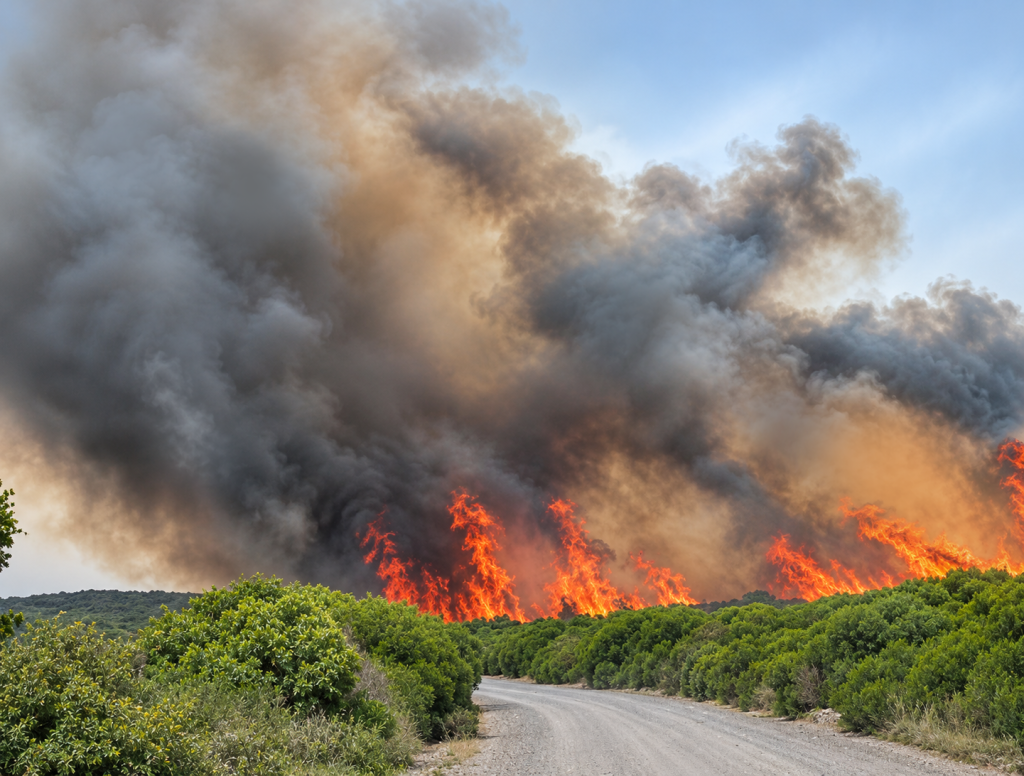
The Garden Route could be facing a summer of heightened wildfire danger, rising temperatures and growing water shortages, raising serious concerns about the region’s preparedness for increasingly extreme weather conditions.

With 2027 marking the tenth anniversary of the devastating Knysna fires, which claimed lives and caused billions of rand in property damage, the warning is particularly significant.

“Hardly into what is predicted to be a summer of extremes, out-of-control wildfires are already threatening lives, property and the natural environment along the Garden Route,” says Cobus Meiring of the Garden Route Environmental Forum (GREF).

Weather forecasts pointing to the possibility of a strong El Niño developing during 2026–2027 have raised concerns about hotter and potentially drier conditions in parts of South Africa. The Southern Cape and Garden Route could face increased pressure on already limited water resources if below-average rainfall and high temperatures persist.

Water restrictions are in place in several towns, while population growth and development continue to increase demand. Although the Garden Route is generally regarded as a high-rainfall region, its short river systems, geography and proximity to the coast limit opportunities for building large dams. Groundwater extraction must also be carefully managed, while desalination remains an expensive alternative.

Another major concern is wildfire risk. High temperatures, heatwaves, strong winds and prolonged dry spells can rapidly dry out vegetation. Dense infestations of invasive alien plants add to the problem by increasing the amount of combustible material across the landscape.

Meiring urges residents to use water responsibly, maintain firebreaks, clear properties of invasive alien vegetation and exercise extreme caution when making fires.

“The lessons of Knysna must never be forgotten. Prevention, preparedness and community cooperation are essential to protecting lives, livelihoods and the Garden Route’s natural heritage.”

The Garden Route Environmental Forum (GREF) is a public platform for environmental managers and serves as a climate change think tank. Visit grefecsf.co.za for more information.

ENDS
19 November 2026 Media Statement: Seizure and Condemnation of Non-Compliant Prepackaged Sugar at a Business in George’s Industrial Area

Media Statement: Seizure and Condemnation of Non-Compliant Prepackaged Sugar at a Business in George’s Industrial Area

For Immediate Release
19 November 2026

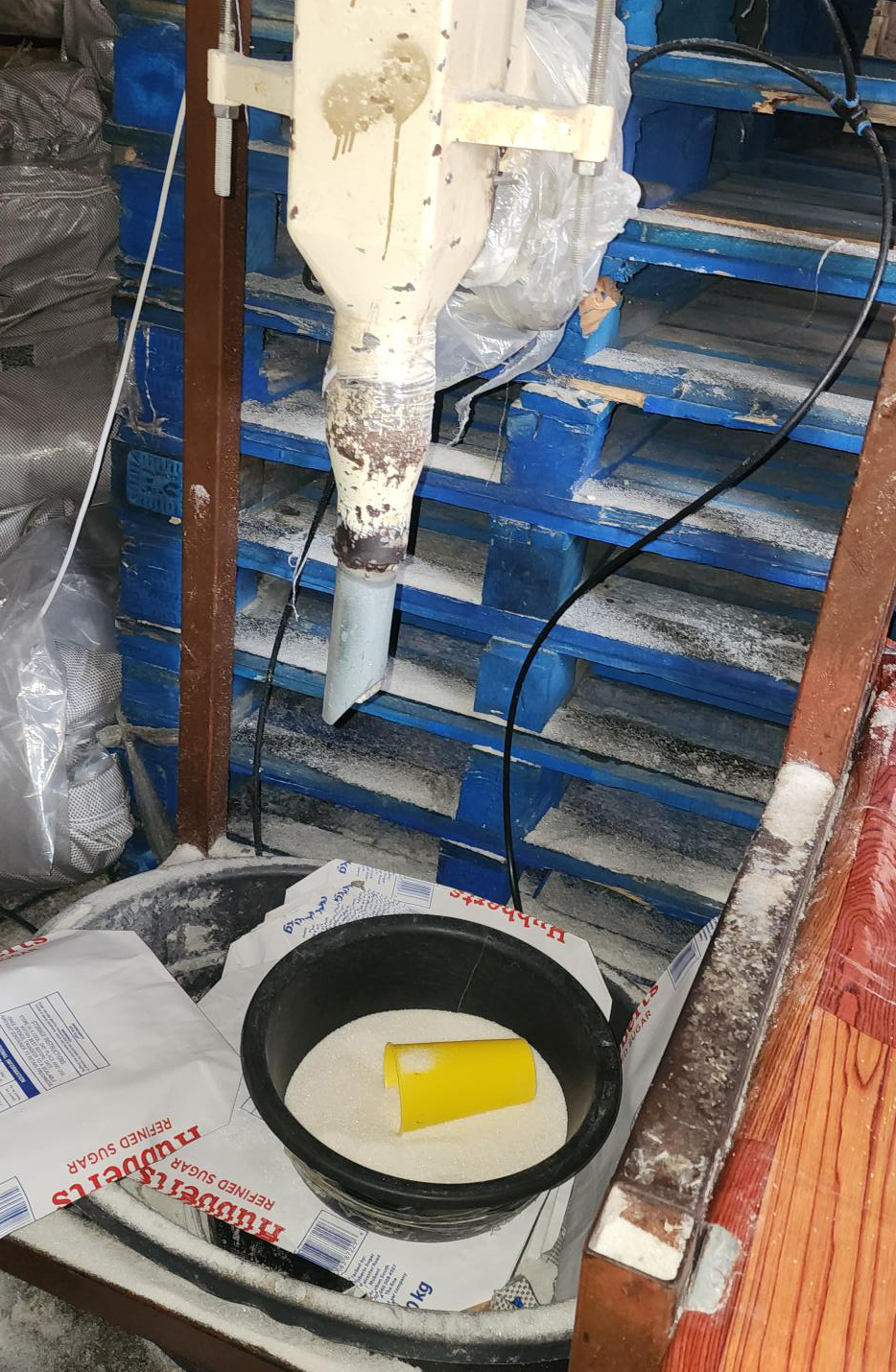
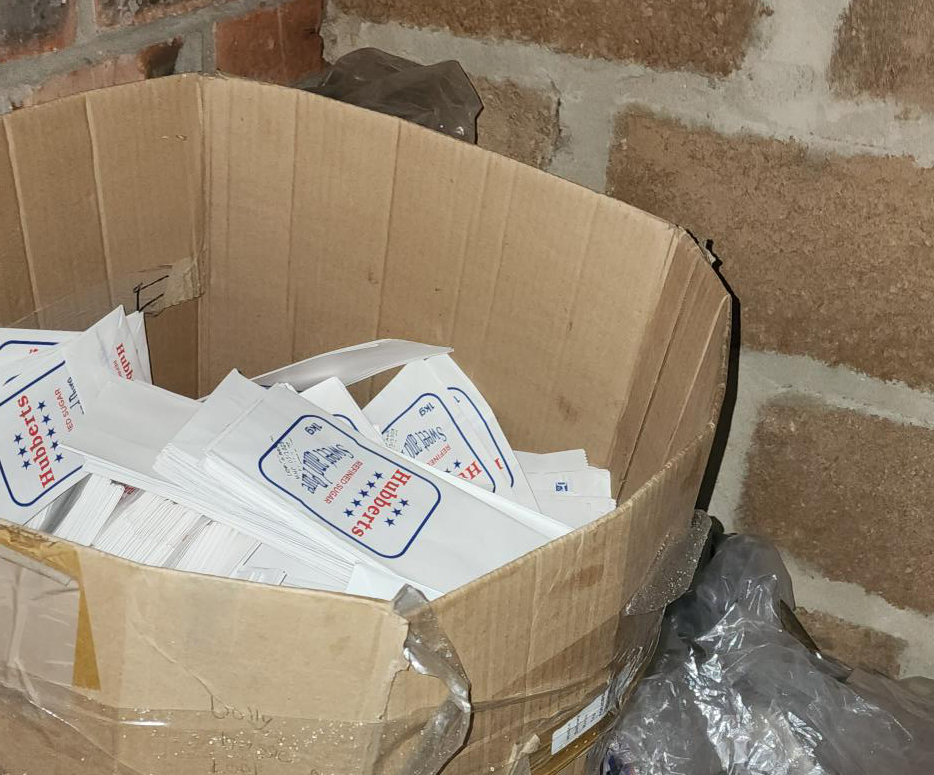
On 18 November 2026, a joint blitz operation was conducted at a wholesale business in George’s Industrial area by Environmental Health Practitioners (EHPs) from the Garden Route District Municipality (GRDM), in collaboration with the South African Police Service (SAPS). During the operation, a substantial quantity of sugar found on the premises was condemned and seized. The inspection further uncovered machinery allegedly used for the repackaging of sugar, as well as storage racks containing empty packaging materials and thousands of packets and containers intended for packaging purposes.

Findings of the Inspection

During the inspection, it was established that sugar had been prepacked into smaller packages on the premises.  The packaging did not bear the true physical address of the premises, which is a requirement of the Regulations relating to the Labelling and Advertising of Foodstuffs. According to Johan Compion, Snr. Manager: Municipal Health, Waste Management and Air Quality, “a package that does not display the correct address of the packer of the food product cannot be regarded as validly labelled, as the omission compromises the traceability of the product”.

He explained that in the event of a food safety incident, the product cannot be traced to its source. “The affected packages were therefore deemed non-compliant and unfit for sale”.

Equipment used to repackage sugar into smaller packages.

Contravention of the Certificate of Acceptability

The premises held a Certificate of Acceptability (COA). However, the certificate authorised “Sales only” and did not authorise processing (“Packaging”). The prepacking of foodstuffs therefore fell outside the scope of the activities for which the premises was certified. This constitutes a contravention of Regulation 638 (R638), the Regulations Governing General Hygiene Requirements for Food Premises, the Transport of Food and Related Matters, promulgated under the Foodstuffs, Cosmetics and Disinfectants Act, 1972 (Act No. 54 of 1972).

Grounds for Condemnation

The sugar was condemned and seized on two grounds:

  1. The premises was not authorised, in terms of its Certificate of Acceptability, to prepack foodstuffs, in contravention of R638.
  2. The labelling of the prepacked product was incorrect and did not comply with the applicable labelling regulations.

These actions underscore the importance of operating strictly within the conditions of a CoA and of ensuring that all prepacked foodstuffs are correctly labelled and traceable. Food business operators are reminded that compliance with R638 is essential to safeguarding public health and protecting consumers. Any operator wishing to prepack foodstuffs must first ensure that its CoA reflects this activity.

To report municipal health-related incidents in the George Municipal Area, contact:

Johan Compion
Snr. Manager: Municipal Health, Waste Management and Air Quality
Cell: 082 803 5161

Emmy Douglas
Chief: Municipal Health (George Municipal area)
Cell: 078 457 2824


ENDS


17 November 2026 Media Release: 24-Hour Emergency Response Network Ensures Garden Route Readiness

Media Release: 24-Hour Emergency Response Network Ensures Garden Route Readiness

17 November 2026

The Garden Route District Municipality (GRDM)’s emergency services are equipped and ready to respond to incidents across the district during the busy holiday period.

With the Garden Route expected to experience an influx of holidaymakers, the GRDM Disaster Management Centre (DMC) has already formed part of various engagements to ensure proper coordination with local municipalities, provincial departments and other emergency response agencies.

According to Gerhard Otto, GRDM Manager: Disaster Management: “Planning requires disaster contingency plans to be in place. These are continuously reviewed and updated in collaboration with the relevant authorities responsible for managing specific hazards”.

Otto said successful coordination efforts are strongly linked to the GRDM’s 24/7 emergency call centre. The centre operates in collaboration with the Department of Health’s Emergency Medical Services (EMS) and Provincial Traffic Services. “It maintains direct communication links with emergency first responders and serves as a central platform for coordinating and dispatching emergency services like medical, wildfire, hazardous material incidents and structural fires in the Kannaland area,” he said.

Gerhard urges the public to save the following numbers on their phones:

  • The GRDM 24-hour Emergency Call Centre: 044 805 5071 / 081 709 5193
  • The National Ambulance Emergency Number: 10177
  • General all-round Emergency Number: 112

According to Otto, the emergency call centre also serves as the Centralised Call Centre (CCC) for the operational implementation of the National Road Incident Management System (RIMS) on major routes traversing the district.

GRDM Emergency response equipment and disaster relief

To support emergency response operations, the GRDM Disaster Management Centre maintains a range of equipment that can be deployed when required. This includes:

  • One 6 000-litre water tanker.
  • Two 10 000-litre water tankers, one of which is mounted on a hook-lift truck and can be detached when necessary.
  • One multi-purpose hook-lift truck that can also transport a six-metre container or operate as a flatbed.
  • Four mobile 100 kVA generator sets, two of which are trailer-mounted.
  • Three mobile 6 kVA generators.
  • One road closure trailer.
  • Twenty six-metre storage containers positioned at local municipalities for the storage of emergency response and relief supplies.
  • Regarding disaster relief, the Western Cape Provincial Department of Social Development’s programme for the prevention of undue hardship is primarily responsible for providing assistance to disaster-affected communities. The GRDM also acknowledges the valuable contribution of non-governmental organisations (NGOs), including Gift of the Givers and Love George, which assist affected communities.
  • To supplement these arrangements, the GRDM maintains a limited stock of emergency relief supplies, currently comprising 300 blankets and 30 mattresses.

Disaster coordination and early warning systems

In terms of the Disaster Management Act, Act 57 of 2002, as amended, the GRDM Disaster Management Centre fulfils an important coordination role in the management of local disasters.

Standby arrangements are in place to ensure that the GRDM Multi-Agency Command Centre (MACC) can be activated when required. The MACC serves as a district-level coordination platform, bringing together relevant agencies and stakeholders to manage disaster situations and coordinate response efforts.

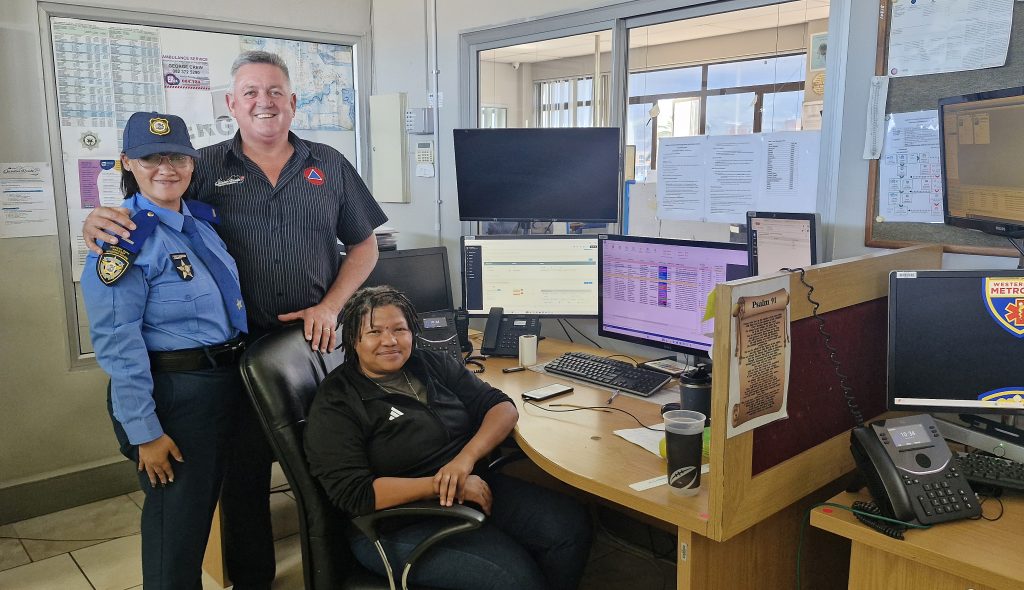
Feature image: Joselind Fortuin (Western Cape Department of Mobility), Suenell Atkinson (GRDM Emergency Call Centre Operator) and Gerhard Otto (GRDM Manager: Disaster Management) are confident that emergency services will be rendered to the standards expected by the public.

ENDS

12 November 2026 Media Release: Western Cape Government Visits GRDM with the Aim of Making Business Licensing Simpler and More Efficient

Western Cape Government Visits GRDM with the Aim of Making Business Licensing Simpler and More Efficient

For Immediate Release

12 November 2026

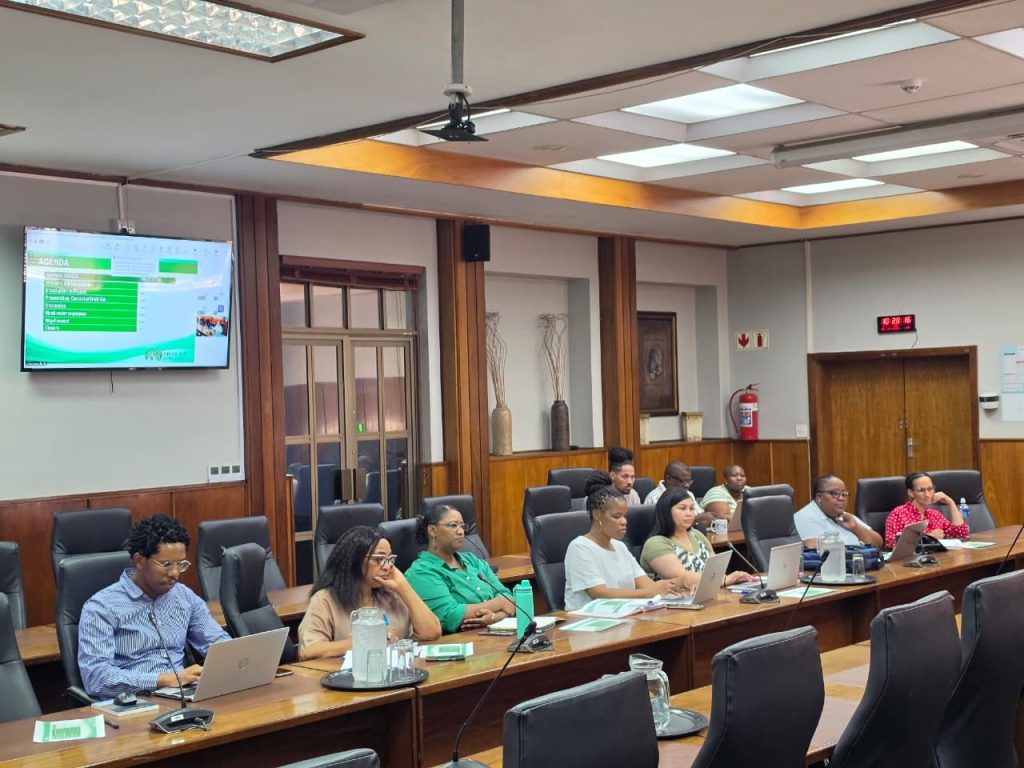
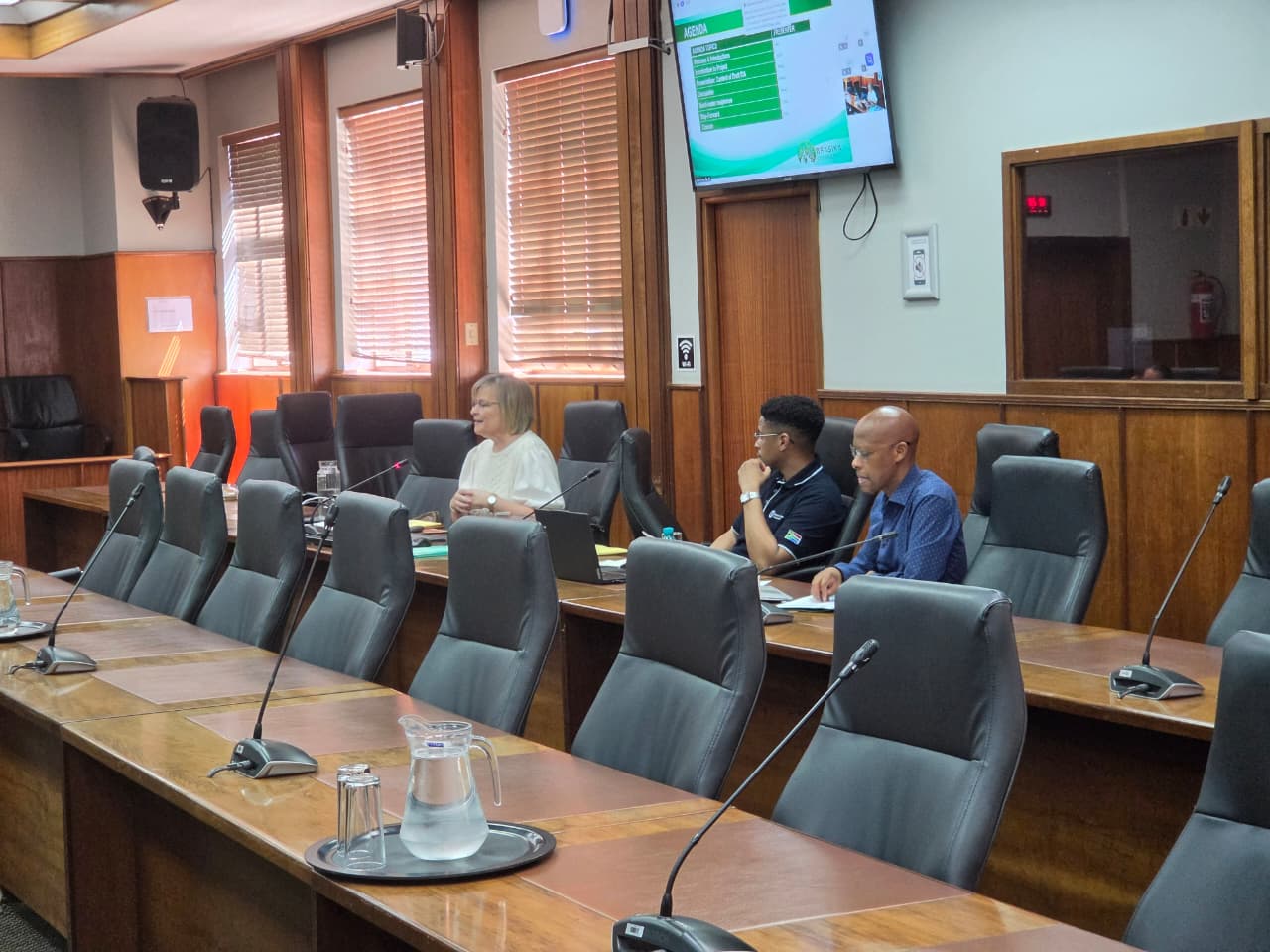
The Garden Route District Municipality (GRDM) and its local municipalities engaged with the Western Cape Department of Economic Development and Tourism’s Red Tape Reduction Unit on 11 November 2026 to discuss the potential implications of proposed business licensing legislative reforms for the Western Cape.

The National Department of Small Business Development has initiated reforms in the business licensing space, including the National Business Licensing Policy and the subsequent Business Licensing Bill. In response, DEDAT has developed a draft Regulatory Impact Assessment (RIA) to assess the desirability, constitutional viability, implementation considerations, and likely economic and administrative implications of provincial business licensing legislation in the Western Cape.

The Red Tape Reduction Unit’s role is to support regulatory reform by identifying and addressing unnecessary regulatory and administrative burdens that may negatively affect businesses, particularly small businesses, and to promote an enabling environment for economic growth. This includes engaging with relevant provincial departments and municipalities to understand the practical implications of proposed regulatory changes and to ensure that municipal perspectives are considered in the assessment.

The engagement provided an opportunity for municipalities to share practical challenges and insights on simplifying licensing processes, reducing unnecessary administrative burdens and creating a more standardised system that supports businesses across the province.

Key structural and administrative challenges raised include:

  • Dual-Authority and Split Jurisdictions: Requirements are fragmented between local municipalities (which issue general trading or business licences) and the Garden Route District Municipality (GRDM), which separately issues the mandatory Certificate of Acceptability (CoA) for food premises through its Municipal Health Services.
  • Strict Compliance Interdependencies: Getting a license requires overlapping approvals across multiple independent municipal departments—including zoning/land-use rights from Urban Planning, building plan compliance, fire and rescue safety clearances and environmental health. Delays in any single department stall the entire application.
  • Outdated National Legislation & Manual Systems: Business licensing across South Africa relies heavily on the legacy Businesses Act 71 of 1991, leading to administrative backlogs, manual processing workflows, and a lack of standardised policies for modern or informal enterprise sectors.
  • Lengthy Processing Times: Processing cycles typically take up to 30 working days and often longer, which creates severe financial and operational disadvantages for businesses, particularly small enterprises and startups operating with tight budgets.

By working together, the government aims to create a more enabling environment for businesses while ensuring that regulatory processes remain practical and efficient.

Feedback on the final draft assessment, as well as the way forward, is expected by 30 November 2026.

#GardenRoute #EconomicDevelopment #RedTapeReduction #BusinessDevelopment #YourRouteToProsperity #DistrictEconomicDevelopment #GRDM


Feature image: The session took place at the GRDM Head Office in George, where local municipalities and the GRDM connected with the Western Cape Government

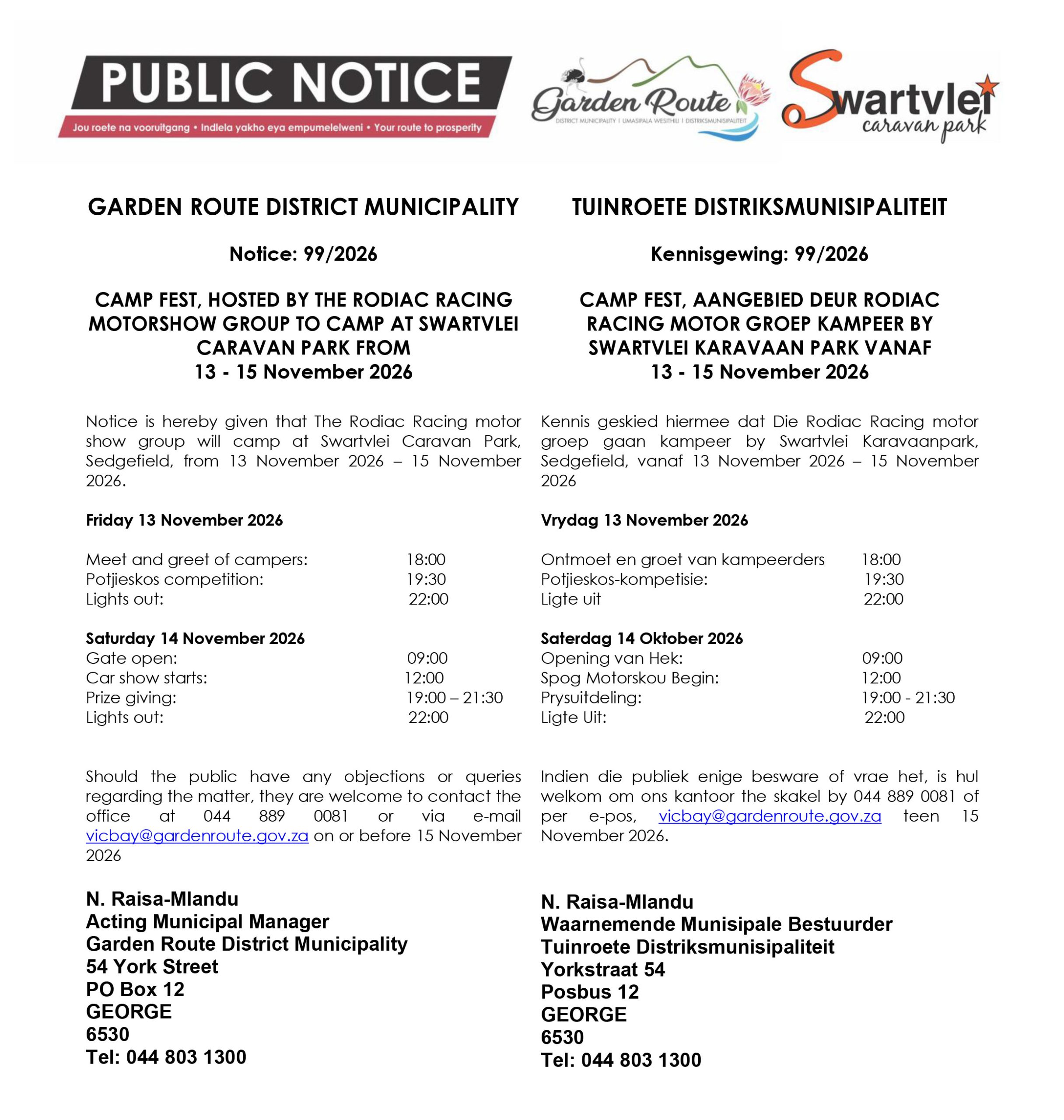
Public Notice 99: Camp Fest: Hosted by the Rodiac racing Motorshow Group to Camp at Swartvlei Caravan Park from 13 – 15 November 2026

Notice is hereby given that The Rodiac Racing Motor Show Group will camp at Swartvlei Caravan Park, Sedgefield, from 13 November 2026 – 15 November 2026.

Friday, 13 November 2026

Meet and Greet Campers 18:00
Potjiekos Competition 19:30
Lights Out 22:00

Saturday, 14 November 2026

Gate Open 09:00
Car Show Starts 12:00
Prize Giving 19:00 – 21:30
Lights Out 22:00

Should the public have any objections or queries regarding the matter, they are welcome to contact the office at 044 889 0081 or via e-mail vicbay@gardenroute.gov.za on or before 15 November 2026

Raisa-Mlandu
Acting Municipal Manager
Garden Route District Municipality
54 York Street
PO Box 12
GEORGE
6530
Tel: 044 803 1300


02 November 2026 Progress Update 7 on the GRDM Regional Waste Management Facility

Progress Update 7 on the GRDM Regional Waste Management Facility

02 November 2026

Construction of phase one of the Garden Route District Municipality’s (GRDM’s) Regional Waste Management Facility (RWMF) is 90% complete. The facility is located approximately 15km outside Mossel Bay, next to PetroSA.

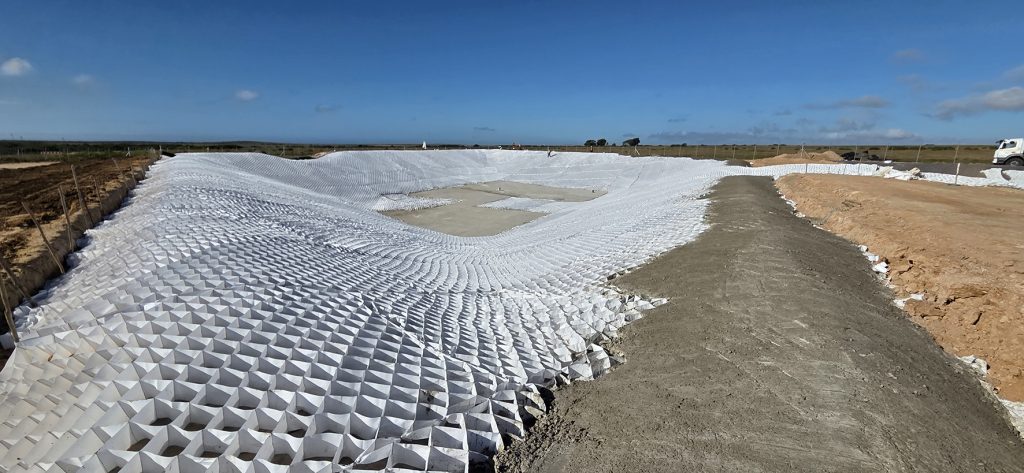
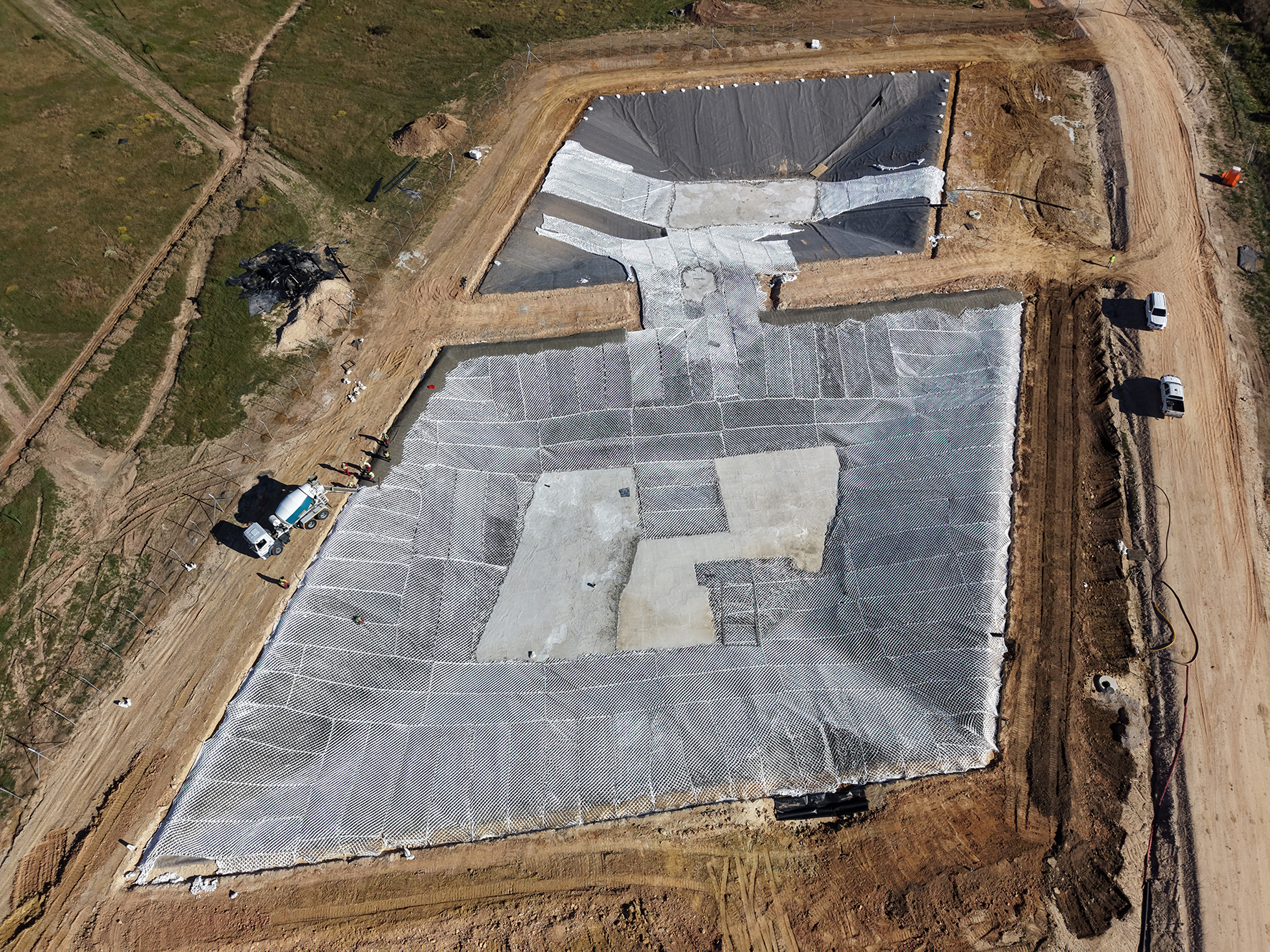
According to Johan Gie, GRDM Manager: District Waste Management: “The only critical items to be completed are the leachate & contaminated water dams; these are currently 81% complete, and they require the final layer of geocells filled with concrete. This was initially scheduled to be completed by the end of October 2026; however, recent rains caused some delays in the pouring of concrete, and it is now due to be completed within the next two weeks. Regardless of the delay, the contractor is still on track with the programme.”

The remaining construction works mainly comprise finishing works for all buildings, access road marking, stone pitching at stormwater headwalls, and final shaping around the facility.

default

Images in this update: Placement of geocells that will be filled with concrete remains ongoing for the leachate & contaminated water dams