Skip to content Skip to left sidebar Skip to footer

Local Government News

26 August 2020 Media Alert: Minister Tertuis Simmers to conduct COVID-19 awareness in George

Media Alert: Minister Tertuis Simmers to conduct COVID-19 awareness in George

For Immediate Release
26 August 2020

Tomorrow, 27 August 2020, Western Cape Minister of Human Settlements, Tertuis Simmers, in his capacity as the Provincial Government’s lead in the covid response for the Garden Route, will conduct a Covid-19 awareness campaign in George.

Minister Simmers, who will be accompanied by the Garden Route District Mayor, Memory Booysen and the George Municipal Mayor, Leon van Wyk, along with various MAYCO members, Councillors and the Premier’s Community Liaison Officers (CLO’s) will be distributing masks and information pamphlets.

Minister Simmers said: “I’m looking forward to engaging residents and reminding them of the importance of adhering to all the covid regulations. It is critical that we continue keeping the spotlight on this virus, as we have to push the infection rate down. This is truer now, particularly since the alert level has been relaxed and more people can move around.”

There will be an opportunity for interviews and photographs.

ALL MEDIA ARE INVITED TO ATTEND.

DETAILS:

Date: Thursday, 27 August 2020

Time: 08:00 – 09:00

Venue/Meeting Point: Hypersave, Pacaltsdorp, George

Media Enquiries:

Marcellino Martin

Spokesperson for Minister Tertuis Simmers

Marcellino.martin@westerncape.gov.za

021 483 3397 (o)

082 721 3362 (m)

Or

Nathan Adriaanse

Director of Communication & Stakeholder Relations

Tell: 021 483 2868 / Mobile: 083 2631720

Email: Nathan.Adriaanse@westerncape.gov.za


26 August 2020 Media Release: Garden Route District Municipality and stakeholders bump up efforts to extinguish peat-wetland fires

Media Release: Garden Route District Municipality and stakeholders bump up efforts to extinguish peat-wetland fires

For immediate release
26 August 2020

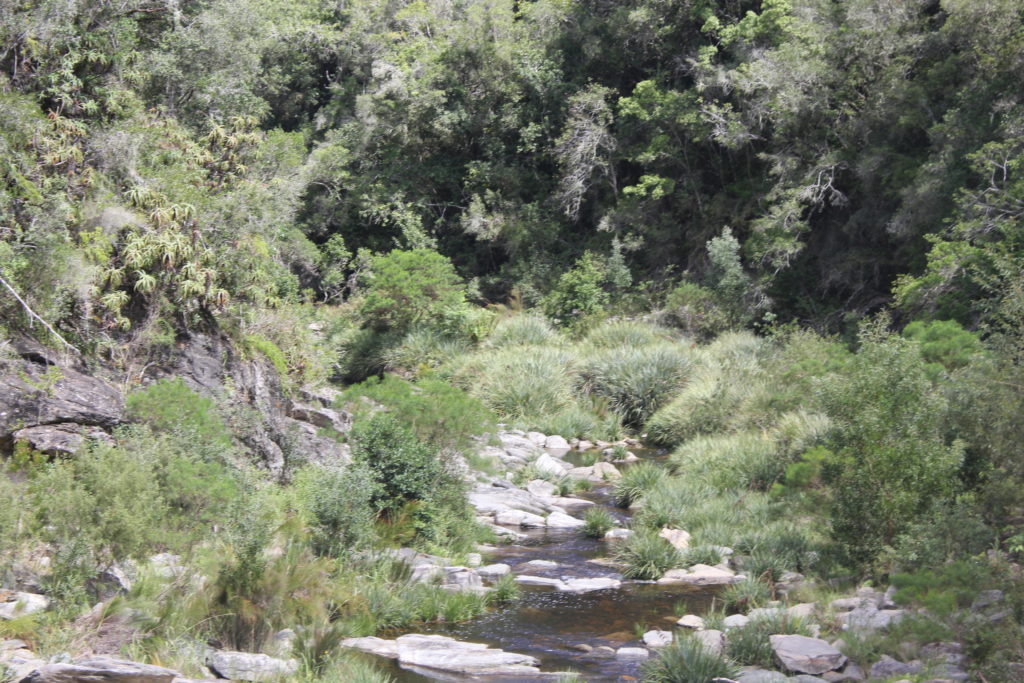
On 26 June 2020, the Garden Route District Municipality (GRDM) Fire & Rescue Services commenced with efforts to finally extinguish peat fires in the Garden Route district. One at the Kamma River in Bonniedale, Mossel Bay and the other at Weyers River in Bergfontein, Albertinia. Peat-wetland fires pose a threat to ecosystems by releasing smoke and heat through soil and vegetation, compromise wetlands.

Mr Deon Stoffels, Station Officer: Fire Safety and Training from GRDM at the peat fire in Bonniedale.

The response from the GRDM Fire & Rescue Service officials was first to assess and demarcate the exact extent of the peat fires. According to Mr Deon Stoffels, GRDM Fire Station Officer for Fire Safety and Training, smoke was evident on arrival – in small pockets appearing from underground”. This necessitated follow-up site visits on 29 June and 02 July 2020 whereby thermal images were captured with the municipality’s Thermal Imaging Drone to map and confirm the underground fire activity.

The immediate role-players involved in the response and planning were GRDM Fire & Rescue Services, Department Environmental Forestry and Fisheries (DEFF), Working for Wetlands, Cape Nature and the respective landowners.

Mr Johan Brand, Station Officer from GRDM Fire and Rescue Services holding one of the tools utilised in the testing and assessment of the sub-surface layers.

The above-mentioned site visits were followed up in middle July for the purpose to capture more thermal imagery to estimate the extent of the spread after two periods of moderate to heavy rainfall. Following the assessment, it was confirmed that the spread of the fire continued.

On the 28 and 29 July 2020, all role-players engaged in on-site visits and the peatland specialist from DEFF, with the assistance of representatives of GRDM Fire & Rescue and Cape Nature, performed assessments and tests. “These were done to determine the full extent of the peat fires, e.g. depth of underground fire activity, condition of the wetland, as well as the environmental and ecological impact of the fire and if continues, the fire activity,” Mr Stoffels, said.  After assessments and tests were completed it was jointly agreed that an Offensive Strategy would be the most practicable approach to deal with the underground and/or peat fires which include;

  • preventing the spread of fire;
  • fighting and extinguishing the fire; and
  • protection of life and property against the fire or other threatening danger:
  • In this case also, the protection of the environment against the fire and other threats.

The strategy will assist in mitigating adverse impacts on the environment, as well as aid in protecting and sustaining the biodiversity of wetlands. Role-players such as GRDM Fire & Rescue, the landowners, Cape Nature, Working for Wetlands, Southern Cape Fire Protection Association and Working on Fire were involved from beginning of the process, however the GRDM Fire and Rescue Services and the landowners started with their operations on 19 August 2020 and Cape Nature on 21 August 2020.

According to Dr Nina Viljoen, Manager for Environmental Management as GRDM, peatlands are present in a third of wetlands worldwide, which contribute a range of ecosystem services. The most pronounced services are biodiversity conservation, water quality and climate regulation. The addition of peat to a wetland allows these wetlands to have additional ecosystem services. She added: “The unique properties of peat allow for a variation in the dynamics of the ecosystem services provided.  This makes peatlands a major contributor to wetlands’ increased capacity for climate, water quality and quantity regulation, biodiversity conservation and waste assimilation”.

Areas in the Garden Route district affected by the wildfire. Thermal images captured with the Thermal Imaging Drone of Garden Route District Municipality.

Dr Viljoen further explained: “The destruction of peatlands by means of fires causes a visible and immediate degradation in the integrity of the aquatic ecosystems downstream of peatlands. This causes major changes to change the hydrology of the peatland system, as well as rivers and associated ecosystem health. Compared to global abundance, she said: “Peatlands are an extremely scarce ecosystem type in South Africa, with only 1% of total wetland area being peatlands. It provides water quality (water purification and waste assimilation) function which causes peatlands to demonstrate a very significant ecosystem services value”.

What is peat?

Peat, also known as turf is an accumulation of partially decayed vegetation or organic matter. Peat forms in wetland conditions, where flooding or stagnant water obstructs the flow of oxygen from the atmosphere, slowing the rate of decomposition.

Peatlands cover approximately 3% of the earth’s surface. The global carbon stored in peat is estimated to be about 500 billion tonnes, which is approximately 30% of the world’s soil carbon. Furthermore, peat stores 10% of the world’s fresh water”.

Peatlands are more valuable than normal wetlands due to the presence of peat stocks within them. Based on the services evaluated and the available data, the value of the cumulative services provided by South African peatlands was estimated to be as high as R174 billion, expressed as an ecological infrastructure value. It is therefore of the utmost importance to protect these type of wetlands against destruction, and to assess the causes of these two identified peat fires in the Garden Route district.

How do peat fires occur?

Peat fires can occur sporadically in smaller peatland systems due to system dehydration and desiccation brought on by either drought (the presence of a heat source), localised draining or flow interruption by roads – it smoulders. These smouldering fires can burn undetected for very long periods of time (months, years, and even centuries) propagating in a creeping fashion through the underground peat layer.

The current drought in the region and associated peat fires bear testimony to the vulnerability of these ecosystems to the variability in our climate patterns which can result in drought-induced peat fires in the Western Cape.

ENDS

25 August 2020 Media Release: Southern Cape coastal degradation visible as winter storms take their toll

Media Release: Southern Cape coastal degradation visible as winter storms take their toll

For Immediate Release
25 August 2020

“Much of the erosion and degradation of the Southern Cape coastline, in particular from Mossel Bay to Storms River, is well documented and closely monitored by scientists, and for good reason,” says Cobus Meiring of the Garden Route Environmental Forum (GREF).

He says even a modest rise in global sea levels and increased wind velocity make for exponentially stronger wave action, which in turn results in rapid shoreline degradation. The degradation potentially renders coastal communities and infrastructure vulnerable to irreparable destruction and displacement.

“Coastal degradation is a complex matter and due to a great many factors, the manner in which it manifests is not uniform.”

“For example, the ongoing degradation of a dune system in St Francis, leaving multi-million rand properties exposed to the might of the open ocean, is not necessarily the same process as the degradation of ancient sand dunes at Kleinkrans near Wilderness, or severe damage to roads and the promenade in Cape Town and Bloubergstrand.”

According to Meiring the overall onslaught by nature on the Southern Cape coastline is relentless, consistent and on the increase with every winter as cold fronts bring ever-stronger winds and increasingly powerful wave action.

“Climate change and global warming are matters that are frightening to present and future generations, but there is a lot ordinary folk can do to mitigate the damage to the environment. A point of departure is the way we plan future developments along the Southern Cape coast, the way we manage our water sources, and the way we conserve what remains of our biodiversity,” concludes Meiring.

** The Garden Route Environmental Forum (GREF) is a regional forum for collaboration in conservation, environmental adaptation and community interaction. The forum aims to coordinate regional conservation efforts, serves as a catalyst to drive climate adaptation practices in the Southern Cape and strives to establish a better-coordinated approach to environmental management.

MEDIA ENQUIRIES

Cobus Meiring: Chair of the Garden Route Environmental Forum (GREF)

Cell: 083 626 7619

Email: cobus@naturalbridge.co.za

Photo: Coastal degradation along the Wilderness coast near Kleinkrans is on the increase and is symptomatic of increased wave action, stronger winds and global sea level rise. (Photo: Cobus Meiring)

25 August 2020 Media Release: Western Cape Government acknowledges the role of Faith-Based Organisations and Religious Leaders in combating COVID-19

Media Release: Western Cape Government acknowledges the role of Faith-Based Organisations and Religious Leaders in combating COVID-19

For Immediate Release
25 August 2020

The Western Cape Provincial Government has identified and implemented several measures which focus on public health and behaviour, using a whole of society approach. As part of Government’s Whole of Society Approach, Cabinet resolved to have regular interactions with Western Cape Faith Based Organisations (FBO’s) and religious leaders about Covid-19 government interventions.  An Inter-Ministerial Committee headed and chair by Minister Ivan Meyer has been meeting weekly, to improve and streamline communication between government and citizens in the province.

The Minister of Cultural Affairs and Sport, Ms Anroux Marais and Ms Sharna Fernandez, Minister of Social Development also form part of the FBO Inter-Ministerial Committee.  The focus of this committee is to utilise skills in the religious community to expand the caring and humanitarian relief footprint to those in need.

In addition, the FBO forum creates a platform where members can obtain vetted information from the Western Cape Government and in many ways, becomes a voice piece for religious leaders and their constituencies to directly engage with government.  Questions and concerns that relate to what communities and congregants are currently unclear about are being addressed at the forum.  Issues like humanitarian relief, funeral and bereavement support plans and information regarding various regulations and feeding schemes form part of the regular agenda.

According to MEC Ivan Meyer, “Religious leaders and faith-based organisations play an important role in society. We also welcome suggestions and ideas in the fight of Covid-19 in the Western Cape. We believe that spiritual leaders offer us unique insights into the social and spiritual wellbeing of our citizens. As crucial stakeholders in our provincial response to Covid-19, our religious leaders have been asking the right questions and guiding us in many ways, to package information that is the most practical at ground level. We appreciate the commitment and levels of engagement that we share with them as well as the constant inputs they provide in helping us find solutions where necessary.”

He continues to acknowledge the exceptional work done by religious leaders during the Covid-19 and lockdown period, as well as the significant contributions, inputs and suggestions as joint efforts to combat the pandemic. “Suicides during the Covid-19 lockdown period are a great matter of concern and spiritual leaders play an integral part in emotional and physical support to the bereaved family members. They also provide counseling, care and relief activities and food relief scheme,” Meyer said.                                    

District Mayors from the various municipalities in the Western Cape also from part of this platform, and are encouraged to establish similar forums within their respective districts. This will enable them to engage with spiritual leaders at local level, thus ensuring that information shared during these engagements cascade down to the citizens within the Western Cape. FBO leaders are champions in establishing a behavioural change in the areas of higher transmissions.

Cllr Lisa Stroebel of the Garden Route District Municipality

 In the Garden Route District, the Executive Mayor of the Garden Route District Municipality, Alderman Memory Booysen, chairs the Garden Route Faith-Based Organisations Forum and is assisted by Councillor Liza Stroebel. The George FBO Forum has been established and is meeting via an online platform weekly. It is anticipated that other FBO forums in the Garden Route will soon follow suit. Inputs by various Stakeholders are also shared during such weekly meetings.

Psycho-social support is available on the hotline number on 0800 220 250.

25 August 2020 Speech by Executive Mayor, Alderman Memory Booysen at an Ordinary Council meeting of Garden Route DM

Speaker, Alderman Groenewald, once again I would like to extend my gratitude to all the frontline workers who are fighting COVID-19 that is causing havoc in our region and South Africa as a whole. We are all doing our best to fight this pandemic. Alderman Groenewald, we were also privileged as this District in our fight and awareness campaigns on COVID-19 over the past two weeks. We recently hosted the Western Cape Government (WCG) MEC for Public Works and Transport, Mr Bonginkosi Madikizela, a few days later we hosted the WCG MEC, Dr Nomafrench Mbombo. Alderman Groenewald, tomorrow we will have the privilege when we will host the WCG Premier’s Office, and on Thursday we will be host the WCG MEC for Human Settlements, Mr Tertuis Simmers. This is all part of our region and that of WCG of dealing with COVID-19. Over the next few days we will be visiting various areas, including hotspots in the Garden Route. These are some of our efforts and our response to the increase of COVID-19 figures in the Garden Route. We are still very concerned about figures in the Garden Route.

In addition, we will never forget our friends we have lost due to COVID-19.  Some are staff members; some are family members of staff members.  I want to praise God for the survivors among us. We pray that we are not going to lose any more lives.

Lastly, something, which is still a grappling matter we face on a daily basis, is Gender-Based Violence (GBV). It is with shock that I heard this morning that another lady in the Garden Route was murdered by her husband or boyfriend – I do not have the exact particulars.

I urge everyone not to keep quiet about GBV but to confront it, speak up and make your voices heard. There are still some bad…bad…rotten men out there – we need to identify these violent men, isolate them.  We need to stand by our sisters and mothers.

Lastly, I want to share my condolences to Alderlady Rosina Ruiters, our Deputy Executive Mayor who lost her sister recently.

Thank you Alderman Speaker.

25 August 2020 Media Release: Alderlady status conferred upon another Councillor of the Garden Route District Municipality

Media Release: Alderlady status conferred upon another Councillor of the Garden Route District Municipality

For Immediate Release
25 August 2020

Municipal Honours was bestowed on Thobeka Teyisi today, 25 August 2020. She is the tenth Councillor to receive such a honour.  Cllr Teyisi will now be recognised as an Alderlady after she met the minimum 10-point criteria as set out in section 5(10)(a) of a GRDM Alderman and Alderlady policy .

Mayor Booysen congratulated Alderlady Teyisi by saying: “This conferment is proof that your experience and history in politics are being recognised – it is indeed priceless”.  Alderlady Wolmarans also congratulated Alderlady Teyisi and said that they have come a long way (since 2006), and got to know one another better when they attended a course in executive leadership during 2009/2010. Alderman Van der Hoven echoed the sentiments of other Councillors and also added: “I do not know of another Councillor who deserves this more than you”. Alderman Gericke shared the last congratulatory remark by saying – “mooi geloop”.

The item recommendations were proposed by Cllr Virgill Gericke and seconded by Cllr Pieter van der Hoven.

Photo caption: Alderman Memory Booysen (Executive Mayor for Garden Route District Municipality) and Alderlady Thobeka Teyisi.

24 August 2020 Media Release: Youth from the Garden Route share awareness videos about COVID-19

Media Release: Youth from the Garden Route share awareness videos about COVID-19

For Immediate Release
24 August 2020

A few members of the youth in the Garden Route District municipal area are sharing TikTok videos about COVID-19 precautions, including hygiene measures, creative ways to greet and keeping safe in general. We expect more of these videos to be shared over the following weeks.

Videos come at a time when the Garden Route District’s rate of infections are increasing at a higher rate than the rest of the Western Cape. Everyone is urged to keep their guard up while the entire country is now on COVID-19 Alert Level 2. If we don’t, we run the risk of a second surge.

Remember to follow the five (5) golden rules of good hygiene:

  1. Wash your hands often for at least 20 seconds with soap and water.
  2. Do not touch your face with unwashed hands.
  3. Cough or sneeze into a tissue or your elbow. Safely throw away the tissue.
  4. Keep 1,5 metres apart from others.
  5. Stay home if unwell. Contact a hotline or your health worker.

Parents/Legal guardians completed and submitted consent forms for the release of all the videos.

21 August 2020 Media Release: Update on the Coronavirus

Media Release: Update on the Coronavirus

For Immediate Release
21 August 2020

As of 1pm on 21 August, the Western Cape has 5331 active cases of COVID-19, with a total of 102 422 confirmed cases and 93 383 recoveries.

Total confirmed COVID-19 cases 102 422
Total recoveries 93 383
Total deaths 3708
Total active cases (currently infected patients) 5331
Tests conducted 463977
Hospitalisations 1090 with 218 in ICU or high care

Cape Metro Sub-districts:
Western 8913 cases; 8197 recoveries
Southern 9229 cases; 8317 recoveries
Northern 6321 cases; 5863 recoveries
Tygerberg 12784 cases; 11830 recoveries
Eastern 9662 cases; 8862 recoveries
Klipfontein 8865 cases; 8057 recoveries
Mitchells Plain 8176 cases; 7537 recoveries
Khayelitsha 8068 cases; 7538 recoveries
Total 72018 cases; 66201 recoveries

Sub-districts:
Garden Route Bitou 547 cases; 471 recoveries
Garden Route Knysna 1304 cases; 1141 recoveries
Garden Route George 3188 cases; 2813 recoveries
Garden Route Hessequa 264 cases; 204 recoveries
Garden Route Kannaland 99 cases; 70 recoveries
Garden Route Mossel Bay 2018 cases; 1692 recoveries
Garden Route Oudsthoorn 996 cases; 693 recoveries
Cape Winelands Stellenbosch 1955 cases; 1807 recoveries
Cape Winelands Drakenstein 4140 cases; 3803 recoveries
Cape Winelands Breede Valley 3159 cases; 2881 recoveries
Cape Winelands Langeberg 1083 cases; 991 recoveries
Cape Winelands Witzenberg 1463 cases; 1307 recoveries
Overberg Overstrand 1482 cases; 1419 recoveries
Overberg Cape Agulhas 253 cases; 223 recoveries
Overberg Swellendam 261 cases; 242 recoveries
Overberg Theewaterskloof 1120 cases; 1034 recoveries
West Coast Bergrivier 395 cases; 357 recoveries
West Coast Cederberg 151 cases; 133 recoveries
West Coast Matzikama 303 cases; 240 recoveries
West Coast Saldanha Bay Municipality 1302 cases; 1196 recoveries
West Coast Swartland 1419 cases; 1273 recoveries
Central Karoo Beaufort West 435 cases; 325 recoveries
Central Karoo Laingsburg 120 cases; 59 recoveries
Central Karoo Prince Albert 13 cases; 10 recoveries

Unallocated: 2934 (2798 recovered)

Data note: It is not always possible to check and verify that the address data supplied for each new recorded case is correct, within the time frames required to provide regular and timely updates. This means that in some instances, cases could be allocated to the wrong sub-districts. We are working with the sub-districts to clean and verify the data and where errors are picked up locally, cases will be re-allocated to the correct areas.

More data is available here: https://coronavirus.westerncape.gov.za/covid-19-dashboard

The Western Cape has recorded an additional 26 deaths, bringing the total number of COVID-19 related deaths in the province to 3708 . We send our condolences to their family and friends at this time.

✅A note on today’s new cases:

Today’s new case statistics appear to have shown a bigger increase than usual. These are not all new or active cases. The Western Cape Department of Health has implemented changes to its data system which has resulted in some older cases, which had not originally been detected, now being accounted for. This is all part of our ongoing efforts to ensure that the data that we share is as accurate as possible.

✅Closure of the Hospital of Hope:

This afternoon, we officially closed the Hospital of Hope at the CTICC. This 862 bed hospital has provided care to over 1500 people since it opened in June-allowing us to provide dignified care to all who needed it at the peak of the pandemic in the Western Cape.

The Hospital of Hope has certainly lived up to its name- with many inspirational stories of healing. Among its patients who were discharged were a 104 year old, a 93 year old and an 88 year old. More than 1400 families have had their loved ones recover and go home.

When we were planning our provincial response to the pandemic, I was clear that I did not want to run out of beds. Providing dignified healthcare to everyone who needed it was our number one aim.

What the Hospital of Hope provided went far beyond that. The hospital was staffed by dedicated, phenomenal people who have touched the lives of every single person they helped. They worked long hours, endured difficult circumstances, made personal sacrifices and they did it while putting themselves at risk of becoming sick themselves. And yet, through it all, every patient was treated with care and respect.

Sadly, 82 people died at the facility and we send our condolences to their families and loved ones. Losing a loved one is never easy, but under COVID-19 circumstances, it is even harder. Today, we heard stories of how patients were treated with the utmost love and care by our healthcare workers, who supported them even in their final moments.

The CTICC has always played a special role in Cape Town- hosting Presidents, international delegates and captains of industry. It has been a site of celebration, bringing people together for weddings and festivals. And now, its history will also include a hospital that was built in four weeks. It may only have operated for a matter of weeks, but it has saved hundreds of lives.

Today, I want to thank every single person who has been involved in the making of history: the healthcare workers at the front line, the Western Cape Department of Health management team and the team from the Department of Transport and Public Works. I would also like to convey a special thank you to the CTICC, who responded to the call and allowed us the use of the space.

At today’s closing ceremony, Head of the Department of Health, Dr Keith Cloete spoke of how the hospital had shown us the best of humanity, and what healthcare in the future could be.

Around the world, this pandemic has created extreme suffering and deep pain for many but at the same time, it has provided us with moments of hope, kindness and love. It has prompted a global outpouring of generosity and support. The Hospital of Hope will always be a symbol of all the goodness we have seen during this time.

The Brackengate temporary hospital will now be the primary Hospital of Hope- providing the same level of care to those who still need it while we continue to work to slow the spread of COVID-19. It will be supported by a number of smaller facilities and dedicated wards in both the metro and in the rural areas.

Caption: Premier Alan Winde, Keith Cloete (HOD Health), Theodore Abrahams (CTICC facility manager) and Harry Malila (Western Cape Government DG) wheel bed number 862, the final bed number in the Hospital of Hope, out of the ward.

iStock.com/ra2studio

21 August 2020 Media Release: Garden Route Health Platform Update

Media Release: Garden Route Health Platform Update

For Immediate Release
21 August 2020

As of 21 August 2020, the Garden Route District has 8200 confirmed cases of Covid-19.

Cases 

Garden Route cases and recoveries per subdistrict.

  • Bitou 533 cases; 460 recoveries
  • Knysna 1288 cases; 1113 recoveries
  • George 3139 cases; 2774 recoveries
  • Hessequa 258 cases; 204 recoveries
  • Kannaland 99 cases; 70 recoveries
  • Mossel Bay 1936 cases; 1608 recoveries
  • Oudsthoorn 947 cases; 658 recoveries

The Garden Route has recorded 258 Covid-19 deaths.

Hessequa 13
Mossel Bay 56
George 87
Knysna 36
Bitou 20
Oudtshoorn 45
Kannaland 1

Hospitalisation

From our latest available information, there are currently 136 patients admitted in public and private hospitals of which 21 are in High Care/ICU.

 George Hospital happy to discharge more COVID-19 patients

George Hospital has treated 256 COVID-19 patients since the start of the pandemic. Two of these patients are Madelain Ntenetyana and Annestien Botha who both spent a few nights in Ward A1 due to complications of COVID-19.

Thirty-three-year old Madelain Ntenetyana from George started feeling ill at work and thought it was a cold.

Madelain Ntenetyana is now fully recovered.

She called in sick for work for a few days and her symptoms got worse so she decided to visit her local clinic where she was tested for COVID-19 and sent to hospital. She had difficulty breathing and had no appetite. Madelain says she felt better after three days in hospital and was transferred to PetroSA West Camp for 9 days to complete her isolation period.

“I am grateful for all the staff in the ward and would like to thank them for everything they did for me. I also want to thank especially Nurse Gary Michaels at PetroSA West Camp for his caring attitude while I was there”, she said. Madelain is now fully recovered and would like to call on the public to take COVID seriously as this is an experience she doesn’t want to repeat.

Annestien Botha(33) a nurse from a private hospital in George felt extremely tired and had a temperature. She went to the testing unit at George Hospital where she was tested and admitted to hospital. She was on oxygen for the first night and started feeling better. Being a health professional herself she was impressed with the service received at George Hospital. “ Staff were great, especially the doctors. I could see they have a plan here. I was treated with care and not someone who has an infectious disease where some staff might feel scared to be near you”, she said.

Annestien Botha on the day she was discharged.

Annestien contracted the virus from her daughter and after being discharged after two days they both isolated together at home.

“It is easy to contract the virus so people should take care of themselves and follow the guidelines such as wearing a mask and social distancing”, she said.

Community Testing and Screening

The approach to active Covid-19 case finding within the rural areas remain that of community testing and screening with a focus on people > 55 years and those with high risk (people with co-morbidities). To date 149 051 people have been screened of whom 1305 have been referred for testing.

 Catching up on the most urgent essential health services without risking patient and staff safety

While the health service platform must remain geared to deal with COVID-19 pandemic (including a possible second wave of infections), the Department of Health wants to scale up essential health services in a balanced manner.   The Department’s risk and impact based approach is guiding the services to be reintroduced identifying those services which have low risk yet high impact (such as immunisation services). These services which had reduced significantly during the COVID pandemic, will have a significant long term impact for those clients who had missed immunisations, follow-up appointments and scheduled non-emergency treatment.    A phased approach will be adopted to return the comprehensive health service platform back to a new normal and will be considered in short, medium and long terms.

PLEASE NOTE THAT CURRENTLY ALL PREVENTATIVE SERVICES ARE OFFERED:

  • Women’s health (family planning, antenatal and post-natal care)
  • Men’s health
  • Child health(immunisations)
  • Chronic disease management (TB, HIV, Diabetes, etc.)

Isolation and quarantine

People who cannot isolate or quarantine safely at home (risk to themselves or exposure risk to others), can be referred to an isolation or quarantine facility.

Isolation facilities are for patients who have been infected with the COVID-19 virus (with mild to moderate symptoms) where they can recover. Quarantine facilities are for those have been exposed and are awaiting test results. These facilities are safe, have been made as comfortable as possible and you will receive free transport, meals, and a laundry service. PetroSA (West Camp) is currently the only activated isolation and quarantine facility in the Garden Route. More facilities have been identified and will be activated, if and when the need arises or capacity is exceeded at PetroSA. We currently have 71 people at the West Camp facility.

5 ways to stay safe

We urge all citizens to remain careful in observing these precautions of hygiene and safety.

  1. Wear your mask as all times when you leave your home
  2. Keep you social distance from other (1.5m)
  3. Do not touch your face
  4. Wash your hands regularly with soap and water or hand sanitizer(70% alcohol base)
  5. If sick, stay home

Make sure you wear your mask when going out to protect yourself and others. Also remember that spitting is another means of transporting the virus. Do not spit on the ground. The protection and wellbeing of all our people remains in our collective hands.

-END-

Nadia Ferreira
Principal Communications Officer
Garden Route and Central Karoo Districts
Western Cape Government Health
Town Clinic, Plettenberg Bay
Tel: 076 379 5423
Email: Nadia.Ferreira@westerncape.gov.za 
Website: www.westerncape.gov.za

Feature image: iStock.com/ra2studio