
Author: Herman Pieters

Eden District Air Quality: Government Institutions prioritise towards healthier communities
Air Quality Monitoring station in Dana Bay relocates
The Air Quality unit of the Western Cape Department of Environmental Affairs, commissioned an Air Quality Monitoring station in Dana Bay during 2011. This was done on request of the Eden District Municipality’s (Eden DM’s) Air Quality unit due to the possible impact of Industrial activity on Dana Bay residents.
Eden DM’s Air Quality Manager, Dr Johann Schoeman, said: “The results of the station, over the last 5 year period, did not exceed the ambient air quality standards for Benzene and Hydrogen Sulphide,” was also within the World Health Organisation guideline limits and further added that the station was however vandalized twice over the last year. Schoeman further confirmed that both Eden DM Air Quality and Province decided to relocate the station to a more secure environment. “The Eden DM Air Quality unit then proposed to move the station to the Mossel Bay Air Quality office in Extension 23. The offices are located in a residential area which is also in the prevailing wind direction from Industrial activity. It therefore falls within the scope of a receptor environment and covers Kwa-Nonqaba, Ext 23, 26, and parts of D`Almeida,” Schoeman further stated.
Permission was also granted by the Mossel Bay Municipality to relocate at this premises and the necessary building plans were approved. Mossel Bay Municipality also provided the electricity for the station. Techno Asphalt handled the transport of the station to its new location, free of charge.
This project is a joint venture between the Department, Eden DM and Mossel Bay Municipality, showing how cooperative governance between Province, municipalities and private sector can work towards the benefit of our communities. Eden DM has full access to the station, as well as the real time monitoring results, which is very helpful towards air quality management in the region. The same goes for the George and Oudtshoorn monitoring stations.
Eden DM also want to thank the Provincial Air Quality unit for the costly monitoring of the air quality within the Eden district, to the benefit of our communities and is looking forward to similar future joint ventures.
Eden DM’s Air Quality Unit shares best practice during fact finding mission
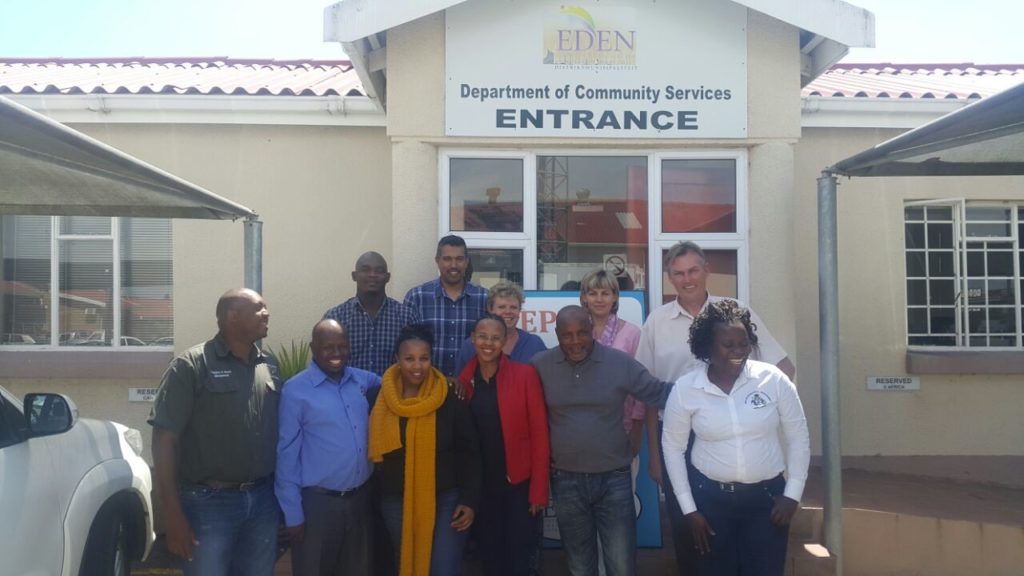
Mr Kamaseelan Chetty, Senior Manager: Air Quality Information at the South African Weather Services, approached the Eden District Municipality (Eden DM) for a fact finding mission to the Eden DM Air Quality unit on 23 and 24 November 2016.
The SA Weather Service has current service agreements with certain Provincial and Local authorities, to assist them with capacity building of their respective Air Quality units. The purpose of the visit was to explore and learn best practices in respect of air quality, from the Eden DM Air Quality unit.
The team consisted of officials from the City of Tshwane, the SA Weather Services, Gert Sibande District Municipality, Nkangale District Municipality and the Mpumalanga Department of Environmental Affairs.

On day one of the visit, Eden provided an introduction and background in terms of air quality management in the Eden district (how it all started, initial and current structure and lessons in establishing the function at district level). Aspects such as the Eden DM air quality management planning and Air Quality Management Plans, the Air Quality Bylaw, atmospheric emission licensing, enforcement and the Eden Air Quality Working Group, Air quality monitoring (ambient, in-stack) & vehicle emission testing, were covered.
The team then joined the Eden Air Quality Working Group on day 2 of the visit.
The SA Weather Services thanked Eden DM for the valuable lessons learned over the two day mission, where after the Eden DM team provided the visiting delegation with the necessary information, templates and systems to use as best practice for their respective air quality working environments.
“The Air Quality unit feels honored that they were approach out of all the Air quality units in SA for this fact finding mission,” concluded the Eden DM Air Quality Manager, Dr Johann Schoeman.

Eden DM EHPs devoted to routine Water Sampling of Coastal Areas
The Environmental Health Practitioners (EHPs) of the Eden District Municipality devote themselves to undertake routine water sampling of areas, situated along the Eden district, as a crucial part of the Municipal Health Services’ key performance areas.
Regular sampling of the following sites, situated within the five coastal areas are procured routinely, as well as prior to and during the December holiday season:
Bitou – 5 sample sites
Knysna – 9 sample sites
George – 4 sample sites
Mossel Bay – 5 sample sites
Hessequa – 4 sample sites

A total of 12 “Blue Flag” beaches have been identified and proclaimed within the entire District, emphasising the very important role this region represents as prominent holiday and tourist destination.
The purpose of sampling at these sites is to ensure that all recreational areas that are being utilised by local residents and visitors, are safe and pollutant-free. The presence of pathogenic bacteria isolated in the water samples, is normally an indication of fecal pollution, which may originate from storm water run-off, pets and wildlife, as well as human sewerage. If present in high concentrations in water and ingested while swimming or enter the skin via a cut or sore, it may cause ear and throat infections, as well as gastro -enteritis.
A collaborative approach regarding the management of all coastal water bodies (including rivers, estuaries, lagoons and the ocean) with all other stakeholders, e.g. the South African National Parks (SANParks) and Nature Conservation, will ensure a safe and enjoyable holiday for everyone.

Eden DM EHPs create awareness about Impetigo in Plettenberg Bay
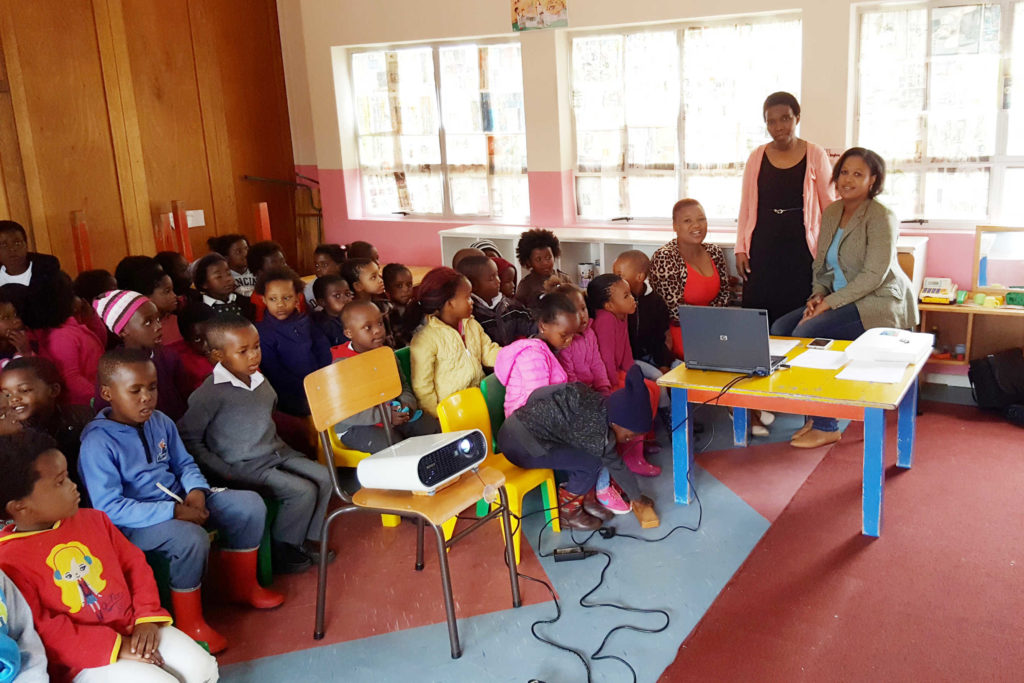
After an incident that occurred in one of Plettenberg Bay’s childcare facilities, Eden District Municipality’s Environmental Practitioners on 28 October 2016, embarked on a programme to create awareness about a bacterial infection named Impetigo.
The programme was held at the Bongolethu Crèche in Kwanokuthula, Plettenberg Bay. Mr Gawie Vos, Ms Zoleka Goniwe and Ms Nokuphiwa Mbali facilitated the session, which was attended by four teachers, 50 toddlers, as well the principal, Ms Beauty Mpondo.
1. What is Impetigo?
Impetigo is a highly contagious skin condition that is most common in children. It usually occurs on the face, neck and hands of young children and infants. Children who wear diapers also tend to get it around the diaper area. The disease occurs usually following another skin condition or an infection. Impetigo is caused by two bacteria – streptococcus pyogenes and staphylococcus aureus, which is highly contagious.

2. What are the symptoms?
Impetigo symptoms can be uncomfortable and embarrassing, particularly when they are present on the face. Though the symptoms vary slightly from type to type of Impetigo, they are similar and can include: red sores that pop easily and leave a yellow crust, fluid-filled blisters, itchy rash, skin lesions and swollen lymph nodes.
3. How to prevent Impetigo?
In order to prevent Impetigo one needs to maintain good hygiene. These methods include: washing hands regularly, bathing or showering regularly, cleaning and covering any injuries to the skin.
With the children who eagerly participated in the activities and attentively listened to the facilitators, the participation of the teachers and attendance of the school principal, the programme was described as being a great success.

IDP Managers help Mossel Bay children

The IDP (Integrated Development Planning) Managers’ Forum, representing all municipalities in the Western Cape, meets once every three months. The Western Cape Provincial Government is responsible for co-ordinating and arranging all activities in consultation with IDP Managers.
About two years ago the Forum unanimously adopted and agreed to do a social responsibility outreach as IDP Managers in the municipal area that hosts the meeting.
This Forum rotates to all the municipal districts, hence each municipality will eventually have the opportunity to host the forum.
The responsibility is on the host municipality to identify an organisational need and in collaboration with the organisation establish its specific short-term needs. The social responsibility contribution is a freewill offering by IDP Managers as a demonstration of the willingness and commitment to uplift the poorest of the poor.
The social responsibility contribution outreach went to the Mossel Bay Haven for the Homeless. The handover was done on Friday, 2 December, at the Garden Court Hotel. As it is December, “Santa shoeboxes” for this worthy cause were made and filled with gifts and necessities for the haven residents.
The following participated in the initiative: Nadia McDonald from the Western Cape Provincial Government Integrated Development Planning Directorate; Garry Olivier from the Mossel Bay Haven; Jody Beukes from the Mossel Bay Haven; Celeste Domingo – IDP Manager from the Eden District Municipality; Tertia Kannemeyer, IDP Manager Kannaland Municipality, Natalie Speelman from the Mossel Bay Haven; Eben Phillips, IDP Manager Knysna Municipality; Rudolph Wessels from the Haven; Simphiwe Piti, IDP Manager Central Karoo District Municipality; and George van der Westhuizen, Manager: Planning and Strategic Services, Mossel Bay Municipality.
Source: Mossel Bay Advertiser

Waste Management is everybody’s business
During an Eden district wide study, it became evident that municipalities lack information, regarding the different types and volumes of waste, featured in their Integrated Waste Management Plans. For this reason, Eden District Municipality (Eden DM) took the initiative, to procure the necessary equipment required to conduct waste characterisation studies. This was done with the prize money received from the Greenest District Municipality Awards that was won in 2015.
From August 2015, the Eden DM Waste Management Section conducted waste characterisation studies in the Bitou-, Mossel Bay-, Knysna-, Hessequa- and Oudtshoorn Municipal areas. The reason behind these studies has been to obtain and provide a breakdown of the composition and quantities of household and commercial waste collected from different outlets and disposed at landfill sites. This information is needed to ensure proper integrated waste management planning.
A representative sample, relative to the total number of households per sub-area, was collected, identified, sorted and weighed. The waste was categorised into 15 different waste types, namely:
- Soft plastics;
- Hard plastics;
- Paper;
- Cardboard;
- Glass metal;
- Food waste;
- Garden waste;
- Textiles;
- Wood waste;
- Inert waste;
- Nappies;
- E-waste; and
- Hazardous waste and more (waste that does not fall under the aforementioned categories).
The results obtained from the different sub-areas within the different municipalities, illustrated different trends in waste generation. These trends will be significant in identifying and prioritising the type of waste minimisation areas and management initiatives to implement in the various sub-areas. For example, home composting initiatives should be implemented in the sub-areas where garden waste was the most prominent component of the waste sampled.
A waste characterisation study is planned for early 2017 in the George Municipal area; whereafter similar studies will follow in the other local municipalities within the Eden district. The abovementioned studies will be performed on a bi-annual basis, in order to determine the seasonal waste generation trends. The majority of waste currently reaching the landfill site are recyclable materials.

Another Greenest District Municipality award the District
21 October 2016 marked another victorious day for Eden District Municipality (Eden DM) and in particular, the Department: Community Services when they won the Western Cape Greenest District Municipality Award, for the fourth consecutive time and on top of that received R130 000.00 prize money. This announcement was made during a prestigious event which was hosted by the Western Cape Department Local Government, Environmental Affairs and Development Planning, at the Devondale Golf and Wine Estate, in Stellenbosch. The awards were handed over by the Provincial Minister of Local Government, Environmental Affairs and Development Planning, Mr Anton Bredell.

Mr Clive Africa, Executive Manager of Community Services and his team, worked hard to keep the Eden district “green”. Excellence in service delivery has once again been achieved, exactly as the Eden DM vision reads: “Eden, a future empowered through excellence”.
During a press conference held to announce Eden DM’s achievements, Municipal Manager, Mr Godfrey Louw, congratulated all role-players for a job well done. He elaborated that excellence is one of the municipality’s seven (7) values and in cohesion with Eden DM vision; this achievement portrays a true testimony of service delivery outcomes, par excellence.
“Today, I consider myself as one of the most fortunate Mayors in South Africa, who took over a ‘well-run machine’, after the 2016 elections,” said Eden DM Executive Mayor, Cllr Memory Booysen. “A municipality who received a clean-audit in the 2015/16 financial year; a municipality who won the South African Toughest Firefighter Alive Championships and now this past week, received the Western Cape Greenest District Municipality Award, for the fourth consecutive time.” Furthermore, Cllr Booysen extended his congratulations to the other municipalities in the district who also received awards. In conclusion he mentioned that in order to ‘stay up there’, as Executive Mayor he will make sure that management and officials receive the political support in order to promote service delivery.
From the four (4) District Municipalities who participated in the 2016 competition, Eden DM won the Greenest District Municipality Award, which included the following categories:
• Waste Management;
• Water Management & Conservation;
• Climate Change Response;
• Coastal Management; and
• Air Quality Management.
In addition to this, the district also won awards for the “Clean Fires Campaign and the “Innovation Award” for the Enviro Health Application that is currently being used by Eden DM Municipal Health officials.
Hessequa Municipality won the following B-municipal categories and the overall Greenest Local Municipality:
• Climate Change Response
• Biodiversity Management
• Coastal Management
• Leadership and Compliance
In a very humble manner Mr Africa explained: “This award is a beautiful collaboration of love, labour and service. It would not have been achieved without strong team work. Mr Godfrey Louw, the Eden DM Municipal Manager, our Councillors, officials from Supply Chain and Corporate-/Strategic Services, including Administration Staff and Cleaners, all played a vital role in our success. This is proof that our vision of ‘Excellence’ has once more been achieved through focusing our energy towards service delivery to the valuable people of the Eden district”. The profound leadership of Mr Johan Compion must be acknowledged, as well as the dedication, passion and commitment of Dr Johan Schoeman, Mr Morton Hubbe, Mr Johan Gie and Mr Vernon Gibbs-Halls. Eden DM also won the award for innovation for the implementation of a Cell Phone App to improve service delivery and its efforts to inform communities about fire safety with the Eden Clean Fires Campaign.

Mossel Bay Hand-Wash Project

In a quest to educate communities, especially children at pre-school level about the benefits of proper health and hygiene habits, Environmental Health Practitioners (EHPs) from Eden District Municipality’s (Eden DM) Municipal Health Section, regularly visits crèches in the district.
On 20 and 21 October 2016, EHPs from the Mossel Bay Office, together with the Portfolio Councillor of Community Services, Cllr Khayelethu Lose visited six (6) crèches in Kwanonqaba and Great Brak River. During these visits, four hundred and fifty (450) toddlers and thirty five (35) teachers were reached and trained regarding the importance of proper hand-wash methods.
Toddlers and teachers were also trained in methods to improve hygiene behaviour, as well as ways to prevent diarrhoeal, sanitation and water-related diseases. One of the key messages communicated, was that good handwashing habits are the first line of defence against the spread of many illnesses, like common colds, to more serious infections, such as diarrhea.
Hand-wash techniques were demonstrated and the importance of using soap, were emphasised. Incentives, which included soap dispensers, hand-wash soap and paper towels, were handed out. The project was a great success and feedback received from crèches, was very positive.
Youth of Eden district benefiting from (EPWP) Hospitality Training Programme
The National Department of Tourism (NDT), in collaboration with the Expanded Public Works Programme (EPWP), is currently rolling out a Hospitality Youth Training Programme in the Western Cape. Learners were inducted to the Programme on 26 October 2016, at the Eden District Municipality (Eden DM) Council Chambers in the presence of their host employers, namely Fancourt Hotel & Estate, Reheifo Lodge and Shenanigans Irish Pub and Eatery. Contracts were also handed over to learners at the induction.

The purpose of the Induction was to foster greater appreciation amongst learners and to inform them about future opportunities that exist in the Hospitality Industry in South Africa and abroad.
Considering that “youth development” and “building a capacitated workforce in communities,” forms part of the strategic objectives of Eden DM, the Municipality seized this opportunity and partnered with the NDT and other local role players, to serve on the project advisory committee to monitor the success of the Programme.