Media Statement: Residents urged to report unsafe food products found at shops to Municipal Health Chiefs
10 September 2026
The Garden Route District Municipality (GRDM) urges residents to report any food products they believe may be unsafe for human consumption at spaza shops, supermarkets, food outlets or other food-handling premises.
Food safety is a shared responsibility. If residents come across spoiled, damaged, contaminated or incorrectly labelled food products, they should not consume the product and should report the matter to the Garden Route District Municipality’s Municipal Health Services.
Who to report safety concerns to:
Johan Compion (entire region)
Senior Manager: Municipal Health, Solid Waste Management and Air Quality
E-mail: info@gardenroute.gov.za
Cell: 082 803 5161
George Municipal Area
Emmy Douglas – Chief: Municipal Health (Outeniqua)
Mission Street, Industrial Area, George, 6530
Tel: 044 803 1501 / Cell: 078 457 2824
Klein Karoo & Kannaland Municipal Areas
Desmond Paulse – Manager: Municipal Health (Klein Karoo)
94 St John Street, Oudtshoorn
Tel: 044 272 2241 / Cell: 083 678 6530
Mossel Bay Municipal Area
Dr Johann Schoeman – Manager: District Air Quality Management and Municipal Health (Mossel Bay)
C/O Sampson & Marling Street, Ext 23, Mossel Bay
Tell: 044 693 0006 / Cell: 083 530 3709
Knysna Municipal Area
James McCarthy – Chief: Knysna
26A Queen Street, Knysna, 6571
Tel: 044 382 7214 / Cell: 082 805 9417
Bitou Municipal Area
Gawie Vos – Chief: Lakes (Bitou)
4 Virginia street, Plettenberg bay, 6600
Tel: 044 501 1600 / Cell: 083 557 1522
If your report is unanswered, please contact communications@gardenroute.gov.za
How often are food premises inspected?
National environmental health standards provide for inspections at least once every three months for high-risk food premises, once every six months for moderate-risk premises and once every 12 months for low-risk premises.
Importantly, inspections are not limited to routine visits. Additional inspections may be conducted when complaints are received, unsafe food or non-compliance is suspected, or where there is a suspected food-borne illness or other public-health risk.
Residents are encouraged to play their part in protecting public health. If you see food that you believe is unsafe, report it to GRDM Municipal Health Services rather than consuming it or simply leaving it on the shelf.
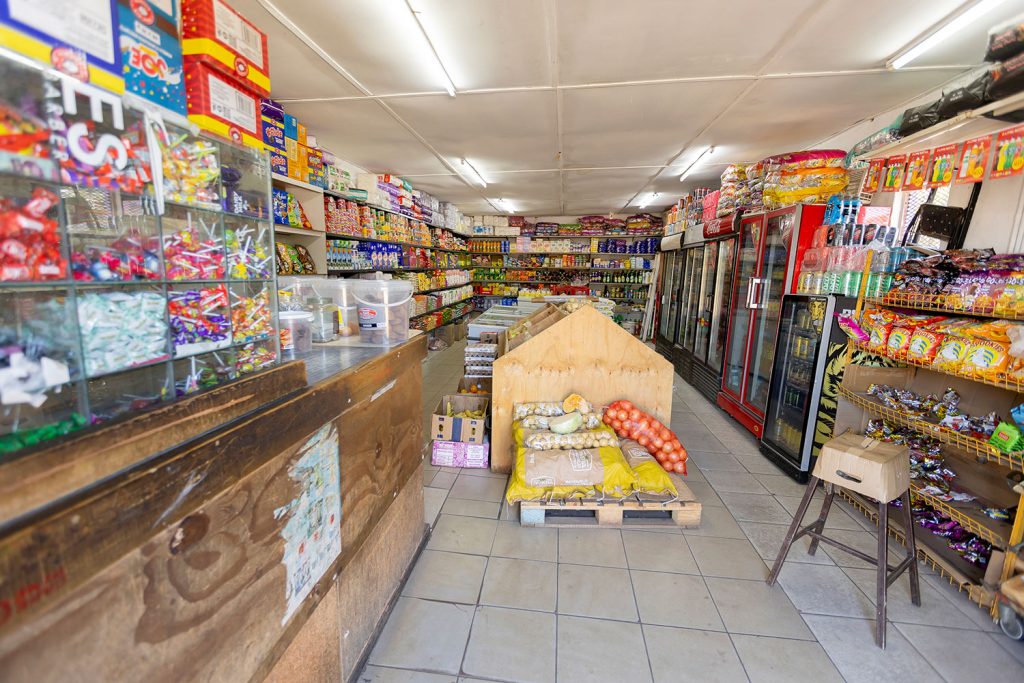
Feature image: An informal food premises in the Garden Route, which is inspected at least every three months by an Environmental Health Practitioner.
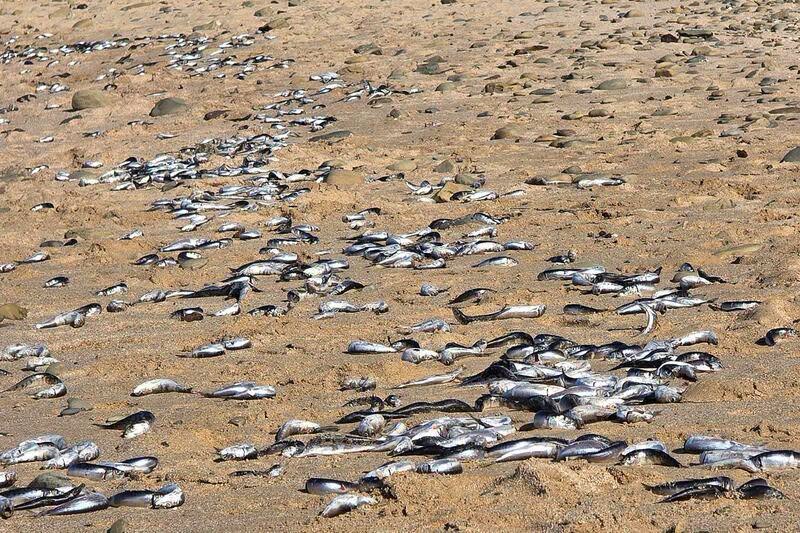
South Africa is experiencing an unusual sardine mortality event that has now been reported over a very wide geographic area, extending from the Western Cape through the southern and eastern coasts, into the northern Wild Coast and along the Namibian coast.
Pilchard herpesvirus (PHV) has been confirmed in sardines associated with the mortality event, including sardines collected in Gqeberha. PHV remains the leading explanation for the observed mortalities, although the role of the virus and the possible contribution of environmental factors are still being investigated.
The full extent and impact of the mortality event are not yet known. The Department of Forestry, Fisheries and the Environment (DFFE) and its scientific partners are continuing to monitor new reports, undertake diagnostic testing and investigate the distribution, scale and progression of the event, as well as its potential implications for the sardine population and the wider marine ecosystem.
PHV is not known to infect people. Commercially produced canned sardines processed under approved conditions remain safe to consume. The public should not collect, eat or feed to pets dead or dying sardines found on beaches or at sea, because of the risks associated with decomposition and contamination.
To read further, please download the below FAQ documents:
Media Release: Procurement process for the construction of Cell 1B of the Regional Landfill Facility to commence soon
For Immediate Release
8 September 2026
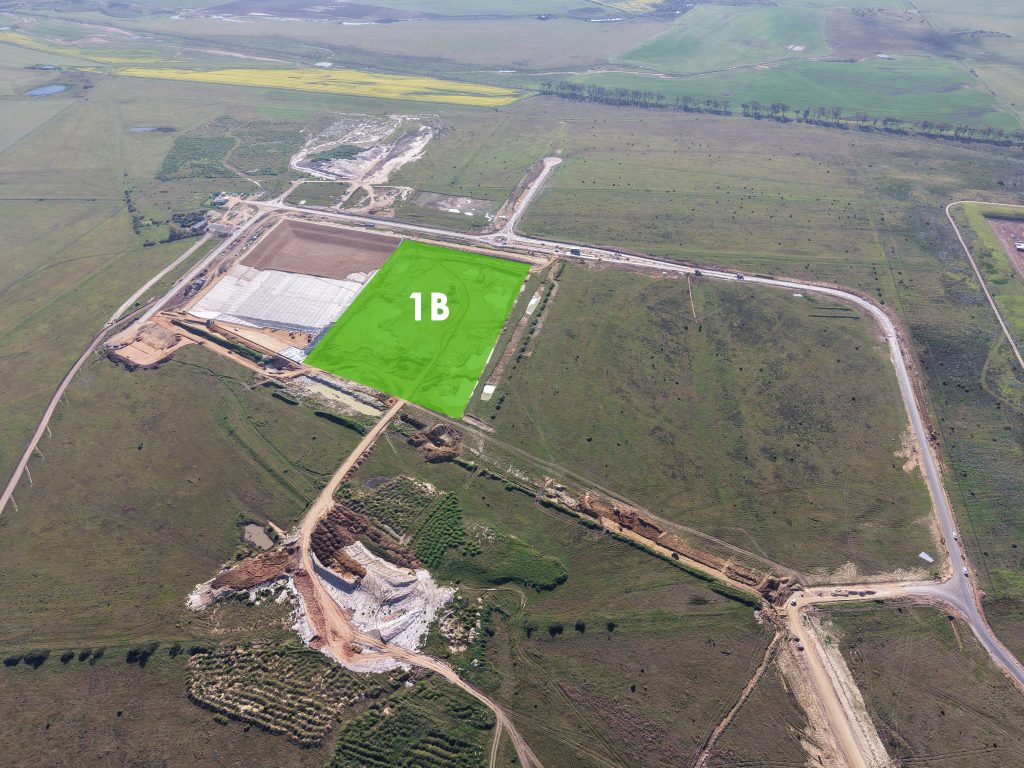
Garden Route District Municipality (GRDM) is in the process of initiating the Supply Chain Management processes to appoint new consulting engineers for the construction of Cell 1B as part of the Garden Route Regional Landfill Facility of which construction works are underway in Mossel Bay. Cell 1B will be close to 1,5 times the size of Cell 1A currently being constructed.
Johan Gie, the Project Manager of the Regional Facility, said: “Once the consulting engineers have been appointed, tender documentation will be drafted and advertised for the appointment of a new contractor to construct Cell 1B”. Cell 1B will cover an area of approximately 59 784m² and will provide approximately 902 852m³ of landfill airspace.
“This will create additional airspace for approximately 5 – 6 years, depending on the waste diversion efforts by the participating municipalities” Gie added.
This facility will be utilised for municipal solid waste (black bags) disposed by the participating municipalities. Cells 1A & 1B are both Class B domestic waste cells designed for municipal solid waste disposal. Class B cells can also accommodate the disposal of asbestos.
Why a new tender for 1B is advertised?
Considering the various delays in implementing the project and the imminent closure of the PetroSA landfill site, the GRDM opted to appoint a contractor to complete only Phase 1 of the project, which are is the construction of the minimum infrastructure required to commence with the operations, in order to ensure that waste disposal operations can commence as soon as possible.
Gie further explained: “Considering the performance of the current contractor, it would have been beneficial to expand the contract to include the construction of Cell 1B; however, the Municipal Finance Management Act and Supply Chain Management Regulations do not allow for contract expansions of this nature”.
“The GRDM will therefore proceed with the competitive bidding processes for the appointment of a new consulting engineer and a new contractor for the construction of Cell 1B.”
The procurement process will take the form of a normal tender process whereby specifications will be presented to the Bid Specification Committee for approval prior to advertisement. The submitted tenders then undergo technical evaluation before serving at the Bid Evaluation Committee for further evaluation and recommendation. Thereafter it will serve at the Bid Adjudication Committee for approval thereof.
The tender process for the appointment of a contractor can only commence once the appointment of consulting engineers has been concluded, surveys done, and tender documents drafted. Therefore, Gie further explained that stipulating any dates at this stage would be premature.
Caption: Cell 1B will be close to 1,5 times the size of Cell 1A currently being constructed.
Media Release: Garden Route District Municipality invites public comment on new Municipal Health By-law
For immediate release 02 September 2026
The Garden Route District Municipality (GRDM) will publish its updated Municipal Health By-law for public comment, following approval by Council on 31 August 2026 to advertise the draft document for a 30-day period.
The By-law, which regulates municipal health services across the district, is being updated for the first time since 2018 to bring it in line with changes to the National Norms and Standards for Environmental Health.
It covers key health functions including water quality monitoring, food control, waste management, health surveillance of premises, communicable disease control, vector control, environmental pollution control, disposal of the dead, and chemical safety.
The draft by-law will be published in the Provincial Government Gazette and local media for a 30-day comment period.
The clear objective of this by-law, as adopted by Council, is to regulate matters within the municipality’s powers. “Activities that can create a risk to people’s health or create a public-health nuisance may be regulated. The By-law sets the rules for protecting public health in our communities,’ said Johan Compion, Senior Manager: Municipal Health, Solid Waste Management & Air Quality Control at GRDM.
Residents across the district’s seven local municipalities namely George, Oudtshoorn, Kannaland, Hessequa, Mossel Bay, Knysna and Bitou, will also have the opportunity to form part of the public participation sessions held in towns throughout the district from 8 to 30 September 2026.
“Public participation is a vital part of this process. This by-law exists to protect the health and wellbeing of every resident in the Garden Route district, and we want communities to make their contributions before it is finalised,” said Compion.
The By-Law is still a draft and comments from the public will contribute to a final document that aim to:
Protect public health;
Promote safe business practices;
Prevent environmental health risks;
Ensure compliance with national standards;
Improve quality of life; and
Clarify responsibilities of owners and occupiers.
Residents and stakeholders are encouraged to review the draft by-law and submit comments during the consultation period.
The due date for comments is 2 November 2026, as public participation helps ensure that the final by-law reflects the needs and realities of our communities. All consultation sessions above will start at 09h00 at the respective venues and dates.
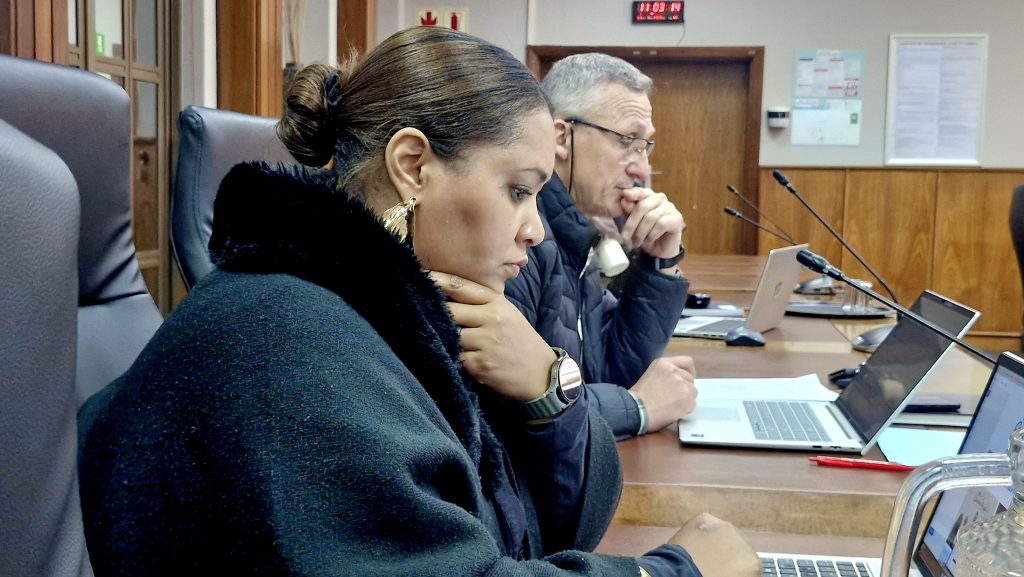
Caption:GRDM IDP Manager, Mercy James, and Senior Manager: Municipal Health, Solid Waste Management & Air Quality Control at GRDM, Johan Compion, during the council meeting.
PUBLIC PARTICIPATION ON DRAFT MUNICIPAL HEALTH BY-LAW (2026)
Notice Number: 81/2026
Notice is hereby given in terms of Section 156(2) of the Constitution of the Republic of South Africa 1996, that the draft Municipal Health by-law was approved on 31 August 2026, and will be published for public participation in the Garden Route District Municipality (GRDM) area of jurisdiction.
The above-mentioned document, together with the specified dates and venues for public participation, is available on the GRDM’s website at www.gardenroute.gov.za
The due date for comments is 2 November 2026. Comments to Senior Manager: Municipal Health, Solid Waste Management and Air Quality Control, Mr. Johan Compion at JCompion@gardenroute.gov.za
N Raisa-Mlandu Acting Municipal Manager 54 York Street P O Box 12 GEORGE 6530
Garden Route District Health Council relaunched to strengthen community voice in healthcare planning
For immediate release 27 August 2026
The Garden Route District Municipality (GRDM) and the Western Cape Provincial (WCG) Department of Health and Wellness convened the first sitting of the reconstituted Garden Route District Health Council today. This platform affirms the GRDM Council’s mandate to give municipalities and communities a direct voice in shaping health service delivery across the district.
The sitting was chaired by GRDM Executive Mayor Marais Kruger, as the newly elected District Health Council chairperson, along with the Mayoral Committee Members for Health from George and Bitou Municipalities, Hessequa Municipality’s Deputy Executive Mayor, Cllr Gerald Boezak, and other local municipality councillors and officials from across the district.
Opening the discussion, Mayor Kruger reminded members of the council’s role in providing leadership and direction on health matters, and of the collective responsibility shared by municipalities and the Department in serving communities.
“This platform exists so that the voices of our communities are heard when decisions are made. It is our collective responsibility to provide leadership and direction, and to ensure no community is left behind,” said Mayor Kruger.
Director of the Garden Route and Central Karoo Health Districts, Helize Le Roux, delivered an insightful presentation on behalf of the Department, highlighting significant infrastructure gains across the district.
Completed projects include the Hornlee, Ladismith, and maintenance work at Groot Brak River Clinics, along with upgrades to the Acute Psychiatric Unit at Oudtshoorn.
“Work is currently underway on maintenance at Mossel Bay, New Horizon and Pacaltsdorp Clinics, as well as upgrades at George and Knysna Hospitals”, said Le Roux.
The council also discussed the district’s preparedness for disaster and disease outbreaks, with remedial and contingency plans in place to support rapid response, and the ongoing containment of communicable diseases to ensure communities accessing the district’s healthcare services continue to receive proper care.
Members agreed that rural communities must remain a priority and not be left behind as services are expanded.
Representing Bitou Municipality’s health portfolio, Cllr Annelise Olivier, raised the positive impact of the Emergency Medical Services (EMS) station in KwaNokuthula township, in Plettenberg Bay, and the extension of weekend clinic operating hours, both of which are easing pressure on emergency services and greatly assisting the community.
“The EMS station in KwaNokuthula and our extended weekend hours have made a real difference for our residents. This is what it looks like when the district and local government work together for our people,” said Councillor Olivier.
George Municipality’s MMC for Health, Cllr Melvin Roelfse, highlighted the growing population pressure in Pacaltsdorp, noting that a rising number of retirees settling in the area without medical aid are placing additional reliance on public healthcare services.
The council has resolved to advocate collectively for continued investment in healthcare infrastructure and services, and committed to engaging the National Department of Health, the WCG Premier’s Office, and the WCG Department of Infrastructure on addressing outstanding priorities in the district.
The Garden Route District Health Council, established in terms of the Western Cape Health Facility Boards and Health Councils Act, is required to meet quarterly. The next sitting is expected before mid-December, pending the outcome of the local government elections.
Caption: GRDM political leadership, delegates from the Garden Route and Central Karoo Health Districts, Western Cape Department of Health and Wellness, and local municipalities pictured after the first sitting of the reconstituted Garden Route District Health Council.
Media Release: R9 million to date for a Stronger, Faster, Better Prepared Hazmat and Flood Responses
For Immediate Release 24 August 2026
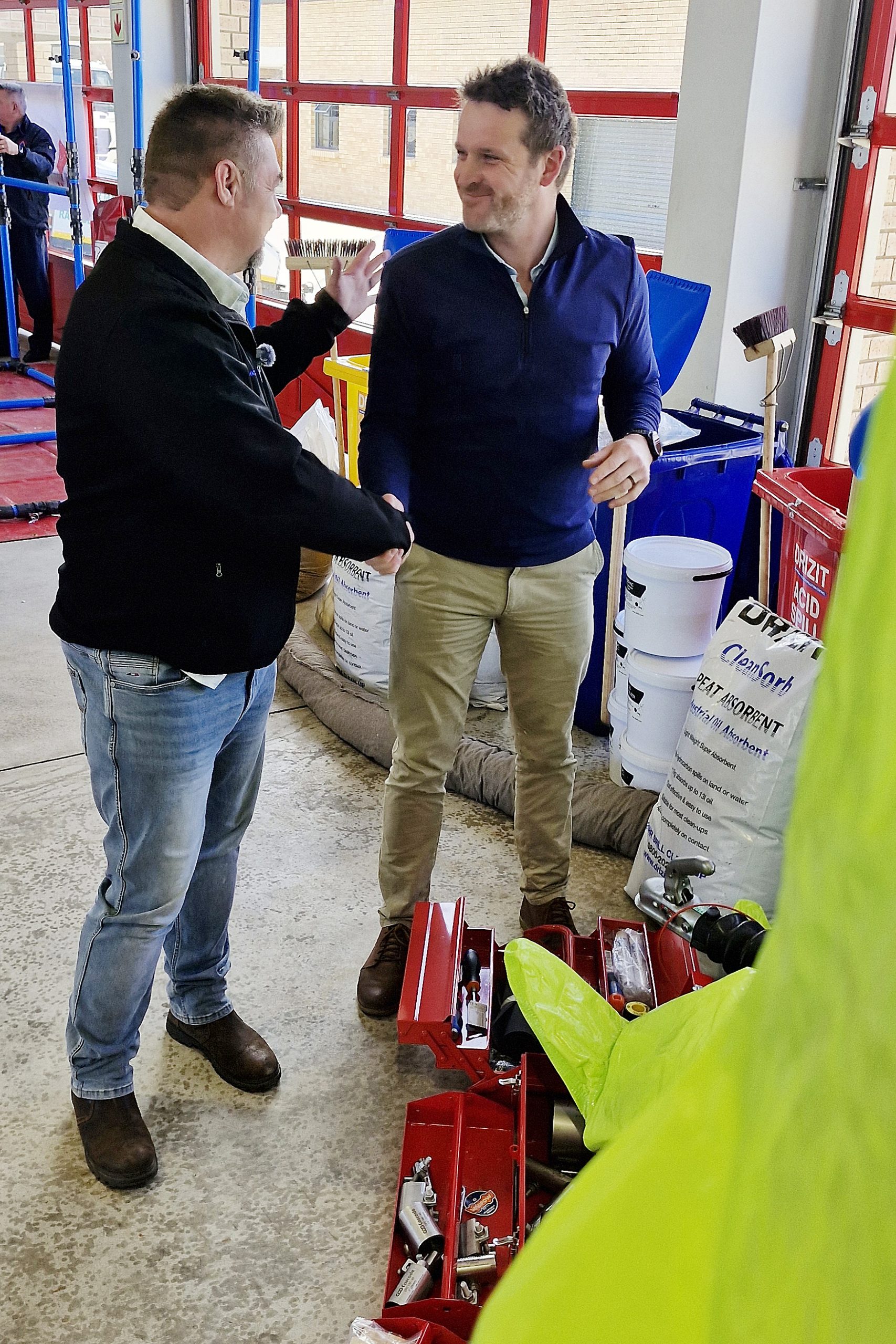
The Garden Route District Municipality’s (GRDM) Fire and Rescue Services reached another milestone today when the last of its Fire Service Capacity Grant for Hazardous Materials equipment worth R1.5 million was handed over to the GRDM by the Western Cape Government (WCG) Department of Local Government (DLG) earlier today. It was also shared by Disaster Management that the construction a R7,5 million flood response base, phase one, remains on track. The grant, which is geared to help Local Government protect communities, is administered WCG DLG.
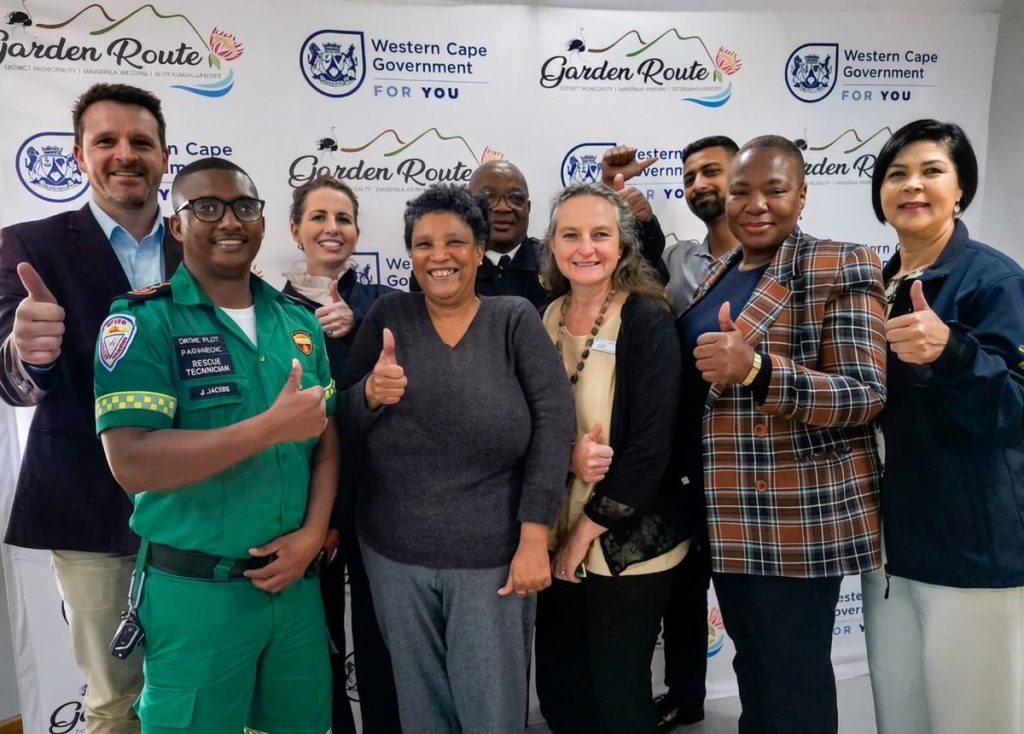
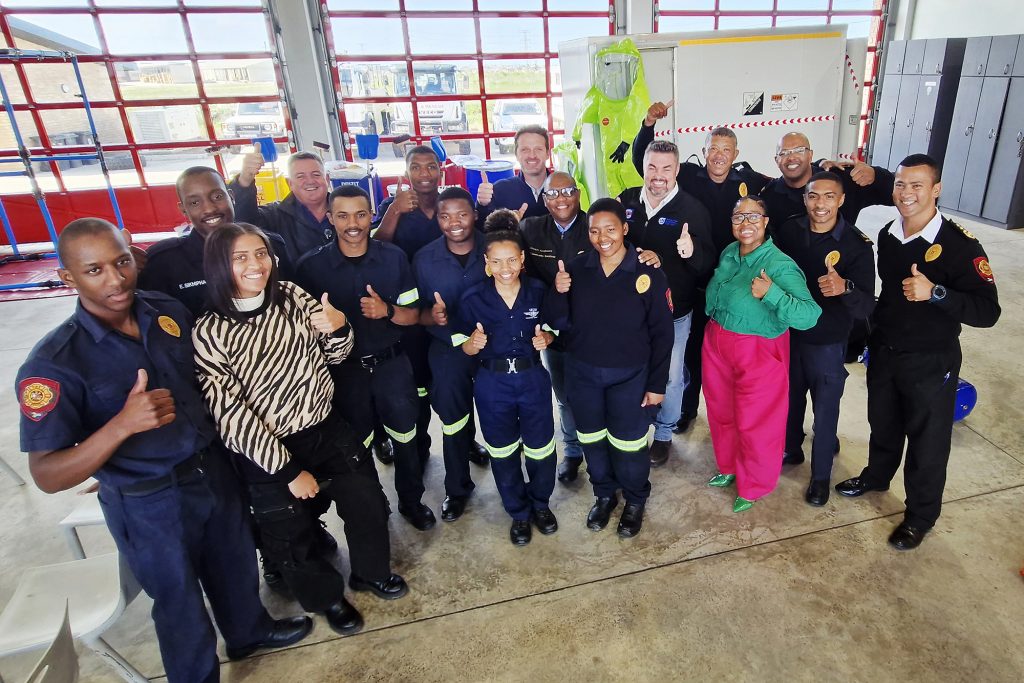
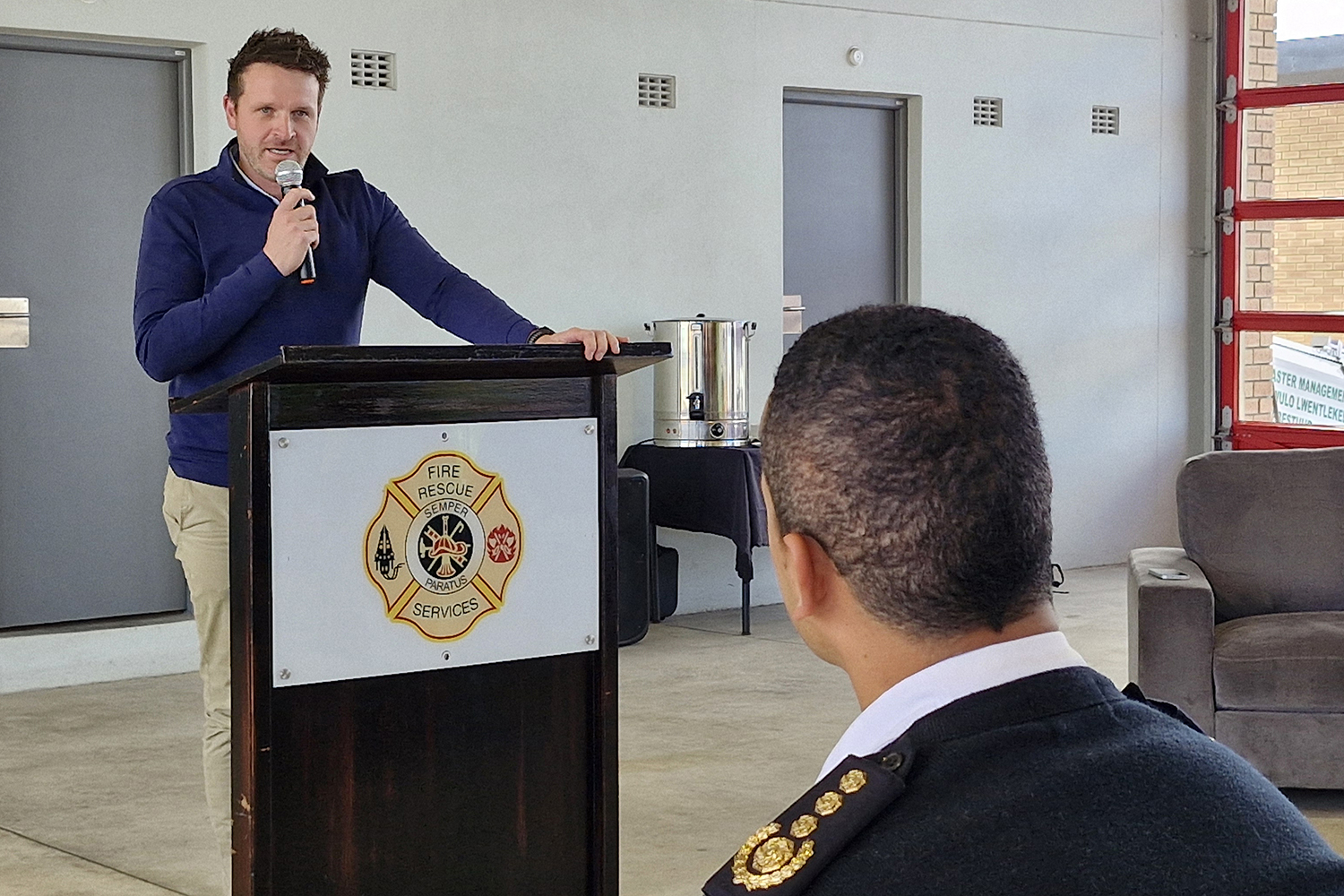
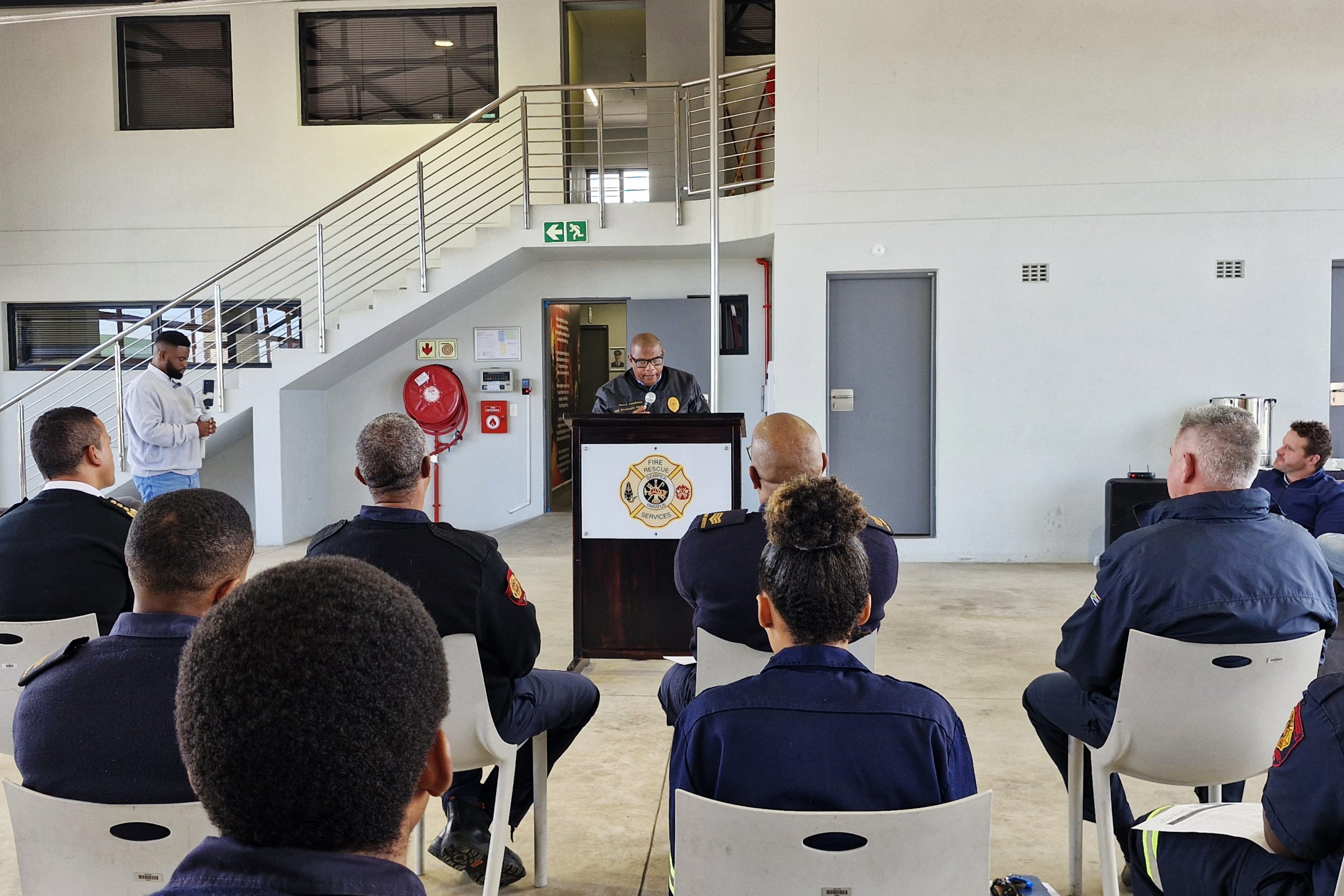
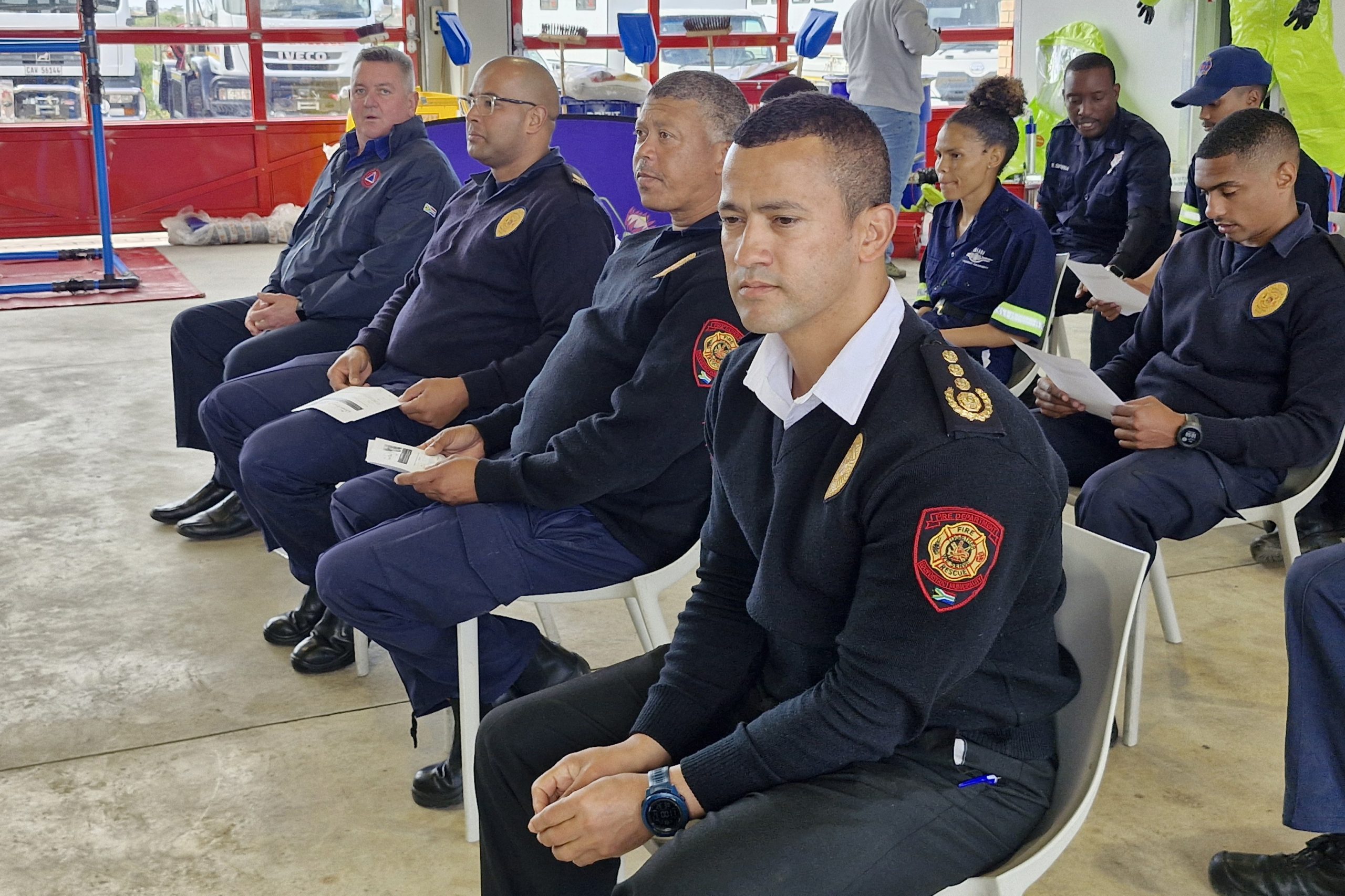
The stakeholders present during the handover ceremony earlier today, 24 August 2026.
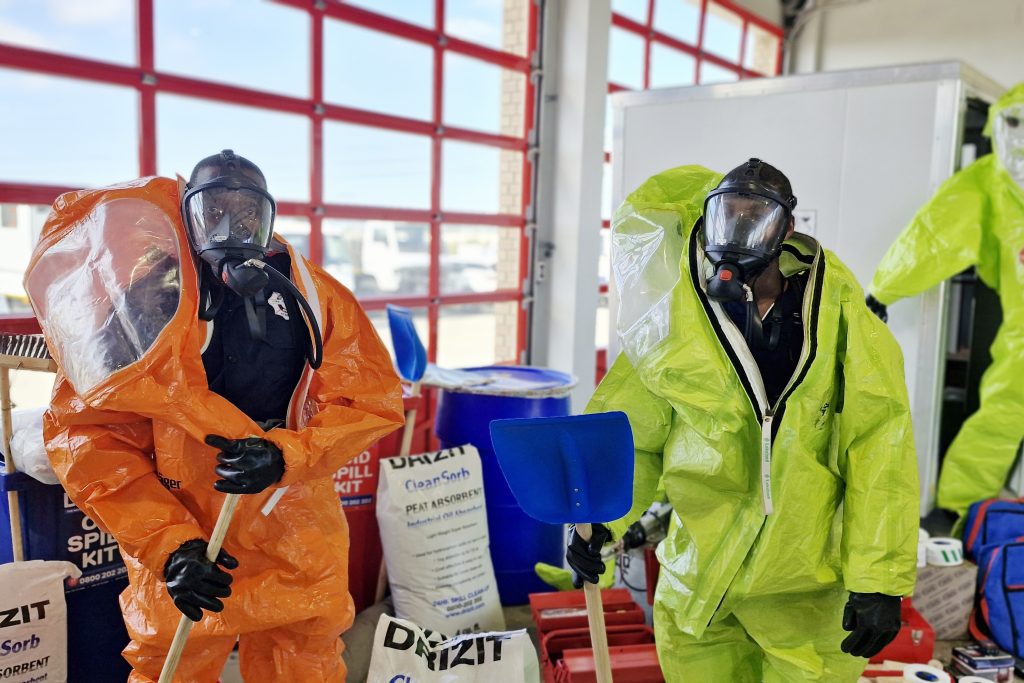
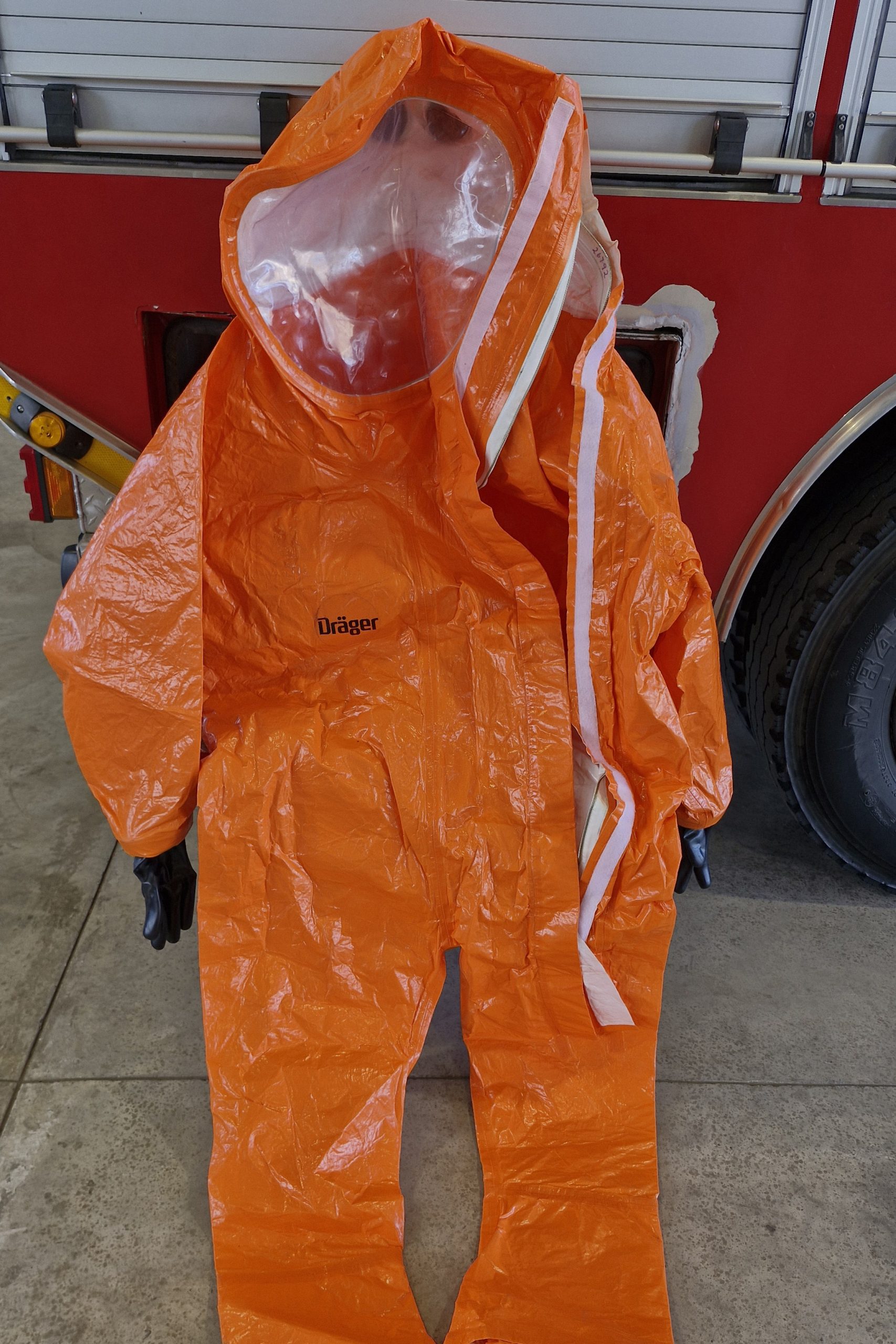
Learner Firefighters Ebenezer Shikapa (left) and Rodwin Quiton Van Wyk wearing Class A suits – fully encapsulated suits with breathing apparatuses.
Deon Stoffels, GRDM Fire Chief said that “through this funding, mobile response trailers have already been strategically positioned in Knysna, Riversdale, and the Kannaland/Oudtshoorn area to facilitate rapid deployment and effective initial incident management”.
“Our teams are now more than ever before, equipped with the necessary specialised resources, remain in a constant state of preparedness along key transportation corridors within the Western Cape”.
Firefighters often face dangerous incidents, and this grant helps us to work safely and effectively,” he said.
Hazmat-related incidents often take place along Garden Route transportation corridors include the likes of the N2, N9, R62 and associated road networks, as well as challenging areas such as the Swartberg Pass.
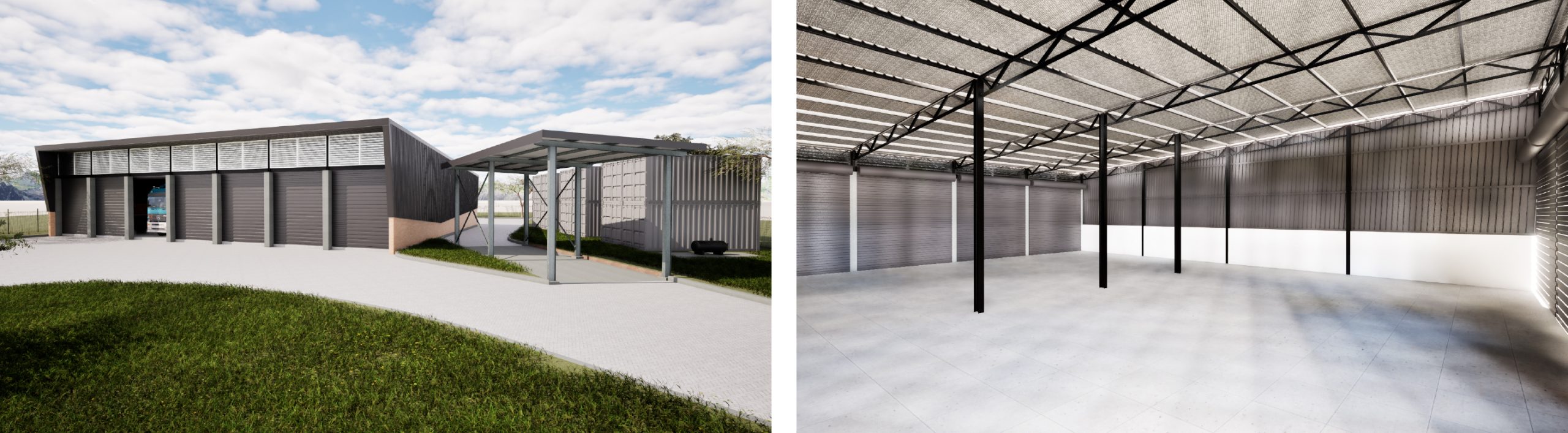
Commenting on the flood-response base, Gerhard Otto, GRDM Manager: Disaster Management, said the facility would provide secure storage for flood-response equipment, water tankers, mobile backup generators and firefighting vehicles. It will also provide a dedicated space for training, including practical rope-rescue techniques.
Phase one, funded out of the same grant as the hazmat materials, includes the construction of the foundation and roof structure. Phases two and three, for which funding would need to be sourced, will involve enclosing the facility, installing electricity and completing the flooring.
During the ceremony today, Mayor Marais Kruger pointed to the handover as being more than an investment in equipment. “It is an investment in the people who protect our communities every day.”
“The true value of this investment will be measured in lives saved, communities protected, and disasters mitigated,” said Kruger.
Mayor Marais Kruger says the true value of this investment will be measured in lives saved, communities protected, and disasters mitigated.
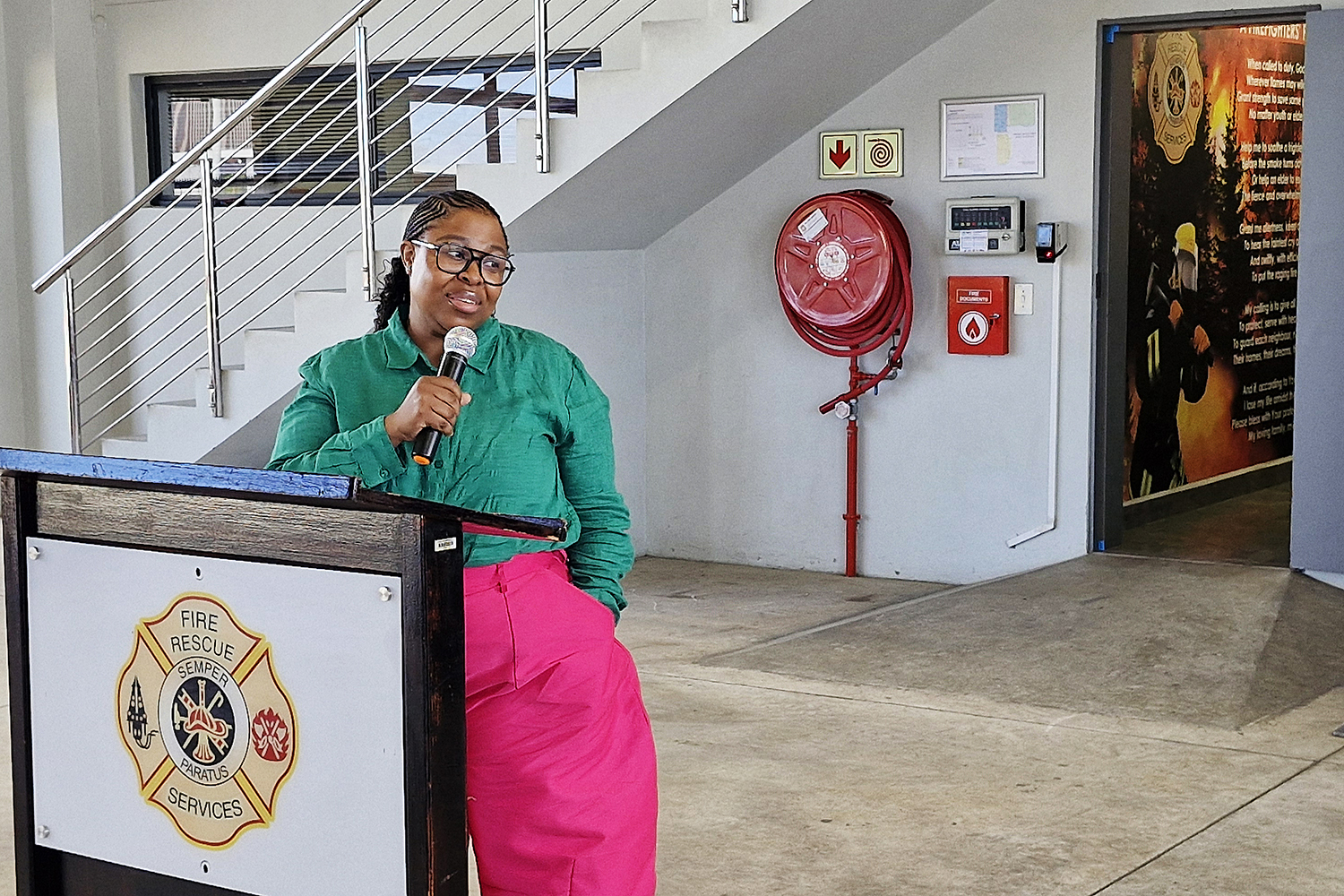
Nthabeleng Raisa-Mlandu, Acting Municipal Manager says the scale and complexity of modern disasters require specialised equipment, advanced tech and highly trained personnel, to name a few.
Speaking on the strategic nature of Firefighting and Disaster Management, the GRDM Acting Municipal Manager, Nthabeleng Raisa-Mlandu (also the HOD for Community Services), correctly said that emergency services cannot be sustained through local resources alone.
“The scale and complexity of modern disasters require specialised equipment, advanced tech and highly trained personnel, to name a few. Strategic support is therefore, for this reason, required from Provincial Government to broaden our skills, occupational health, safety and ensure modern equipment and organisational support is a given”, she said.
WHAT IS INCLUDED IN THE HAZARDOUS MATERIALS GRANT HANDOVER?
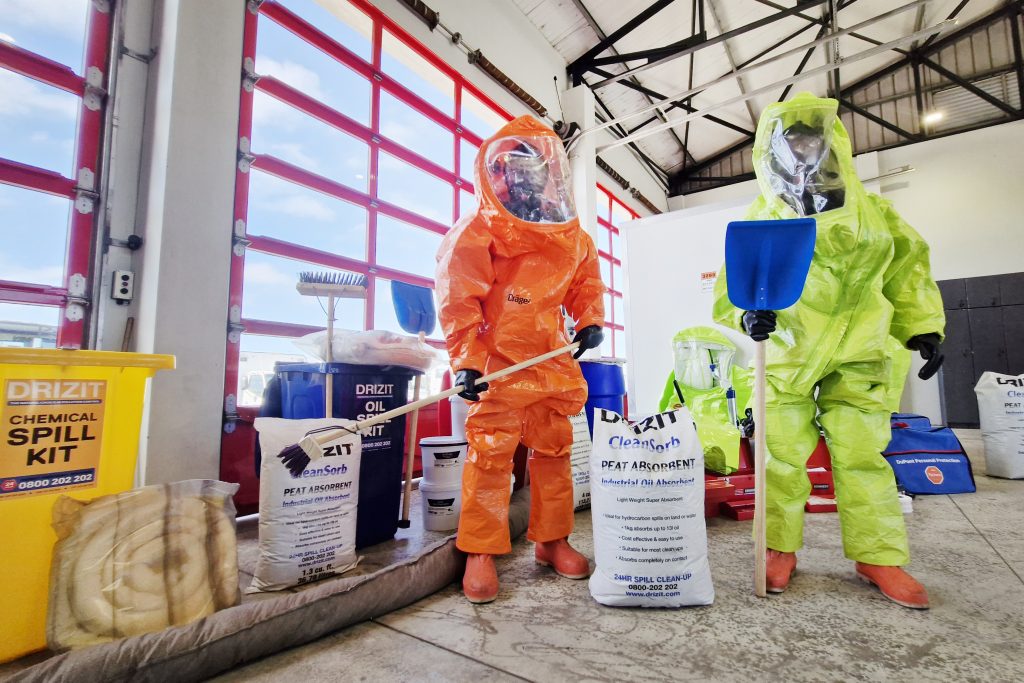
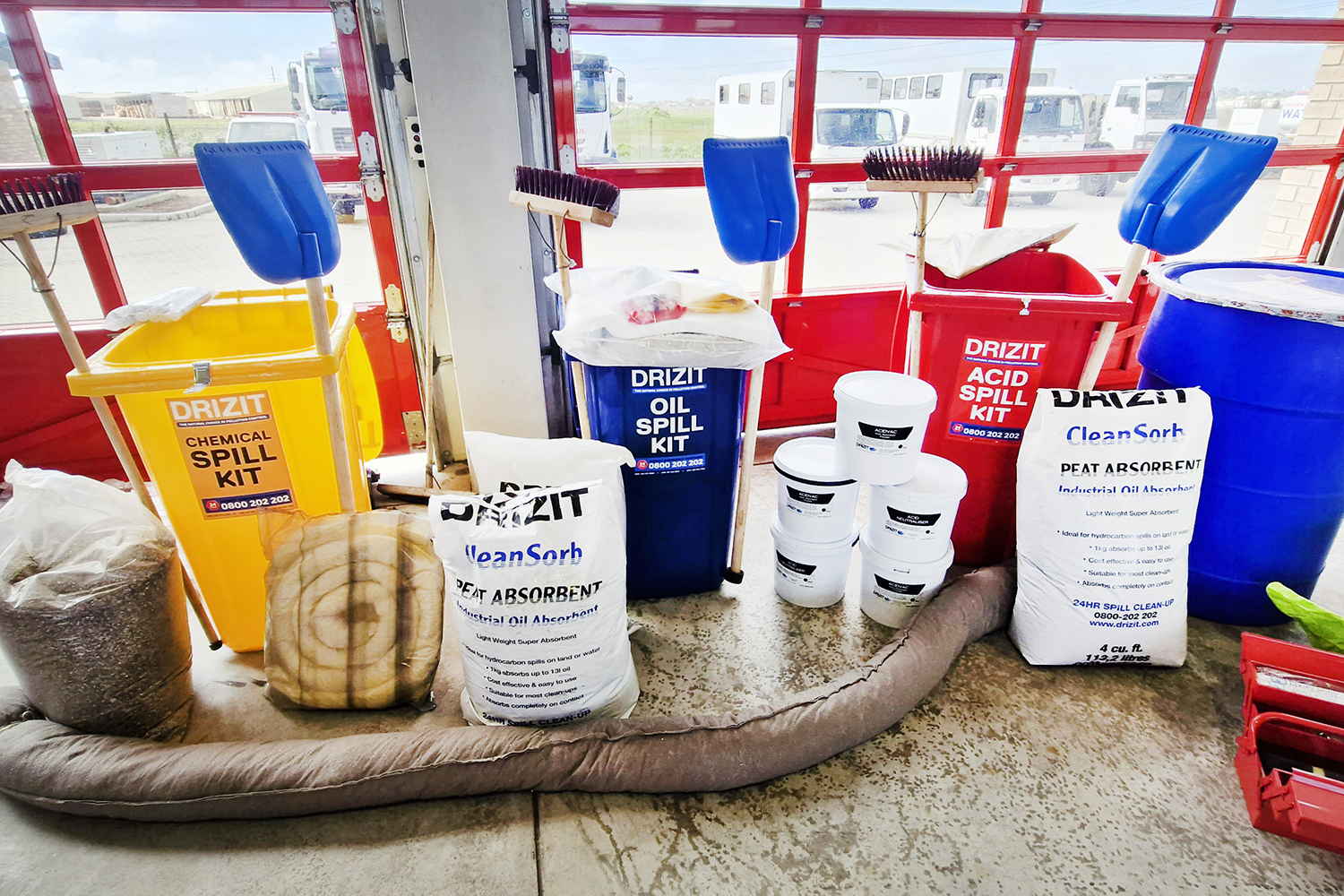
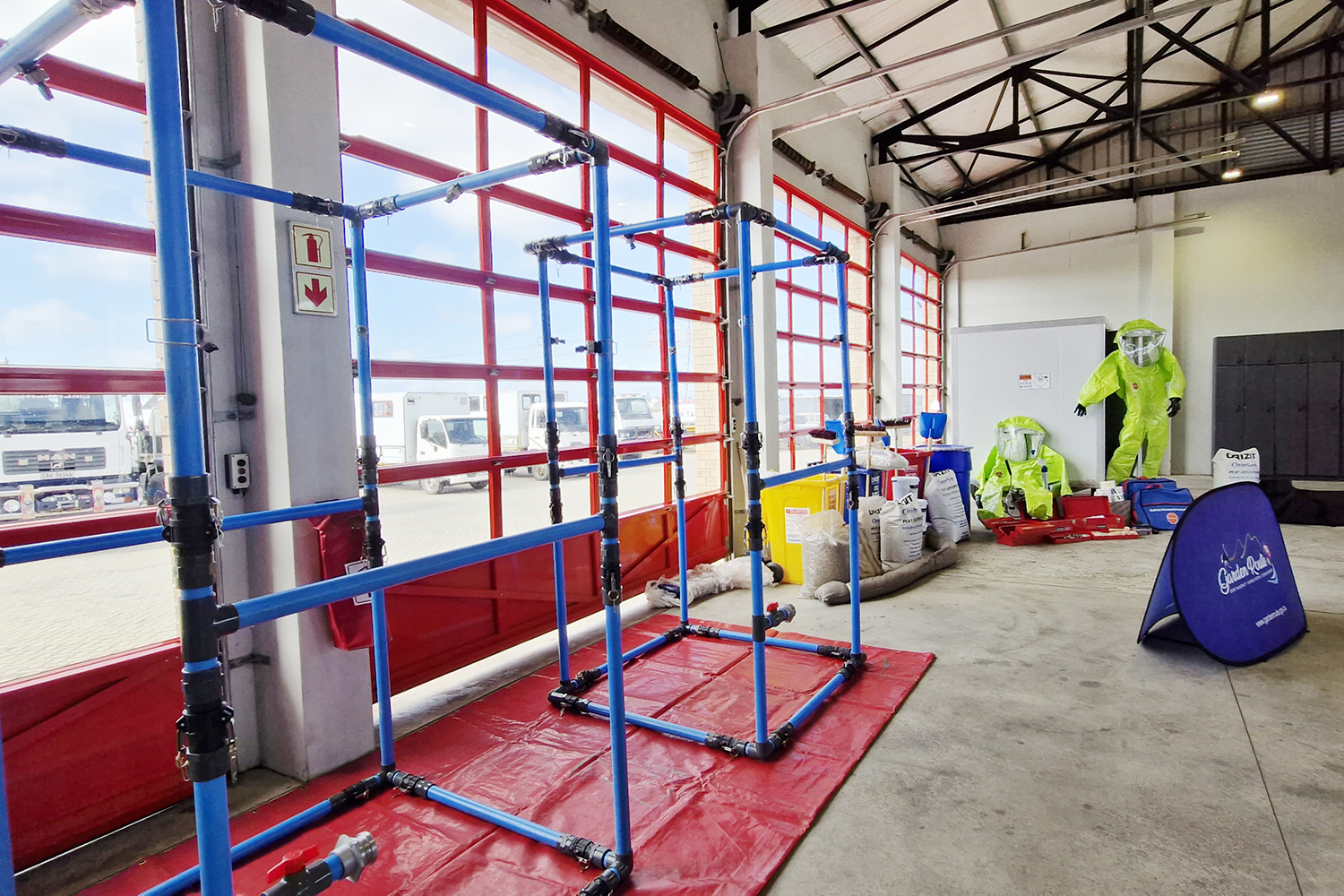
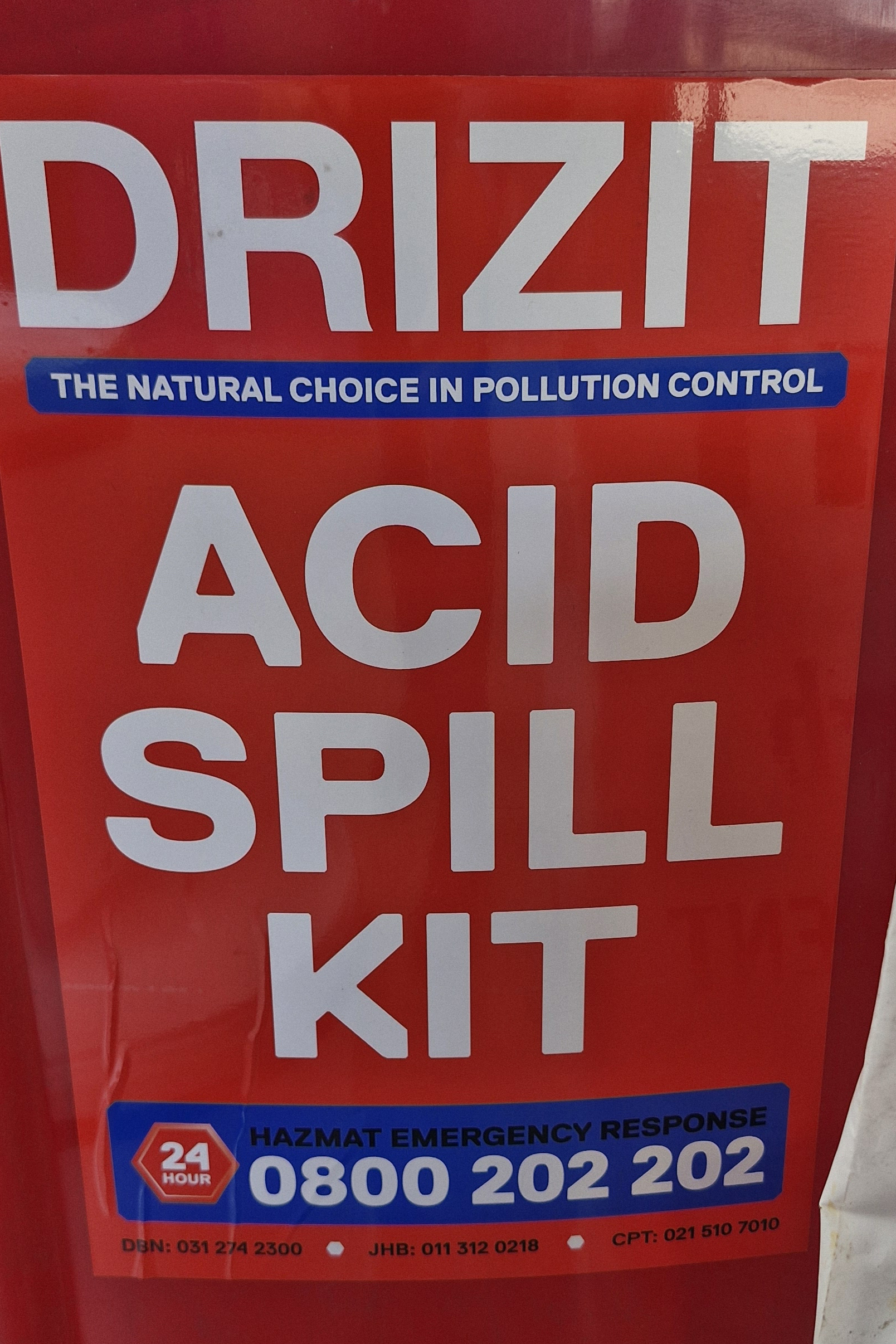
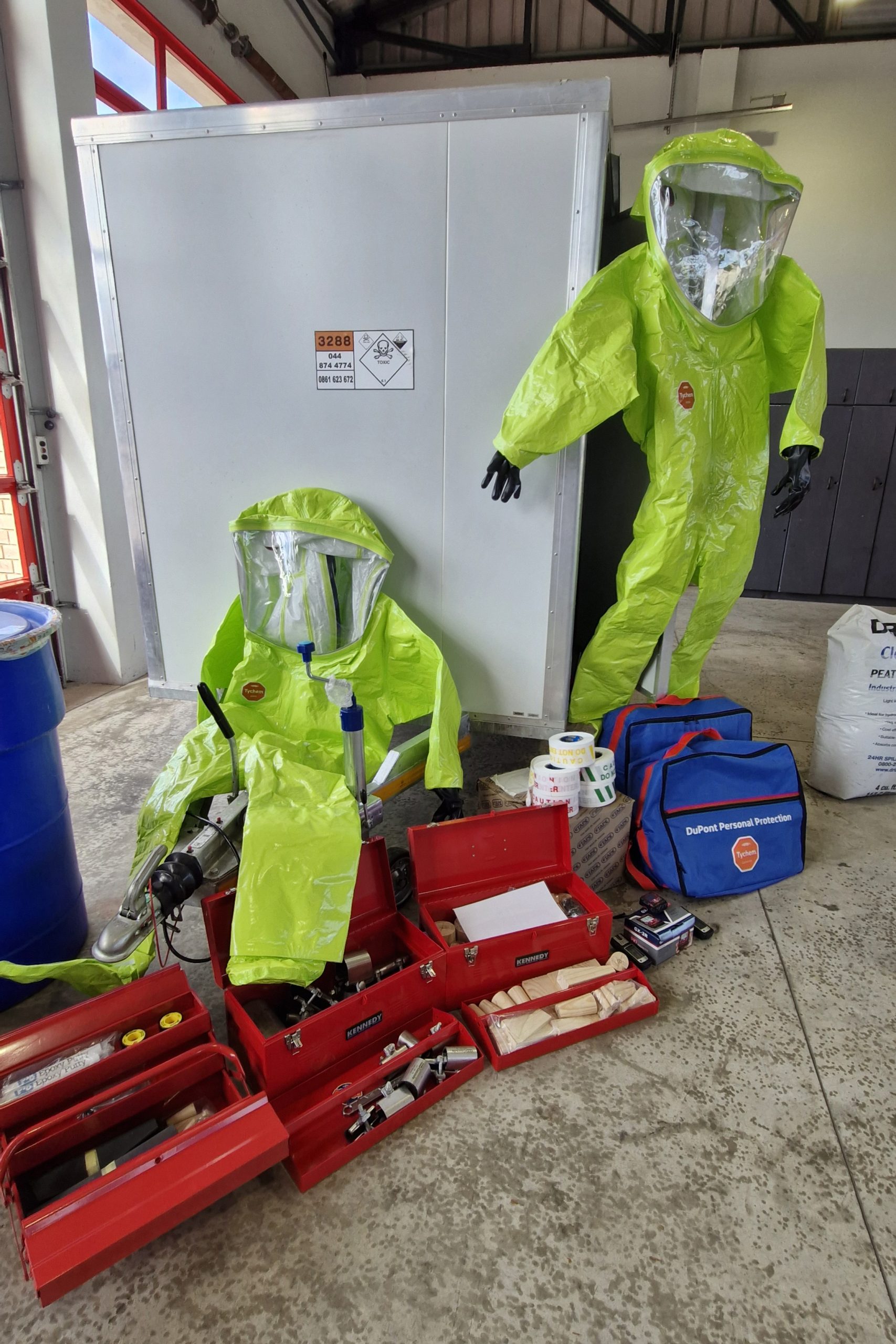
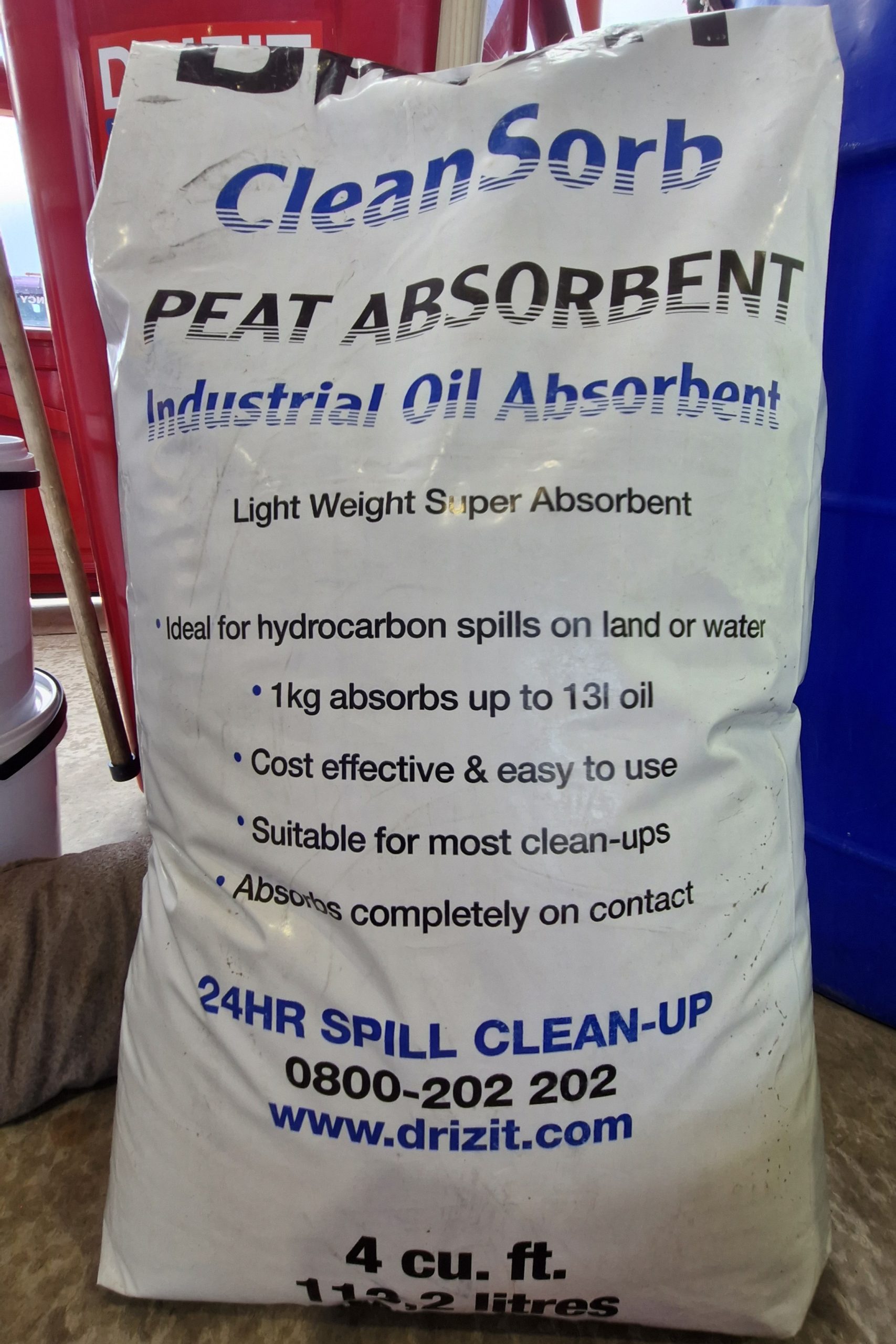
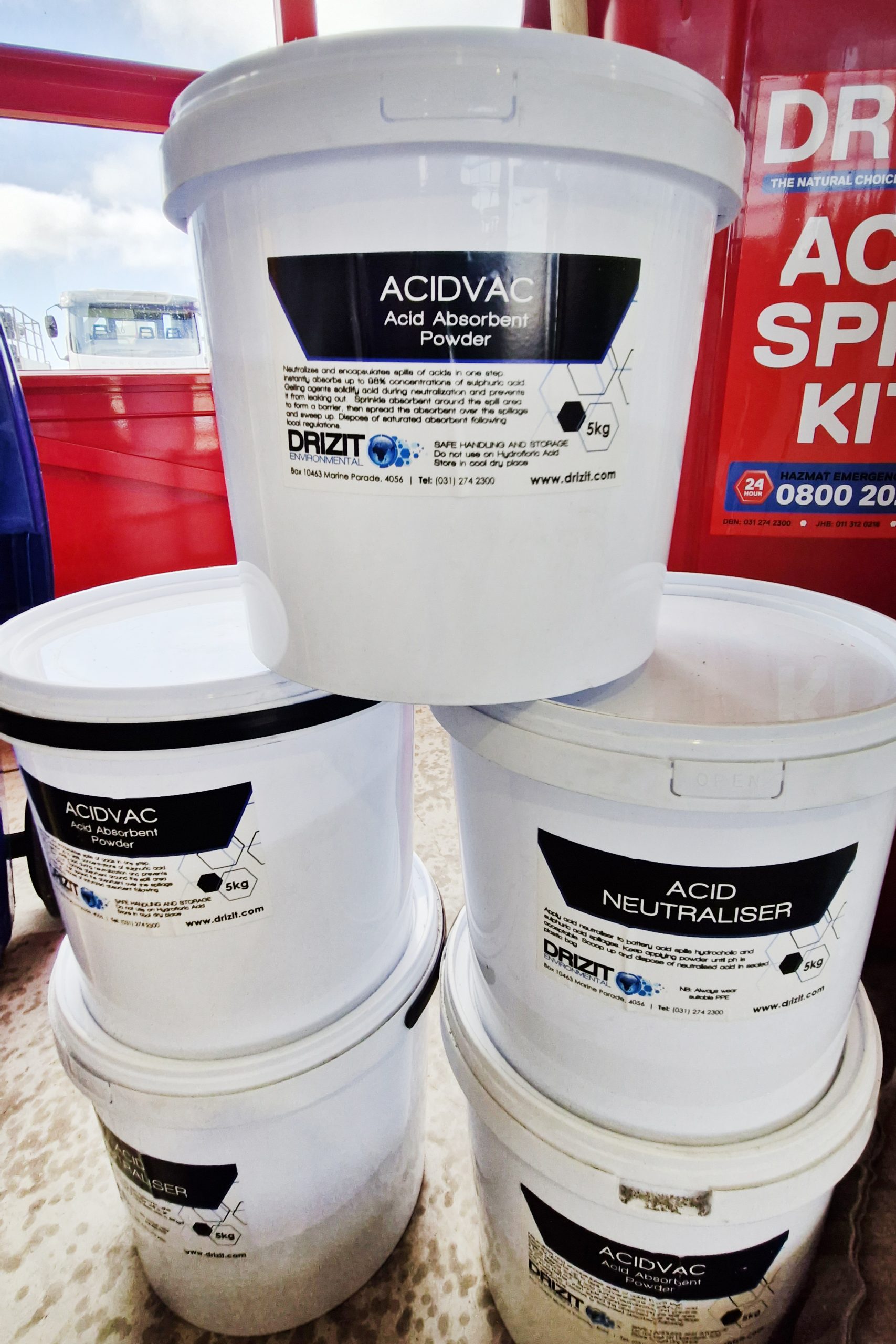
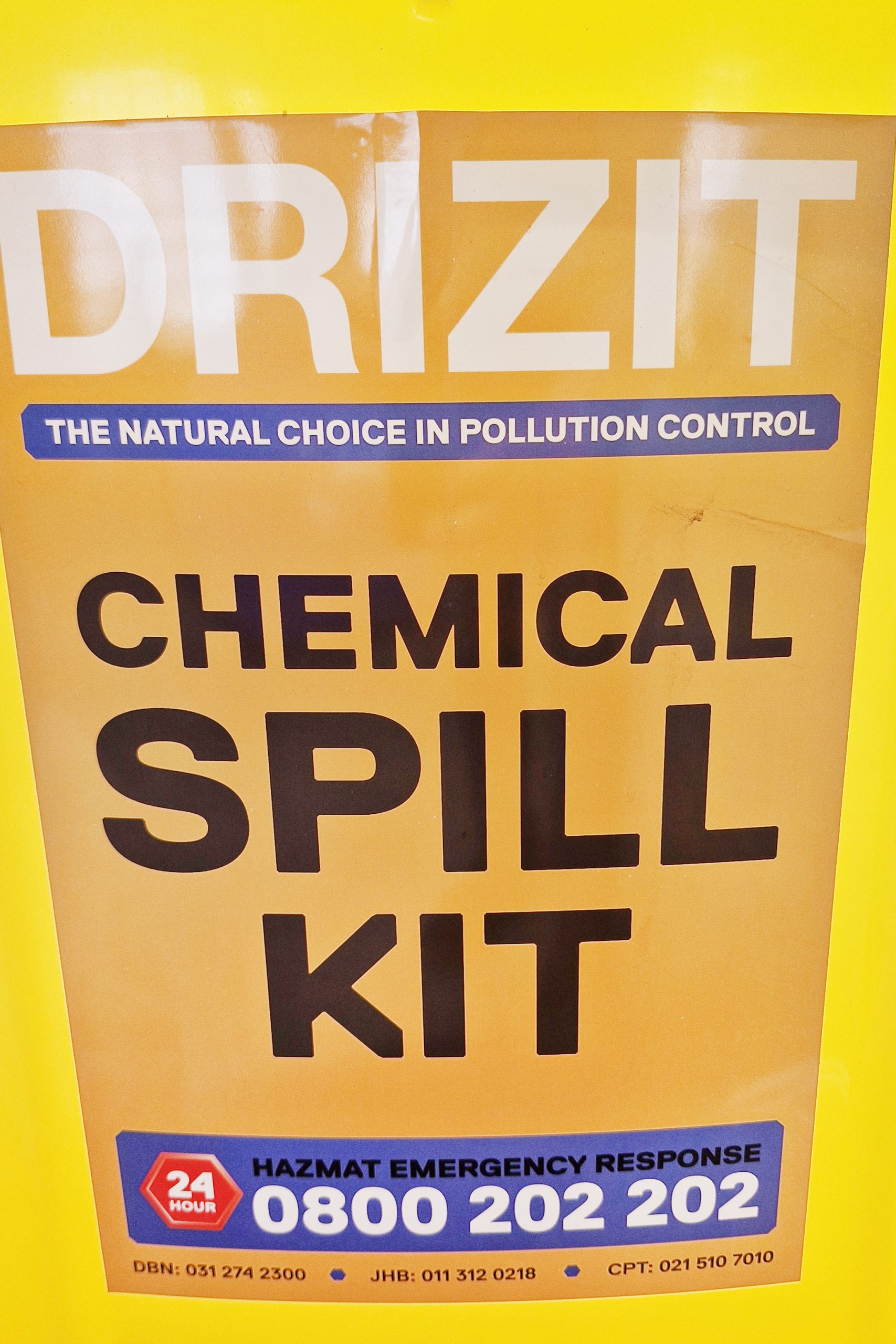
Trailer, Class A, B, C Suits, Nitrile Rubber Hazmat Gloves, Portable Decon Showers, Decon Pools, Hazmat Spill kits, Hazmat absorbents, Repair Putty 12/Box, 210L Large Mouth Over drum, Hazmat Kit – Drum & Pinhole Plugging Kit, Hazmat Kit – Wooden Cone & Wedge Kit, Hazmat Kit – External Pipe Sealing Kit, Hazmat I.D. Kit, 4 stage Gas detector and a mini compressor.
Various hazardous response unit materials now available to firefighters.
In the foreground are two portable Decon showers to be used after firefighters performed their duties at an incident.
WHAT ARE THE SPECIFICATIONS OF THE FLOOD RESPONSE BASE
Size of 700 m², 14 parking bays (bays could accommodate 22m long trailers), 0.50mm thick aluminium-zinc or Chroma deck roof sheeting/ clip lock to prevent rust, steel roof sheeting in continuous lengths, chain operated, horizontal slatted roller shutter doors on northern and southern sides of the building.
A visual representation of the flood response base which will also be situated on the same property as the Garden Route Regional Fire Station in George.
INVESTMENTS SHAPE EACH FUTURE INCIDENT RESPONSE
Together, these investments reinforce our, and the provinces’ commitment to safeguarding lives, protecting infrastructure, and enhancing the readiness of emergency services throughout the Garden Route district. The event was attended by Assistant Director, Marthinus Rust assistent Director Fire and Rescue services Western Cape Disaster Management who made it clear that the Garden Route’s response is the Western Cape Provincial Government’s response – “I am not here for me, I am here for we”, synonymous with the Western Cape Government Slogan of “For you”. The “For You” communicates that we are citizen-centric and embrace doing everything we can for the people we serve.
Editor’s notes: Anton Bredell, Western Cape Minister of Local Government, Environmental Affairs and Development Planning previously said the following during a similar handover: “We are investing in preparedness, resilience and the ability of our emergency services to respond when communities need them most”.
The WCG DLG Fire Service Capacity Grant is an enabler of rapid response to chemical spills and hazardous material incidents; real-time safety monitoring of emergency response personnel; compliant on-site decontamination capabilities; mitigation of chemical Incidents; and operational readiness for incidents of any scale.
Feature image caption: Learner Firefighters Ebenezer Shikapa (left) and Rodwin Quoton Van Wyk wearing Class A suits – fully encapsulated suits with breathing apparatuses.
Media Release: Skills Mecca Indabas turn talk into action across the Garden Route
18 August 2026
The Garden Route Skills Mecca (GRSM), a skills development programme by the Garden Route District Municipality (GRDM), is enhancing economic inclusion through a series of Skills Development Indabas held across the region.
With this initiative, the GRSM is connecting all the seven local municipalities in the district, business, training providers, and residents to explore skills development, training opportunities and create pathways to employment, especially for the youth.
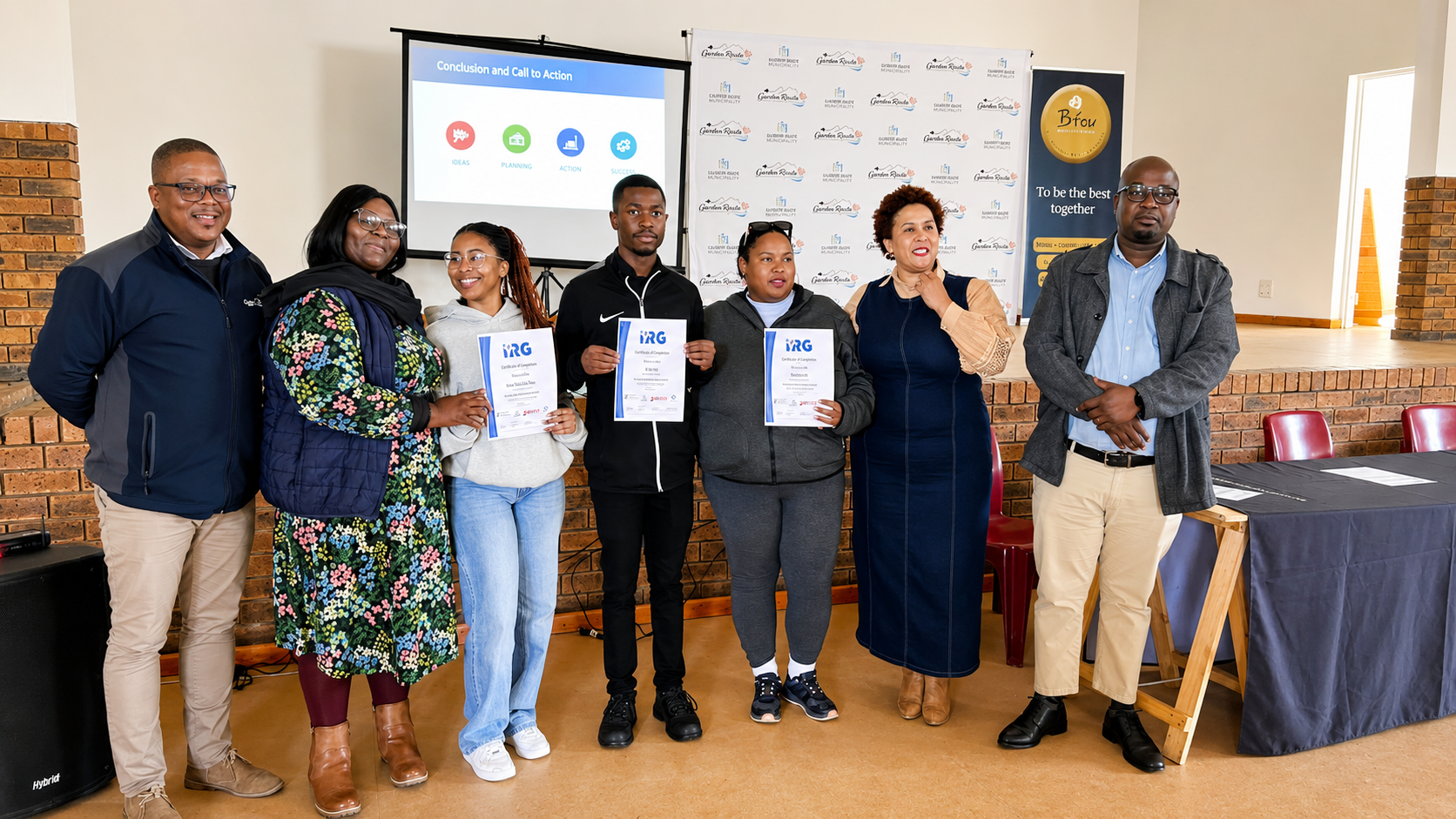
On 11 August 2026, in collaboration with the Bitou Local Municipality, the GRSM held another successful session in KwaNokuthula Community Hall in Plettenberg Bay, bringing together government departments, Sector Education and Training Authority (SETA), and various stakeholders. This was done to connect the community with opportunities that promote skills development, employment and economic participation.
Held biannually in all seven local municipal areas (Hessequa, Mossel Bay, George, Knysna, Bitou, Oudtshoorn and Kannaland), this year’s programme has been expanded to include unemployed youth, creating access to valuable information and opportunities that can help transform their futures.
GRDM Training Coordinator, Reginald Salmons said, “The Indabas form an important part of the GRSM’s commitment to ensuring that skills development responds directly to the needs of local communities and the regional economy”.
George kicked off the current round on 16 June with LevelUp, a partnership with SUFF Academy that helped Grade 12 learners from more than 10 schools navigate university applications, funding and career pathways.
Knysna’s Indaba on 24 July brought together stakeholders including the Small Enterprise Development and Finance Agency, the Knysna Business Chamber and Africa Skills Village. The area is now moving toward a Mini Skills Summit to tackle rural outreach and broader skills needs.
Mossel Bay’s engagement on 28 July led to plans for a local task team to organise a Job and Career Expo within two months, linking job-seekers directly to employers, SETAs and training providers.
Hessequa’s Indaba on 4 August surfaced a clear need for a School of Skills in the Hessequa/Kannaland area, backed by the Western Cape Provincial Department of Education.
Kannaland took its Indaba directly to Zoar on 5 August, reaching unemployed youth and agreeing to extend outreach to Van Wyksdorp, Calitzdorp and surrounding farming communities.
The Local Government Sector Education and Training Authority (LGSETA) Provincial Manager, Anneka Jacobs, commended the GRSM for its work by saying: “This approach will ensure that skills development information and opportunities reach communities that may otherwise experience barriers in accessing information and support”.
Salmons said that these indabas are not talk shops, but rather exists to produce tangible solutions to local challenges. “The communities are sharing their needs with us, and we’re connecting with partners to deliver it.”
The GRSM is taking the next leg of these indabas straight to Oudtshoorn at the Thusong Service Centre on 18 August 2026, and unemployed youth, businesses, training providers and community organisations are encouraged to attend and help shape the region’s skills agenda.
The GRSM encourages community members to use these engagements to obtain information about available opportunities, communicate their skills development needs and contribute to identifying practical solutions for their communities.
To learn more, visit skillsmecca.gardenroute.gov.za
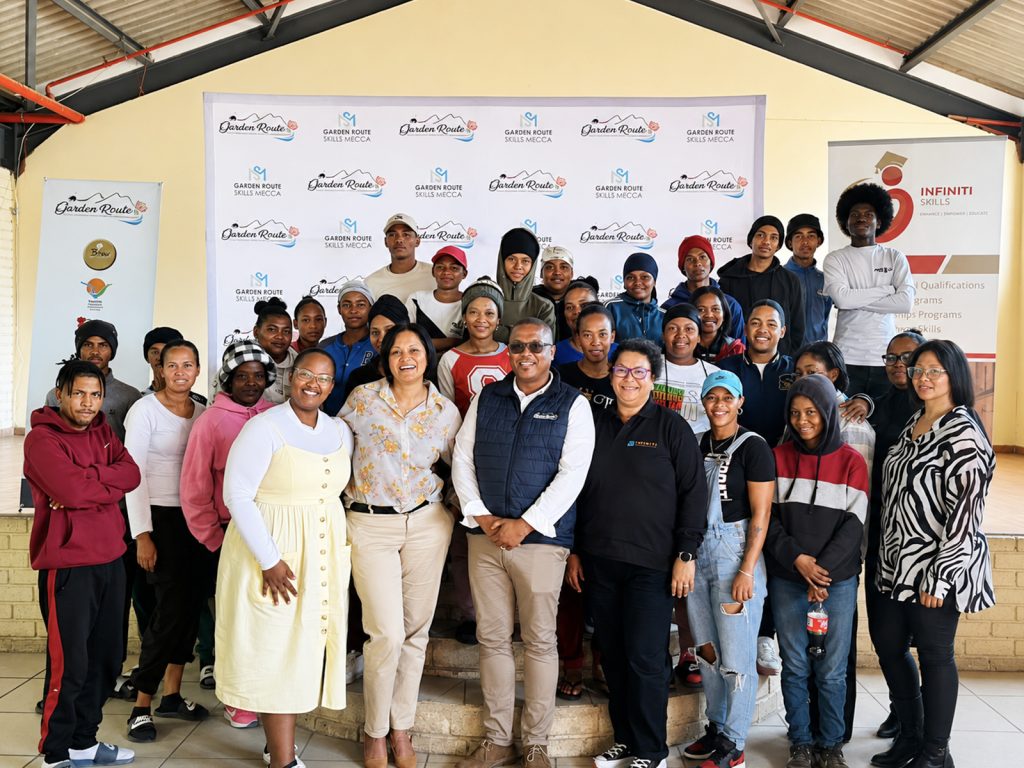
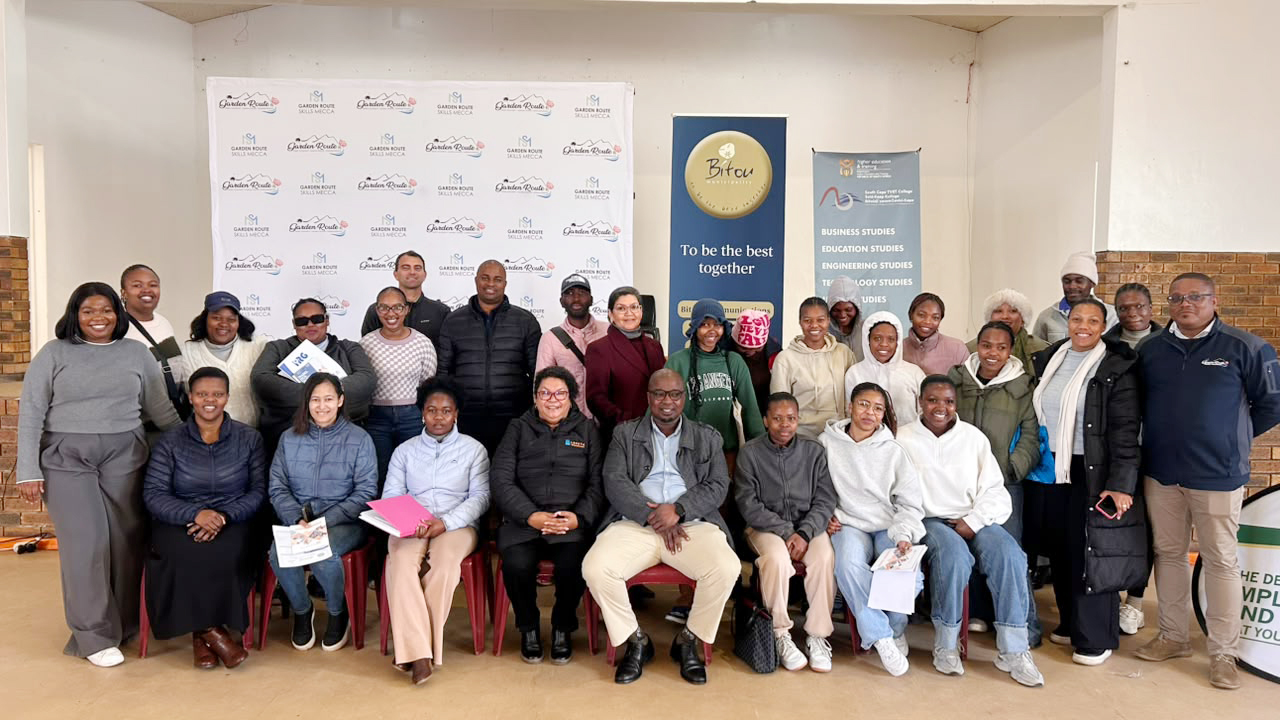
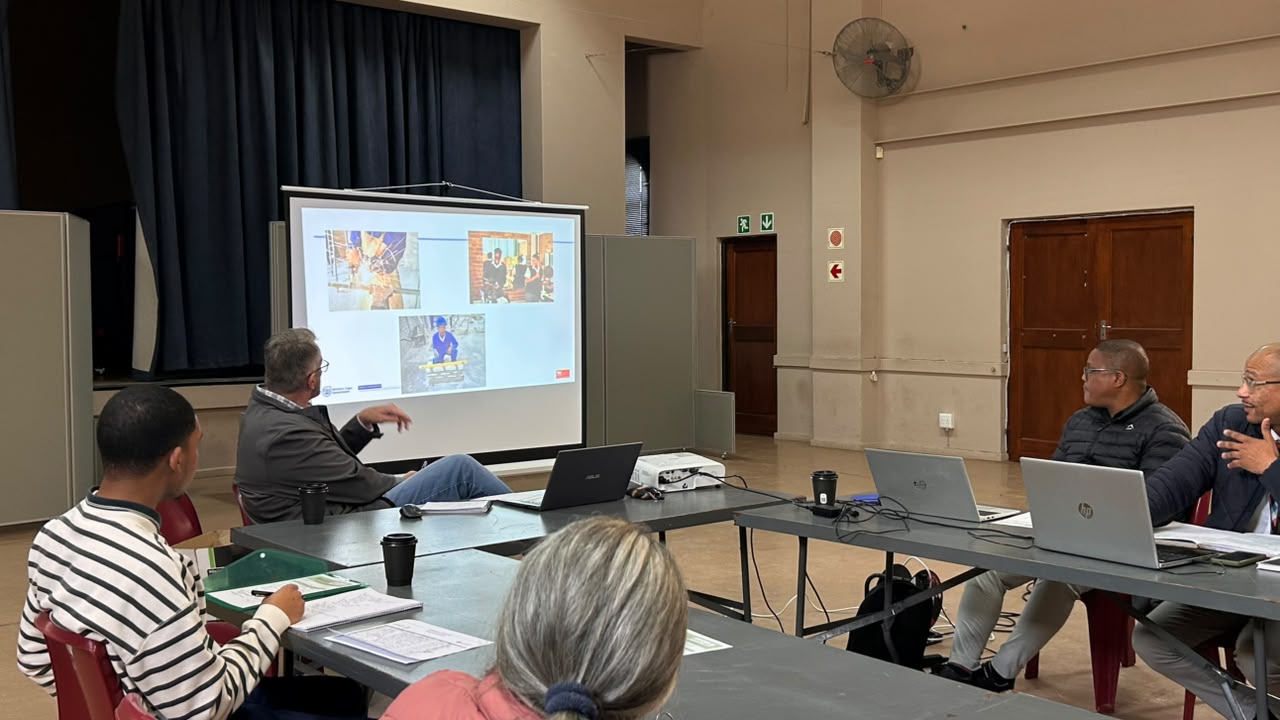
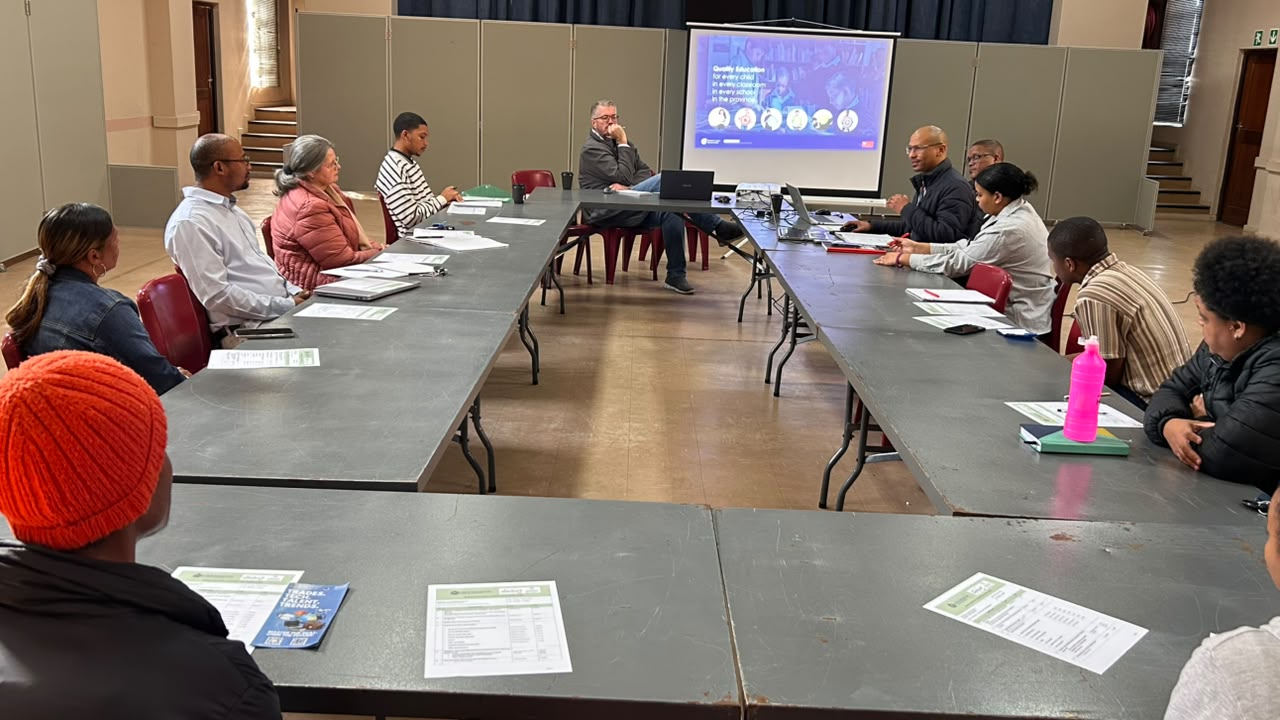
Caption: Skills Mecca Indaba sessions in Kannaland, Hessequa and Bitou Local Municipalities.
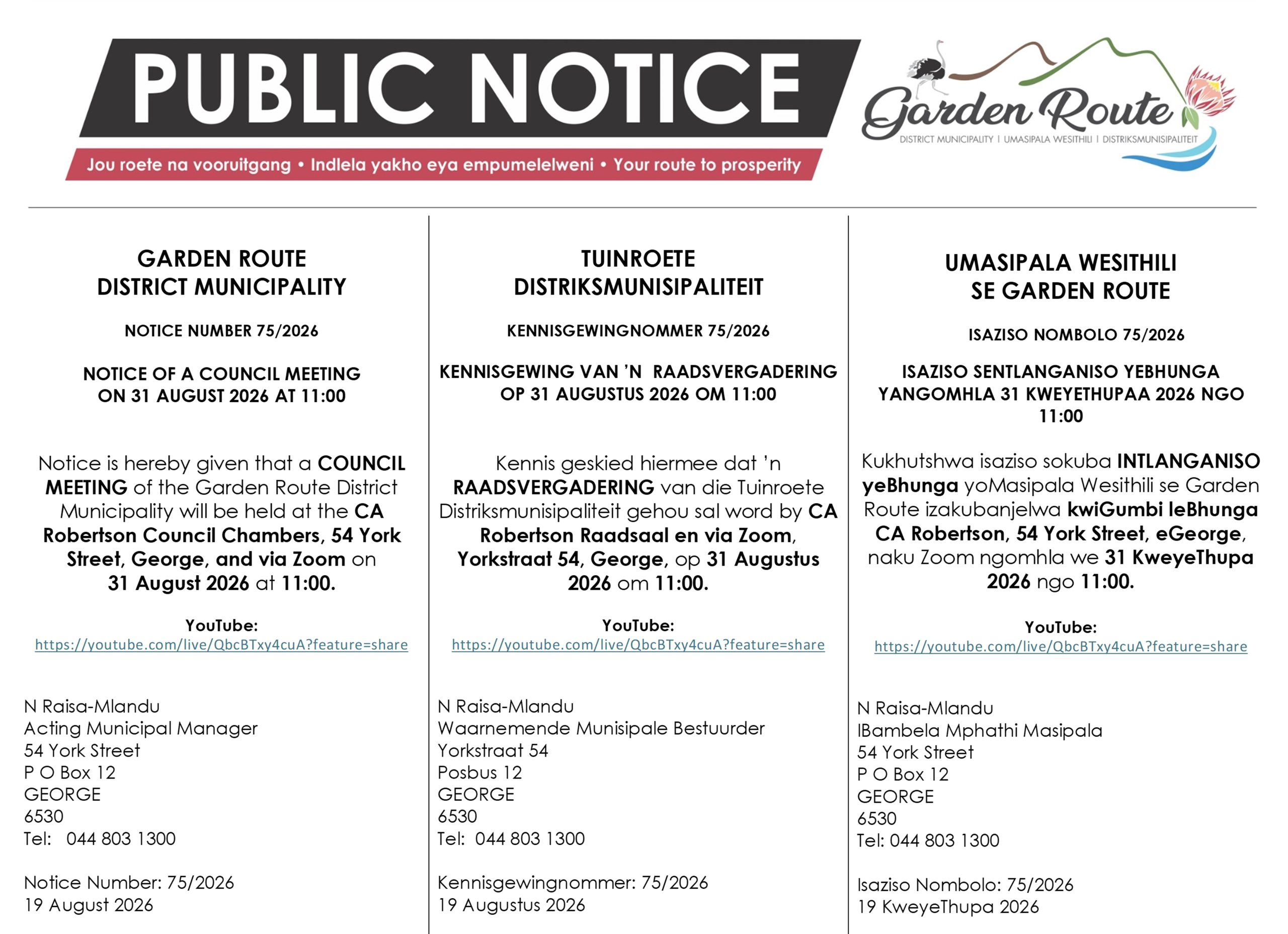
Public Notice 75/2026: Council Meeting on 31 August 2026 at 11h00
Notice is hereby given that a COUNCIL MEETING of the Garden Route District Municipality will be held at the CA Robertson Council Chambers, 54 York Street, George, and via Zoom on 31 August 2026 at 11:00.
Openbare Bewusmaking: Voedselveiligheid tydens kragonderbrekings in die Oudtshoorn munisipale gebied
17 Augustus 2026
Die Oudtshoorn munisipale area is tans sonder elektrisiteit. Voedsel kan gedurende hierdie tyd vinnig bederf indien dit nie behoorlik gestoor of hanteer word nie. Deur te weet wat om te doen, kan almal help om voedselgedraagde siektes te voorkom.
Hieronder volg ’n paar eenvoudige, maar belangrike voedselveiligheidswenke.
Hoe om jou kos langer koud te hou
Een van die belangrikste dinge om tydens ’n kragonderbreking te onthou, is om die yskas- en vrieskasdeure so veel as moontlik toe te hou. Hoewel geen elektrisiteit gebruik word terwyl die deure toe bly nie, behou die yskas die koue temperatuur vir ’n langer tydperk en vertraag dit dus die bederf van bederfbare voedsel.
Indien die kragonderbreking in ’n gebied voortduur, oorweeg dit om ’n koelhouer met yspakke te gebruik vir voedsel wat koud gehou moet word, soos melk, vleis, eiers en oorskietkos.
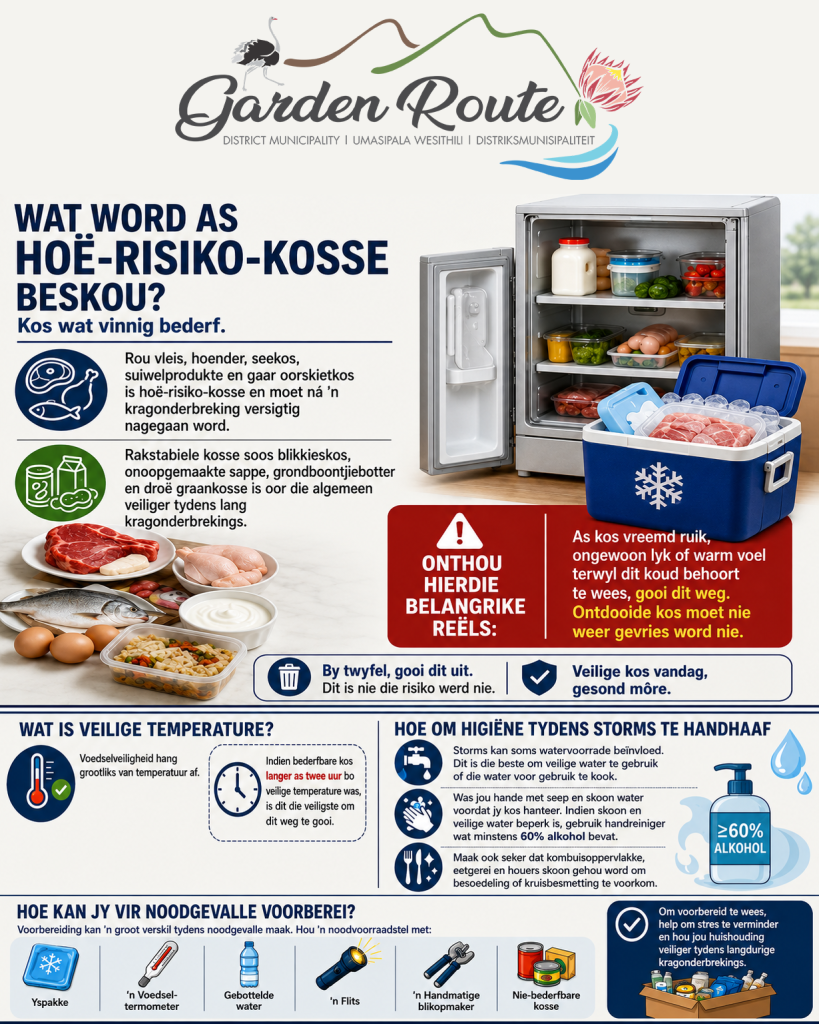
Watter voedselsoorte word as hoërisiko-voedsel beskou?
Rou vleis, hoender, seekos, suiwelprodukte en gaar oorskietkos is hoërisiko-voedselsoorte en moet ná ’n kragonderbreking noukeurig nagegaan word.
Rakstabiele voedselsoorte, soos blikkieskos, onoopgemaakte vrugtesappe, grondboontjiebotter en droë ontbytgraan, is oor die algemeen veiliger tydens lang kragonderbrekings.
Onthou hierdie belangrike reëls: Indien voedsel vreemd ruik, ongewoon lyk of warm voel wanneer dit koud behoort te wees, gooi dit weg. Ontdooide voedsel moet ook nie weer gevries word nie.
Wat is veilige temperature?
Voedselveiligheid is sterk afhanklik van temperatuur. Indien bederfbare voedsel vir langer as twee uur aan temperature bo die veilige temperatuur blootgestel was, is dit die veiligste om dit weg te gooi.
Hoe om higiëne tydens storms te handhaaf
Storms kan soms watervoorrade beïnvloed. Dit is die beste om veilige water te gebruik of water te kook voordat dit gebruik word.
Was jou hande met seep en skoon water voordat jy voedsel hanteer. Indien skoon en veilige water beperk is, gebruik handreiniger wat minstens 60% alkohol bevat.
Maak ook seker dat kombuisoppervlaktes, eetgerei en houers skoon gehou word om besoedeling of kruisbesmetting te voorkom.
Hoe kan jy vir noodgevalle voorberei?
Voorbereiding kan ’n groot verskil tydens noodgevalle maak. Hou ’n noodvoorraadstel met die volgende items gereed:
Yspakke
’n Voedseltermometer
Gebottelde water
’n Flits
’n Handmatige blikoopmaker
Nie-bederfbare voedsel
Deur voorbereid te wees, kan jy stres verminder en jou huishouding veiliger hou tydens langdurige kragonderbrekings.
Vir meer inligting of om onhigiëniese praktyke deur voedselhanteerders aan te meld, kontak die volgende persone:
Johan Compion
Senior Bestuurder: Munisipale Gesondheid, Vaste Afvalbestuur en Luggehalte
E-pos: info@gardenroute.gov.za
044 803 1300 / 082 803 516