Skip to content Skip to left sidebar Skip to footer

Food Control

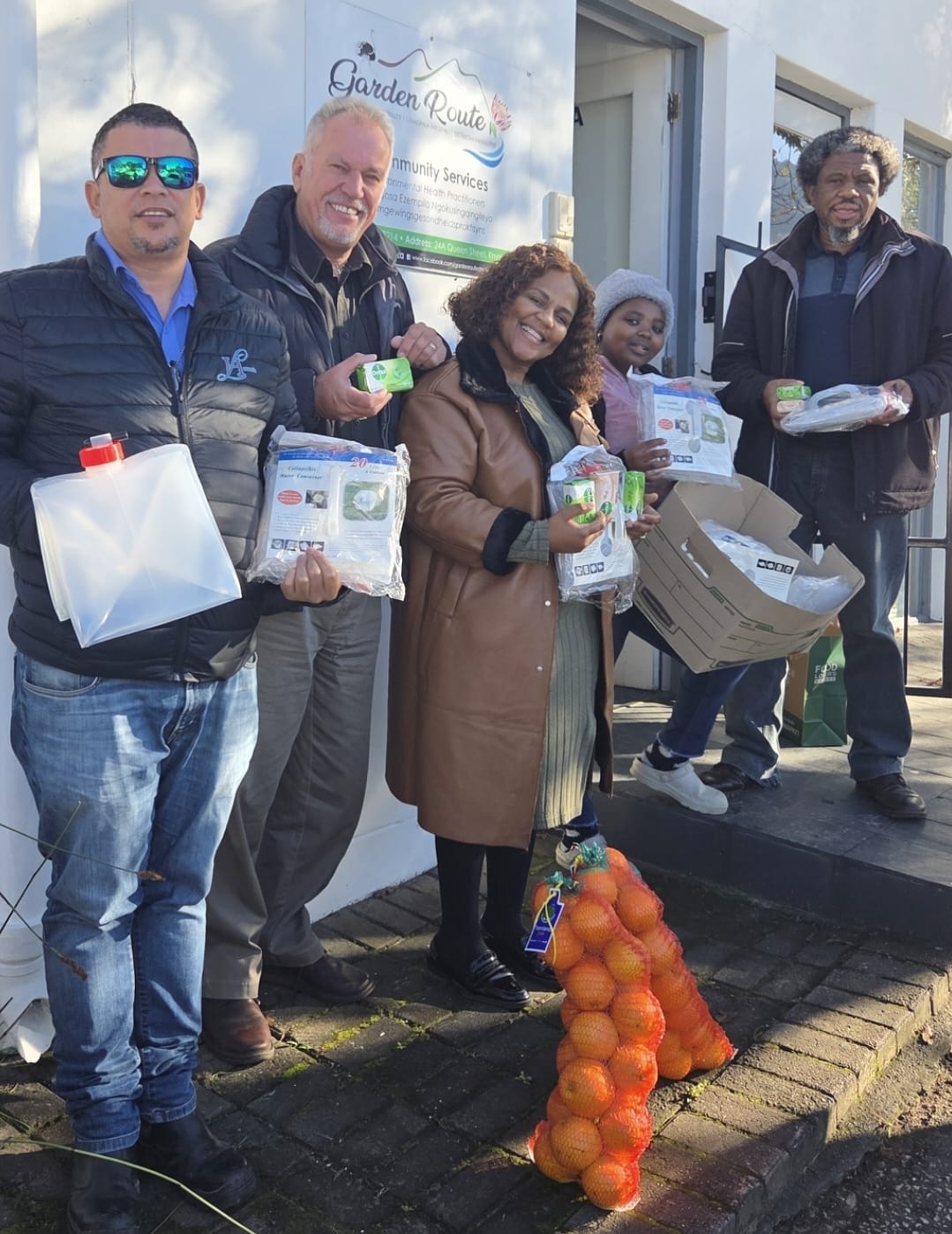
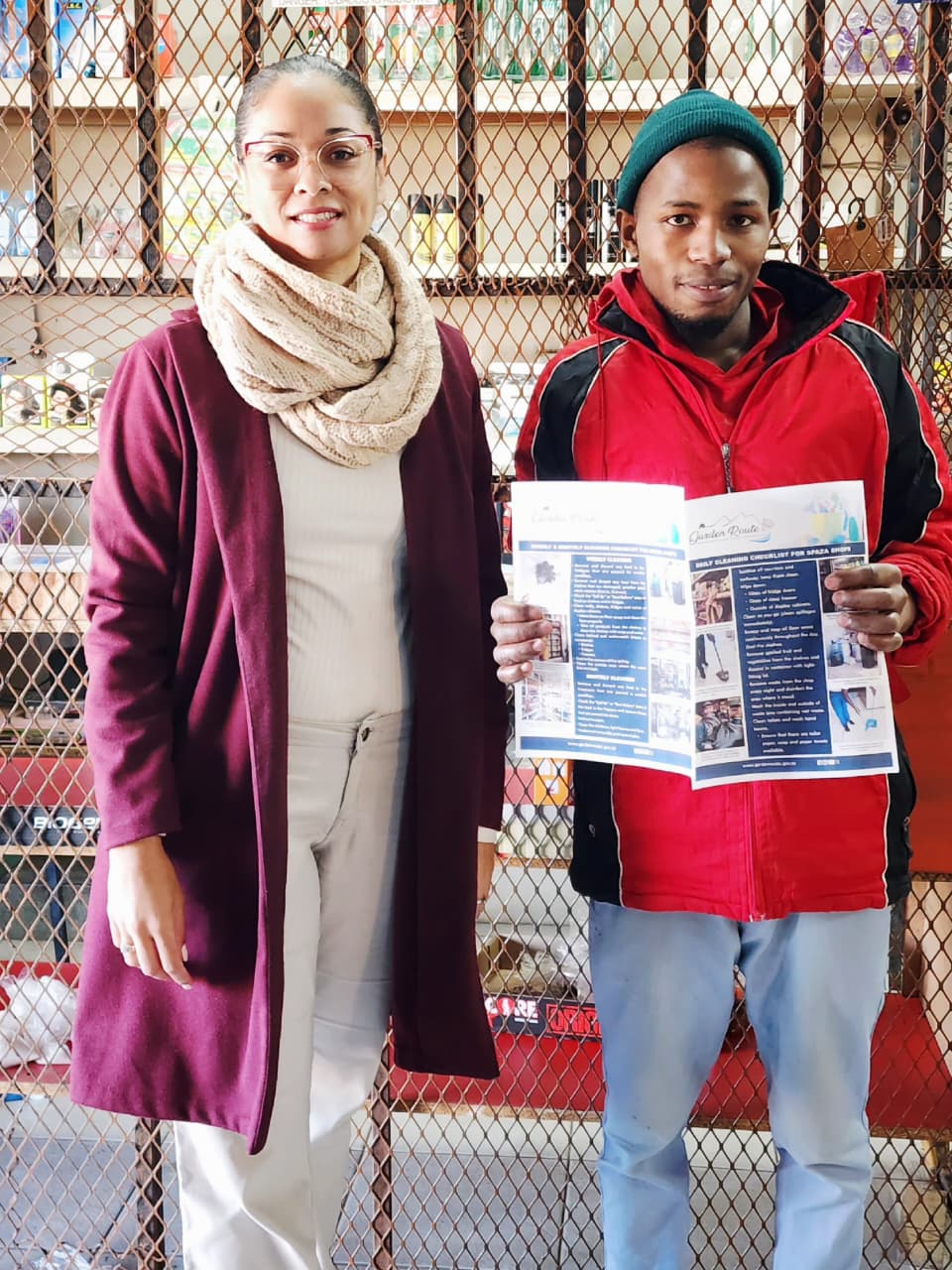
05 June 2026 Media Release: GRDM promotes cleanliness and hygienic practices across spaza shops in the Klein Karoo

Media Release: GRDM promotes cleanliness and hygienic practices across spaza shops in the Klein Karoo

For immediate release:
05 June 2026

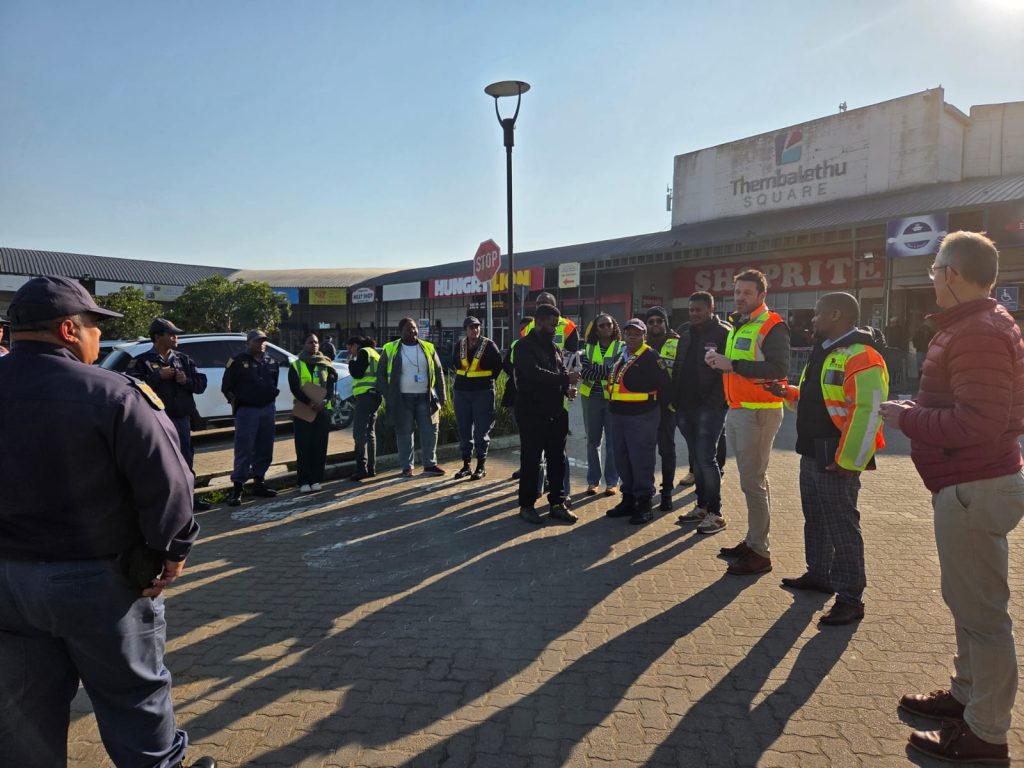
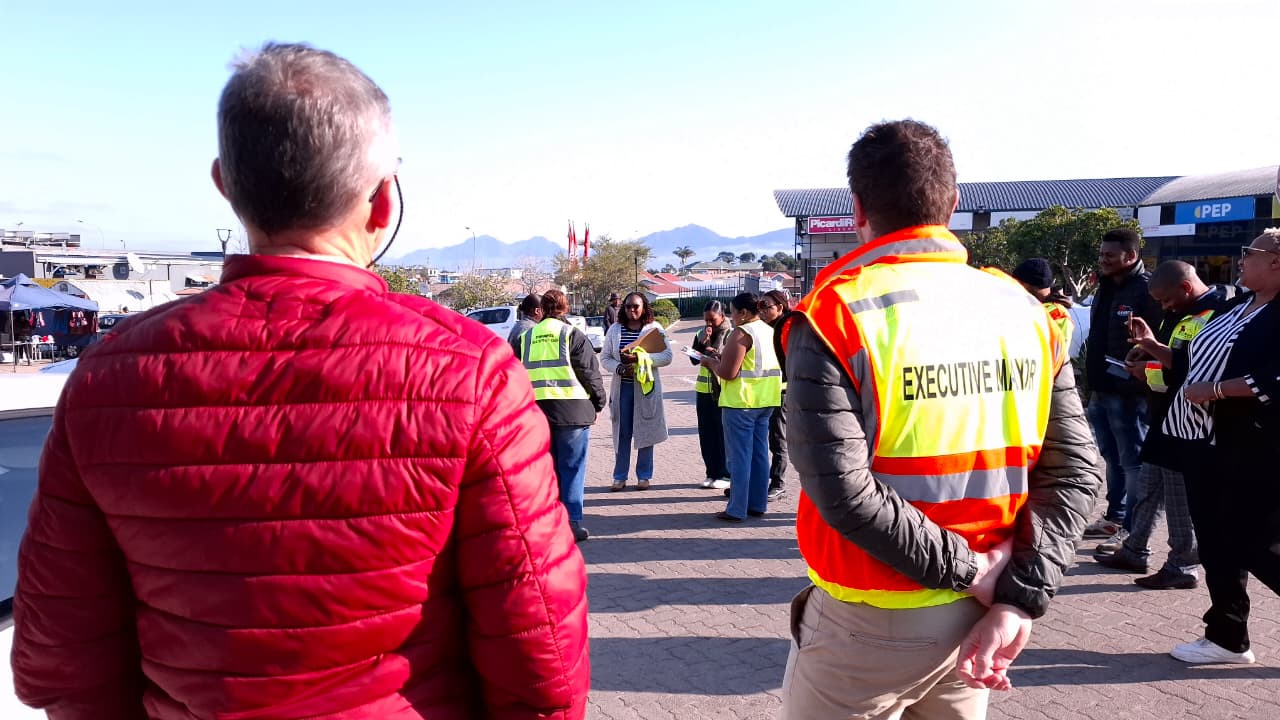
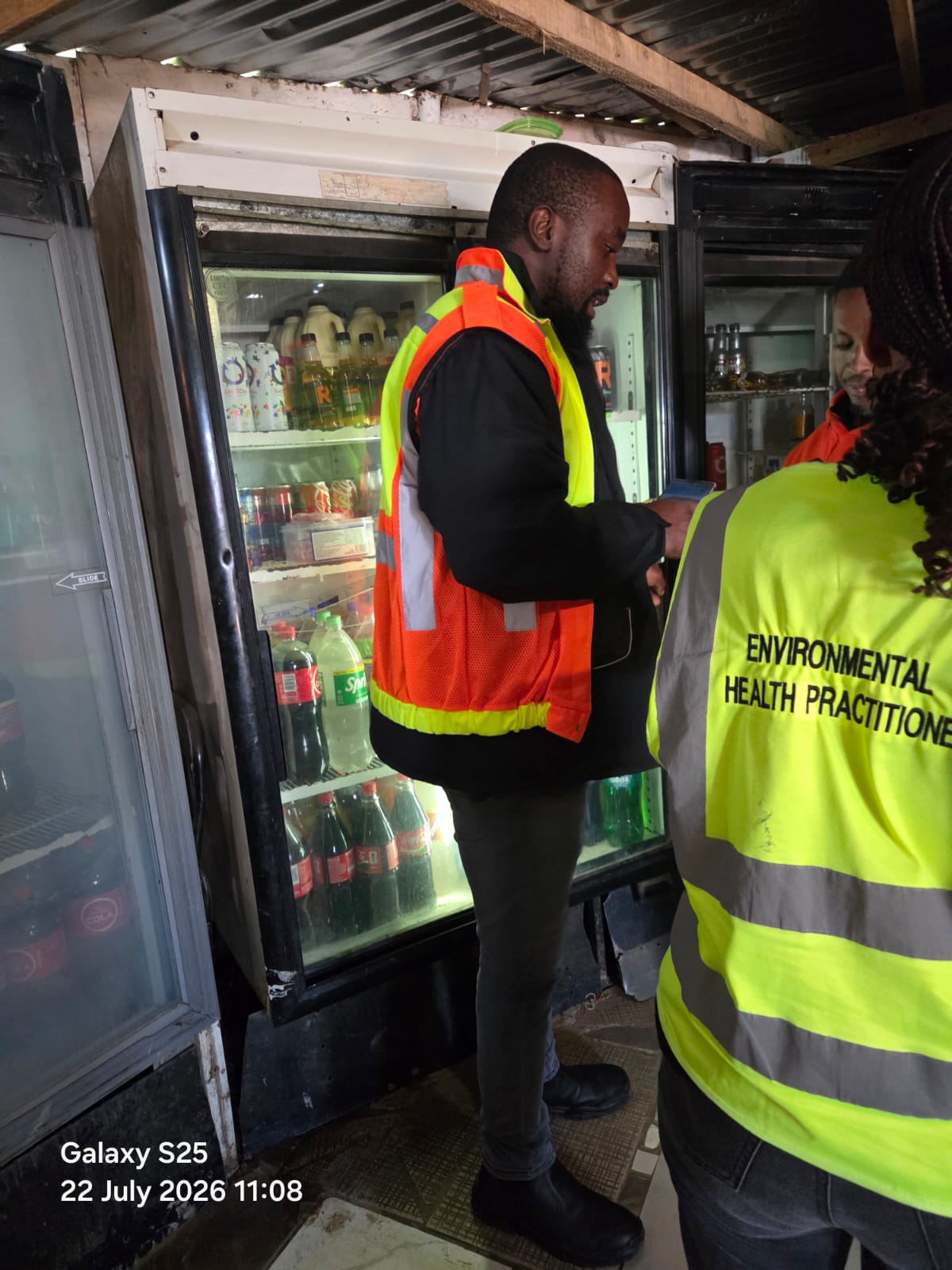
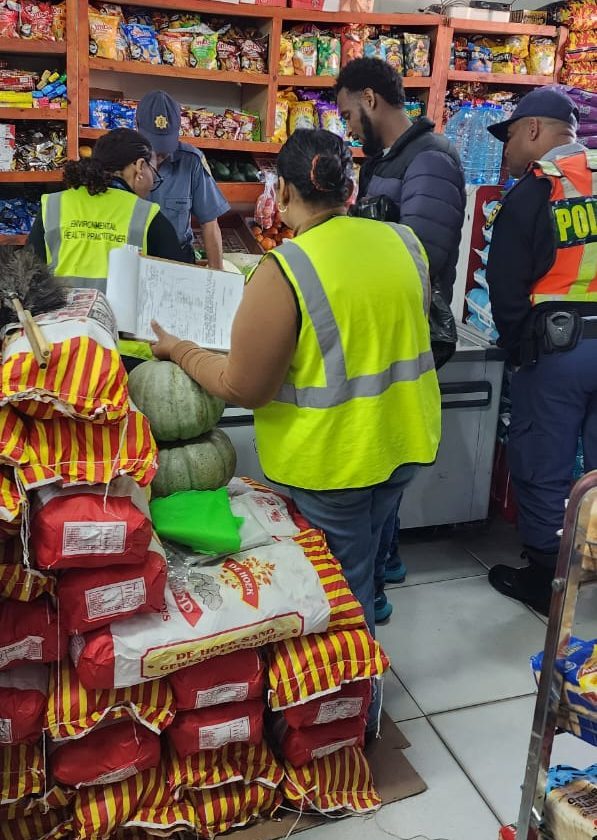
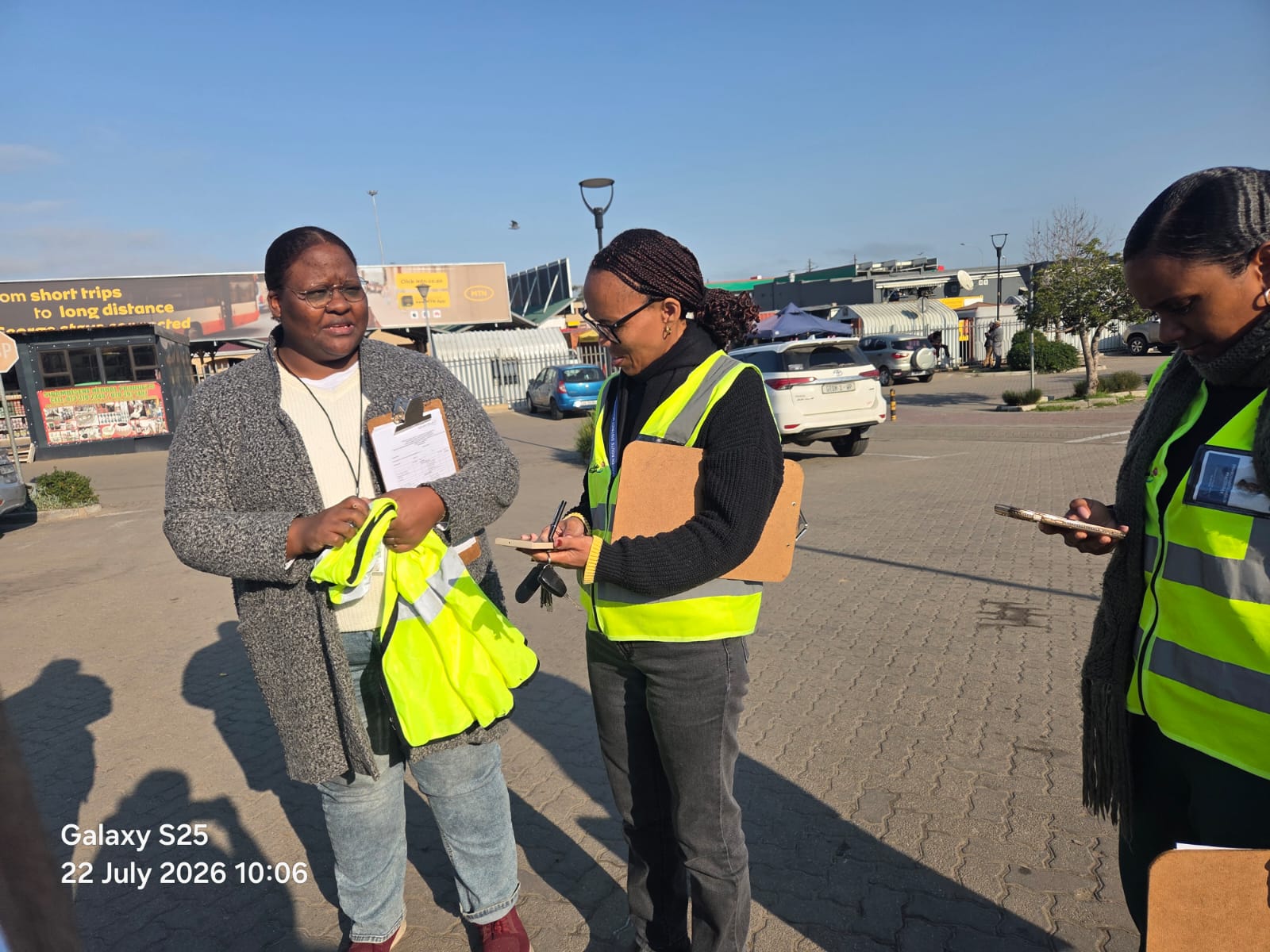
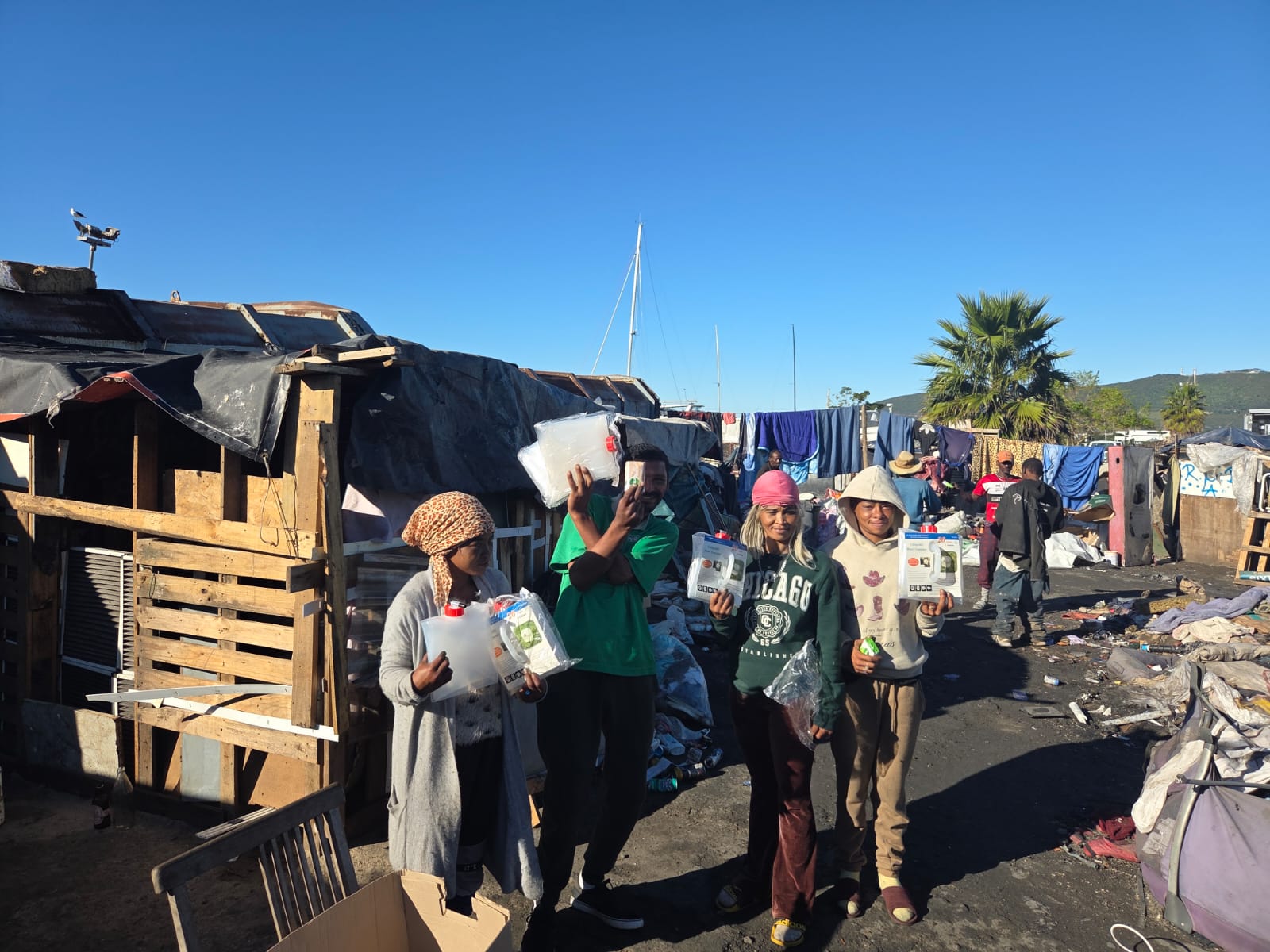
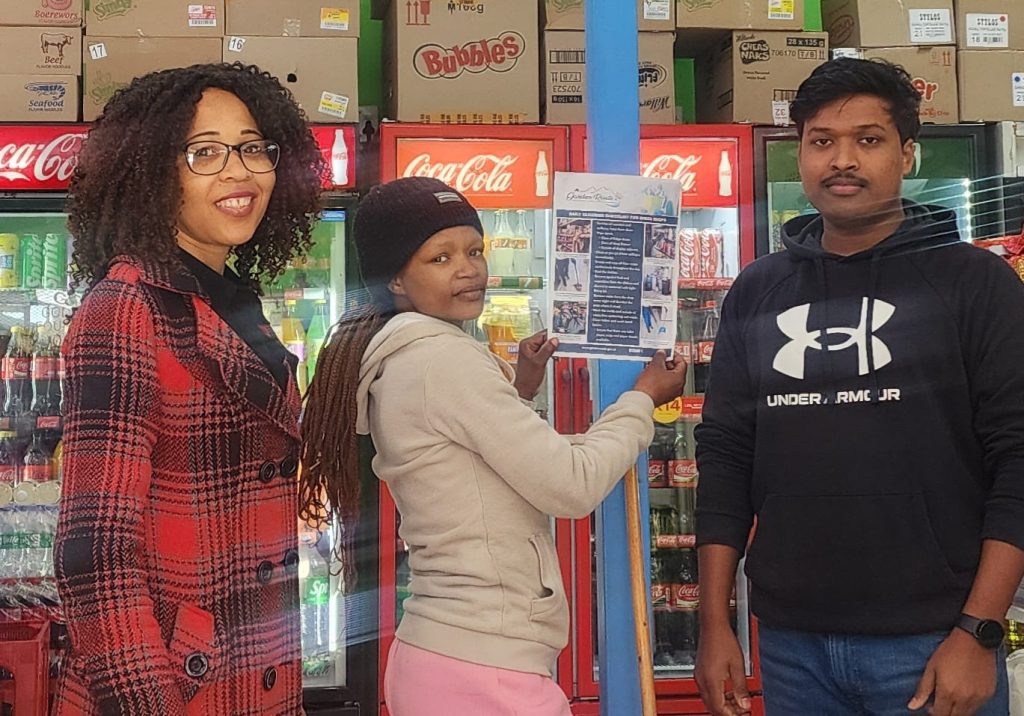
The Garden Route District Municipality’s (GRDM) Environmental Health Practitioners (EHPs) conducted a comprehensive Food Safety Day Awareness campaign across the towns of Ladismith and Oudtshoorn on 5 June 2026, to enforce compliance with norms and standards of food handling and raise awareness about foodborne risks.

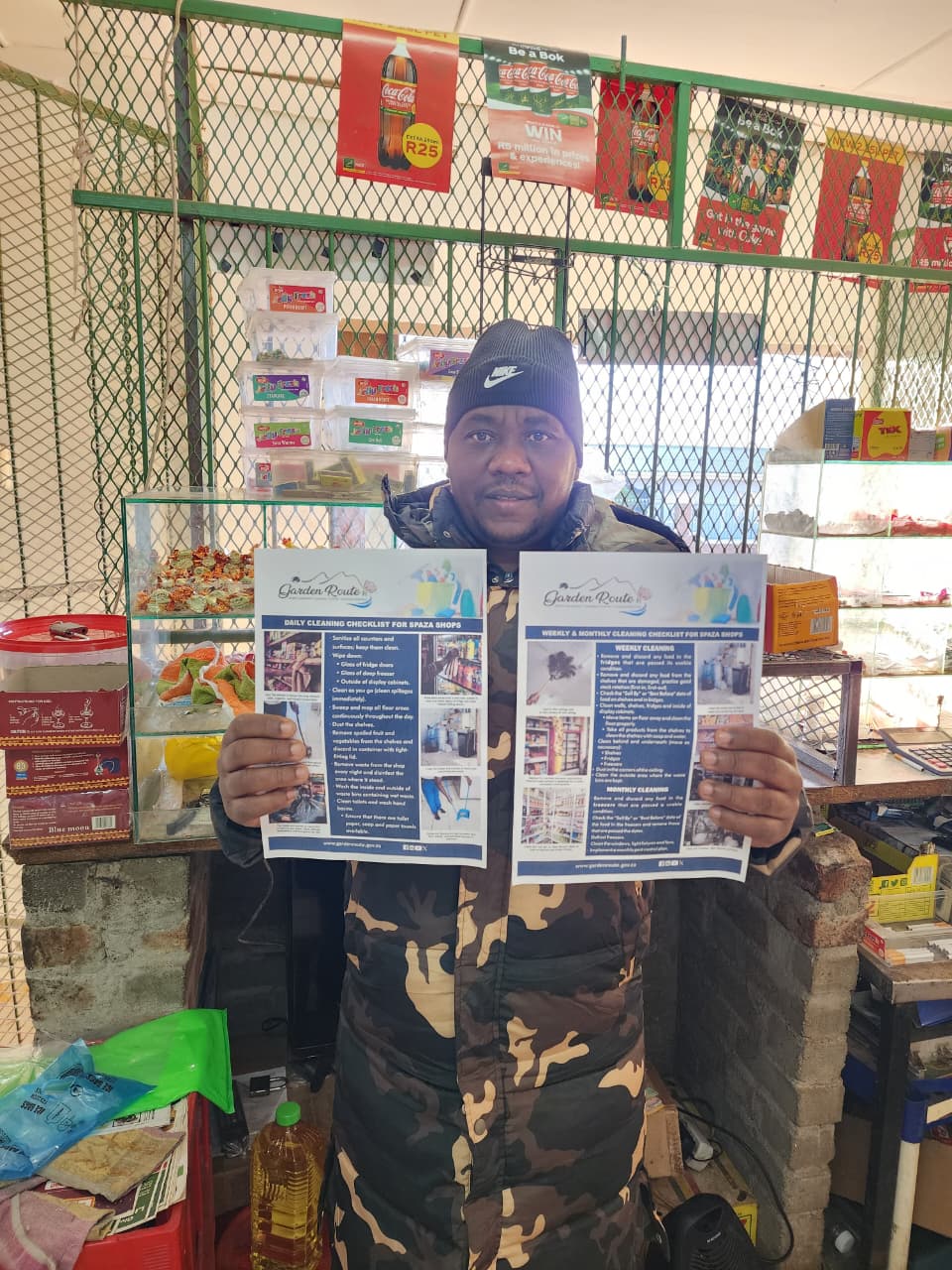
In observation of World Food Safety Day, the EHPs of the Klein Karoo area, are supporting the theme: Food Safety: From Burden to Solutions – safe food everywhere” by promoting cleanliness and food safety at spaza shops in the Oudtshoorn and Ladismith areas. “Through inspections, education, and engagement with shop owners, EHPs encourage proper hygiene practices, safe food handling and regular cleaning of premises,” said GRMD’s Municipal Health Chief: Klein Karoo, Desmond Paulse.

“This year’s theme aims to inspire action to help prevent and manage foodborne risks to safeguard food security and healthy communities.”

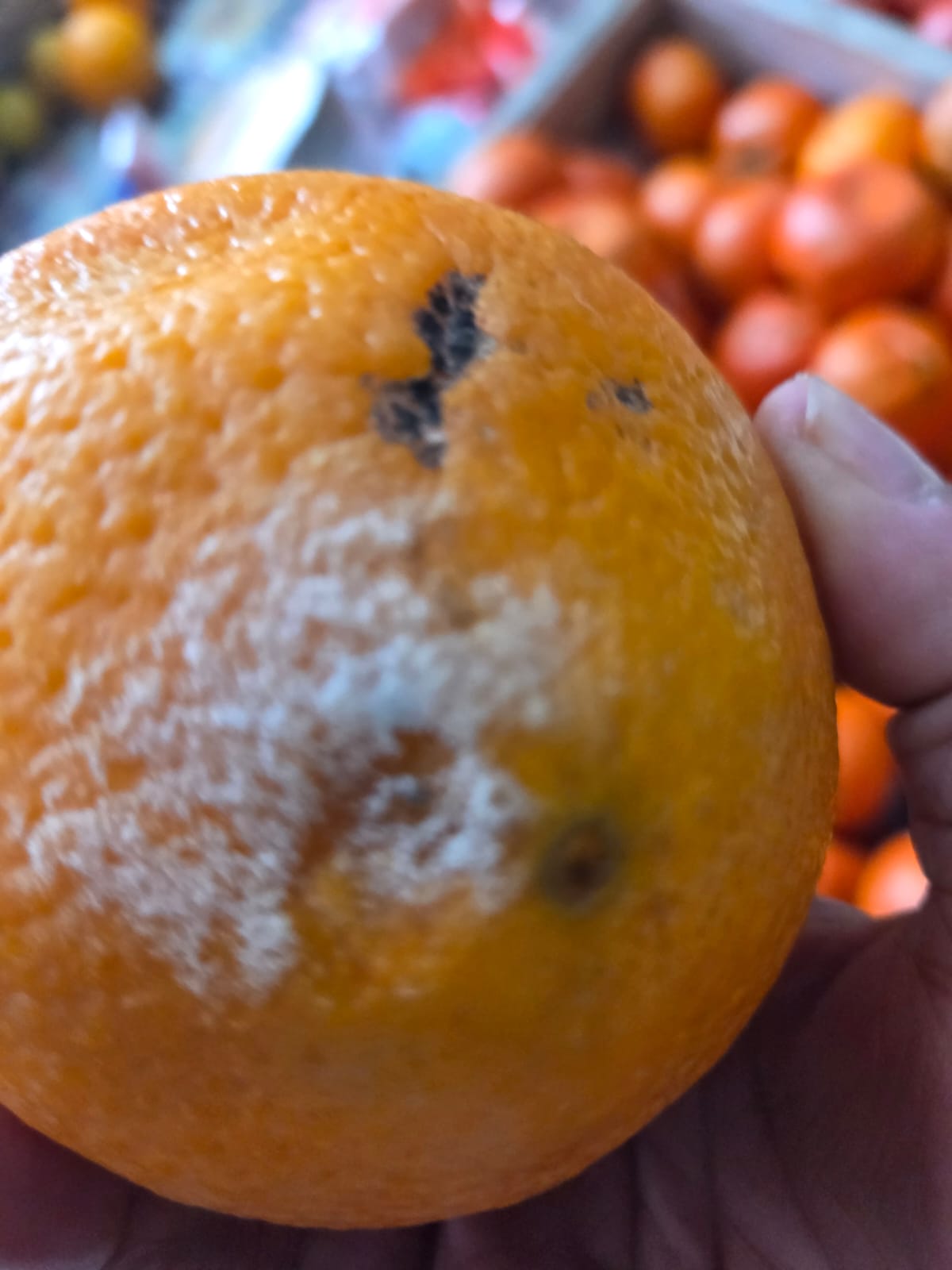
GRDM’s highly competent team of EHPs regularly conducts inspections not only to spaza shops, but also to manufacturers, restaurants and supermarkets, to name a few. This is done to monitor compliance with hygienic and preparation standards. Paulse added that these actions help reduce foodborne health risks, improve compliance with food safety standards, and contribute to healthier communities.

The EHPs placed particular emphasis on cleaning and proper disinfection as these are effective methods to ensure safer food for human consumption. “Clean and hygienic shops play an important role in food safety. A clean shop helps prevent contamination, reduces the spread of harmful bacteria, viruses, and protects customers from a range of foodborne illnesses,” said Paulse.

The EHPs encourage spaza shop owners to adhere to good hygiene practices, such as regular cleaning, proper food storage, and safe handling of food, to ensure that food remains safe and of high quality.

On World Food Safety Day, as GRDM, we recognise that maintaining clean shops remains essential for protecting public health.

ENDS

05 June 2026 Awareness Article: Pest Control: A Key Pillar of Food Safety on World Food Safety Day

Awareness Article: Pest Control: A Key Pillar of Food Safety on World Food Safety Day

For immediate release:
05 June 2026

World Food Safety Day is commemorated annually on 7 June, and in 2026 the global theme, “Safer Food, Better Health,” reinforces the importance of protecting consumers from foodborne risks. One of the most critical, yet often underestimated, components of food safety is effective pest control.

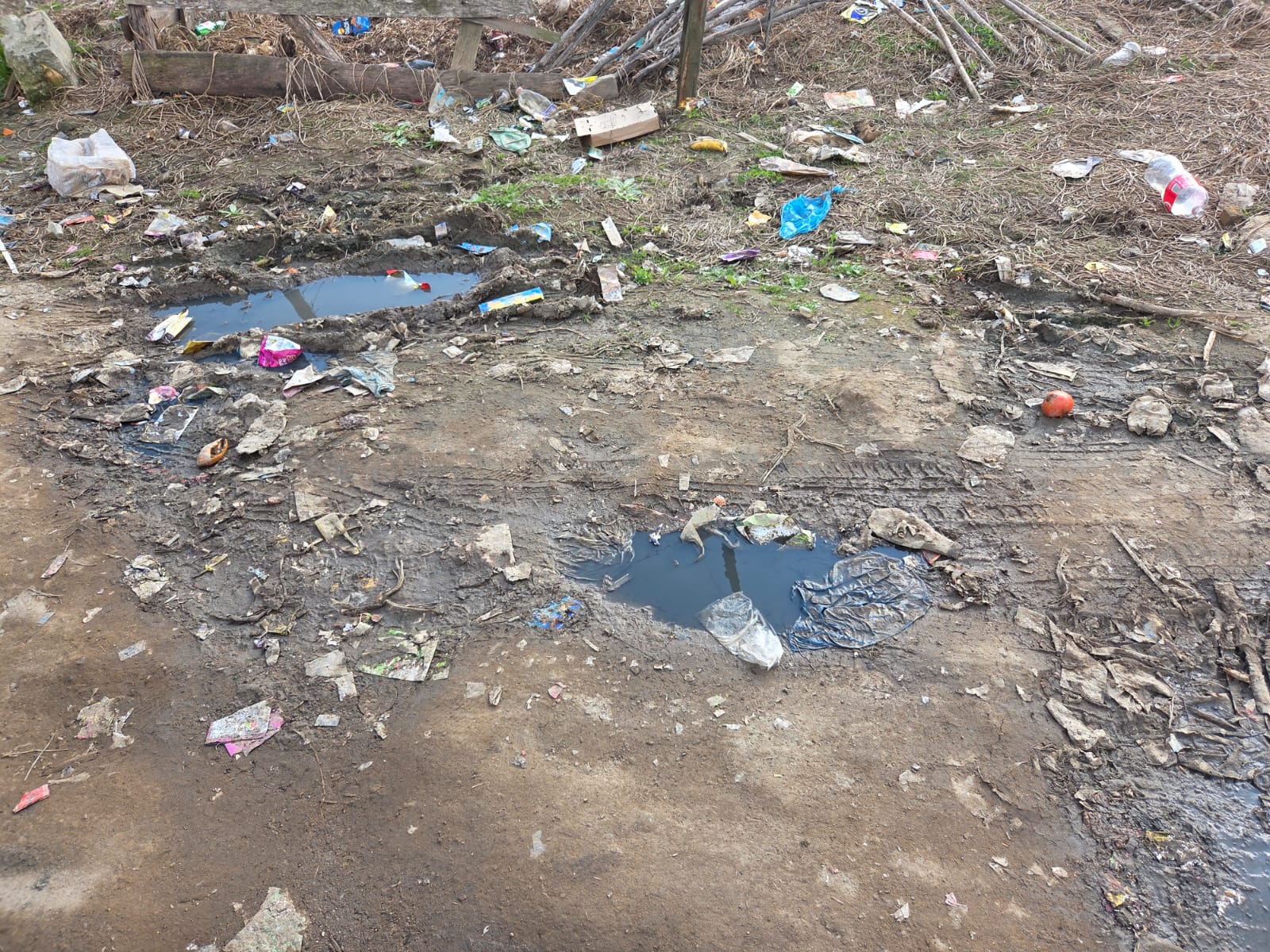
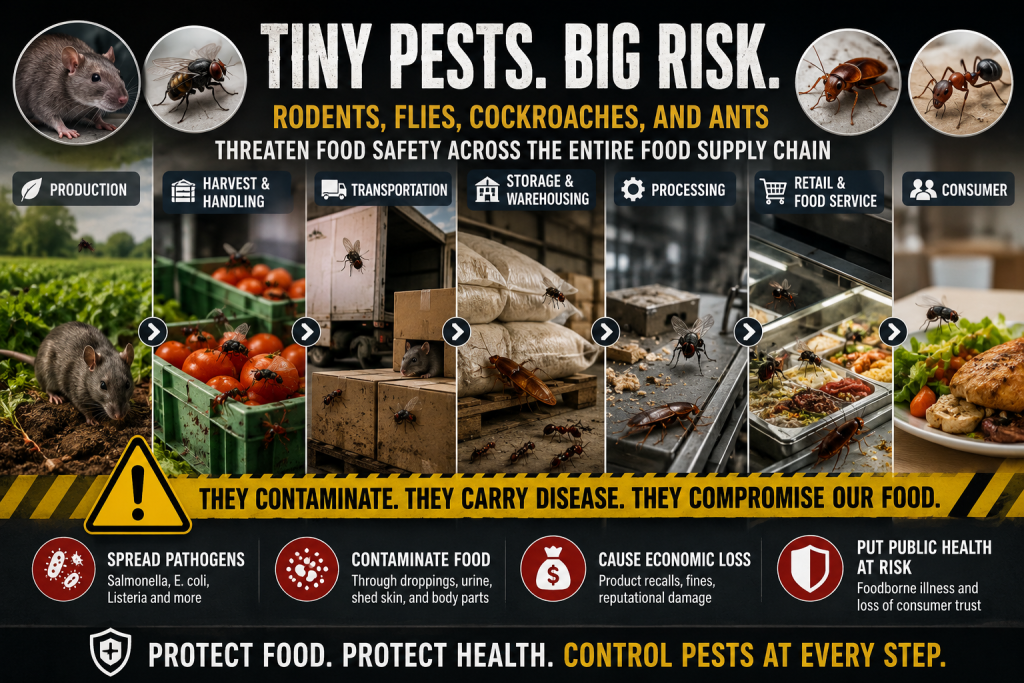
Pests such as rodents, flies, cockroaches, and ants pose a serious threat to food safety across the entire food supply chain, from farms and food processing plants to retail outlets, restaurants, schools, and households. These pests are known carriers of harmful pathogens that contaminate food, equipment, and preparation surfaces, increasing the risk of foodborne diseases.

Disease causing pathogens such as salmonella, E. coli, listeriosis, and Norovirus can result from poor pest management practices. Vulnerable groups, including young children, the elderly, pregnant women, and immunocompromised individuals, are particularly at risk. Preventing pest infestations is therefore not only a hygiene issue, but a public health priority.

In South Africa, food premises are legally required to implement pest control measures. The Foodstuffs, Cosmetics and Disinfectants Act, 1972 (Act 54 of 1972) mandates that food sold or handled must be safe and free from contamination. In addition, Regulation R.638 of the Health Act, 1977 (General Hygiene Requirements for Food Premises and the Transport of Food) clearly states that food premises must be kept free of pests, and that adequate measures must be in place to prevent their access and harbourage.

Furthermore, the National Health Act, 2003 (Act 61 of 2003) places a responsibility on food business operators to ensure that conditions do not pose a risk to human health. Failure to comply with these regulations may result in fines, closure of premises, or legal action.

Environmental Health Practitioners (EHPs) emphasise that pest control is a non-negotiable element of food safety.

“Effective pest control is one of the first indicators of a well-managed food premises. Where pests are present, the risk of food contamination and disease transmission increases significantly. Preventing infestations protects not only consumers, but also the reputation and sustainability of food businesses,”

An effective approach to pest control is Integrated Pest Management (IPM), which prioritises prevention through good housekeeping, proper waste disposal, regular cleaning, sealing of entry points, and safe food storage. Where chemical control is necessary, it must be conducted by trained and registered pest control operators using approved products in a manner that does not compromise food safety.

World Food Safety Day serves as a reminder that food safety is everyone’s responsibility. Business owners, food handlers, regulators, and consumers all play a role in preventing contamination and safeguarding public health.

By maintaining strict pest control measures, we protect food from contamination, reduce the spread of disease, and support healthier communities. As we observe World Food Safety Day under the theme “Safer Food, Better Health,” it is clear that effective pest control is not optional — it is essential.

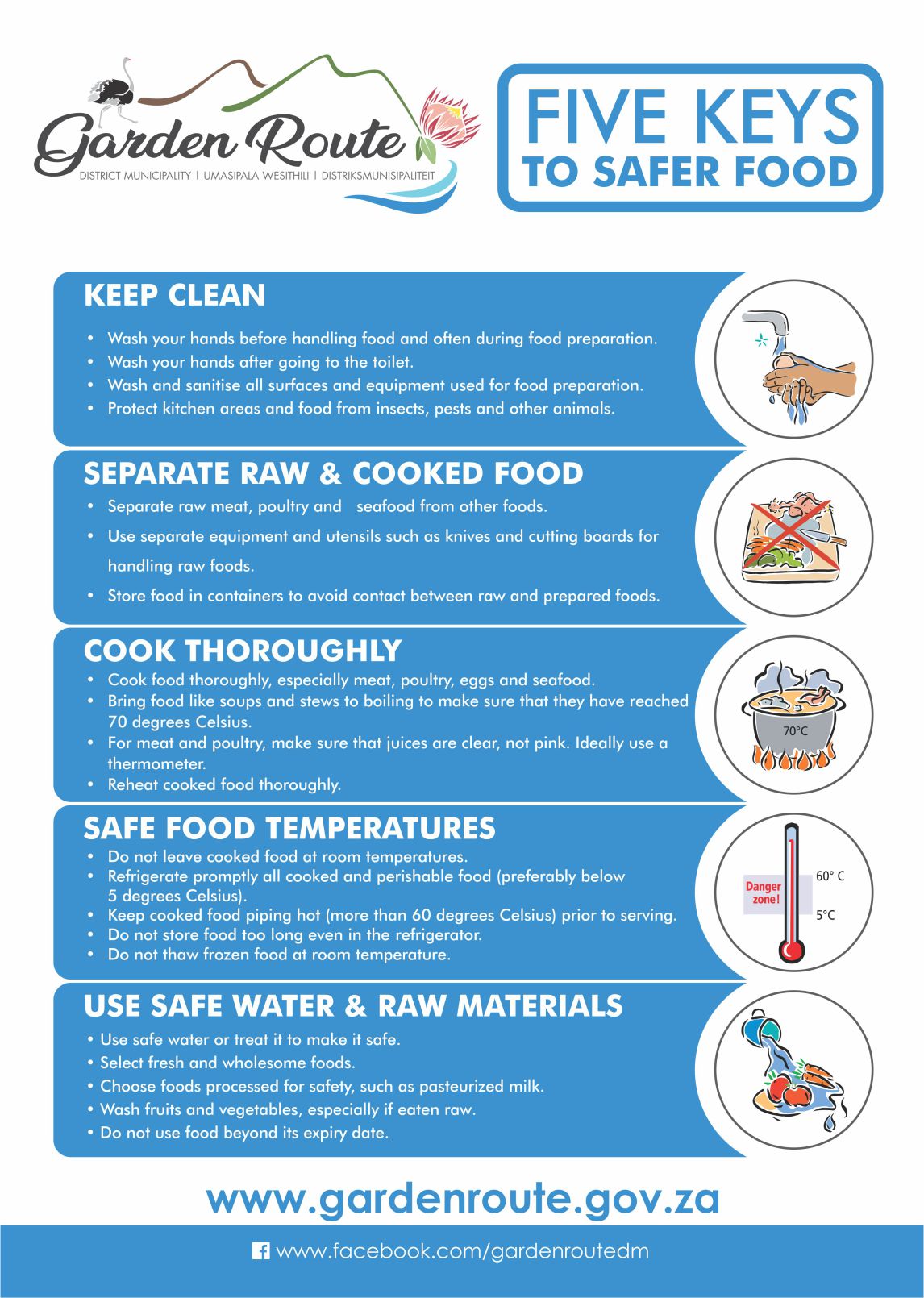
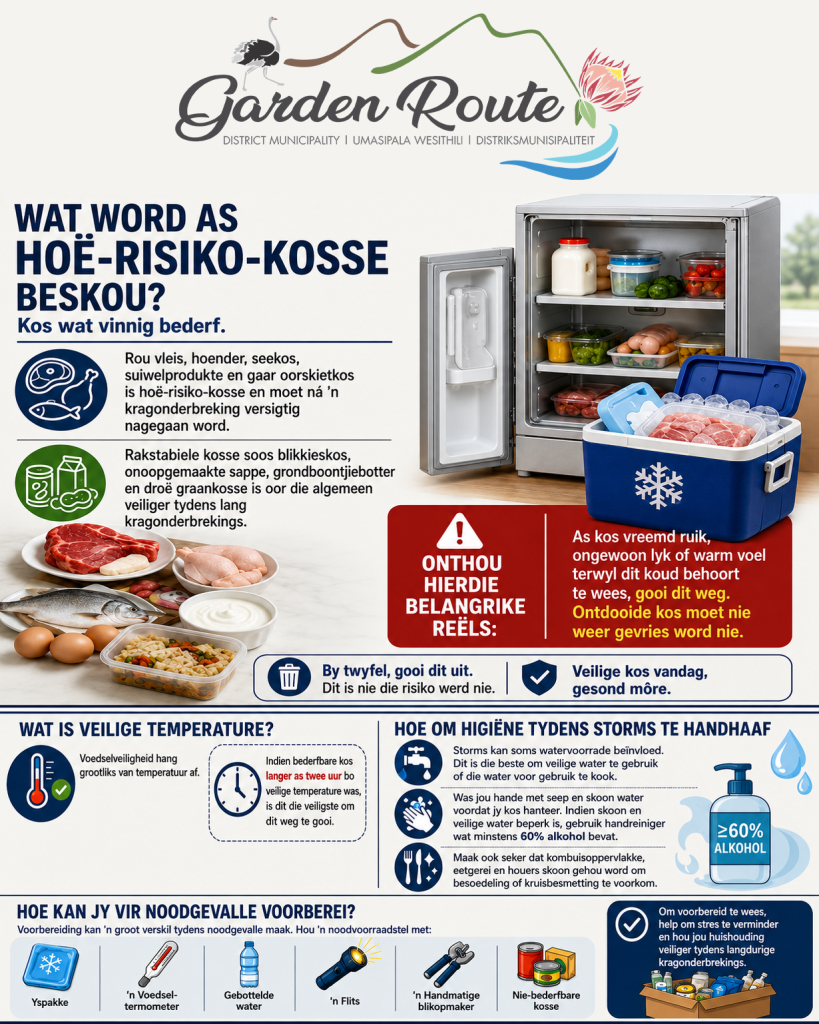
Here’s how you can maintain hygiene when handling food:


ENDS

Media Release: Empowering Food Handlers: Food Safety & Hygiene Training at Meals on Wheels Community Service

Media Release: Empowering Food Handlers: Food Safety & Hygiene Training at Meals on Wheels Community Service

For immediate release
21 May 2026

A Food Safety and Hygiene Training session was recently facilitated for the food handlers of Meals on Wheels Community Services (MOWCS). MOWCS serves some of the most vulnerable members of the community, including the elderly, the frail, and children. These individuals are at a higher risk of complications from foodborne illnesses. “This makes food safety not merely a regulatory requirement, but a direct expression of care and dignity for every person who receives a meal,” said Nonkosi Somwahla, Environmental Health Practitioner (EHPs) at the Garden Route District Municipality (GRDM).

As a non-profit organisation involved in the preparation and serving of food, MOWCS is required to hold a valid Certificate of Acceptability (COA) and ensure that all food handlers receive adequate training in Food Safety and Hygiene.

The training was presented by GRDM’s EHPs. The aim was to equip participants with the knowledge and practical skills required to handle, prepare, and serve food safely, while ensuring compliance with South African food safety legislation.

 The session covered key areas of food safety relevant to the day-to-day work of the MOWCS team, including the identification and control of food safety hazards, safe food handling practices, personal hygiene standards emphasise the importance of washing hands, and the maintenance of clean, pest-free premises. Participants engaged actively throughout the session, which was well received by all in attendance.

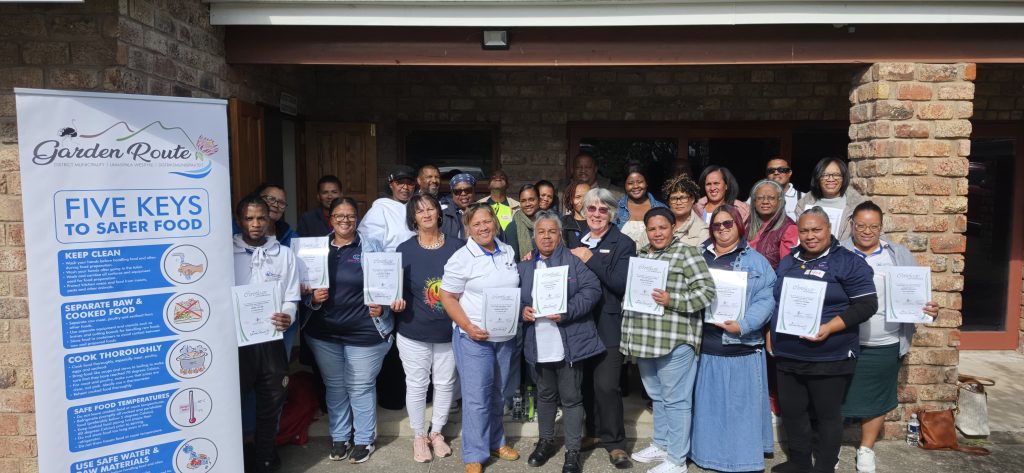
All attendees who participated in the Food Safety and Hygiene Training received Certificates of Attendance at the end of the session in recognition of their participation and commitment to improving food safety practices.

The training was well received, with positive feedback from Meals on Wheels leadership. The Regional Director of Meals on Wheels, Mr Jeremy Vlotman, shared the following feedback with the EHP, Nonkosi Somwahla: “Thank you for a professional and informative presentation. We have received positive feedback thus far; our next step is to ensure implementation.”

The EHP’s looks forward to supporting Meals on Wheels Community Services through this process, including follow-up visits and ongoing guidance as needed.

-END-

25 March 2026 Media Release: Blitz Operation by GRDM Environmental Health Practitioners, Hessequa Law Enforcement and Police

Media Release: Blitz Operation by GRDM Environmental Health Practitioners, Hessequa Law Enforcement and Police

25 March 2026

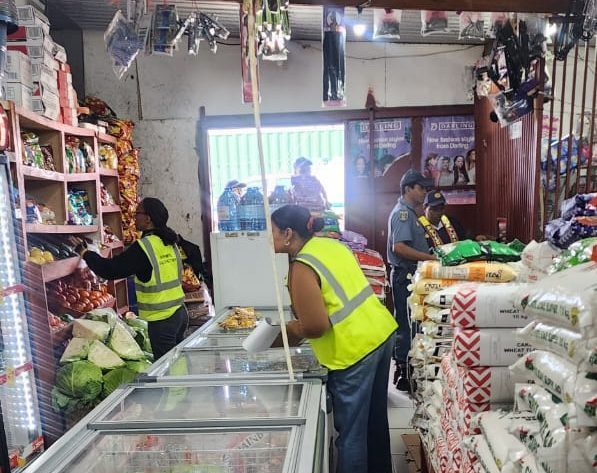
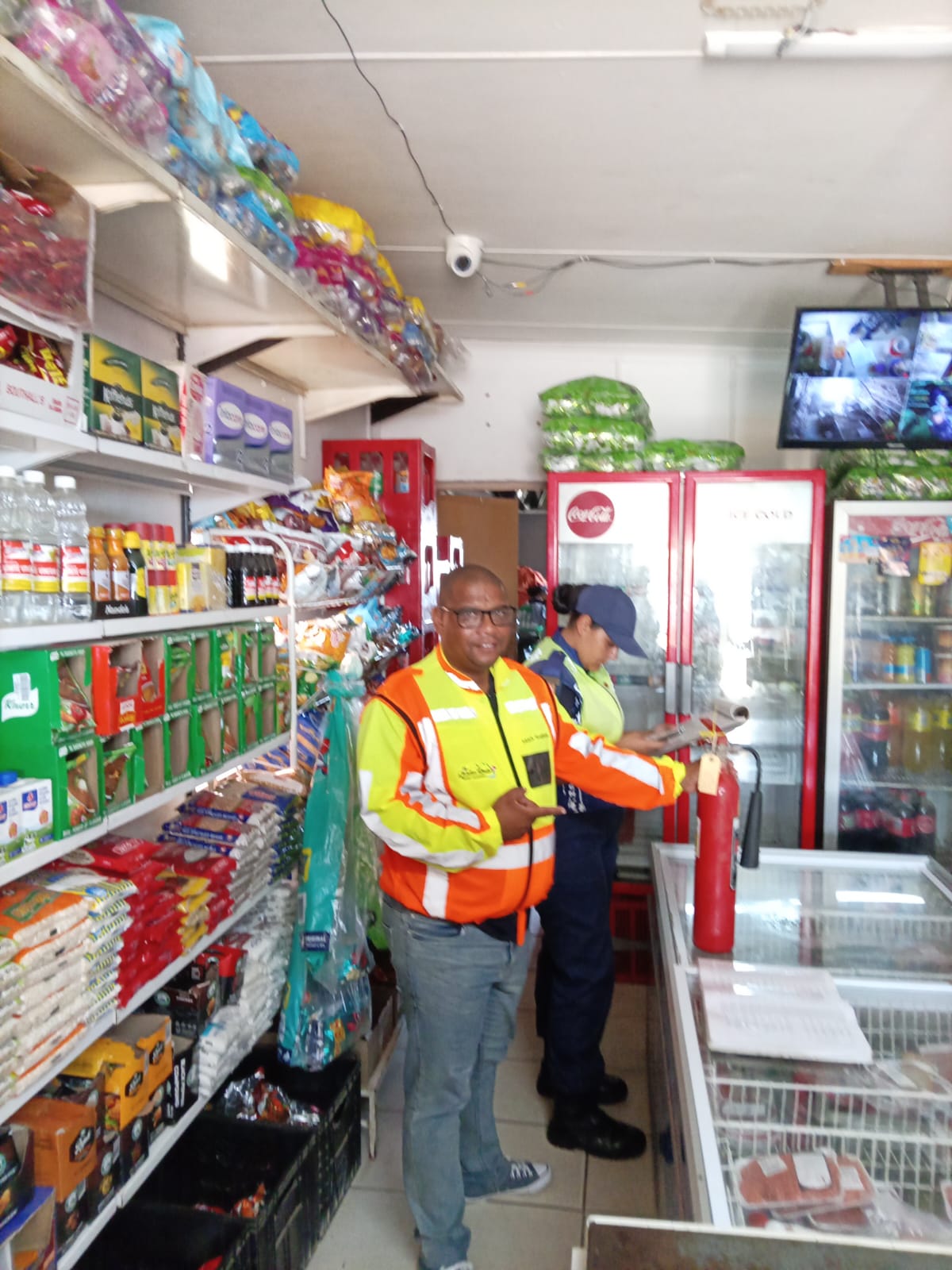
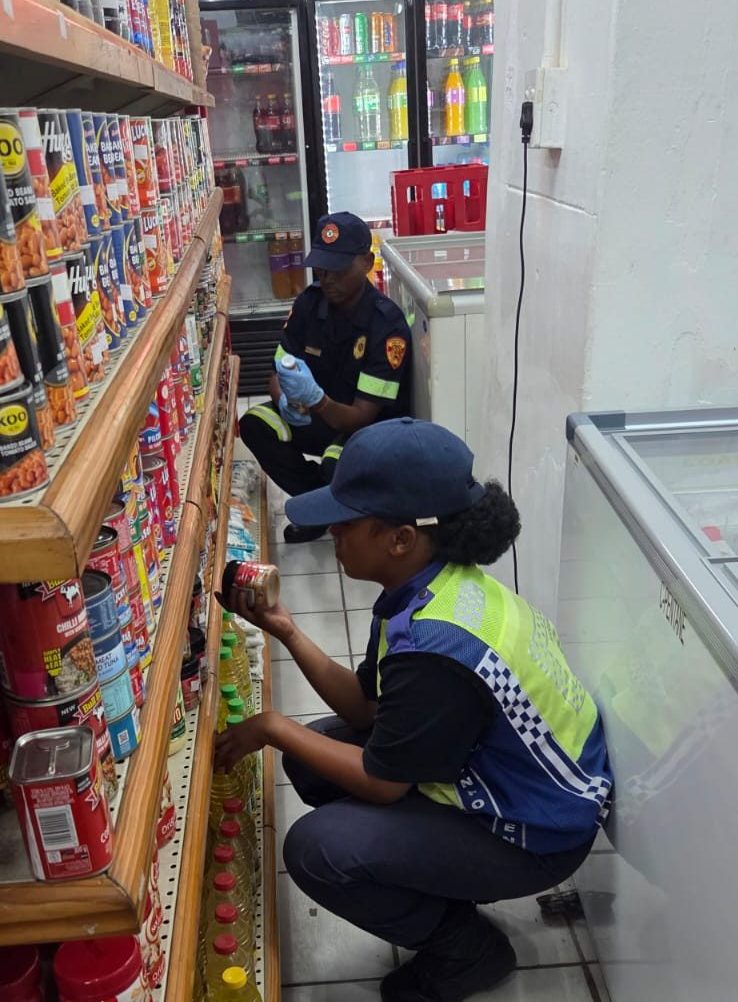
A coordinated joint operation between Garden Route District Municipality’s (GRDM) Municipal Health Services, Hessequa Municipality’s Municipal Police and the South African Police Service (SAPS) resulted in the inspection of 38 spaza shops over a two-day period, on 19 and 20 March 2026.

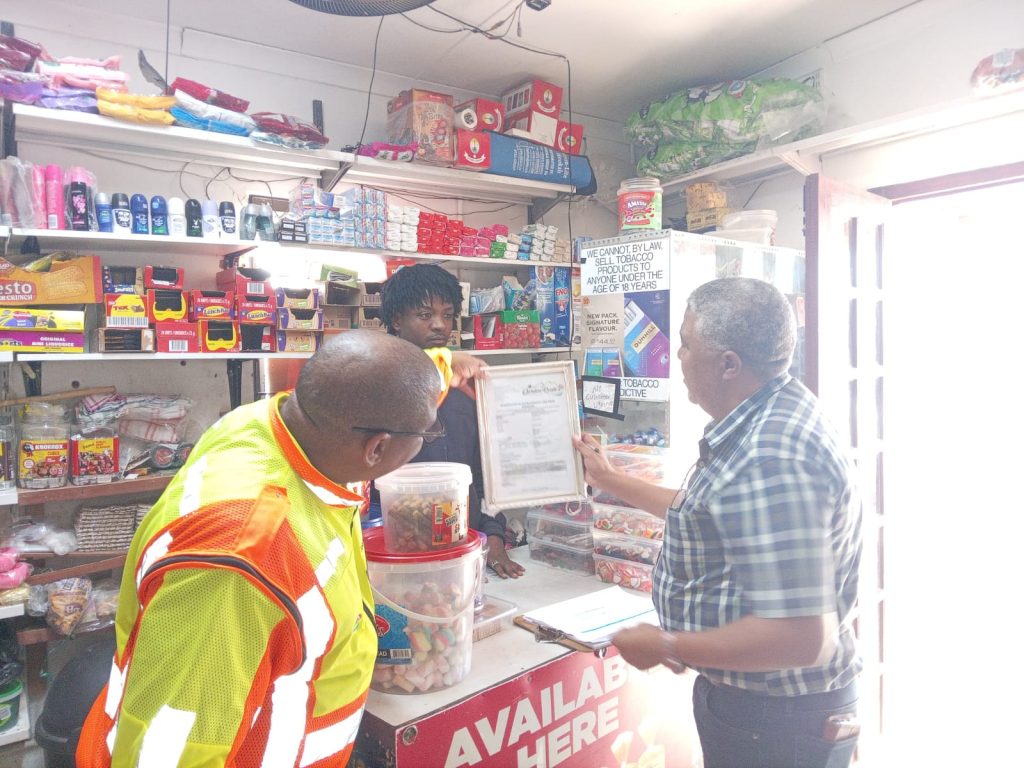
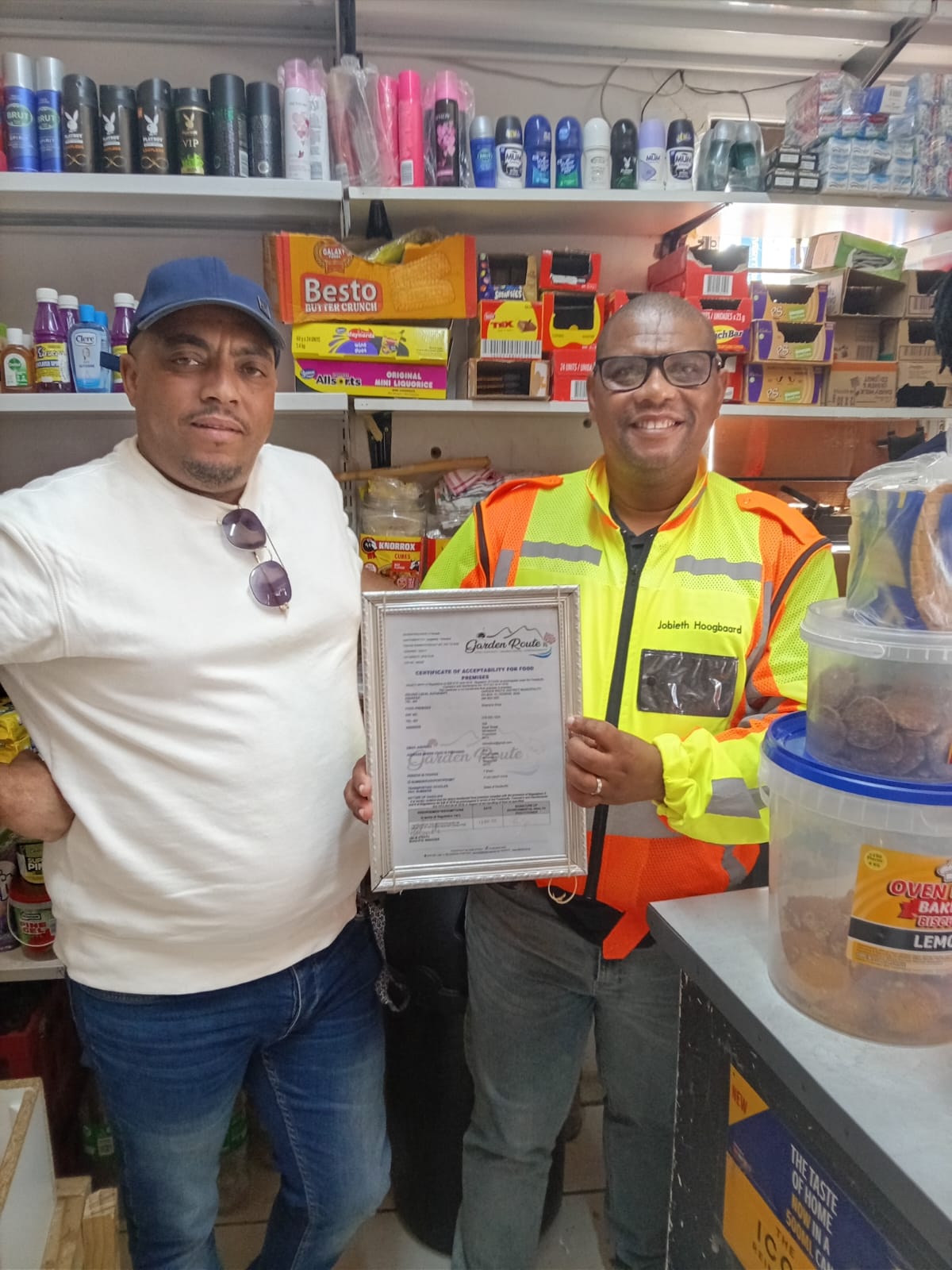
The operation formed part of ongoing efforts to ensure public health, enforce applicable by-laws, and address any illegal activities. Officials conducted thorough inspections focusing on food safety standards, including the monitoring of expired goods, hygiene practices, storage conditions, and the verification of valid Certificates of Acceptability.

Compliance issues were identified and addressed during the operation. Unsafe food products were confiscated while certain establishments may face further enforcement action. Hessequa Municipality’s Municipal Police also addressed matters relating to fire safety and relevant bylaws, with SAPS providing support to ensure the safety and security of all officials involved.

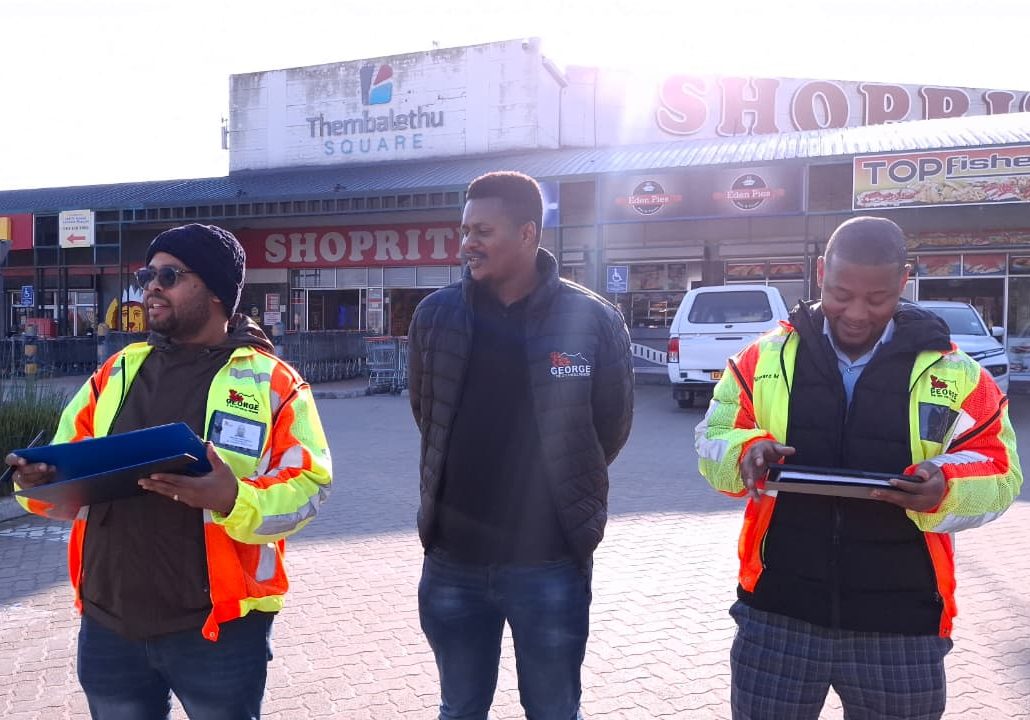
Officials carrying out inspection activities during the operation.

Cllr Hoogbaard, MMC for Community Services at GRDM, during the session reiterated that the operation demonstrated the commitment from all role players to protect public health and ensuring that all businesses operate within the legal framework and that similar operations will be conducted to promote compliance.

Residents are encouraged to report any concerns related to food safety or non-compliant issues to this department businesses to the municipality.

Johan Compion
jcompion@gardenroute.gov.za
044 803 1550 / 082 803 5161

Haemish Herwels – Chief: Municipal Health Hessequa (Langeberg)
haemish@gardenroute.gov.za
028 713 2438 / Cell: 083 678 6545
23 Mitchell Street, Riversdale


Opsomming in Afrikaans

’n Gekoördineerde gesamentlike operasie tussen die Tuinroete Distriksmunisipaliteit (TDM) se Omgewingsgesondheidspraktisyns, Hessequa Munisipaliteit se Munisipale Polisiediens en die Suid-Afrikaanse Polisiediens (SAPS) het gelei tot die inspeksie van 38 spaza-winkels oor ’n twee-dag tydperk, op 19 en 20 Maart 2026.

Die operasie vorm deel van TDM se voortdurende pogings om openbare gesondheid te beskerm, toepaslike verordeninge se implimentering te verseker, en enige onwettige aktiwiteite aan te spreek. Amptenare het deeglike inspeksies uitgevoer wat gefokus het op voedselveiligheidsstandaarde, insluitend die monitering van vervalde produkte, higiënepraktyke, bergingstoestande en die verifikasie van geldige Aanvaarbaarheidssertifikate.

Oortredings is geïdentifiseer en aangespreek, onveilige voedselprodukte is gekonfiskeer, en sekere besighede kan verdere afdwingingsaksie verwag. Hessequa Munisipaliteit se Munisipale Polisiediens het ook brandveiligheid en toepaslike verordeninge aangespreek, terwyl SAPS die veiligheid van alle betrokke amptenare verseker het.

Soortgelyke operasies sal in die toekoms voortgaan om voldoening aan verordeninge te bevorder.  Inwoners word aangemoedig om enige bekommernisse rakende voedselveiligheid of nie-nakoming aan die munisipaliteit te rapporteer.

-Einde-

16 January 2026 Media Release: Environmental Practitioners from GRDM ensured health and safety standards during holiday period

Media Release: Environmental Practitioners from GRDM ensured health and safety standards during holiday period

For immediately release
16 January 2026

The Garden Route District Municipality (GRDM) has implemented its Seasonal Municipal Health Safety Plan to ensure the health and safety of residents and visitors during the December holiday period.

As tourists entered the region GRDM Environmental Health Practitioners (EHPs) intensified their Municipal Health plans conducting inspections while monitoring and creating awareness across all seven local municipal areas to protect public health during the busiest time of the year.

The following inspections were conducted:

Knysna Region:

  • Formal food premises – 54
  • Informal food premises – 14

Pre-seasonal Health and Hygiene inspections were conducted of at major food outlets, malls and shopping centres. During this period no food related incidents were reported to this office.

George – Wilderness region:

  • Formal food premises – 44
  • Spaza shops – 25

Premises were under severe pressure due to the influx of tourists to the area. This made cleaning as-you-go challenging and most cleaning was done after business hours. Hiring more staff is an option that can help clean continuously, but it comes at a cost. Premises must not stretch beyond their reach in Decembers and accommodate more customers than they are able to handle – this is to ensure that food safety remains prioritised.

Although people followed health and hygiene standards, a possible scabies outbreak was reported in the area. Following inspections conducted, it was discovered that only two cases occurred, after which the facility acted to prevent further spread in the area. Health education was provided to the management of the facility.

Another complaint of children defecating in the water at the Touws River was received and subsequently a swimming section was cornered off for no swimming due to contamination. It is important to be reminded that there are clean public bathroom facilities to use and that many people also swim in the same water, so the water must be left in the clean condition it was found in.

Stalls/markets in the area were also monitored to ensure ongoing compliance, and mostly everyone complied.

George – Outeniqua region:

  • Formal food premises: 86
  • Informal food premises: 107

Highlights experienced in this area were that all informal food stalls were registered prior to events; health and hygiene requirements were met by all food handlers/owners; and minor incidences were addressed and rectified immediately showing co-operation and willingness to adhere. Furthermore, no health and hygiene complaints were received from various platforms during the holiday period.

EHPs extended a message of gratitude to all businesses for their cooperation and the commitment that they have showed towards the environmental well-being of the communities of the Garden Route.

Bitou region:

The following inspections were conducted:

  • Formal food premises: 39
  • Information food premises: 1
  • In the Bitou area, residents and visitors followed and complied to health and hygiene standards – all inspected food premises complied, with no cases of food poisoning reported.

Mossel Bay region:

The Mossel Bay area hosted various events including the:

  • “Matriek Baai”
  • Jazz Festival
  • “Afrikaans is Groot” (2 events)
  • 2 x Christmas White Tents in Hartenbos
  • Markets – Brinkleys; Great Brak River
  • Amongst others.

With these events that were hosted in Mossel Bay, the EHPs also included inspections of these and other premises in their planning for the holiday period. The following premises were inspected:

  • Formal food premises (complied): 58
  • Informal food premises (complied): 70
  • Spaza shops (complied): 9
  • Other premises (complied): 18

A highlight of this area was that all informal food stalls were registered prior to events. Health and hygiene requirements were met by all food handlers/owners, however, minor incidences were addressed and rectified immediately’ showing co-operation and willingness by business owners and managers to adhere to the health and hygiene standards. No health and hygiene complaints were received from various platforms during the holiday period.

Furthermore, EHPs from the Mossel Bay region did regular monitoring of the bacteriological standard in the Hartenbos River during the holiday. From the total of four samples taken at two sampling points at the Hartenbos River, all the samples complied bacteriologically.

Hessequa region:

The following inspections were conducted:

  • Formal food premises: 37
  • Informal food premises: 14
  • Spaza shops: 52

Most of the inspections were follow-ups as to ensure compliance to relevant regulations. Caravan parks were well maintained by the Hessequa Municipality with excellent hygiene standards applied.

The following events took place:

  • 20 Dec 2025 – Cooler Box Chill out, Riversdale
  • 20 Dec 2025 – Cooler Box Chill out, Heidelberg
  • 21 Dec 2025 – Cooler Box Chill out, Albertinia
  • Christmas Outreach
  • 27 Dec 2025 – Summer Baze

These events were regarded as low-risk events as only one food trader were operating at the events. Hygiene aspects with regards to food safety, waste management and sanitation, were thus adhered to.

Oudtshoorn and Kannaland:

Between 15 December and the 5 January 2026, 41 inspections were conducted in the Klein Karoo region.  This included formal food premises and general surveillance inspections. No food related complaints were received over the festive season.

Regrettably, the water situation in Kannaland worsened to the point where water had to be transported to areas where there was no accessible water available.  Kannaland also received assistance from various sources to help alleviate the problem.

Two crucial lessons learned during the festive period, is communication and safety.

  1. Communication is critical: Effective and efficient Municipal Health Services requires constant dialogue between management and the public and that regular training and awareness sessions at business premises be conducted.
  2. Safety:  It is not just the EHPs responsibility; it is a cooperative effort involving everyone to maintain a healthy and safe environment.

The Municipal Health Services of GRDM extends a word of gratitude to the community for taking care over the festive season and wishing everyone a prosperous and blessed 2026.

ENDS

07 June 2025 Media Release: World Food Safety Day – The Role of Environmental Health Practitioners

Media Release: World Food Safety Day – The Role of Environmental Health Practitioners

For immediate release
7 June 2025

Today, 7 June 2025, Food Safety Day is commemorated across the globe, with the theme “Science in Action”.

Did you know? Approximately 200 diseases in humans are caused by the consumption of unsafe food, ranging from diarrhoea to cancers. On top of this, close to 1.6 million people world-wide fall ill daily due to them consuming unsafe food, according to the World Health Organisation.

Why is food safety important?

The World Health Organisation defines ‘Food Safety’ as the assurance that food will not harm consumers when prepared and eaten. ‘Food Hygiene’ encompasses measures to ensure food safety from production to consumption.

The purpose of food safety is to ensure that FOOD IS SAFE TO EAT. However, contaminated food and water sources are the main contributors to food borne illnesses that affect people, particularly across South Africa. This phenomenon is also noted globally.

When contaminated, foodstuff impose considerable health burdens, ranging in severity from being mildly sick, to fatalities. Related illnesses impact health, livelihoods, education and economies.

In South Africa, health authorities are continuously enforcing food safety principles to protect consumers. These principles focus on ensuring food safety during production, handling, storage, processing, and distribution.

While food safety increasingly becomes an important public health issue, governments all over the world are intensifying their efforts to improve food safety, according to the WHO. This is largely due to rapid globalisation, overpopulation and the importance of the safety when food gets transported from one country to another.

The role of Environmental Health Practitioners (EHP) in ensuring Food Safety within the Garden Route

Daily inspections 

According to the numerous of responsibilities of EHPs, Food Control is one of the areas which require the complex responsibilities. Food Control relates to a mandatory regulatory activity of enforcement to provide consumer protection and to ensure that food is:

  • Handled in a hygienic manner during production, storage, processing, distribution and sale;
  • safe, wholesome and fit for human consumption and conforms to safety, nutrition and quality requirements; and
  • honestly and accurately labelled as prescribed by law.

The role of the EHP includes, but is not limited to the following:

  • Inspection of food premises and vehicles;
  • Compliance monitoring in terms of legislative requirements and provisions and instituting remedial and preventative measures;
  • Issuing of Certificates of Acceptability;
  • Examining sampling and analysis of foodstuffs;
  • Examining food labels;
  • Addressing complaints;
  • ‘Law enforcement’ by serving compliance notices, or if deemed necessary, by issuing summonses to appear in Court (Sect 56 of Criminal Procedures Act. 1977)
  • Export control when requested; and
  • Health promotion and training, etc.

According to Johan Compion, Snr. Manager for Municipal Health, Solid Waste Management and Air Quality Control, “Many diseases can be prevented when the public is educated and informed; and action is taken”.

“Particularly during the month of June, in celebration of World Food Safety Day, the GRDM EHPs plan to visit various areas/premises in the Garden Route to conduct Food Safety awareness and education sessions.”

On 3 June, the GRDM EHPs serving the Klein Karoo area, conducted an educational and awareness session at Linza Sales Foods where they educated participants regarding the Five Keys to Safer Food.  On Thursday, 5 June, EHPs from GRDM, EHPs from Beaufort West and the Department of Agriculture engaged in discussions at the South Cape Central Karoo Forum held in Sedgefield on the status of meat production in the Western Cape. On 8 June, the Outeniqua team serving the George area will have a Health and Hygiene education and awareness session targeting communities they serve. In the Bitou area, the GRDM’s Bitou team plans to host a targeted food safety training session for managers of both formal and informal food premises in Plettenberg Bay.

To report any Food Safety related complaints, contact your nearest GRDM Municipal Health Office:

Johan Compion
jcompion@gardenroute.gov.za
044 803 1550 / 082 803 5161

Desmond Paulse – Manager: Municipal Health Klein Karoo
desmond@gardenroute.gov.za
044 272 2241 / Cell: 083 678 6530
94 St John Street, Oudtshoorn

Rinay Cloete – Acting Chief: Municipal Health Mossel Bay
rinay@gardenroute.gov.za
044 693 0006 /Cell: 083 630 6108
C/O Sampson & Marling Street, Ext 23, Mossel Bay

Emmy Douglas – Chief: Municipal Health George (Outeniqua)
emmy@gardenroute.gov.za
044 803 1537 / Cell: 078 457 2824
Mission Street, Industrial Area, George, 6530

Jessica Erasmus – Acting Chief: Municipal Health George (Wilderness)
jessica@gardenroute.gov.za
044 803 1522 / Cell: 081 346 3118
Mission Street, Industrial Area, George

James McCarthy – Chief: Municipal Health Knysna (Lakes)
james@gardenroute.gov.za
044 382 7214 / Cell: 082 805 9417
26A Queen Street, Knysna

Gawie Vos – Chief: Municipal Health Bitou (Lakes)
Gjvos@gardenroute.gov.za
044 501 1600 / Cell: 083 557 1522
7 Gibb Street, Plettenberg Bay

 Haemish Herwels – Chief: Municipal Health Hessequa (Langeberg)
haemish@gardenroute.gov.za
028 713 2438 / Cell: 083 678 6545
23 Mitchell Street, Riversdale

 *Landline numbers are only in use during weekdays

ENDS

30 May 2025 Media Release:  Kannaland Spaza Shop Owners receive refresher training about health, fire and legal compliance

Media Release:  Kannaland Spaza Shop Owners receive refresher training about health, fire and legal compliance

30 May 2025

The Garden Route District Municipality’s (GRDM) Environmental Health Practitioners (EHP) responsible for monitoring spaza shops in the Kannaland region recently held information session for all shop owners in the Kannaland municipal area on Regulation 638 promulgated under the Foodstuffs, Cosmetics and Disinfectants Act.

The first session was held on Tuesday, 20 May 2025, in Ladismith, followed by another session on 22 May 2025, in Calitzdorp, with a total of 40 spaza shop owners who attended it. The workshops were facilitated by EHPs Maxwelline Fatuse and Ikanya Hendricks, along with Keith Johannes and Hein-lee Oosthuizen from Kannaland Fire Services, and Courtney Ludick and Gershon Claasen from Kannaland Municipality’s Law Enforcement.

Participants engaging in various discussions during the two-day training programme.

The sessions primarily focused on health, fire, and legal compliance requirements necessary for the safe and lawful operation of spaza shops. During both sessions, spaza shop owners actively engaged in the discussions, expressed their appreciation and affirmed their respect for South African Constitution and relevant laws and their dedication to operate their businesses correctly.

Similar engagements are regularly being rolled out across the district by GRDM Environmental Health Practitioners as part of their day-to-day activities.

-END-

3 April 2025 Media Release: GRDM Community Services Portfolio Chairperson visits Environmental Health Practitioners at 2025 KKNK 

Media Release: GRDM Community Services Portfolio Chairperson visits Environmental Health Practitioners at 2025 KKNK 

3 April 2025

Garden Route District Municipality Environmental Health Practitioners (EHP) provide and facilitate comprehensive, pro-active and needs-based services to ensure a safe, healthy and clean environment and thereby preventing detrimental environmental conditions and related diseases.

The Klein Karoo National Arts Festival (KKNK) in Oudtshoorn commenced on Tuesday 1 April 2025, and will continue until Sunday, 6 April 2025. Food quality control and health surveillance of premises are key performance areas of EHPs.

According to Mayor Andrew Stroebel, “the KKNK has an excellent track record in food quality control. Now in its 29th year, the festival has never experienced an outbreak of foodborne illnesses or food poisoning”.

Today, the Portfolio Chairperson (MMC) of Community Services Department at GRDM, Councillor Jobieth Hoogbaard, also visited the KKNK to observe the functions and activities carried out by EHPs who ensure food safety and prevent environmental conditions that could negatively impact public health.

Cllr Hoogbaard first visited the office of the EHP in Oudtshoorn, where an informative discussion took place to inform him about the inspections and monitoring activities carried out by EHPs during the KKNK. These activities include ensuring food safety, water quality, public toilet facilities, solid waste storage and disposal, waste-water disposal, etc.

Photo caption: Councillor Hoogbaard visited food stalls with Environmental Health Practitioners (EHPs), engaged with food stall owners, and handed over Certificates of Acceptability. He also visited the stalls of GRDM and the Department of Health and Wellness.

Thereafter he accompanied EHPs to the KKNK to observe the daily health inspections and activities first-hand.  MMC Hoogbaard also visited the KKNK Joint Operation Centre (JOC).

Food stalls must comply with Regulation 638 of 2018 and possess a Certificate of Acceptability (COA). He further visited food stalls with EHP’s, engaged with food stall owners, and witnessed COAs being handed over to food stalls.

He welcomed a comment from a food stall owner from outside the GRDM, who stated that, “the quality of service provided by the EHPs and the application process to obtain a COA for his food stall was impressive and seamless”.

Featured image caption: Councillor Hoogbaard with EHPs from the Oudtshoorn Office.

FLTR: Francois Koelman, Anelisa Fuzani, MMC Jobieth Hoogbaard (Portfolio Chairperson of Community Services), Desmond Paulse (Manager: Municipal Health Services, Klein Karoo), Johan Smith, and Maxwelline Fatuse.

-ENDS-

20 March 2025 Media Release: Regulation 638 Training  for employees of Watsons Butchery 

20 March 2025

Enshrined in the National Health Act of 2003, food control is one of the nine key performance areas of Municipal Health Services. The training of food handlers is a crucial aspect of food control which Environmental Health Practitioners (EHP) perform.

On Thursday, 13 March 2025, EHPs from the Wilderness Region Municipal Health Section conducted training at the Watsons Butchery relating to requirements set out in REGULATION 638 OF 22 JUNE 2018:  REGULATIONS GOVERNING GENERAL HYGIENE REQUIREMENTS FOR FOOD PREMISES, THE TRANSPORT OF FOOD AND RELATED MATTERS, PROMULGATED IN TERMS OF THE FOODSTUFFS, COSMETICS AND DISINFECTANTS ACT, 1972 (ACT 54 OF 1972).

Health and hygiene training at food premises is essential to ensure that all food handlers are properly educated on hygiene and to protect the public from foodborne illnesses.  The theme of the training entails:  5 keys to safer foods, importance of personal hygiene and hygiene requirements.

“Overall, premises that receive this training show improved compliance during routine inspections conducted by Environmental Health Practitioners. Our goal is to educate and train as many food handlers across the region as possible to increase the compliance rate of premises,” said Ivy Mamegwa, an EHP from the GRDM in George.

During the training, 58 employees of Watson’s Butchery participated. The sessions were conducted in groups, with each group consisting of over 20 participants.

For more information on food safety and health surveillance, please contact

Johan Compion
Senior Manager: Municipal Health, Air Quality and Waste Management
E-mail: info@gardenroute.gov.za
Cell: 082 803 5161

Feature Image Caption: EHP Jessica Erasmus busy presenting to the food handlers and employees of Watson’s Butchery

-END-

13 December 2024 Media Statement: Investigation Concludes on alleged Foodborne Illness Incident Involving Schoolchildren

Media Statement: Investigation Concludes on alleged Foodborne Illness Incident Involving Schoolchildren

13 December 2024

“The Environmental Health Practitioners (EHPs) of the Garden Route District Municipality (GRDM) have concluded their investigation into the reported illness of schoolchildren on 18 November 2024 in Mossel Bay,” said Executive Mayor, Andrew Stroebel.

The GRDM previously reported about the children were reported to have fallen ill after consuming chips purchased from local spaza shops and vendors near their school.

The mandate of GRDM is to send similar batches of chips packets for testing to the National Health Laboratory Service – Forensic Chemistry Laboratory, to screen for potential contamination. Whereas the mandate of the South African Police Service (SAPS) is to send the actual foreign objects found in the food packaging for testing.

“Testing a specific batch of a product is crucial for pinpointing contamination or irregularities linked to a particular production or handling period. This process ensures traceability and prevents inaccurate generalizations about a product’s safety,” said Stroebel

“According to the laboratory test results, the toxicology analysis confirmed that no traces of toxic chemicals were present in any of the batches of chips.”

“The EHPs have concluded that there is no evidence that the chips were cause of the illness of the children,” said Stroebel.

The South African Police Service (SAPS), however, is busy conducting testing on substances found as part of their ongoing investigation.

To report any incidents of suspected counterfeit or tampered foods, members of the public are urged to contact their nearest SAPS or reach out directly to the Garden Route District Municipality’s Environmental Health Services.

  • Johan Compion – Senior Manager: Municipal Health, Solid Waste Management & Air Quality Control. jcompion@gardenroute.gov.za; 044 803 1550 / 082 803 5161
  • Desmond Paulse – Manager: Municipal Health Klein Karoo. desmond@gardenroute.gov.za;  044 272 2241 / 083 678 6530; 94 St John Street, Oudtshoorn.
  • Rinay Cloete – Acting Chief: Municipal Health Mossel Bay. rinay@gardenroute.gov.za; 044 693 0006 / 083 630 6108; C/O Sampson & Marling Street, Ext 23, Mossel Bay.
  • Emmy Douglas – Chief: Municipal Health George (Outeniqua). emmy@gardenroute.gov.za;  044 803 1537 / 078 457 2824; Mission Street, Industrial Area, George.
  • Jessica Erasmus – Acting Chief: Municipal Health George (Wilderness); jessica@gardenroute.gov.za; 044 803 1522 / 081 346 3118; Mission Street, Industrial Area, George.
  • James McCarthy – Chief: Municipal Health Knysna (Lakes). james@gardenroute.gov.za; 044 382 7214 / 082 805 9417; 26A Queen Street, Knysna.
  • Gawie Vos – Chief: Municipal Health Bitou (Lakes). Gjvos@gardenroute.gov.za; 044 501 1600 / 083 557 1522; 7 Gibb Street, Plettenberg Bay
  • Haemish Herwels – Chief: Municipal Health Hessequa (Langeberg).  haemish@gardenroute.gov.za; 028 713 2438 / 083 678 6545; 23 Mitchell Street, Riversdale.

 ENDS