Skip to content Skip to left sidebar Skip to footer

Municipal Health

13 September 2022 Media Release: Environmental Health Practitioners monitor river water quality

Media Release: Environmental Health Practitioners monitor river water quality

For Immediate Release
13 September 2022

Managing and protecting river systems are of utmost importance. Agricultural and land management practices, wastewater works maintenance, wetlands protection, and invasive alien plant control and eradication all play a role in the health of river systems.

“The Garden Route District Municipality (GRDM) is the official Water Quality Monitoring Authority of the Garden Route region. Environmental Health Practitioners (EHP) take water samples on a monthly basis to ensure that water intended for human consumption, recreation or use by industries is safe and complies with specific standards,” said Johan Compion, GRDM Manager for Municipal Health Services.

“The term water quality describes the physical, chemical, biological and aesthetic properties of water, which determine its suitability for a variety of uses and for protecting the health and integrity of aquatic ecosystems.”

Compion says the river water sampling and monitoring programme of the GRDM strives to provide accurate and consistent information. He added, “Sampling results assist to determine the main sources of pollution and to introduce specific interventions aimed at addressing these identified sources of pollution”.

The water quality monitoring function rendered by the EHPs of GRDM includes the following:

  • Monitoring of quality and availability of water intended for human consumption, recreation or use by industries;
  • Regular taking of water samples for analysis;
  • Identification and control of sources of water pollution;
  • Protection of water sources and resources by enforcement of legislation relating to the water quality;
  • Taking of samples for wastewater quality compliance;
  • Enforcement of legislation to ensure a supply of water safe for health (Water Services Act, 1977), Act No 108 of 1997) and South African National Standards (SANS Code 241).
  • Introduction of corrective and preventative actions (e.g., making recommendations to relevant authorities);
  • Implementation of health and hygiene awareness actions and education relating to the water supply.

Whenever risks can compromise safe drinking water in communities, the GRDM takes a preventative approach.

Sampling results serve to evaluate the suitability of the water of the various rivers for irrigation, livestock watering, recreational and domestic purposes and according to the following standards/ guidelines:

  • Wastewater limit values applicable to the discharge of wastewater into a water source in terms of the National Water Act, Act No. 36 of 1998.
  • South African Water Quality Guidelines: Agricultural use – Irrigation
  • South African Water Quality Guidelines: Agricultural use-Livestock Watering
  • South African Water Quality Guidelines: Recreational Use
  • SANS code 241 for drinking water

Typical water types that are monitored, sampled and analysed include, but are not limited to drinking water, rivers, dams, treated sewage effluent, recreational waters and industrial effluent. Rivers, which receive final effluent from Waste Water Treatment Works (WWTW), are of higher risk to human health, and water- and environmental pollution. EHPs inspect WWTW, and do water sampling to ensure that the final effluents are safe to discard in rivers and the environment as per specific WWTW permit requirements.

The applicable legislation is enforced by EHPs and is stipulated in the Constitution of the Republic of South Africa, Act 108 of 1996, the Water Services Act, no 108 of 1997, the National Water Act no. 36 of 1998 and the National Health Act no. 61 of 2003.

The GRDM with an area of 23 331km² is a Category-C Municipality and comprises seven local municipalities: George, Mossel Bay, Knysna, Bitou, Oudtshoorn, Hessequa and Kannaland.

Criteria used to determine high-risk and low-risk rivers, include:

Rivers that receive final effluent from Waste Water Treatment Works, are regarded as high risk to human health.

The rivers in the GRDM region where EHPs take water samples monthly include the following:

A. HIGH RISK
A) Ruiterbos Paardekop River
B) Heidelberg Duiwenhoks River
C) Riversdale Goukou River
D) Oudtshoorn Olifants River
E) George Gwauiing River, Schaapkop River, Molen River
F) Mossel Bay Hartenbos River
G) Plettenberg Bay Ganzevlei
H) Kurland / Plettenberg Bay Sout River
I) Zoar and Ladismith Nels River
B. LOW RISK
A) Oudtshoorn Grobbelaars River
B) Mossel Bay Klein Brak
C) Knysna Salt River and Bongani
D) Plettenberg Bay Piesang-, Keurbooms-, and Ganzevlei River
E) Plettenberg Bay Touw and Kaaimans River
F) George Garden Route Dam
G) Mossel Bay Kleinbrak and Grootbrak Rivers

All relevant role-players, municipalities and state departments must be involved in serious cases of river pollution. Where necessary EHPs advise water users on appropriate treatment options in accordance with the usage of the water and the specific determinants (total Coliforms, E-Coli and Faecal Coli organisms) not complying with relevant standards or guidelines. The “polluter pays” principle is applicable in cases of continuous pollution of water resources. EHPs report non-compliance to water services authorities and institutions to implement rectification measures in cases of unsafe and unhealthy conditions and health hazards.

What is the difference between a Water Services Authority and the GRDM Municipal Health Services?

Collaboration between local municipalities, the Department of Water Affairs, the Department of Environmental Affairs, other government departments and private entities, as well as all relevant role-players, will ensure that short-, medium- and long-term goals are reached, to ensure clean and healthy river systems.

A Water Services Authority (WSA) is any district municipality or metropolitan or local municipality that is responsible for providing water services to end users. A water services authority may either provide water services itself (an internal mechanism) or contract a water services provider to provide water services (an external mechanism).

Municipal Health Services is a function of District Municipalities, and the EHPs perform water quality monitoring as part of their municipal health functions, which include the following:

  • Monitoring of water reticulation systems
  • Monitoring of quality and availability of water intended for human consumption, recreation or use by industries
  • Regular taking of water samples for analysis
  • Identification and control of sources of water pollution
  • Protection of water sources and resources by enforcement of legislation relating to the water quality
  • Enforcement of legislation to ensure a supply of water safe for health (Water Services Act, 1977 Act No 108 of 1997) and SANS Code 241
  • Introduction of corrective and preventative actions (e.g. making recommendations to relevant authorities)
  • Implementation of health and hygiene awareness actions and education relating to the water supply.

For any further information, please contact us at the respective regional offices within the Garden Route District Municipality:

Klein Karoo Region

Mr. Desmond Paulse
Tel: +27(0)44 272 2241
Cell: +27(0)83 678 6530
Address: 94 St John Street, Oudtshoorn

Mossel Bay

Mr. Sam Bendle
Tel:  +27(0)44 693 0006
Cell: +27(0)83 630 6108
Address C/O Sampson & Marling Street, Ext 23, Mossel Bay.

George Outeniqua

Ms. Emmy Douglas
Tel: +27(0)44 803 1501
Cell: +27(0)78 457 2824
Address: Mission Street, Industrial Area, George, 6530

George Wilderness

Mr. Pieter Raath
Tel: +27(0)44 803 1501
Cell: +27(0)83 644 8858
Address: Mission Street, Industrial Area, George

Knysna Region

Mr. James McCarthy
Tel: +27(0)44 382 7214
Cell: +27(0)82 805 9417
Address: 26A Queen Street, Knysna

Bitou Region

Mr. Gawie Vos
Tel: +27(0)44 501 1600
Cell: +27(0)83 557 1522
Address: 7 Gibb Street, Plettenberg Bay

Hessequa Region

Mr. Haemish Herwels
Tel: +27(0)28 713 2438
Cell: +27(0)83 678 6545
Address: 23 Michell Street, Riversdale, 6670

Mr. Johan Compion
Manager: Municipal Health & Environmental Services
Cell: +27(0)82 803 5161
E-mail: info@gardenroute.gov.za

Switchboard: 044 803 1300

Feature image: Sample taken of water by an EHP.

ENDS

12 September 2022 Media Release: GRDM faced with another tragic loss – Adri Miles passes away

GRDM faced with another tragic loss – Adri Miles passes away

For immediate release
12 September 2022

The Garden Route District Municipality (GRDM) family has suffered yet another tragic loss after one of its dear colleagues, Adri Miles, passed away at the age of 37 during the early hours of 7 September 2022.

Adri was a mother of two who started her GRDM career in October 2007 as a temporary employee in the Social Development section. She was later permanently appointed at GRDM Community Services as an Administrative Assistant for Municipal Health Services on 1 June 2010. This was as a result of her excellent work ethic and dedication to her job.

Tributes have already been poured in from friends, colleagues and family. Her love for singing, dedication to her religious beliefs and her winning smile and warm character, are some of the character traits she will be remembered for.  Her colleague and ‘bosom-buddy’ at work for more than ten years, Lee-ann Eksteen remembers Adri as her confidant and sister. “She taught me a lot, especially not to give up easily and to trust in God for everything. ‘His eye is on the sparrow’, was one of the songs we often sang with passion and enthusiasm – ‘uit volle bors’! My heart will always smile when I recall those special memories. I will always feel pain knowing that she is no longer with us, but the thought that she is truly free, gives me comfort”.

“Fly high, my friend, until we meet again!” – Lee-Ann Eksteen.

Melanie Wilson, Adri’s first supervisor at the then Eden District Municipality, recalls working with her as a young, passionate and dedicated twenty-year-old ‘girl’, who began her journey at the Social Development Section of Community Services in 2007.   “She was a beautiful, vibrant and powerful young woman.  Our connection with her, was instant and when I moved over to Tourism and Economic Development, it was a heart-breaking time for both of us.”

Melanie further said: “She was full of life, love and light.  She was not ashamed to display and demonstrate her love for God. Without a doubt a God-fearing woman. My heart is broken by Adri’s passing. The legacy and memories that she leaves behind will live in my heart forever,” Melanie concluded. On a lighter note, Wilson also referred to their fellow colleague Johannes Jaftha and Adri who always opened all their programs by singing the National Anthem in perfect harmony.

As GRDM family, we send our deepest sympathies to our late colleague’s family, husband, and their two children, whom she treasured so much and who have brought her so much love and joy.

Her voice has surely become silent, but her memories will always live on in our hearts.

Let’s take comfort in the words of one of her favorited songs:  His eye is on the Sparrow

Why should I feel discouraged, Why should the shadows come,
Why should my heart be lonely, And long for heaven, heaven and home,
When, when Jesus is my portion, My constant Friend is He;

Oh, oh-oh, his eye is on the sparrow, And I know He watched, watched it over me.

30 August 2022 Media Release: GRDM Councillors and officials visit establishments in the Hessequa area

Media Release: GRDM Councillors and officials visit premises and establishments in the Hessequa area

For immediate release
30 August 2022

On Monday, 22 Augustus 2022, a Garden Route District Municipality (GRDM) delegation visited various premises and sites within the Hessequa region (Heidelberg and Slangrivier) to establish shortcomings,  evaluate standards of municipal health services delivered, as well as to hand over sanitary towels to learners. Community Services Portfolio Committee members, Ald. Nompumelelo Ndayi, Cllrs Jobieth Hoogbaard and Cobus Meiring, Executive Manager, Clive Africa for Community Services, Manager for Municipal Health and Environmental Management, Johan Compion, and officials from the Hessequa Region formed part of the delegation.

Municipal Health Services as defined in the National Health Act, 2003 includes the following Key Performance Areas of which these visits are applicable to: Water Quality Monitoring, Food Control, Solid Waste Management, Health Surveillance of Premises, Supervision and Prevention of Contagious Diseases (excluding Immunization), Vector Control, Environmental Pollution Control, Disposal of Human Remains and the Safe handling of Chemical Substances.

The team visited three (3) crèches, a soup kitchen, a high school, a spaza shop and an illegal dumping site. By visiting these facilities/premises Councillors were afforded the opportunity to understand how the interventions of Environmental Health Practitioners (EHP) assist these establishments to comply with relevant By-Laws and/or legislation. Ongoing monitoring and health and hygiene education by the EHPs enable them to implement measures to address the gaps in line with the Key Performance Areas for Municipal Health Services.

During the visits, Haemish Herwels, Chief: Municipal Health for the Hessequa region,  and Marchelles Hurling, Environmental Health Practitioner, explained the inspection procedures and the issues of importance.

Child care facilities – Herwels reiterated the importance of allowable floor space, which dictate the number of children that can be accommodated at childcare premises. According to the relevant norms and standards, 1.5 m² must be available for each child.  Furthermore he explained that the compliance to the prescribed number of toddlers and proper ventilation can minimize the spread of diseases within the classroom setting.

When visiting another crèche in the area it was observed that space was a real challenge. Crèche principle, Petro Joseph, informed the delegation that due to the number of toddlers currently registered at the facility she is in the process of expanding the facility to ensure, not only compliance to the GRDM By-laws, but also promoting the health and safety of all their toddlers.

Herwels also explained that EHPs visit these facilities on a regular basis to evaluate the hygiene standards of classrooms, bathrooms, outside play areas and the kitchens of those facilities who prepare meals for the toddlers

Visit to Slangrivier High School – Visiting Slangrivier High School was the highlight of the event when Cllr Ndayi and the team handed over two hundred (200) packs of sanitary towels to learners. When she took the items into acceptance, Raymondi Saayman admitted that not having these items makes it difficult for learners to attend school, which has a detrimental impact on their overall academic performance. She extended a messages of appreciation to the Garden Route team for the generous donation. With August being Women’s month Ald. Ndayi, said “While we are celebrating Women’s Month, we hope that these products will help restore the dignity of our female learners, as they will be our leaders of tomorrow”.

Illegal Dumping – The team visited certain sites along Eikeweg where illegal dumping has become a major problem. Herwels explained that the EHP’s conduct regular inspections of formal and informal settlements to monitor illegal dumping, as part of Waste Management which is listed as a key performance area,  as these sites if not managed, create favourable conditions for the breeding of flies and rodents which can contribute to the spread of diseases. When illegal dumping is brought under their attention, it is immediately communicated to the Hessequa Municipality. Furthermore Herwels mentioned that currently they have a good relationship with the Hessequa Municipality, as such that when issues are communicated it is addressed immediately.

Spaza Shops – Spaza shops, over the years have become the life-line of informal economic development which has become significant in our communities across the country. These shops are mostly situated in residential areas and customers therefore do not have to travel far to purchase essential goods, especially in case of emergencies.

Although it has its benefits of easy access, these shops must comply with all the requirements as stipulated in the Regulations Governing General Hygiene Requirements for Food Premises and the Transport of Food and Related Matters R 638 of 22 June 2018, to ensure that customers enjoy a convenient, but mostly a healthy shopping experience. Regular inspections are conducted by the EHPs to ensure compliance with the regulation and food samples are taken from time to time to monitor the bacteriological and chemical quality of products. One such spaza-shop is Corner Shop, situated in Heidelberg. When the Garden Route delegation entered the shop, they immediately observed the neatness of the shop with food products that were labelled properly. Marcelles Hurling, the EHP responsible for Heidelberg and Witsand areas, gave an overview of how the inspections are conducted and the intervention taken to ensure compliance to the Regulation. He furthermore explained that constant hygiene and food safety training have an enormous influence on the tidiness of Spaza shops, of which Corner shop is a good example.

Soup Kitchens – A touching moment was to see how Aunt Catherine, together with her assistants prepared a hearty meal for the vulnerable members in her community.  When arriving at the soup kitchen, adults and kids were already queuing to receive their warm soup. Cat’s Kitchen provides meals to almost 100 people per day, three days a week. Catherine said: “We started very small, and at a point I was able to register the soup kitchen and from there onwards, various people came on board including councillors and family members, who helped me to be able to provide these meals”. Adding to this, she said: “We are grateful to the group Unspoken for their assistance with the capturing of the beneficiaries’ names when they collect their meals. With this we can determine who the most vulnerable is in the community”.

Ablution facilities – The team furthermore visited Donald Square, an informal settlement in Heidelberg.  According to Herwels, EHPs conduct regular inspections  in the area, to evaluate the structural requirements of toilet facilities and the hygiene aspects thereof.  A major aspect that is also monitored is the issue of illegal dumping.

While addressing the team, in closing, Cllr Ndayi, said: “For the current GRDM Community Services Portfolio Committee it was our first visit to the premises where our Municipal Health Service perform their duties and it has been an inspiring experience to see how thankful these establishments’ representatives were towards GRDM”. Adding to this she highlighted: “Being accompanied by my colleagues Cllrs Meiring and Hoogbaard, as well as the Head of the Department and the team who work closely with these establishments, showed their true commitment and passion for the communities of the Garden Route”.

Feature Photo: Before leaving Cat’s Soup Kitchen in Slangrivier fo their next stop, Aunt Catherine insisted that each member of the GRDM delegation enjoys a warm cup of soup. 

ENDS

27 August 2022 Media Release: The GRDM salutes a true public servant

Media Release:  The GRDM salutes a true public servant

For immediate release
27 August 2022

The Garden Route District Municipality (GRDM) announces with great sadness the passing of Georg Hendriksz on 23 August 2022. He was a beloved, hardworking and dedicated colleague who started his career at the then Klein Karoo Divisional Council in Oudtshoorn in 1984.

The 63-year-old Georg Hendriksz worked for the GRDM Municipal Health Services in Oudtshoorn for 39 years as an Environmental Health Practitioner.

As a true servant of the public, Hendriksz is remembered by his colleagues as a humble individual who made a significant impact on the lives of many people. “We will forever be grateful for the work he did at the GRDM’s Municipal Health Section. As colleagues, we will truly miss him. ‘May his soul rest in peace,’ said his long-time colleague Desmond Paulse.

26 July 2022 Media Release: Garden Route District Municipality’s role in managing of human remains

Media Release: Garden Route DM’s role in managing of human remains

For Immediate Release
25 July 2022

The disposal of the dead, also known as the management of human remains, is one of the nine municipal health functions performed by Environmental Health Practitioners (EHPs) assigned to local governments under the National Health Act 2003 (Act no. 61 of 2003).

According to the National Health Act, handling of human remains, transportation, and funeral undertakers’ facilities must all be inspected and monitored at least twice a year. However, ongoing monitoring is also required. Environmental health inspections include identifying, monitoring, and assessing health risks, nuisances, and hazards at funeral homes. Where necessary, corrective and preventative actions are implemented.

The main functions of EHPs in the management of human remains is as follows:

  • EHPs ensure that funeral homes are operating under current certificates. Upon confirmation that the facility complies with environmental health regulations, a certificate of competency is issued.
  • EHPs further ensure that handling, collection, storage, and disposal of waste, including health care risk waste, comply with SANS 10248, Norms and Standards for waste management.
  • Conduct risk assessment to identify potential health hazards from the preparation and storage of human remains.
  • Provide health education and awareness on proper hygiene practices as well as water and sanitation practices.
  • Ensures that the funeral undertaker premises have a pest control plan and that pest control services are performed at least once a month.
  • In case of non-compliant after an inspection, the relevant EHP will liaise with the owner of the funeral undertaker.
  • After each inspection, the EHPs ensure that the inspection report indicates the condition of the premises and relevant health recommendations are provided to the owner or person in charge.
  • EHPs ensure that a database of all premises in their area used for handling, preparing, and storing human remains is maintained.
  • EHPs must ensure that all facilities and equipment used in connection with the handling, preparation, storage, preservation, and transportation of human remains adhere to the regulation relating to the management of human remains, in accordance with National Health Act 61 of 2003.

For any further information, please contact us at the respective regional offices within the Garden Route District Municipality:

Klein Karoo Region

Mr. Desmond Paulse

Tel: +27(0)44 272 2241

Cell: +27(0)83 678 6530

Address: 94 St John Street, Oudtshoorn

Kanaland Region

Mr. George Hendriksz

Tel: +27(0)44 272 2241

Cell: +27(0)82 907 3492

Address: 15 Regent Street, Oudtshoorn

Mossel Bay

Mr. Sam Bendle

Tel:  +27(0)44 693 0006

Cell: +27(0)83 630 6108

Address C/O Sampson & Marling Street, Ext 23, Mossel Bay.

George Outeniqua

Ms. Emmy Douglas

Tel: +27(0)44 803 1501

Cell: +27(0)78 457 2824

Address: Mission Street, Industrial Area, George, 6530

George Wilderness

Mr. Pieter Raath

Tel: +27(0)44 803 1501

Cell: +27(0)83 644 8858

Address: Mission Street, Industrial Area, George

Knysna Region

Mr. James McCarthy

Tel: +27(0)44 382 7214

Cell: +27(0)82 805 9417

Address: 26A Queen Street, Knysna

Bitou Region

Mr. Gawie Vos

Tel: +27(0)44 501 1600

Cell: +27(0)83 557 1522

Address: 7 Gibb Street, Plettenberg Bay

Hessequa Region

Mr. Haemish Herwels

Tel: +27(0)28 713 2438

Cell: +27(0)83 678 6545

Address: 23 Michell Street, Riversdale, 6670


Mr. Johan Compion

Manager: Municipal Health & Environmental Services

Cell: +27(0)82 803 5161

E-mail: info@gardenroute.gov.za

Tel: 044 803 1300


13 July 2022 Media Release: GRDM Environmental Health Practitioners annually ensures Knysna Oyster Festival safe

Media Release: GRDM Environmental Health Practitioners annually ensures Knysna Oyster Festival safe

For immediate release
13 July 2022

Environmental Health Practitioners (EHPs) of the Garden Route District Municipality (GRDM) fulfils their mandatory duties by ensuring that hygiene standards at all festivals are maintained.  The recent Knysna Oyster Festival is one of many examples where EHPs worked diligently to ensure quality health standards were maintained.

Role and interventions during the festival

EHPs from the GRDM Knysna office prepared for the Knysna Oyster Festival well in advance.  They had to plan, and implement mitigating and monitoring activities for the entire festival. This already started days before the festival commenced and concluded after the festival officially ended.

Food control

  • All informal food premises were inspected before and during the festival, including daily inspections at Oyster Festival “Hot spots”;
  • Inspections were also conducted at various locations in town where thousands of oysters were kept under prescribed conditions;
  • Several batches of oyster samples were dispatched to the Merieux NutriSciences Laboratory in Cape Town for bacteriological analysis, prior to the start of the festival, to establish the status of the holding tank water, as well as the bacteriological oyster quality. This lab requested EHPs from the Garden Route District assist with the surveillance of oysters procured from other areas within the Southern Cape; and
  • The drinking water to be provided to the athletes participating in the Forest Marathon was analysed to ensure compliance with the Bottled Water Regulations: “Regulation 692 of 1997, promulgated under the Foodstuffs, Cosmetics and Disinfectant Act (Act 54 of 1972)”.

Water quality monitoring

Bacteriological water monitoring of the Knysna Estuary was conducted by sampling water at 14 sites in and around the estuary.

Health surveillance of premises

Regular inspections and health surveillance of premises of all related public amenities was undertaken during the Festival, including:

  • Public toilet facilities;
  • Accommodation establishments;
  • Cycle race registration;
  • Marathon;
  • Food markets; and
  • Tobacco control at premises.

Communicable disease outbreak

The local EHPs and relevant medical health care providers have established a strict protocol for reporting communicable disease outbreaks. Hospitals, general practitioners, and pharmacies, both private and provincial, were included.

After the festival, the EHPs participated in debriefing sessions to discuss the best practices and challenges identified.

For any further information, please contact GRDM Lakes (Knysna) Region Municipal Health Services:

Mr James McCarty

Chief:  Municipal Health Lakes (Knysna)

Tel: 044 382 7214

Cell: 082 805 9417

Address: 26A Queen Street, Knysna


 Mr. Johan Compion

Manager: Municipal Health & Environmental Services

E-mail: johan@gardenroute.gov.za

Tel: 044 803 1300

Featured image:  Picture taken during an oyster competition at Taste of Knysna.

12 July 2022 Media Release: Health Surveillance of Premises – places of public gatherings

Media Release: Health Surveillance of Premises – places of public gatherings

For immediate release
12 July 2022

Health surveillance of premises is a function of the Environmental Health Practitioners (EHP). They are required to promote safe, healthy, and hygienic conditions at all premises through the identification, monitoring, and evaluation of health risks, nuisance, and hazards.

When conducting health surveillance of premises, the EHPs must:

  • assess aspects such as ventilation and indoor air quality, lighting, moisture-proofing, thermal quality, structural safety and floor space;
  • assess overcrowded, unhygienic or unsatisfactory health conditions on any residential, commercial, industrial or other occupied premises;
  • monitor all buildings and all other permanent or temporary physical structures used for residential, public or institutional purposes, and the facilities in connection therewith and the immediate precincts;
  • ensure the prevention and abatement of any condition on any premises; and ensuring the health and safety of public transport facilities and public gathering places which for example needs to comply with the following National Standards of the Garden Route District Municipality’s Municipal Health By-Laws, PG. 8018 of 10 December 2018:

Waste Management-

The management of waste on the premises should comply with the relevant By-laws of the Local Authority of jurisdiction, and regulated by that Local Authority.

Refuse bins should be provided at strategic points throughout the premises for collection.

On-site management of waste should be available on the premises during events, for management of spillages and littering, to prevent any nuisances from occurring.

Arrangements should be in place between the event manager and the Local Authority, regarding waste management during and after an event.

Drinking Water supply-

In the case of an event, potable water should be available at strategic points throughout the premises/area.

The water must comply with the South African National Water Standards (SANS 241)

Sanitation facilities-

Sanitary facilities to be provided for a population of up to:


A site plan outlining the type and location of sanitary facilities during events especially for short-term events. The EHP will examine the proposal to make sure no annoyances will arise.

EHPs are stationed throughout the region. Members of the public are welcome to make contact with the following chief EHPs, should the need arise:

Mossel Bay – Mr. Sam Bendle
Tel:  044 693 0006
Address C/O Sampson & Marling Street, Ext 23, Mossel Bay.

George: Outeniqua – Ms. Emmy Douglas
Tel: 044 803 1501
Address: Mission Street, Industrial Area, George, 6530

George: Wilderness – Mr. Pieter Raath
Tel: 044 803 1501
Address: Mission Street, Industrial Area, George

Klein Karoo Region – Mr. Desmond Paulse
Chief: Municipal Health (Klein Karoo)
Tel: 044 272 2241 / Cell: 083 678 6530
Address: 94 St John Street, Oudtshoorn

Knysna Region – Mr. James McCarthy
Chief: Knysna
Tel: 044 382 7214 / Cell: 082 805 9417
Address: 26A Queen Street, Knysna

Bitou Region – Mr. Gawie Vos
Tel: 044 501 1600
Address: 7 Gibb Street, Plettenberg Bay

Hessequa Region – Mr. Haemish Herwels
Tel: 028 713 2438 / Cell: 083 678 6545
Address: 23 Michell Street, Riversdale, 6670

Kannaland Region – George Hendriksz
Tel: 044 272 2241 / Cell: 082 907 3492
Address: 15 Regent Street, Oudtshoorn

ENDS

30 June 2022 Media Release: Food safety during load shedding

Media Release: Food safety during load shedding

For Immediate Release
30 June 2022

Load shedding occurs often in South Africa. Other countries in the northern parts of Africa and the Middle East, also experience power outages on an average of 23.5 times a month which lasts on average 9.4 hours at a time. South-East Asia is hit with an average of 17 power outages a month, lasting over an hour each time.

These outages have a direct impact on food safety. Three (3) factors are at play here – the length of the outage, its frequency of it and where food is stored.

One key fact to remember is: As long as it is cold, food should be safe.

Food in a refrigerator may be safe as long as:

  • Power outages do not last longer than four hours
  • the fridge door is closed
  • the temperature of the refrigerator was at 4 °C when load shedding started.

Food safety issues including spoiling are especially likely to occur with perishable goods such as fresh meat, poultry, fish, soft cheeses, milk, and leftover food (depending on how long they were stored before load shedding started). The recommended temperature for the fridge to operate at, for food to remain safe to consume, is 4°C. It is therefore a better option to discard perishable food stored in a fridge that operates at a temperature higher than 4°C, especially when load shedding took place for two (2) or more hours.

Different bacteria grow at various temperatures. For every 1°C increase above that minimum growth temperature, the bacteria growth rate will double (depending on the type, living environment and access to nutrients).  It is therefore essential to keep the door closed to ensure that the refrigerator stays as cold as possible during a power outage

If a freezer door is kept closed, frozen food will stay frozen for up to 48 hours. Perishable food must be cooked as soon as possible if they begin to defrost. Refreezing perishable food is dangerous.

Given the price of food, one is hesitant to discard it, but weighed against the risks of consuming unsafe food – it is best to discard it. Some perishables might not necessarily smell or taste much different but may be filled with bacteria that cause foodborne illnesses.

If one knows the load-shedding schedule, one can prepare for it as follows:

  • Ensure that the temperature in the refrigerator is 4 °C or as near to it as possible.
  • Frozen leftovers, milk, fresh meat and poultry, fish, and other goods should be moved from the fridge to the freezer that you might not need right away.
  • Buy fresh food in smaller quantities, prepare it fast, and enjoy it instead of buying it in bulk and storing it in the fridge.
  • Take special note of purchasing long-lasting items, such as unopened canned foods and sterile or ultra-heat heated temperature drinks. These have a lengthy shelf-life outside of the fridge, however, once they’re opened, they too need to be chilled.
  • Another method used to keep perishable goods as cold as possible for as long as possible is to place ice packs around the items in the fridge.

ENDS
27 June 2022 Media Release: GRDM Environmental Health Practitioners and stakeholders perform collaborative Spaza Blitz in areas of Knysna

GRDM Environmental Health Practitioners and stakeholders perform collaborative Spaza Blitz in areas of Knysna

For immediate release
27 June 2022

On 8 June 2022, a joint Spaza Blitz operation was conducted in the Nekkies area, located in Knysna. The Garden Route District Municipality’s (GRDM) Environmental Health Practitioners (EHPs), together with Knysna Municipality’s Law Enforcement and the South African Police Service (SAPS) formed part of the operations to visit spaza shops in the area.

During the visits to the respective premises, the following were inspected to the determine whether shops complied with the legislative requirements:

  • A valid Certificate of Acceptability In terms of Regulation 638 promulgated under the Foodstuffs, Cosmetics and Disinfectant Act,1972 (Act 54 of 1972);
  • Business License for food premises;
  • Adherence of applicable COVID protocols;
  • The general hygiene of the premises; and
  • Labeling of foodstuffs.

The team also inspected the shops for any expired products that might have been on the shelves.

A total of twelve (12) shops were visited and inspected of which four (4) did not comply to the requirements. After completion of the operations, GRDM  issued a letter to all the premises that were visited during the day, as well as to the Knysna Municipality in terms of legislative compliance that have to be adhered to. The letter contained clear directives for contravening Spaza Shop owners relating to their shortfalls. Complying to all requirements contribute to the health and safety of the communities that shops sell products to.

More blitz operations are planned for the Greater Knysna during July 2022.

Members of the public are encouraged to report any complaints, relating to the above-mentioned requirements to the Municipal Health Services Section at the Municipality’s office at 24 A Queen Street, Knysna or contact the Knysna office at: 044- 382 7214.

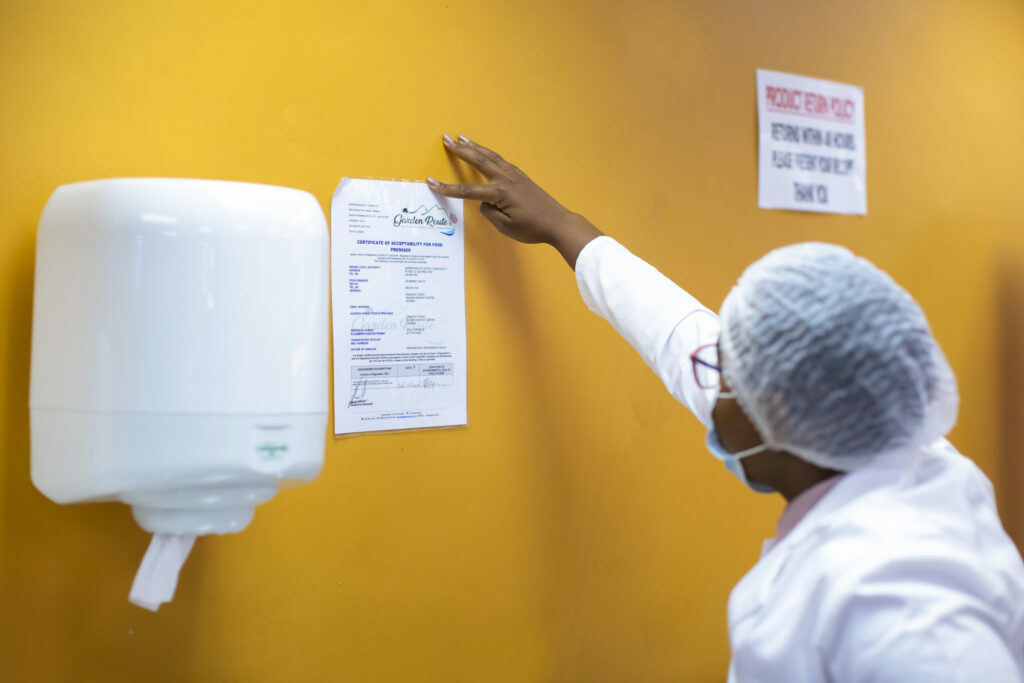
Feature Image: An official from the Knysna Municipality’s Law Enforcement Services during the Joint Spaza Shop Blitz operation that was recently performed in areas of Knysna.

ENDS

02 June 2022 Media Release: Crèche surprised with mattress donations by Garden Route District Municipality

Media Release: Crèche surprised with mattress donations by Garden Route District Municipality

For Immediate Release
2 June 2022

Crèches or day care facilities are required to provide safe sleep spaces for toddlers or little ones they care for on a daily basis. To ensure that these spaces are comfortable enough to provide a healthy sleeping routine, a mattress is regarded as an essential item for a toddler.

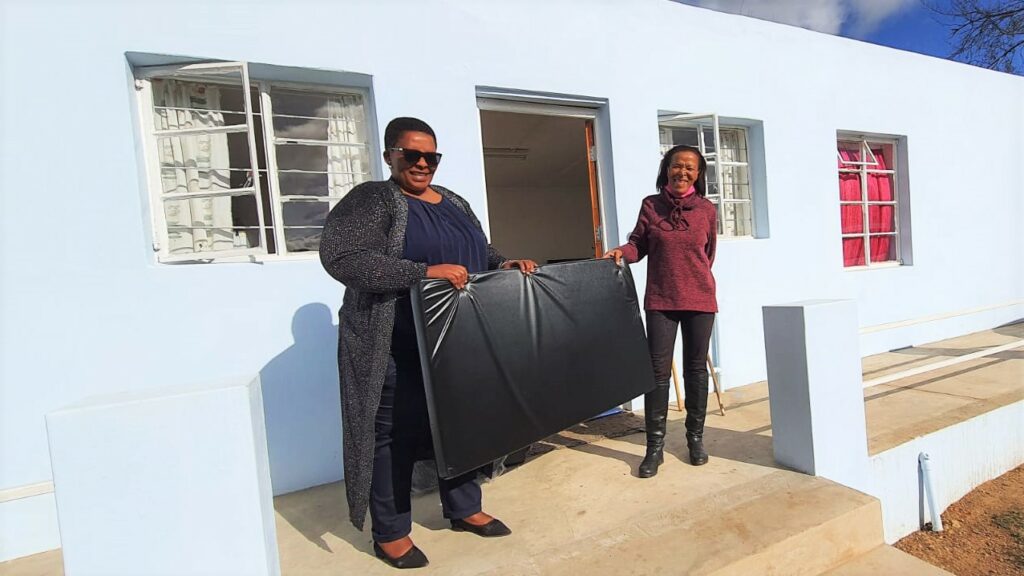
Towards the end of May 2022, Environmental Health Practitioners (EHP) from Garden Route District Municipality (GRDM) and their Portfolio Chairperson for Community Services, Cllr Nompumelelo Ndayi, paid a surprise visit to the St. Elizabeth Crèche in Avontuur. On arrival Cllr Ndayi, on behalf of GRDM, donated sixteen (16) mattresses to the crèche.  A gratified Principal, Caroline Esau, accepted the items on behalf of the little ones and expressed her gratefulness towards GRDM for the donation, especially due to the timing of the donation.  Avontuur experiences extremely cold weather during winter time, reaching low temperatures of 2°C during autumn and winter.

As part of the visit, the team also demonstrated the steps of proper hand wash techniques to the toddlers and daycare staff.

“Applying these steps will prevent you and your families from easily attracting several types of hygiene-related illnesses,” said Cllr Ndayi at the event.

In closing, the team also distributed pamphlets covering information on daily Health and Hygiene habits. The event ended on a yummy note, with the team sharing snack packs, contributed from their own pockets, with each toddler for behaving and cooperating exceptionally well during their visit.

Carike Soman, Environmental Health Practitioner at GRDM, demonstrates proper handing washing techniques to the toddlers present during the visit.

A few health and hygiene tips shared with the toddlers:

  1. WHY IS HAND WASHING IMPORTANT?
  • Keeping hands clean can prevent 1 in 3 diarrhea related illnesses and 1 in 5 respiratory infections, such as a cold or flu;
  • It can result in less illness and fewer missed school days;
  • When the family is healthy, you don’t have to worry about missing school, work or other activities.
  1. STEPS TO WASH HANDS THOROUGHLY:

Wet first; apply soap; rub palms; rub tips of nails against palms or use a clean scrub; rub fingers between each other; place one hand over the back of the other and rub between fingers. Do the same with the other hand that is not washed; rub each thumb with opposite palms; rinse and dry.

  1. USE OF HAND SANITIZER:
  • If soap and water are not available, use an alcohol-based hand sanitizer that contains at least 60% alcohol.

Feature Image: Garden Route District Municipality’s Portfolio Chairperson for Community Services, Cllr Nompumelelo Ndayi (left), hands over a mattress to the Principal of St. Elizabeth Crèche in Avontuur, Caroline Esau.

ENDS