Skip to content Skip to left sidebar Skip to footer

Municipal Health

22 February 2022 Media Statement: Garden Route Municipalities not affected by Typhoid Fever

Media Statement: Garden Route Municipalities not affected by Typhoid Fever

For Immediate Release
22 February 2022

Garden Route District Municipality (GRDM) Executive Manager, Community Services, Clive Africa, also confirms that there are no cases of Typhoid Fever in the Garden Route.

Typhoid fever also known as enteric fever is a bacterial infection that can spread throughout the body, affecting many organs. Typhoid Fever is caused by a bacterium called Salmonella typhi, related to the bacteria that cause salmonella food poisoning. It is highly contagious and an infected person can pass the bacteria through contaminated faeces. If someone else eats food or drinks water that has been contaminated they can become infected with the bacteria and develop typhoid fever.

Typhoid fever is most common in communities that have poor sanitation and limited access to clean water.

Municipal health services as defined in the National Health Act, 2003 do monthly water sampling of all municipal water sources in the Garden Region and potable water in the region is still safe for human consumption. Cases of typhoid in the Western Cape have also not been linked to municipal water sources. Environmental Health Practitioners (EHP) form part of the Garden Route District Response Team and will investigate any suspected cases.

SYMPTOMS
Typhoid fever symptoms include weakness, stomach pain, headache, diarrhoea or constipation, cough and loss of appetite. Some people with typhoid fever develop a rash of flat, rose-coloured spots.

PREVENTION

  • Proper hand hygiene, which includes thorough washing of hands with water and soap.
  • After using the bathroom/toilette, and before preparing or eating a meal.
  • After handling nappies.
  • Maintain good hygiene in the kitchen when you are handling and preparing a meal.
  • Ensure that household water from a safe source.
  • Safe disposal of human faeces and nappies.

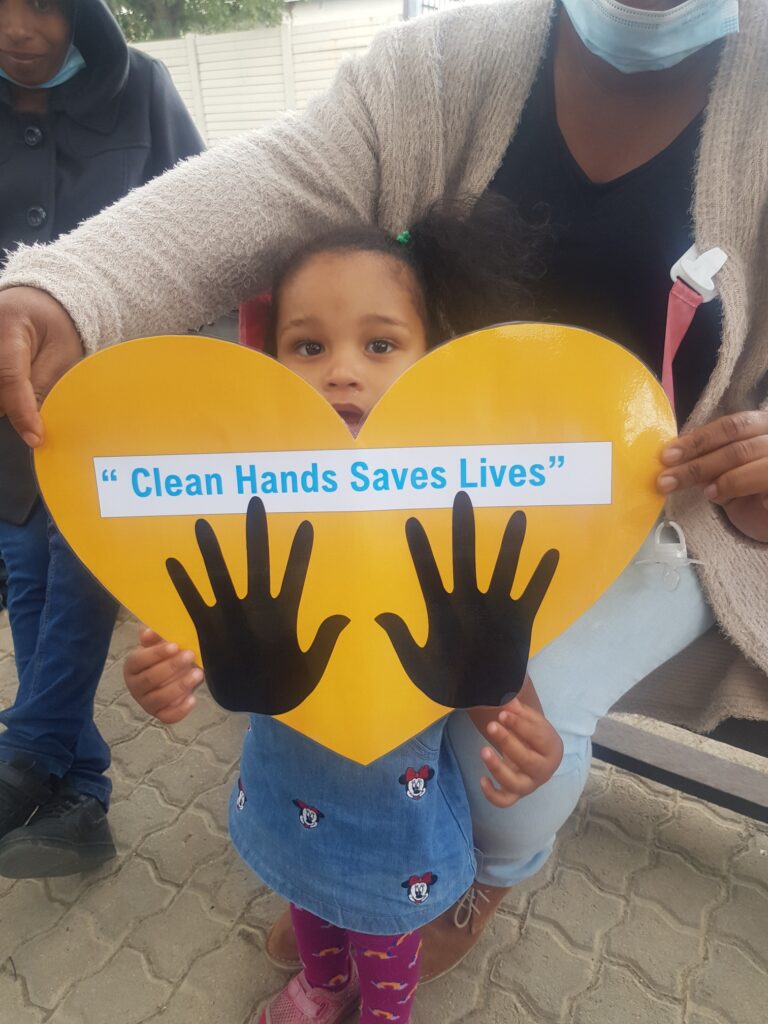
Environmental Health Practitioners provide health and hygiene training on a monthly basis at crèche and schools in the district to illustrate and practice of proper handwashing techniques as well as the importance thereof.

For any further information, please contact us at the respective Regional offices within the Garden Route District Municipality:

Johan Compion
GRDM Manager:
Municipal Health & Environmental Services
E-mail: info@gardenroute.gov.za
Tel: 044 803 1300

Mosselbay:
Sam Bendle
Chief: Municipal Health (Mossel Bay),
Tel:  044 693 0006
Address C/O Sampson & Marling Street, Ext 23, Mossel Bay.

George Outeniqua:
Emmy Douglas
Chief: Municipal Health (Outeniqua)
Tel: 044 803 1501
Address: Mission Street, Industrial Area, George, 6530

George Wilderness:
Pieter Raath
Chief: Wilderness (George)
Tel: 044 803 1501
Address: Mission Street, Industrial Area, George

Klein Karoo
Desmond Paulse
Chief: Municipal Health (Klein Karoo)
Tel: 044 272 2241
Cell: 083 678 6530
Address: 94 St John Street, Oudtshoorn

Knysna
James McCarthy
Chief: Knysna
Tel: 044 382 7214
Cell: 082 805 9417
Address: 26A Queen Street, Knysna

Bitou
Gawie Vos
Chief: Bitou
Tel: 044 501 1600
Cell: 083 557 1522
Address: 4 Virginia Street, Plettenberg Bay

Hessequa
Haemish Herwels
Chief: Hessequa
Tel: 028 713 2438
Cell: 083 678 6545
Address: 23 Michell Street, Riversdale, 6670

Kanaland
George Hendriksz
Chief: Kannaland
Tel: 044 272 2241
Cell: 082 907 3492
Address: 15 Regent Street, Oudtshoorn

ENDS

28 January 2021 Media Release: Garden Route District Municipality’s role in Heavy Motor Vehicle & Hazardous Materials Incidents

On Thursday, 27 January 2022, the Garden Route District Municipality (GRDM) Fire Services responded to a heavy vehicle incident on the N2 highway. The scene involved a truck that lost control and overturned, resulting in oil leaking from it. This posed a high risk of oil spreading towards a close-by drain that leads to the Maalgate River.

The GRDM team was requested to assist George Municipality Fire and Rescue Services who initially responded to the incident.

Deon Stoffels, Acting Fire Chief Officer, said:  “After preventing the oil from spreading further the crew ensured that no fire ignited”.

The GRDM firefighters also restored the road to its former standards and ensured a safe road surface.

Legislation; i.e. The National Environmental Management Act, 107 of 1998 (NEMA) guides and its purpose is among other, to provide for co-operative environmental governance. This requires those responding to incidents, to establish principles for decision making on matters affecting the environment. Of particular importance is Section 30 for the control of incidents involving hazardous substances that could have a detrimental impact on the environment. This is a measure that gives effect to the provisions of Section 24 of the Constitution, regarding the protection of the environment.

Did you know?

Accident scenes are difficult to ignore and are in numerous cases a disturbance to motorists passing the scene. Many accident scenes are taking place near other accident scenes, merely because motorists were not paying attention to the road ahead and only focused on the emergency personnel attending to the accident scene. Passing motorists are therefore advised to adhere to the following:

  1. Observe changes in the traffic pattern around a given accident scene.
  2. Look for emergency personnel directing traffic.
  3. When directed to stop, do so immediately.
  4. Proceed through the scene slowly.
  5. Look for signs indicating what you should do.
  6. Be vigilant of personnel walking on the scene.
  7. Be vigilant of emergency vehicles arriving and exiting the accident scene.
  8. Do not disregard the instructions of emergency personnel.
  9. Remain calm and avoid stepping out of your vehicle.
  10. Keep doors and windows closed, to avoid inhaling in the fumes.
  11. Avoid smoking or attempting to light a cigarette or disposing of flammable goods (deodorant, acetone, paint, methanol, etc.).

ENDS

28 January 2022 Media Release: New District Health Council introduced

Media Release: New District Health Council introduced

For Immediate Release
28 January 2022

The newly appointed district health council for the Garden Route District was introduced by the Western Cape Minister of Health, Dr Nomafrench Mbombo, on 24 January 2022.

‘Community involvement in health is a crucial part of a good health system functioning. It is also an integral part of Primary Health Care, that is why I am committed to meaningful engagement with communities and civil society. This is critical because it gives the district mayors and councillors representing local municipalities an opportunity to interrogate our Annual District Health Plan checking to see whether their local health priorities are considered,’ said Minister Mbombo.

Garden Route District Municipality (GRDM) Mayor, Ald. Memory Booysen, together with councillors reviewed the Annual District Health Plan to confirm whether their local priorities have been considered.

‘This collective approach to health in the Garden Route works because it raises the bar on health service standards,’ said Ald. Booysen. ‘Over the years, GRDM also extended its expert advice about municipal health services and will continue doing so in future.’

Councils represent their respective districts and ensure the coordination of health services with their respective municipalities. The appointment of the district health council is in accordance with the National Health Act, 2003 (Act 61 of 2003) which stipulates the establishment of district health councils.

A district health council consists of:

  • a person appointed by the provincial minister to represent her
  • a member of the relevant district council, who will also be the chair
  • a member of the council of each local municipality nominated by the member of the relevant council
  • not more than five other persons, appointed by the provincial minister, after consultation with the district council.

Members of the council are:

  • Garden Route District Municipality (GRDM) Mayor, Ald. Memory Booysen
  • Garden Route District Director: Mr Zee Brickles
  • Cllr Melvin Roelfse (George)
  • Cllr Betsi Van Noordwyk (Hessequa)
  • Cllr Mavis Busakhwe (Bitou)
  • Cllr Anna Janse van Rensburg (Mossel Bay)
  • Cllr Joey R Canary (Oudtshoorn)
  • Ms Rita Kayster (District Council on Aids and TB)
  • Knysna (outstanding)
  • Kannaland (outstanding)

Members of the public are requested to make use of the channels available to them, such as the district health council, to voice any matters that might need attention.

Caption:

From left: Ms Rita Kayster ( District Council on Aids and TB), Cllr Melvin Roelfse (George), Garden Route District Municipality (GRDM) Mayor, Ald. Memory Booysen, Cllr Betsi Van Noordwyk (Hessequa), Western Cape Provincial Health Minister Nomafrench Mbombo, Cllr Mavis Busakhwe (Bitou), Cllr Ruiters representing Mossel Bay in the absence of cllr Janse van Rensburg, Mr Zee Brickles(district director: Garden Route and Central Karoo) and Simo Sithandathu(Provincial Council on Aids and TB Civil Society representative).

END

Nadia Ferreira
Principal Communications Officer
Garden Route and Central Karoo Districts
Western Cape Government Health
Tel: 044 813 1831
Email: Nadia.Ferreira@westerncape.gov.za
Website: www.westerncape.gov.za

14 January 2022 Media Release: Garden Route Air Quality remains tops

Media Release: Garden Route Air Quality remains tops

For Immediate Release
14 January 2022

“Humankind faces its greatest existential threat in the form of climate change” – President Cyril Ramaphosa, 2020 State of the Nation Address

Climate change refers to long-term changes in weather patterns and temperatures. Such shifts may be natural, such as through variations in the solar cycle. Climate change has been primarily driven by human activities since the 1800s, particularly through the burning of fossil fuels like coal, oil, and gas. Fossil fuel combustion produces greenhouse gas emissions that act like a blanket around the Earth, trapping the sun’s heat and raising temperatures.

Climate change and air quality are closely related. Some of these emissions are not only of concern, but they often come from the same sources. Furthermore, air pollution and climate change interact in complex ways in the atmosphere. Increasing levels of greenhouse gases (GHGs) alter the energy balance between the atmosphere and the Earth’s surface, altering the chemical composition of the atmosphere.

Examples of developments that will result in the release of GHG`s include:

  • Electricity generation facilities that utilize fossil fuels.
  • Industrial developments that contribute to atmospheric emissions.
  • The extraction and production of fossil fuels.
  • The development and related operations of feedlots.
  • Clearing of vegetation and where it is replaced by built infrastructure such as roads, airports, and urban development.
  • Waste disposal facilities.
  • Treatment of waste through burn technologies.

In October 2011, the Government of South Africa published the National Climate Change Response White Paper, which details the Government’s vision for an effective response to climate change and a just transition to a climate-resilient, lower-carbon economy and society. The Minister has promulgated the National GHG Reporting Regulations. The purpose of these Regulations is to introduce a single national reporting system for the transparent reporting of greenhouse gas emissions, which will primarily be used to: Inform policy formulation, implementation and legislation.

“The Garden Route District Municipality recognises climate change as a threat to the environment, its residents, and its future development,” says Dr Johann Schoeman, District Manager: Air Quality. Böckmann (2015) states that measures should be taken to reduce or eliminate carbon emissions or enhance greenhouse gas sinks (mitigation). However, due to lag times in the climate and biophysical systems, the positive impacts of past and current mitigation will only be noticeable in the next 25 years (Jiri, 2016). In the meantime, adaptation is seen as an inevitable and necessary response to the changes projected in the district. Garden Route District Municipality has therefore prioritised the development of a Climate Change Vulnerability Assessment and Climate Change Response Plan.

The Air Quality status of the Garden Route

Air Quality in the Garden route is managed through its 3rd generation Air Quality Management Plan (AQMP). Our Air Quality vision is: To have air quality worthy of the name “The Garden Route”

“The GRDM is one of the front-running municipalities with regards to Air Quality management in South Africa,” said Schoeman.

Air pollution is an increasing risk, and it is estimated that more than 7 million people die worldwide because of air pollution. it is due to this risk that the GRDM for the last 6 years intensified its air pollution awareness through its GRDM Clean Fires campaign, focussing on air pollution awareness at the primary school level.

The Garden Route is a fast-developing zone with people all over South Africa migrating to the district. This will ultimately also lead to increased industrial activity and more pressure on the environment. Within the Western Cape Provincial contexts, GRDM issued 21% of the total number of Atmospheric Emission Licences within the Western Cape, with only the City of Cape town issuing more licences than the GRDM.

Garden Routers is fortunate to have three Provincial Air Quality monitoring stations, which are located strategically within the district. Their placement is based on potential hazardous sources of pollution. These stations are complemented by monitoring stations operated by the industry as well as air quality monitoring activities done by the Garden route district municipality. The George station is also reporting live to the South-African Air Quality Information System (SAQIS).

In general, the pollution measured at these stations are in compliance with the Ambient Air Quality standards of South Africa and the Garden route can still be regarded as a district with very good air quality. The public can access the data on the SAQIS- system. There is excellent cooperation between GRDM and Industry and many emissions reduction programmes and improved technology projects have been implemented to mitigate the harmful effect of air pollution.

Goals 3 and 4 of the GRDM Air Quality Management Plan focus on Climate change response (CCR). The following tasks are envisaged under this objective relating to CCR:

  • Determining the types and quantity of fuels used in households
  • Continue the Clean Fires campaign at schools
  • Refine the emissions inventory to include household emissions
  • Identify the largest contributors of greenhouse gas emissions within the GRDM
  • Engage with these contributors to reduce greenhouse gas emissions and acknowledge those who take effective steps
  • Assist local municipalities to amend by-laws to affect emissions limits on unlicensed industries that emit greenhouse gasses.

The importance of air quality on the quality of life is often overlooked due to a lack of understanding of the impact that poor air quality has on the health and wellbeing of the community. The GRDM AQMP will continue to prioritise protecting vulnerable communities against exploitation.

Feature image: Air quality sensor

ENDS

18 November 2021 Media Release: Typhoid cases in George

Media Release: Typhoid Fever in George

For Immediate Release
18 November 2021

Isolated Typhoid hotspots have recently been identified in the Garden Route, more specifically the George municipal area.

Of paramount importance in the fight against typhoid fever, is awareness and the management of already notified cases. Therefore, the role and functions of the Garden Route District Municipality (GRDM) Municipal Health Services cannot be over emphasised. Prompt interaction with the notified cases will prevent further spread, although difficulties with correct addresses sometimes are a challenge,’ says Johan Compion, Manager for Municipal Health and Environmental Management at GRDM. He added: “During the period of August 2020 until September 2021, fourteen (14) cases including one (1) death were reported from the George region (GRDM),” Compion said.

Typhoid fever is a life-threatening infection caused by the bacterium Salmonella Typhi. It is usually spread through contaminated food or water. Salmonella Typhi lives only in humans.

Typhoid is endemic in South Africa. The normal Typhoid case patient age ranges from 4 years to 27 years. Typhoid risk is higher in populations that lack access to safe water and access to adequate sanitation. Poor communities and vulnerable groups including children are at higher risk. Typhoid fever is also climate related as the germs spread easier during the summer period, making this disease Climate Change related.

A walk through survey and investigation was conducted in order to determine possible cause of the typhoid fever in the affected areas and the following were observed:

  • Illegal dumped waste
  • Pools of stagnant water
  • Animals such as pigs roaming around the area
  • Overflowing sewage
  • Man-made urinal stalls
  • Prolonged high fever
  • Fatigue
  • Headache
  • Nausea
  • Abdominal pain
  • Constipation or diarrhoea

Access to safe water and adequate sanitation, hygiene among food handlers and typhoid vaccination are all-effective in preventing typhoid fever.

Recently, Environmental Health Practitioners (EHPs) have taken water samples to be analysed for Salmonella and Vibrio Cholera. Eight sewage water samples were taken to detect the salmonella typhi and vibrio cholera from different areas in Thembalethu and the Outeniqua Water Works in Rosedale. All those samples taken from the sewage, comply with the standard limit.

EHPs from GRDM monitor the pump stations and river water samples will be taken on a monthly basis.

The aim of this Sampling programme is to reduce the health and safety risks resulting from exposure to contaminated river water.

Compion highlighted that the GRDM Municipal Health section interacts with Local Municipalities on a regular basis to ensure the sustainability of river water and drinking water programs. Further to this he concluded: “Our GRDM EHPs are also busy with typhoid awareness in clinics and the community at large to prevent the spread on the fever in our area”.

ENDS

19 October 2021 Media Release: Garden Route DM prioritises the long-term health and well-being of citizens

Media Release: Garden Route DM prioritises the long-term health and well-being of citizens

For Immediate Release
19 October 2021

The impact various businesses have on the health and well-being of communities, are closely monitored by Garden Route District Municipality (GRDM) Environmental Health Practitioners (EHP). They conduct surveillance of premises to ensure that safe, healthy and hygienic conditions are the order of the day. EHPs, during their inspections, identify, monitor and evaluate health risks, nuisances and hazards. If the premises they’ve inspected is not up to standard, corrective actions will be taken.

GRDM Executive Manager for Community Services, Mr Clive Africa, says “the GRDM Municipal Health By-law, promulgated under the National Health Act, 2003 (61 of 2003), allows EHPs to take remedial action in instances where the conditions may create a possible risk to the health and well-being of the community”. “EHPs perform health inspections at various premises unannounced,” he said.

EHPs visit these types of sites on a routine basis:

  • Accommodation facilities
  • Barbers and hairdressers
  • Body piercing and tattoo parlours
  • Childcare facilities- tertiary and other educational institutions
  • Farms
  • Guesthouses or self-catering accommodation premises
  • Health care facilities
  • Hostels/backpackers
  • Informal settlements
  • Laundries
  • Night shelters
  • Nursing homes and retirement villages
  • Places of care
  • Premises where animals are kept
  • Public ablution facilities, beaches

When inspections are done, the following steps are required to be completed by each EHP:

  1. Inspection checklists are completed and captured for each inspection.
  2. Those in charge of premises will receive a full report on findings within 14 days following an inspection.
  3. While inspections are done, EHPs also educate and inform those in control of premises about immediate remedial actions required.
  4. The GRDM has a digital database of all premises in the region.
  5. In some instances, external stakeholders will form part of inspections (law enforcement, etc.)

A risk-based approach is followed by each EHP during inspections. Focus areas include ventilation, lighting, indoor air quality, food safety, water and sanitation practices, management of waste, pest control, disease transmission risk factors, hygiene practices and other conditions that are likely to pose a hazard or risk to human health.

For any information, contact the GRDM Municipal Health Services Unit of Garden Route District Municipality at 044 – 803 1300 or contact Johan Compion, Manager: Municipal Health and Environmental Services, on 083 803 5161.

ENDS

Caption: Garden Route District Municipality Environmental Health Practitioner inspecting food products at a grocery store in the Garden Route.

15 October 2021 Update: Avian Influenza outbreak


Update: Avian Influenza outbreak

For Immediate Release
15 October 2021

Western Cape authorities continue to respond to an outbreak of Avian Influenza amongst wild seabirds, primarily along parts of the West Coast but also in parts of the Overberg. Clean up operations will continue over the weekend.

The Minister of Local Government, Environmental Affairs and Development Planning, Anton Bredell, says it remains critical to conduct thorough clean up operations and to work hard and fast to prevent the spreading of the virus to other sectors of the province.

“Teams are still collecting dead and sick birds from areas where infection has been reported. We are keeping an eye on Dyer Island where clean up teams yesterday picked up 1595 dead birds. However, the situation in Bergriver Municipality area appears to be improving. From 1500 dead birds collected on Wednesday, we only collected 100 yesterday. In addition, our partners have reported no more carcasses have been found on Robben Island yesterday but they will check again today. We are hoping this trend continues dropping today and over the weekend.”

Bredell says a disposal site has been identified and prepared for the disposal of the infected wild bird carcasses. Veterinarians also continue providing assistance. Officials are following advice provided by Veterinary Services in terms of how to manage the sick birds.

“I want to thank all our workers and partners who mobilized rapidly to help and continue to work hard to stop the spread of this virus. I also want to repeat this critical message to the public: Please do not approach or touch any sick or dead birds. If you spot a bird behaving strangely, or a dead bird, please call the closest municipal office, conservation authority or your local vet.

Contact details for state veterinarians are available at https://www.elsenburg.com/services-and-programmes/veterinary-services-0#s=Animal-Health-and-Disease-Control

ENDS

Media enquiries:
James-Brent Styan
Spokesperson for the Minister of Local Government, Environmental Affairs and Development Planning, Anton Bredell

Mobile:                   084 583 1670
Telephone:            021 483 2820
E-mail:                    James-Brent.Styan@westerncape.gov.za

14 October 2021 Urgent Alert: Suspected outbreak of Avian Influenza

Urgent Alert: Suspected outbreak of Avian Influenza

For Immediate Release
14 October 2021

Western Cape authorities are responding to a suspected outbreak of Avian Influenza amongst wild seabirds in the Bergrivier Municipality on the West Coast as well as the Walker Bay area in the Overberg. All disaster nodes have been alerted and Bergrivier Municipality, both the Overberg and West Coast District Municipalities and CapeNature have already deployed teams of officials to collect the dead and sick birds. Veterinarians are on scene assisting and officials are following advice provided by Veterinary Services in terms of how to manage the sick birds.

The Minister of Local Government, Environmental Affairs and Development Planning, Anton Bredell, is urging the public to avoid the area and in particular not to collect or touch sick or dead birds. “It is critical to prevent the spread of the disease. This means people must not attempt to assist or transport any sick birds, even to take them to rehabilitation centres and veterinarians as this could spread the disease. It is critical to keep a controlled environment.”

At the moment, Bergrivier Municipality remains the hotspot area with reports of dead birds from Velddrif to Arniston. Neighbouring municipalities have been alerted and urged to be cautious and to keep an eye out for potential spreading of the disease. There are additional hotspots on Dyer island and Robben Island which are receiving attention. The Western Cape Disaster Management Centre is currently doing an assessment to determine if the outbreak constitutes a disaster or not.

“This is a serious situation. We note that the deaths are occurring currently amongst endangered wild birds including cormorants. Yesterday alone an estimated 1500 dead cormorants were collected in the region.”

The current virus strain was detected in wild birds in May 2021, mainly affecting gulls. The first cormorants were only diagnosed with the disease in mid-September and cases have increased rapidly over the past week.

“This is an incurable disease affecting birds, that is not preventative, cannot be treated and is highly contagious to birds,” says Bredell.

There is also currently no evidence that this virus poses any risk or threat to humans. However, humans can transmit the virus from sick birds to other birds if their clothes or hands gets contaminated. People are advised not to handle the birds at all unless it is absolutely unavoidable and in that instance to please use gloves and face masks.

The Disaster Management Centre urges the public to be vigilant and report unusual mortalities in any birds to their local municipality, conservation authority or state veterinarian.

Contact details for state veterinarians are available at:
https://www.elsenburg.com/services-and-programmes/veterinary-services-0#s=Animal-Health-and-Disease-Control

ENDS

Media enquiries:
James-Brent Styan
Spokesperson: Minister of Local Government, Environmental Affairs & Development Planning, Anton Bredell
Mobile:  084 583 1670
Telephone:  021 483 2820
E-mail:  James-Brent.Styan@westerncape.gov.za

27 September 2021 News Release: Garden Route District Municipality’s Environmental Health Practitioners fulfill significant role in Water Quality Monitoring

News Release: Garden Route District Municipality’s Environmental Health Practitioners fulfill significant role in Water Quality Monitoring


For Immediate Release
27 September 2021

Water is a national resource, fundamental to life, as well as growth and development. It, therefore, stands to reason that the quality of our drinking water and water resources is highly dependent on the overall management of the water cycle.  

According to Johan Compion, Garden Route District Municipality’s (GRDM) Manager for Municipal Health and Environmental Management, GRDM is mandated by various legislation to monitor the quality of our drinking- and wastewater. He said: “The applicable legislation is enforced by Environmental Health Practitioners (EHPs) and is stipulated in the Constitution of the Republic of South Africa, Act 108 of 1996, the Water Services Act, no 108 of 1997, the National Water Act no. 36 of 1998 and the National Health Act no. 61 of 2003”. To this he added: “Therefore all these health powers are vested in district municipalities, which includes water quality monitoring and environmental pollution control”.


GRDM has eight regions with offices to ensure that water quality in all regions is monitored at intervals required by the legislation mentioned above. The offices are situated in the following areas of the Garden Route district, including Plettenberg Bay, Knysna, George Head office with two sub-regions, Mossel Bay, Riversdale and Oudtshoorn, with a sub-office in Ladismith.


Typical water types that are monitored, sampled and analysed include, but are not limited to: drinking water, surface water (rivers and dams), treated sewage effluent, recreational waters (seawater and public swimming pools) and industrial effluent. Compliance rates for potable water are above ninety (90) per cent, and where samples do not comply with legislation (norms and standards), the reasons are investigated and corrective measures implemented. Waste water plants are also inspected, and sampling is done to ensure that the final effluents are safe to discard in the environment as per permit requirements.


Compion further highlighted and said: “Close cooperation with local municipalities, the Department of Water Affairs, the Department of Environmental Affairs, other government departments and private entities, as well as role-players, exist, to ensure that short-, medium- and long-term goals are met.


In conclusion he emphasised: “Notwithstanding all the above-mentioned facts, residents in the Southern Cape, are the main shareholders to ensure a healthy and safe environment and are encouraged to use water sparingly, to report any form of pollution and refrain from discarding any chemicals or foreign matter in sewage systems and water bodies”.

ENDS

7 July 2021 Public Awareness: The roles and responsibilities of Environmental Health Practitioners in Vector Control

Public Awareness: The roles and responsibilities of Environmental Health Practitioners in Vector Control

07 July 2021
For immediate release

Garden Route District Municipality (GRDM), in terms of the powers vested in Section 156 (2) of the Constitution of the Republic of South Africa Act No. 108 of 1996 read with Section 13(a) of the Local Government Municipal Systems Act, 2000, stipulates that the Environmental Health Practitioner (EHP) within the is responsible for the health and hygiene surveillance of food premises. In terms of the Scope of Practice for EHPs, one (1) of the nine functions of Municipal Health Services is Vector Control.

What are vectors, the control thereof and its impact on public health?

According to research, vector-borne diseases account for approximately 17% of the estimated global burden of infectious diseases. Vectors are insects or animals that spread an infectious disease through a bite, or contact with their urine, faeces, blood, etc. Vectors include mosquitoes, flies, ticks, rodents, cockroaches and fleas. Diseases spread by vectors include malaria, dengue fever, Zika, chikungunya, yellow fever, Rift Valley fever and plague.

The role of Environmental Health Practitioners in vector controlling is to understand the vector and how it transmits infectious pathogens. The team also has to monitor the possible existence of environmental factors that can create a conducive environment for the breeding of vectors; and lastly, they also have to conduct case investigations of vector-borne diseases, as well as public health education on preventative measures.

The National Health Act of 2003, National Environmental Norms and Standards and the Garden Route District Municipal By-Laws of 10 December 2018, obligates food premises to comply with the following requirements for pest control purposes:

  1. Effective measures to prevent and control infestation from pests.
  2. Pest control programmes which sets out procedures necessary to prevent and control pests within the premises. This includes identification of pests, the level of infestation and measures implemented to prevent and control pest infestation in the internal and exterior perimeters of the food premises.
  3. The pest control program should include procedures on the correct storage of food, management of waste and housekeeping to ensure proper management of conditions that may promote pest infestation.
  4. Suitably trained and competent personnel for the implementation and maintenance of documented pest control programs.

What are the hygiene requirements at various settings?

Waste management

  1. Waste generated on the food premises should be properly removed and stored at all times.
  2. Remove waste regularly to eliminate potential food sources and harbourage for pests and keep the area where waste is stored clean.
  3. Containers for the discarding or storage of waste should be fitted with tight-fitting lids, rodent-proof and constructed of material that may not be penetrated by rodents.
  4. Waste storage containers to cleaned and disinfected regularly to avoid attracting pests. Storage containers kept closed at all times.

Housekeeping

  1. Good housekeeping practices to ensure premises are free of conditions that may attract pests.
  2. A cleaning program to promote the immediate cleaning of minor spills and filth, for example, clean-as-you-go-principle.

Water and Food

  1. Avoid stagnating water in and around the premises. This can be possible breeding for mosquitoes and attraction for rodents and other pests.

Bait stations

  1. Locked, labelled, tamper-resistant bait station.
  2. Securely placed to ensure no removal and maintained in good condition.
  3. Regular inspections on the bait stations to check for any activity/ presence of rodents.

Rodent Proofing

  1. The food premises must be rodent-proof and must be in accordance with the SANS Code 080 of 1972.

Challenges relating Vector Control

  1. An increasing amount of food premises are found not to be compliant with their pest control programmes.
  2. Food premises managers or owners cannot provide the EHP with receipts for pest control servicing on request.
  3. Food premises managers or owners are not reporting immediately or not at all when they have pest infestations. These include spaza shops.

The effective execution of a pest control program must be regularly monitored. Therefore, Environmental Health Practitioners appeal to the public to report any nuisances caused by vectors to the Municipal Health Services Section of GRDM.  An Environmental Health Practitioner will attend swiftly to all the complaints brought to their attention.

For more information relating to Vector Control, contact the GRDM Municipal Health Services Section at 044-803 1300/1525.

ENDS