Skip to content Skip to left sidebar Skip to footer

Covid-19

17 September 2020 Awareness: COVID-19 Return to Place of Worship Guideline

17 September 2020

Fighting COVID-19 is a collective responsibility. Therefore, this guideline is developed to guide churches and places of worship to adhere to the golden rules of COVID-19 to curb the spread of the disease.

The virus can spread in churches and places of worship through singing, shouting, talking, preaching, sneezing and coughing. It can also spread if social distancing and no physical touching protocols are not adhered to.

Everyone should be aware that returning to place of worship will be different and a lot of adjustments need to be made. All churches are different and it is important that these principles should be viewed as a guide in developing their own document.

Click here to download the guideline.

For more information, contact:
Mr Johan Compion,
Manager: Municipal Health & Environmental Services
Tel: 044-803 1300 / 044-803 1525
E-mail: jcompion@gardenroute.gov.za

15 September 2020 Media Alert: Executive Mayor to present the Garden Route’s ‘COVID-19 Policy Response to the Tourism Sector’ to National Parliament

Media Alert: Executive Mayor to present the Garden Route’s ‘COVID-19 Policy Response to the Tourism Sector’ to National Parliament

For Immediate Release
15 September 2020

The Executive Mayor of Garden Route District Municipality, Alderman Memory Booysen, will at 19:40 this evening present the Garden Route’s ‘COVID-19 Policy Response to the Tourism Sector’ to the Select Committee on Trade and Industry, Economic Development, Tourism, Employment and Labour. The engagement is hosted by the Committee on behalf of the National Parliament.

All Mayors who will present their response plans are required to specifically focus on the followings aspects, namely:

-Financing that the District Municipality offers Tourism SMMEs including Cooperatives;

-Concessions and incentives that the district municipality offers Tourism SMMEs and Cooperatives;

-Non-Financial Development Programmes;

-Partnership initiatives with other spheres of government including other development institutions;

-Donor funding to support Tourism SMMEs and Cooperatives;

-Partnership Initiatives established with private sector including civil society and institutional of higher learning;

-Policy response initiated in response of COVID-19;

-Action Plans to reset the Tourism Industry post COVID-19; and

-The way-forward/Policy Recommendations.

This engagement started at 14:00 today and is expected to conclude at 21:00.

15 September 2020 Media Release: Western Cape to call on President Ramaphosa to open up international travel, lift curfew and save jobs

Media Release: Western Cape to call on President Ramaphosa to open up international travel, lift curfew and save jobs

15 September 2020

This morning, I am attending the President’s Coordinating Council meeting where President Cyril Ramaphosa will be discussing the next phase of lockdown with Ministers and the Premiers of all the provinces.

During that meeting, I will motivate for the further opening of business and economic activity on the grounds that the citizens of this province have proven that they are able to take individual responsibility by changing our behaviour.

The Western Cape Government is also well prepared for COVID-19 and has shown that we are able to track and manage this virus, and we continue to flatten the curve. Our province-wide hotspot management also continues.

I will therefore be requesting, on behalf of the citizens of the Western Cape, that:

  • We lift the curfew.
  • A date, in October, for the opening of international travel is declared so that bookings can be made by international travelers who want to come to our country.
  • We save jobs and business by allowing more economic activity such as events and sporting events.

Our focus right now must be on saving jobs and avoiding a humanitarian crisis. We must do this now and we must do it safely to move forward.

Broadcasters: Please see video attached.

10 September 2020 Statement by Premier Alan Winde: Western Cape cabinet to meet on formal position for further reopening of the economy; calls on residents to stay safe, move forward.

Statement by Premier Alan Winde: Western Cape cabinet to meet on formal position for further reopening of the economy; calls on residents to stay safe, move forward.

10 September 2020 

“It’s time to move forward”

This week, we received confirmation of what was already being felt by families and communities across our province and country: that we are facing a serious economic disaster that will result in hunger and growing levels of inequality in South Africa.

If the daily Covid-19 stats were a marker of how we were doing in our fight against this health pandemic, then the GDP stats released this week, which showed a significant decline in economic activity, should be the clearest indication that we are now in the midst of a dangerous and, yes, deadly second pandemic of joblessness that will hit our most vulnerable communities the hardest.

I agree with President Ramaphosa’s comments yesterday: this was not a shock, but the result of a prolonged and severe Lockdown and its associated economic restrictions – which at times lacked common sense. The reality is that if people cannot work, sell their goods, or offer their services, the economy cannot grow, and jobs will be lost.

As I have said before, we supported the initial hard lockdown as a necessary step to buy South Africa time to prepare our health-system for the peak of infections that were to come. We did this in the Western Cape. We built field hospitals in record time, ensured that we had enough PPE and other medical stock like oxygen for our peak, and we launched a comprehensive, province-wide hotspot strategy to intervene and ensure behaviour change that would flatten the curve.

But we also at the same time argued – even when facing serious opposition – that we should allow businesses to operate safely as well. We called for Level 3, when some wanted us to go to Level 5. We lobbied for the tourism, construction, e-commerce and wine sectors to open. We said that we can save lives now through interventions like our hotspot strategy, but we can do this in a way that allows economic activity and saves lives in the future too.

It is also why we have now geared up our government to fight this second pandemic with equal determination. We have convened two Bosberaad sessions and identified the pillars of our recovery plan, which will focus on our government priorities of jobs, safety and dignity for the people of the Western Cape.

But our success will be limited for as long as we continue with restrictions on economic activity. They need to come to an end.

We must open up all sectors of the economy and allow for international travel in line with clear health guidelines and in acknowledgment of individual responsibility. We must treat our residents as responsible partners in our continued efforts to keep Covid-19 on the decline.

Tomorrow, the Western Cape Government cabinet will discuss the further opening of the economy and adopt an official position to present to President Ramaphosa during his next round of consultations.

“Stay Safe. Move Forward” 

All indicators confirm that the Western Cape has moved into the recovery phase of its pandemic. We need to ensure that we keep up all the behaviour changes we have learnt over the last 5 months. We must continue to wear a clean cloth mask, keep a 1.5 metre distance from others, wash our hands, and clean surfaces around us regularly. If we do this, we can keep ourselves and our loved ones safe.

But we need to do something further at the same time: we need to move forward. We need to get out of our homes and support businesses so that we get our economy growing again.  We need to make sure we get the medical treatment we need for non-COVID health conditions which we have been delaying. We must make sure that our kids are immunised, and that they go to school to get the knowledge they need to succeed in life. We need to get back to work, to school and to our lives – and we need to do it safely.

This has never been a zero-sum game. We don’t have to pick-and-choose between being safe and moving forward. We can do both, and we can get onto the right track again. Our message to the people of the Western Cape is to help us now like you did so enthusiastically before so that together, we can move forward.

10 September 2020 Media Release:  CANGO CAVES OPEN ITS DOORS AFTER SIX-MONTH NATIONAL LOCKDOWN CLOSURE

MEDIA RELEASE

For Immediate Release

CANGO CAVES OPEN ITS DOORS AFTER SIX-MONTH NATIONAL LOCKDOWN CLOSURE

 Oudtshoorn, 9 September 2020. – After having had to close its doors as a result of the National Lockdown for a period of approximately six months, the Cango Caves is proud to announce that it will open its doors to the public on Friday, 11 September 2020.

The Cango Caves, which successfully draws about 250 000 tourists a year, is regarded as a provincial, national as well as an international tourism treasure. More than half of all visitors per year are from outside the borders of South Africa, with 60% of all visitors coming from Europe and Britain. South-East Asian tourists are also as key visitors.

In this regard, the Cango Caves is widely acknowledged for its role as a key contributor to the economy of the Garden Route and Klein Karoo, and in particular Oudtshoorn.

“The onset of the Covid-19 pandemic and its resultant negative impact on the economy of the region, meant that the Cango Caves management along with key partners of the Oudtshoorn Municipality had to think very carefully about its future business and plan for accordingly,” says Alison Moos, Acting Manager of the Cango Caves.

“As far we know, this is the first time since opening its doors in the late 1900s that the Cango Caves had to close its doors for such a long period of time – nearly six months since National Lockdown was introduced in March this year,” Moos adds.

“While we are looking forward to opening our doors to welcome tourists again, we are well aware of the importance to protect the safety of both the Cango Caves employees as well as our visitors. We are also aware of the negative impact of Covid-19 on the economy, locally, national as well as internationally. This means that at least for the next 18 months we are unlikely to experience as strong a flow of visitors as we saw prior to the onset of the pandemic.”

“We also know that should we register a Covid-19 case at the Cango Caves, we would most likely have to close our doors again, albeit for a much shorter period of time.”

With regards to tours, Moos announced that, as part of the measures introduced to manage the situation, “the Cango Caves will for the foreseeable future only offer the Heritage Tour, which is an easy walk through the first six largest chambers. The size of the groups on this specific tour will also be limited, given requirements for social distancing”.

“The Heritage Tour originally catered for a maximum of 100 people. This has been changed, in line with safety protocol, to 20 people on the tour and the tour is conducted every 15 minutes.”

The Adventure Tour, which is considered a more challenging tour with narrow passages and tunnels that requires a degree of fitness, has been suspended till further notice.

Sanitising stations are available throughout the complex before visitors embark on their tour and visitors are encouraged to regularly sanitise their hands. Face masks are obligatory for all staff and visitors. Electronic temperature screening and sanitising will take place at the entrance to the complex.

The Cango Caves is a public entity and as such adheres to the strict regulation as gazetted by the Department of Labour as well as the Department of Health.

The first tour at Cango Caves was conducted in 1891.

Ends.

CAPTION: Cango Caves 1 and Cango Caves 2

Issued by the Oudtshoorn Municipality’s Communication & Media Services on Wednesday, 09 September 2020

10 September 2020 Media Release: Illegal dumping needs to stop for the sake of all of us

Media Release: Illegal dumping needs to stop for the sake of all of us

For immediate release
10 September 2020

Illegal dumping and littering is a national environmental problem which has a detrimental effect on human health.  This problem not only negatively affects the environment, but it also has social and economic repercussions, such as detrimental impact on tourism.  Recently it became widely known that illegal dumping is prevalent in the majority of the identified COVID-19 hotspots in the Garden Route district.

With the above in mind, the need to effectively clear and manage illegal dumping in the COVID-19 hotspot areas has become a matter of urgency.  Consequently, an investigation was initiated by the Garden Route District Municipality (GRDM) to determine the challenges of each local municipality to effectively manage illegal dumping in their respective municipalities. Also, to determine the associated costs relating to doing this for the remainder of the 2020-2021 financial year.

According to the local municipalities, all the identified illegal dumping hotspots in the Garden Route district receive waste management services.  In most municipalities, waste skips are placed in and around areas where illegal dumping is prevalent and waste disposal at the waste facilities is also free of charge.  Therefore, illegal dumping is not due to a lack of waste management services but is however a human behavioural issue.  The problem is especially prevalent in less affluent areas of municipalities. There are a countless number of instances where domestic waste is disposed of in ravines and open spaces.  Similarly, small builders and gardening service providers are also frequently reported for illegally dumping builders’ rubble and garden waste in open spaces and road reserves. These areas become particularly difficult to access by means of machinery i.e. front-end loaders and tipper trucks and therefore require a different approach.

GRDM has found that each local municipality has unique needs, volumes of illegally dumped waste and clearing methodologies and the costing and implementation of a district or standardised approach will therefore not be efficient.  Also, the majority of the local municipalities have a dire lack of budget allocation and/or understanding of the requirements to effectively manage illegal dumping.

As a result, a project was identified to clear all accumulated waste in the COVID-19 and illegal dumping hotspots.  The project aims to implement measures to maintain clean and hygienic conditions in these areas to mitigate the associated detrimental health effects. A door-to-door educational and awareness campaign on proper waste management and environmental pollution will be conducted. This grassroots level approach will attempt to change residents’ attitudes towards illegal dumping. Also, it would be a great achievement if behavioural change can happen through the buy-in of the community. This will ensure that the project is sustainable.

Due to the enormity of the project and the associated costs at a district level, the project will be implemented in a phased approach.  Phase 1 of the project will entail the clearing of illegally dumped waste in the Thembalethu and Pacaltsdorp areas of the George Municipality, for four months from September 2020 until the end of December 2020.  George Municipality, specifically Thembalethu and Pacaltsdorp, were identified as the areas where illegal dumping is currently most prevalent in the district. Therefore, these areas are perfectly suited for the implementation of Phase 1 of the project.  The project will be rolled-out in collaboration with the applicable local municipalities and in this case, George Municipality.

Front-end loaders and tipper trucks will be utilised for the clearing of large stockpiles of illegally dumped domestic waste as well as for the clearing of accumulated garden waste and builders’ rubble.

Community-based contractors and workforces i.e. employment of workers from within the communities will be utilised for the areas that are inaccessible to large machinery and equipment.  The EPWP job creation approach is being used, which means that EPWP participants are being recruited and appointed by the GRDM for a period of four months.  The GRDM will appoint a total of thirty-five (35) EPWP participants as support staff to the front-end loaders which will include fourteen (14) EPWP participants as support staff to the front-end loaders provided by George Municipality. Thirty-six (36) EPWP participants will be appointed for the door-to-door education and awareness and the conduction of a survey to determine the causal factors contributing to illegal dumping.  George Municipality will implement loud hailing throughout the illegal dumping areas in order to inform residents of the project and to request their cooperation during and after the project.  The Ward Councillors of the respective wards in Thembalethu and Pacaltsdorp will also assist in spreading the word.

George Municipality has already appointed two contractors to commence with the clearing of illegal dumping in Thembalethu and Pacaltsdorp by using a front end loader and tipper trucks. One supporting team was dispatched to assist the JCB with clean-up of waste that cannot be cleaned by the Frontend Loader.


9 September 2020 Media Release: Tourism Month – Western Cape tourist guide registration system goes online

Media Release: Tourism Month – Western Cape tourist guide registration system goes online

For Immediate Release
9 September 2020

We are excited to announce a new online system launched to make it easier for the 5 000 tourist guides in the Western Cape to register, renew and update their details.

Until now tourist guides have had to complete application forms in hard copy or via email, but now the new online registration system provides them with the opportunity to register or create a profile, search the knowledge base of resources, give feedback, ask a question and chat with an agent.

Access to the tourist guide registration system is through the Western Cape Government eService portal.

With the re-opening of inter-provincial travel under Alert Level 2, our tourist guides play an important role in welcoming visitors to the Western Cape and ensuring they have a great experience and keep coming back.

Our new online registration, which is the first of its kind in South Africa, is just one of the many ways we have been working hard to support tourist guides during the Covid-19 pandemic in the Western Cape.

To ensure that our tourist guides were able to access the relief funding that national government made available to them, we collected and verified the details of an estimated 5 000 tourist guides which were then submitted to the Department of Tourism to receive financial support.

Our “One Day” tourism campaign which was developed by Wesgro and launched to inspire future travellers during the Covid-19 lockdown restrictions, also provided an opportunity for tourist guides to become virtual guides, using streaming services to conduct tours of our top experiences in the Western Cape. At the end of the virtual tour, viewers had the chance to show their appreciation to the tourist guides through Paypal or Snapscan.

From September, tourist guides can also schedule appointments to collect their tourist guide ID cards and badges from the Tourism Guide Registration Office at Waldorf Building, 80 St George’s Mall. While the Office remains partially closed due to the Covid-19 restrictions, almost 200 tourist guide ID cards and badges are ready for collection. To collect, tourist guides must schedule an appointment with one of our staff members:

Vorena Rudolph 021 483 3012 vorena.rudolph@westerncape.gov.za
Puleng Leoatle-Kwepile 021 483 9130 puleng.leoatle-kwepile@westerncape.gov.za
Babalwa Matiti 021 483 2960 babalwa.matiti@westerncape.gov.za

Notes for media:
Please find soundbyte from Minister David Maynier attached

To read the statement online visit: https://www.westerncape.gov.za/news/tourism-month-western-cape-tourist-guide-registration-system-goes-online

Media Queries:

Francine Higham

Spokesperson for the Provincial Minister of Finance and Economic Opportunities

(Responsible for the Provincial Treasury and the Department of Economic Development and Tourism)

Tel: 021 483 4327 / Cell: 071 087 5150

Email: francine.higham@westerncape.gov.za

If you do not want to receive future media releases from Minister David Maynier then please reply directly to this email requesting to be removed from our mailing list.

8 September 2020 Media Release: GDP contraction: We will apply the same urgency to rebuilding our economy as we did to the health response in the Western Cape

Media Release: GDP contraction: We will apply the same urgency to rebuilding our economy as we did to the health response in the Western Cape

For Immediate Release
8 September 2020

GDP contraction: We will apply the same urgency to rebuilding our economy as we did to the health response in the Western Cape

The massive 51% real GDP contraction in the second quarter of this year shows just how devastating the lockdown has been on the economy across South Africa.

When the national economy contracts, the provincial economy contracts, and so there is no doubt that the lockdown will have a severe impact on the economy in the Western Cape.

However, one positive is the agricultural sector which has grown by 15% and provides a glimmer of hope as this sector contributed 209 798 jobs and R21 billion to the economy in 2019 in the Western Cape.

We have led the way in calling for the opening of the economy where it was safe to do so, with some success in the re-opening of the ecommerce, construction and tourism sectors.

We have worked hard to support businesses during the crisis with many resources and tools such as:

  • the Covid-19 Content Centre, set up with our partners at Wesgro and the City of Cape Town, to provide support and advice for businesses during the crisis,
  • the Covid-19 support finder which helps businesses navigate and access the many financial relief packages available to them,
  • our Red Tape Reduction Unit which assists businesses, including small businesses, with information such as how to start a business and where to register a business, as well as red tape related issues, such as delayed permits
  • our health guidelines and information materials on preventing and managing Covid-19 infections in the workplace, and
  • our PPE marketplace which helps businesses to find Personal Protective Equipment (PPE) suppliers and which supports small businesses providing PPE to private businesses.

We have stood with business through the crisis and we remain committed to standing with business in recovery, which is why we are now moving forward and focusing on our economic recovery with all the urgency of the health response in the Western Cape.

We have launched our “We Are Open” domestic tourism campaign, and we will continue to call for the further opening of the economy where it is safe to do so. This includes calling for the opening of our borders to allow international travel, which is critical to supporting businesses in the hardest hit tourism and hospitality sector in the Western Cape.

Notes for media:
Please find soundbyte from Minister David Maynier attached.

To read the statement online visit: https://www.westerncape.gov.za/news/gdp-contraction-we-will-urgently-rebuild-our-economy-western-cape


Media Queries:

Francine Higham

Spokesperson for the Provincial Minister of Finance and Economic Opportunities

(Responsible for the Provincial Treasury and the Department of Economic Development and Tourism)

Tel: 021 483 4327 / Cell: 071 087 5150 / Email: francine.higham@westerncape.gov.za

If you do not want to receive future media releases from Minister David Maynier then please reply directly to this email requesting to be removed from our mailing list.

31 August 2020 Media Release: Third Garden Route DM employee loses his life to COVID-19

Media Release: Third Garden Route DM employee loses his life to COVID-19

For Immediate Release
31 August 2020

It is with profound sadness and loss that the Garden Route District Municipality (GRDM) announces its third employee who succumbed to COVID-19. On Friday, 28 August 2020, Mr Nono Willie Nkasayi, a Senior Worker at the GRDM Oudtshoorn Roads Services Department passed away when he lost his battle against Covid-19.

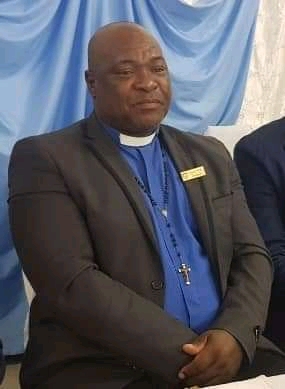
The 54-year-old Willie Nkasayi worked at the Oudtshoorn region since 3 June 2005. Colleagues remember him as a humble and beloved person. Mr Gert Verwey, Deputy Manager at the Oudtshoorn region described him as a man who has always treated everyone with respect, and who had the ability to look at the “bigger picture” of things in life. He further described the late Nkasayi as an exceptional person – well-known, as a God-fearing person.  Having been a pastor at his church, Verwey refers to Willie as a prominent religious leader in the Southern Cape and Karoo area.  He acknowledges that Willie’s passion for the Lord and people drove him to always serve his fellow community members.

Mr Kleinbooi Stoffels, Roads Services Superintendent and the immediate supervisor of Willie Nkasayi said that he will be deeply missed amongst his colleagues.  He described Willie as a very disciplined and caring person.  “Willie was a go-getter in his team, always ready to make plans on how to complete a task productively.  His passing really ‘shocked’ me, and made me realise how short life is and that we should appreciate each other while we still can. I will miss his visits in the morning in my office. I am eternally grateful that I was able to walk a path with such a great spirit,” said Kleinbooi.

During his journey at GRDM Roads Services, Willie served his colleagues as a union representative for the South African Municipal Workers Union (SAMWU).  As a shop steward, he lived his passion and he believed that a matter could be resolved in a respectful and orderly manner.  Willie Nkasayi will also be remembered as a family man whose loved ones and relatives meant the world to him; as a community leader; a teacher for many; a caring colleague and friend.

Hamba Kahle – ‘Tata Nkasayi – as you were known by all’.

28 August 2020 Media Release: GRDM Roads official wins battle against COVID-19 after being bedridden in Hospital

GRDM Roads official wins battle against COVID-19 after being bedridden in Hospital

For Immediate Release
28 August 2020

After almost two months of ill health, weakness, oxygen shortage and hospitalisation, Ms Teresa Nortje-Singh, Personal Assistant at the Garden Route District Municipality Roads Department, has finally won her battle against the deadly COVID-19 coronavirus.

Ms Nortje-Singh remembers that soon after she came in close contact with a person at the end of July 2020, she immediately started to feel weak the following day.  She recalled that she could not get herself out of bed the next morning, to get ready for work. She continued working for two more days. “On Thursday morning I started to feel weaker and could not eat, but could consume some soup and medication,” she said.  “Over the next weekend I felt so weak that I slept most of the time to the extent that somebody had to wake me up”.

A week later, Ms Nortje-Singh decided to call her medical doctor, who advised her to be tested for Covid-19.  When the doctor contacted her the same evening with the news that she had contracted the virus, he immediately asked whether she needed assistance with isolation.  She declined as her setup at home was favourable for her to be isolated.

Ms Teresa Nortje-Singh, Personal Assistant at Garden Route District Municipality, won her battle against COVID-19.

Ms Nortje-Singh also recalled how her doctor telephoned her every morning to find out how she felt and whether there were any change in symptoms and he encouraged her to keep herself safe to avoid ending up in an intensive care unit.  During the start of her COVID-19 journey, her mother took care of her, however since her mother is an elder with a comorbidity, she asked her to swop homes with her sister for a while until she has fully recovered. Ms Nortje-Singh also remembers how her sister had to lay on top of her for more than once for her body temperature to increase after experiencing body chills.  She also had body aches, but did not cough. When the doctor contacted her again she started experiencing breathing problems. “When my asthma pump did not help to clear my airways, I started to become anxious,” she said.

On arrival at the Medi-Clinic George, the medical staff on duty immediately attended to her. The doctor sent her for a sonar and only then the damage to her lungs was discovered, with both already partially collapsed. Her kidneys were also damaged.  “I could see the concern in the doctor’s eyes when he told me how severe my condition was”. She furthermore said.  “I also realised how serious my condition was when the two COVID-19 patients who I shared the ward with, were taken to the intensive care unit the same evening”.

“At our ward, medical staff’s main focus was on the recovery of patients while protecting themselves – they took excellent (beyond excellent) care of me in the ward and they constantly asked me how I felt”.

Being discharged from hospital on 6 August 2020 was an emotional experience for Ms Nortje-Singh. “The medical practitioners and care workers of the ward waited for me at the elevator to take me down to the exit. They also helped me into the vehicle and made sure that I was in a comfortable position”.  With a little laugh she added:  “They debated about who will be pushing me to my vehicle. They also thanked me for making them feel good about themselves while in their care”.

Back at home, Ms Nortje-Singh still did not feel well and she thought she still had the virus, but eventually she started to feel better as days went by.  She acknowledged all her family, friends and colleagues who supported her with her COVID-19 journey, who called and messaged her.  Nortje-Singh now uses every opportunity to create awareness about the severity of the disease. I constantly raise the issue when having conversations with people. “They have to know how quickly one can get infected and how sick someone can become”. She emphasised: “I urge every person to adhere to all the safety protocols to protect themselves against this invisible enemy. It is also important that anyone who might contract the virus have to get enough and proper body rest to prevent the virus from leaving any other damages to the body behind. It is also important for others to understand that an infected person always need and appreciate the messages of support when they are in isolation/sick, but I could not always respond to messages or telephone calls as the situation became extremely overwhelming and draining. My body needed all the rest I could get to fully recover,” Ms Nortje-Singh concluded.

The article was written in memory of Ms Nortje-Singh’s colleague, Mr Lemos Soko, who passed away of COVID-19 on 6 August 2020 during the time she was hospitalised.

ENDS