
Author: Herman Pieters
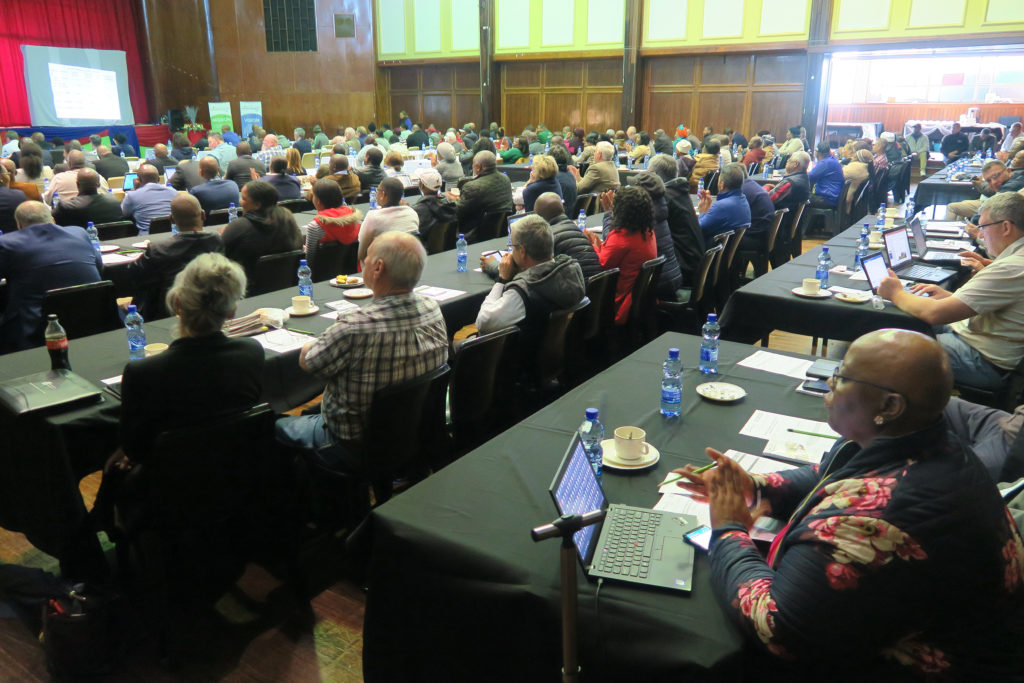

A warm welcome to our district
Odds are, the moment you enter the iconic Garden Route District, your soul will awaken with a jolt!
We offer the perfect balance of nature and metropolis, outdoor adventure and shopping mall delight – our region is a gem, a springboard to launch visitors into an adventure of excellence across the entire region. You will find that there is never enough time to see and experience all that an area has to offer – so you have to come back again to continue your journey.
On a serious note, during your time with us, we encourage you to exercise caution and to be tolerant while travelling on the road. Please obey the speed limits, the road rules, do not text or call while driving, do not drink and drive, and always wear a seatbelt. An important number to dial in case of an emergency is 044 805 5071 or 10177.
See you on the Garden Route!

Garden Route’s Regional Waste Facility a ground-breaking Public-Private Partnership
Above: The GRDM minds behind the Regional Landfill Facility – hard work paid off: (FLTR): Johan Gie (District Waste Management Officer, Johan Compion (Manager: Municipal Health and Environmental Management Services), Clive Africa (Executive Manager: Community Services) and Morton Hubbe (Manager: District Waste Management).
(Credit: Michelle Pienaar)
A first of its kind for South Africa
Garden Route District Municipality’s (GRDM) Council, on 13 December 2019, approved a ten-year and eight-month contractual agreement for a Public-Private Partnership (PPP) between GRDM and Eden Waste Management. The facility will include integrated disposal services to accommodate household and hazardous waste from four municipalities in the Garden Route – Bitou, Knysna, George and Mossel Bay.
According to Executive Mayor of GRDM, Cllr Memory Booysen: “This is a first PPP of its kind for South Africa. We are the first district municipality out of 44 district municipalities in South Africa to champion such an initiative.”
“We are also planning a sod-turning event for early 2020. Thereafter, construction of the facility will start in February 2020, with the first truckloads of domestic waste expected to be delivered by September 2020,” said Cllr Booysen.
Cost and Services
The total cumulative cost to the district municipality over the contract period is projected at R790 million.
According to Mr Morton Hubbe, GRDM Manager: District Waste Management: “The Regional Waste Management Facility will have a life-span of approximately 30 years”. He also said: “Provision was made to accommodate waste from Hessequa, Kannaland and Oudtshoorn Municipalities – if the need arises.” Hessequa Municipality also recently indicated that they are interested to dispose the domestic waste generated in Gouritzmond and Albertinia at the regional facility when in need of such a service.
The municipal services and support activities that will be provided by the Regional Waste Facility, will include the following:
- The safe disposal of general waste;
- a hazardous waste cell for the safe disposal of regional hazardous waste;
- bulk waste transport;
- chipping of green waste;
- crushing of builder’s rubble; and
- alternative waste treatment technologies, but only if the alternative waste treatment technologies can be incorporated on a no-additional cost basis.
The services of a roaming chipper, use for green waste, and crusher, used for builder’s rubble, will be made available to Mossel Bay, George and Knysna municipalities on a rotational basis. Bulk waste transport services will be available to George Municipality for the transport of domestic waste from Uniondale and George waste transfer stations to the Regional Facility.
Editor’s note:
Section 83 of the Local Government: Municipal Structures Act, 1998 (Act No. 117 of 1998), requires a district municipality to seek to achieve the integrated, sustainable and equitable social and economic development of its area, by:
- Ensuring integrated development planning for the district as a whole;
- Promoting bulk infrastructure development and services for the district as a whole;
- Building the capacity of local municipalities in its area to perform their functions and exercise their powers where such capacity is lacking; and
- Promoting the equitable distribution of resources between the local municipalities in its area to ensure appropriate levels of municipal services within the area.

Employees Awarded Long Service Certificates
Long Service Certificates were awarded to various employees of Garden Route District today, 13 December 2019, during an Ordinary Council meeting. Some, but not all of the following employees, were able to attend the award ceremony.

Here are a few of of the employees who received recognition for being employed from to 10 to 40 years.


Employees donate to NPO
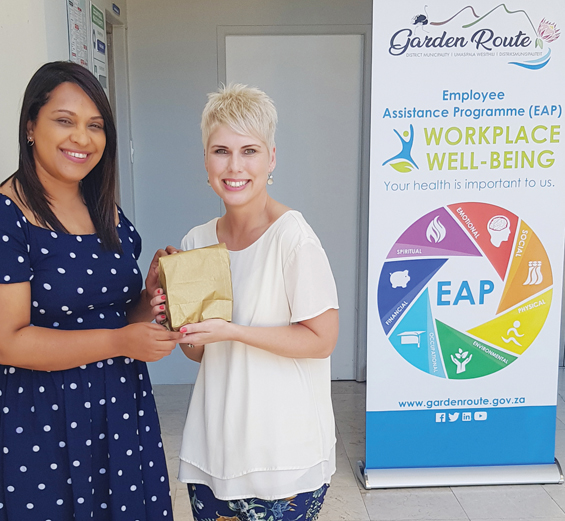
GRDM joined the ‘Special Needs Children are Different, not Less‘ campaign of Binah and Legacy Centre to show support for special needs awareness. The campaign coincided with National Disability Rights Awareness Month from 3 November to 3 December and the International Day of Persons with Disabilities. Funds were raised by buying and selling green lollipops at a profit. GRDM officials bought a total of 130 lollipops and managed to raise R1450.00 that will be utilised to empower the special needs community of George by means of information and training on special needs.
We would like to thank the officials of GRDM for their eagerness to make a contribution towards this worthy cause.
GRDM Employee Assistance Practitioner, Shandré Abrahams said: “The funds raised will be used to remove barriers and to improve the quality of life of people with disabilities.”
It is important for the public to understand that disability is the consequence of an impairment that may be physical, sensory, cognitive, mental, emotional, developmental, or some combination of these.






Wilderness Beach launches Pilot Blue Flag
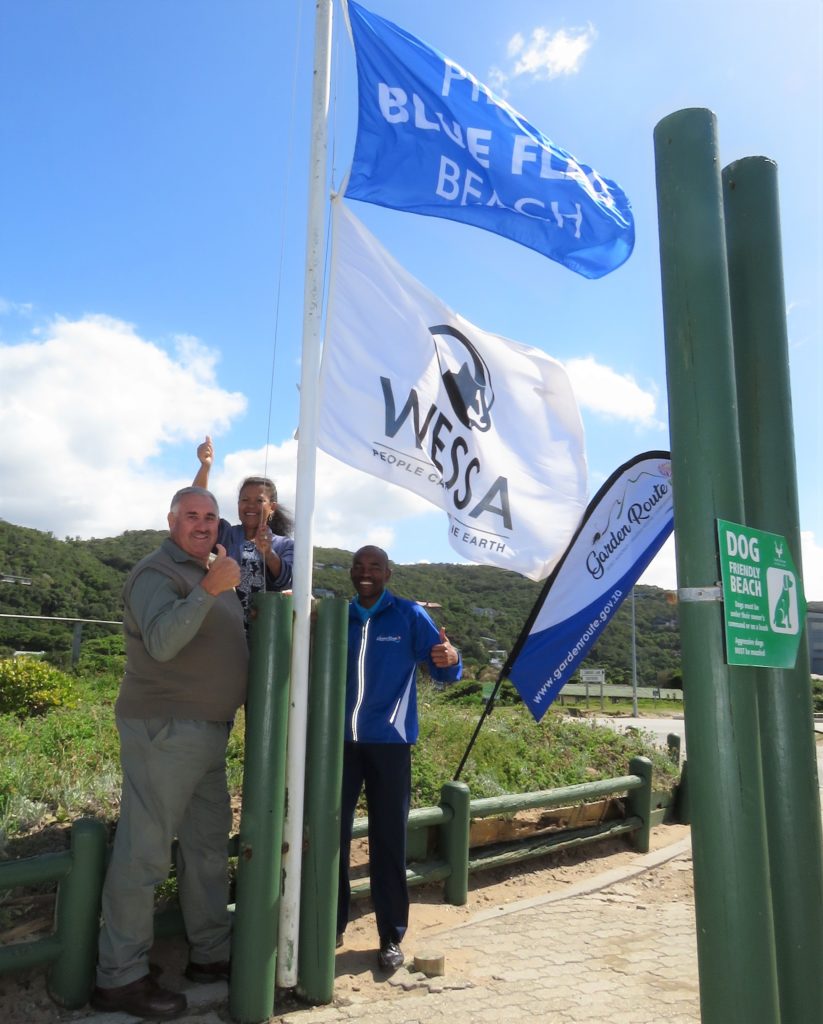
Wilderness Beach today (3 December 2019) hoisted its Pilot Blue Flag for the 2019/20 season during a short ceremony at the beach in front of Salina’s Restaurant.
The beach incorporates jurisdiction of SANParks, Garden Route District Municipality and George Municipality. The Blue Flag is a joint project of these roleplayers, with major involvement of Salina’s Restaurant, which overlooks Wilderness beach, and with the support of the Wildlife and Environment Society of South Africa (Wessa) that manages the Blue Flag Programme in South Africa. It is the second consecutive year the beach has Pilot Blue Flag status since Garden Route District Municipality re-applied for the accolade. Wilderness had full status in previous years but skipped application in 2017 due to administrative changes at the District Municipality.
Addressing roleplayers at the ceremony this morning, Garden Route District Municipality Head of Disaster Management Gerhard Otto said the roleplayers had hoped that Wilderness Beach would earn full Blue Flag status this year, but new changes in the WESSA Blue Flag Beach requirements had not made it impossible on short notice. “Salina’s had in the past made its disabled toilets available to disabled beachgoers, which was sufficient in the past to qualify, but this is no longer the case. The George Municipality has already allocated funding for such upgrades at the public toilets located in the parking area at the beach, but the implementation of these upgrades was unfortunately outside the Blue Flag application timeframe. We believe this will be resolved next year and expect that Wilderness will have full Blue Flag status for the 2020/21 season,” said Mr Otto.
Garden Route District Mayor Alderman Memory Booysen said the Pilot Blue Fag certificate ensured close scrutiny of beach management standards such as water quality, public safety, facility management, the provision of quality services, environmental management and commitment towards environmental education and information. “I am confident we can attain full Blue Flag status and together reap the fruits of the programme’s inherent benefits for many years to come,” said Mr Booysen.
George Municipality Ward Councillor for Wilderness, Marlene Barnardt thanked the many roleplayers and complimented by name Salina’s Restaurant owner Massimo Mariotti for his involvement and sited his role as a stellar example of the private sector working with local government and others for the greater good of the community. “
Selina’s Restaurant owner Massimo Mariotti said patrons often commented on the presence of a Blue Flag. “National and international tourists recognise the benefits associated with the Blue Flag and we believe it is very important for tourism in our village and on the Garden Route to have this accolade,” said Mr Mariotti.
The Blue Flag season in Wilderness runs from 1 December 2019 to 31 January 2020. Compliance includes high standards of water quality monitoring, public safety and lifeguard services, and well-maintained coastal amenities.
South Africa has participated in the Blue Flag programme since 2001. Blue Flag is an international coastal management programme that accredits beaches that meet standards of excellence in water quality, environmental management, environmental education and information as well as safety and services. The Blue Flag programme offers many benefits: improved tourism facilities, enhanced management of coastal ecosystems, increased awareness of the coast and capacity building of coastal municipalities. In South Africa, the programme is implemented by the Wildlife Environmental Society of South Africa (WESSA).

Another Unqualified Audit for Garden Route District Municipality
Garden Route District Municipality (GRDM) has received its second consecutive unqualified audit. The Auditor-General (AG) attributed the Western Cape municipalities’ 2018/19 success to “effective leadership culture, the implementation of action plans, and established policies and procedures”.
Monde Stratu, GRDM Municipal Manager said: “we managed to reduce all deviations by almost half when compared to 2017/18 financial year.” This was one of the institution’s goals which was collectively achieved.
“I am proud of my administration and all the work they’ve put into retaining an unqualified audit status. Council’s oversight and support have also been invaluable,” said Stratu.
Putting good governance into practice is one of the reasons why the Western Cape Government has produced the best AG outcomes with 79% clean audits. Earlier this year, GRDM hosted its first Good Governance Summit where it, among others, discussed topics such as:
- accountability through the implementation of effective governance structures;
- enhancing public participation processes through effective good governance structures and new innovations;
- insulate municipalities against interference from external stakeholders
- encourage and improve ethics and ethical conduct within municipal leadership
The MEC for Local Government at Western Cape Government, Anton Bredell, also voiced his opinion about audit outcomes and said: “Councils are increasingly struggling with severe ongoing financial constraints due to the country’s economic challenges.” At 74%, the province also had the highest number of auditees with good financial health status and there were no auditees with unauthorised expenditure. From the above, it is evident that there has been a solid and consistent pattern of good audit outcomes in the province.
Definition of various Audit Outcomes
Clean Audit Outcomes:
The financial statements are free from material misstatements and there are no findings on reporting on performance objectives or non-compliance with legislation.
Unqualified Audit Opinions:
The financial statements contain no material misstatements. Findings may have been made on either reporting on predetermined objectives or non-compliance with legislation, or both these aspects.
Qualified Audit Opinions:
The financial statements contain material misstatements in specific amounts, or there is insufficient evidence for us to conclude that specific amounts included in the financial statements are not materially misstated.
Disclaimer of Opinion:
On some occasions, an AQ is unable to complete an accurate audit report. This may occur for a variety of reasons, such as an absence of appropriate financial records. When this happens, the auditor issues a disclaimer of opinion, stating that an opinion of the firm’s financial status could not be determined.

WORLD AIDS DAY – 1 December 2019
1 December 2019 was WORLD AIDS DAY
This year, World AIDS Day is themed “Communities make the difference”
Communities contribute to the AIDS response in many different ways. Their leadership and advocacy ensure that the response remains relevant and grounded, keeping people at the centre and leaving no one behind. Communities include peer educators, networks of people living with or affected by HIV, such as gay men and other men who have sex with men, people who inject drugs and sex workers, women and young people, councilors, community health workers, door-to-door service providers, civil society organizations and grass-roots activists.
Some stark statistics
- Globally, there are an estimated 36.7 million people living with HIV.
- More than 35 million people have died of HIV or AIDS, making it one of the most destructive pandemics in history.
- The total number of people living with HIV is estimated at approximately 7,97 million in 2019.
Frequent assumptions and questions
HIV is NOT AIDS
It’s important to remember that HIV and AIDS are not the same thing. When someone is described as living with HIV (Human Immunodeficiency Virus), they have the HIV virus in their body. A person is considered to have developed AIDS (Acquired Immune Deficiency Syndrome) when the immune system is so weak it can no longer fight off a range of infections with which it would normally cope.
True or false: You can get HIV from a mosquito bite?
Answer: False
It is physically impossible for a mosquito (or any other insect which bites mammals) to transmit HIV. Firstly, the HIV virus can’t survive in or on an insect. Secondly, these insects only suck blood up, they do not inject blood back in.
HIV can be transmitted by two of the following routes.
a) Sharing needles or syringes / YES
b) Kissing someone / NO
c) Sex without a condom with someone who has HIV but has an undetectable viral load / NO
d) Spitting / NO
True or false: Pre-exposure prophylaxis, or PrEP, can prevent HIV transmission even when a condom isn’t used.
Answer: True.
If used correctly, PrEP is effective against preventing HIV. However, it does not prevent against other STIs or pregnancy. More info: A person can take Pre-Exposure Prophylaxis, or PrEP, to prevent themselves from acquiring HIV. PrEP is a medication which is highly effective at preventing HIV transmission, when used as directed.
What are the benefits of HIV treatment?
a) It prevents sickness and gives you a normal life expectancy
b) It suppresses the virus so that you can’t pass it on
c) Both of the above
Answer: (c) Both of the above
More info: HIV treatment is extremely effective and an HIV positive person on treatment can now lead a full and active life and has a normal life expectancy. HIV treatment also has preventive benefits. It reduces the level of HIV in the body to what is clinically referred to as an ‘undetectable viral load’ (this normally takes around six months from starting treatment). If someone’s viral load is undetectable, that means that they cannot pass on HIV, even when having sex without condoms.
“Like” the UNAIDS Facebook page: https://buff.ly/2KbIZ3L
“Like” the UNAIDS South African Facebook page: https://buff.ly/34OggKd


Forms of gender-based violence
There are many different forms of violence, which you can read more about here. All these types of violence can be – and almost always are – gendered in nature, because of how gendered power inequalities are entrenched in our society.
GBV can be physical, sexual, emotional, financial or structural, and can be perpetrated by intimate partners, acquaintances, strangers and institutions. Most acts of interpersonal gender-based violence are committed by men against women, and the man perpetrating the violence is often known by the woman, such as a partner or family member [3].
Violence against women and girls (VAWG)
GBV is disproportionately directed against women and girls [4]. For this reason, you may find that some definitions use GBV and VAWG interchangeably, and in this article, we focus mainly on VAWG.
Violence against LGBTI people
However, it is possible for people of all genders to be subject to GBV. For example, GBV is often experienced by people who are seen as not conforming to their assigned gender roles, such as lesbian, gay, bisexual, transgender and/or intersex people.
Intimate partner violence (IPV)
IPV is the most common form of GBV and includes physical, sexual, and emotional abuse and controlling behaviours by a current or former intimate partner or spouse, and can occur in heterosexual or same-sex couples [5].
Domestic violence (DV)
Domestic violence refers to violence which is carried out by partners or family members. As such, DV can include IPV, but also encompasses violence against children or other family members.
Sexual violence (SV)
Sexual violence is “any sexual act, attempt to obtain a sexual act, unwanted sexual comments or advances, or acts to traffic, or otherwise directed, against a person’s sexuality using coercion, by any person regardless of their relationship to the victim, in any setting, including but not limited to home and work.” [6]
Indirect (structural) violence
Structural violence is “where violence is built into structures, appearing as unequal power relations and, consequently, as unequal opportunities.
Structural violence exists when certain groups, classes, genders or nationalities have privileged access to goods, resources and opportunities over others, and when this unequal advantage is built into the social, political and economic systems that govern their lives.”
Because of the ways in which this violence is built into systems, political and social change is needed over time to identify and address structural violence.
GBV in South Africa
Societies free of GBV do not exist, and South Africa is no exception [7].
Although accurate statistics are difficult to obtain for many reasons (including the fact that most incidents of GBV are not reported [10] ), it is evident South Africa has particularly high rates of GBV, including VAWG and violence against LGBT people.
Population-based surveys show very high levels of intimate partner violence (IPV) and non-partner sexual violence (SV) in particular, with IPV being the most common form of violence against women.
- Whilst people of all genders perpetrate and experience intimate partner and or sexual violence, men are most often the perpetrators and women and children the victims [7].
- More than half of all the women murdered (56%) in 2009 were killed by an intimate male partner [8].
- Between 25% and 40% of South African women have experienced sexual and/or physical IPV in their lifetime [9, 10].
- Just under 50% of women report having ever experienced emotional or economic abuse at the hands of their intimate partners in their lifetime [10].
- Prevalence estimates of rape in South Africa range between 12% and 28% of women ever reporting being raped in their lifetime [10-12].
- Between 28 and 37% of adult men report having raped a women [10, 13].
- Non-partner SV is particularly common, but reporting to police is very low. One study found that one in 13 women in Gauteng had reported non-partner rape, and only one in 25 rapes had been reported to the police [10].
- South Africa also faces a high prevalence of gang rape [14].
- Most men who rape do so for the first time as teenagers and almost all men who ever rape do so by their mid-20s [15].
- There is limited research into rape targeting women who have sex with women. One study across four Southern African countries, including South Africa, found that 31.1% of women reported having experienced forced sex [16].
- Male victims of rape are another under-studied group. One survey in KwaZulu-Natal and the Eastern Cape found that 9.6% of men reported having experienced sexual victimisation by another man [17].
Source: https://www.saferspaces.org.za/understand/entry/gender-based-violence-in-south-africa