Skip to content Skip to left sidebar Skip to footer

Municipal Health

GRDM EHPs and stakeholders educate ECD representatives regarding requirements of ECD facilities

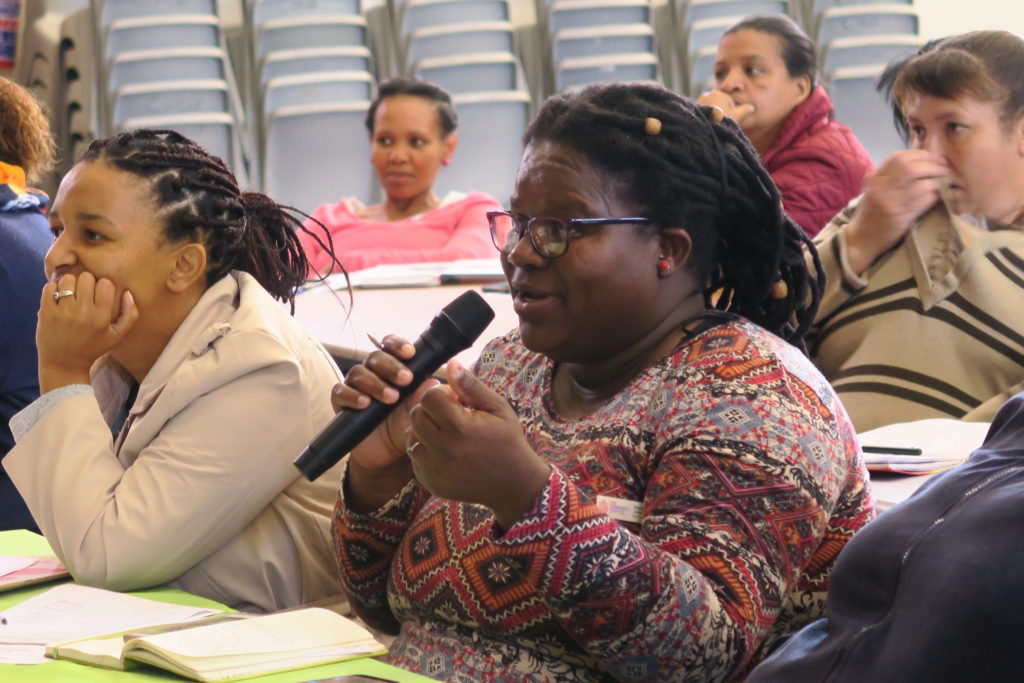
Representatives from Early Childhood Development (ECD) facilities, such as Crèche principals and members of the George community, on 17 October, benefited from an ECD Programme presented by Environmental Health Practitioners (EHPs) from Garden Route District Municipality (GRDM) at the Conville Civic Centre in George.

The initiative aimed to discuss the importance of daily practices that would be of benefit to a child and to ensure that the parents and ECD practitioners instill the correct values in the child’s life.  For this reason, Ms Jacoleen Fred, Health Promoter at the Western Cape Department of Health, presented the first 1000 days of a child’s life from the period of conception.  Listening to every aspect shared at the event, it became clear that every activity during this 1000 day period has an effect on the mental and physical health and development of a child, e.g. how one talk the child and what one say to them, immunisation and also how the habits and activities of the parent or caretakers influence the child over the long run. Ms Fred also stressed her concern about the toxic habit of using drugs and alcohol during pregnancy and the undesired impact it will have on babies and their future. She therefore advised that love and affection is key to raise a healthy child and one example thereof is to play with a child. “This provides the opportunity for expressing love and care, communicating, building relationships and problem solving,” she said.

Ms Jessica Erasmus, EHP at GRDM, presented the topic regarding the requirements of ECDs.
Ms Sive Mkuta, EHP at GRDM, spoke about proper health and hygiene practices at ECDs.


Ms Chrystal Smith from Klein Karoo Resource Centre which handles the registrations on behalf of Department of Social Development, spoke about the importance of the registration of ECD facilities and that they are committed to help ensure that all crèches in the Garden Route area become registered.  For more information contact Ms Smith at: kkrcentr@mweb.co.za / tel: 044 272 7802.

Ms Jessica Erasmus, GRDM EHP at the George office spoke about the Health and Hygiene requirements of childcare facilities and educated all present regarding the Health Certificate which is a must for anyone running an ECD facility.

She furthermore emphasized that health and hygiene habits are important for all ages, more so in settings where children who are in diapers and are very young, are cared for. She stated:  “Good health and hygiene practices, can help to reduce the spread of germs and prevent children and caregivers from contracting diseases”. She also explained that an ECD facility should be designed, built and equipped in manner that proper care is given to a child and also to protect children from any public health hazard, risk or public nuisance.  “For every children 0 – 24 months they need 2m2 each,  children aged 2 – 7 years need 1,5m2 each and the outside space per child, regardless of age is 2m2” and she added:  “These requirements are to help allow the children to move around and have space to develop”. She also shared the importance of a valid Certificate of Acceptability which is a legislative requirement for all premises who prepare and serve food. The certificate is issued by an EHP, to the effect that the premises comply with the Environmental Health regulations.

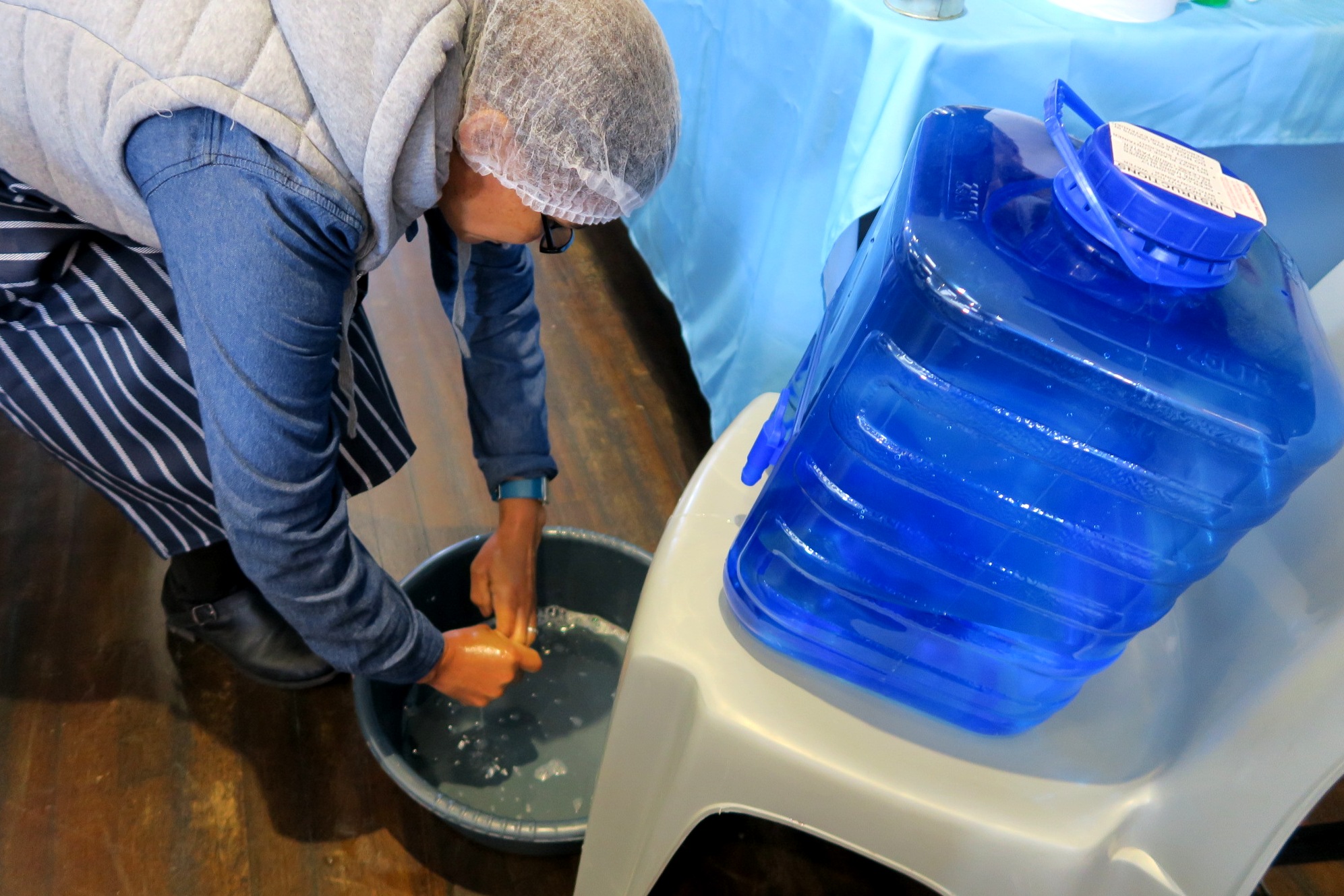
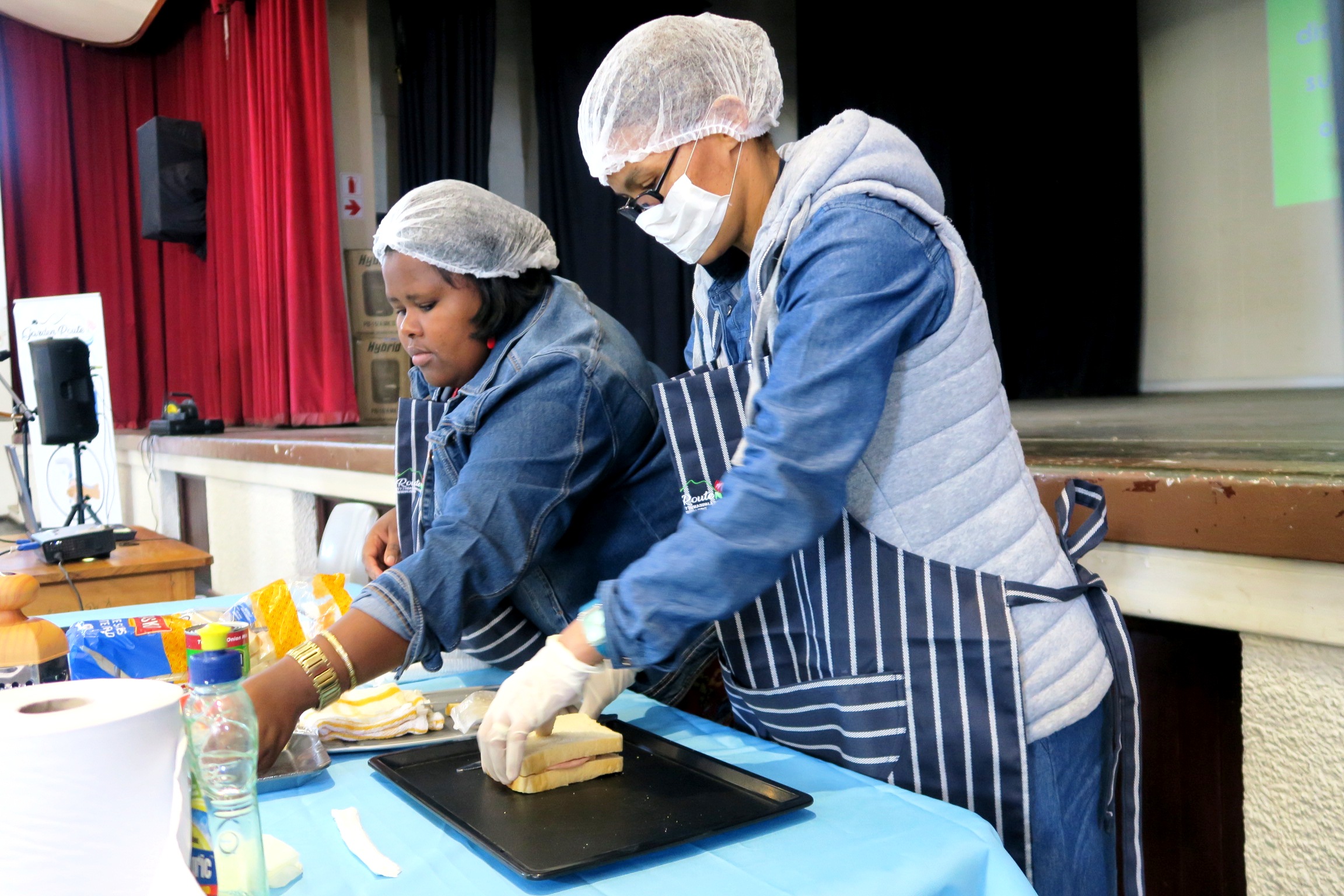
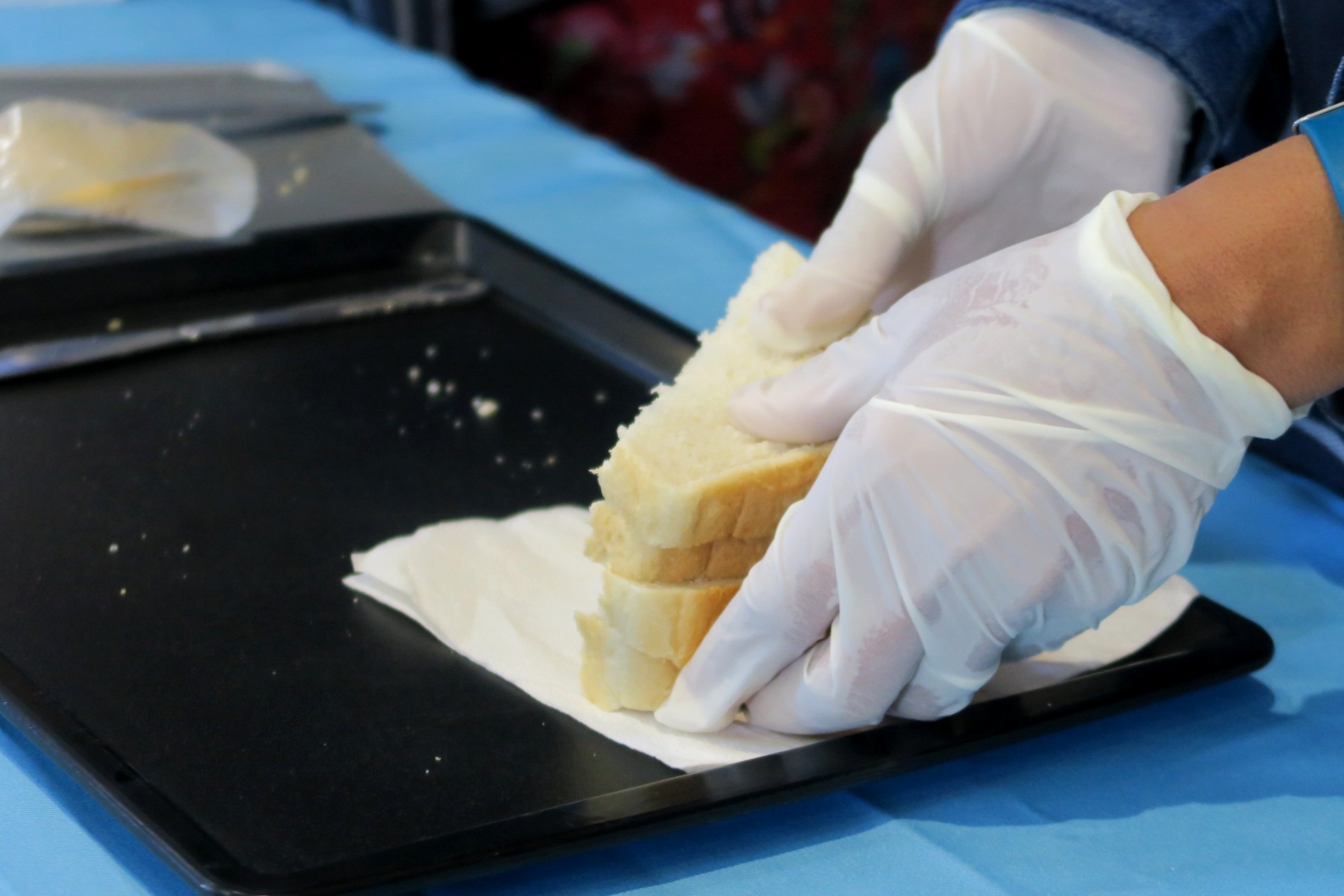
During her presentation with regard to food safety and personal hygiene, Ms Sive Mkuta, EHP at GRDM, presented the five keys to safer food and invited two volunteers from the audience to each prepare a sandwich within five minutes. Before and during the preparation, she asked the audience to carefully look at how the sandwiches were prepared and subsequently asked them to identify any mistakes that were made during the preparation. The audience then responded that one of the ladies’ hair was not properly covered and that she did not wear gloves. It is important that all these factors are applied during the preparation of food, specifically at ECD facilities.  Other topics that were presented during the session include:  fire safety at ECD facilities, town planning requirements as well as how to reduce waste, reuse waste and the recycling of waste.

EHPs from GRDM, together with representatives from the Western Cape Department of Health, George Municipality, as well as Klein Karoo Resource Centre soon after the session.

Ms Ivy Mamegwa (EHP), on behalf of GRDM, shared a word a gratitude to all representatives who participated and attended the event, including the representatives from the Western Cape Department of Health, George Municipality, Klein Karoo Resource Centre, principals and caretakers of ECD facilities and members of the community.

A total of 150 representatives, including principals of crèches and caretakers, as well as members from the community were in attendance.  Attendees found the topics very helpful in their journey to make a difference in the life of each child in their care.

FOR PUBLIC COMMENT – Final Draft Garden Route DM 3rd Generation Integrated Waste Management Plan 2020-2024 – Closing 8 November 2019

Garden Route District Municipality wishes to invite the public to review and provide comment on the 3rd Generation Integrated Waste Management Plan (IWMP).

The IWMP covers the period 2020 – 2025 and defines the municipality’s vision, objectives and targets for waste management.

 The reports will be made available for review at the following locations:

 Garden Route Municipal Offices (during office hours)

Hard copies of the GRDM IWMP will be made available at the following locations:

GRDM Head Office 54 York Street, George (Tel: 044 803 1300)
Knysna Satellite Office 24A Queen Street, Knysna (Tel: 044 382 7214)
Mosselbay Satellite Office C/O Marlin & Samson Street, Mosselbay (Tel: 044 693 0006)
Plettenberg Bay Satellite Office 7 Gibbs Street, Plettenberg Bay (Tel: 044 501 1600)
Oudtshoorn Satellite Office 15 Regent Street, Oudtshoorn (Tel: 044 272 2241)
Riversdale Satellite Office 24 Mitchell Street, Riversdale (Tel: 028 713 2438)

GRDM website: https://www.gardenroute.gov.za/documents/

GIBB’s website: http://projects.gibb.co.za

Public review and commenting period

The IWMP will be available for a period of 21 days from 18 October 2019 to 08 November 2019 for the public to review and provide comment on.  All comments received will be included in the final IWMP.

Submission of comments

Comments on the IWMP can be submitted using the contact details listed below

GIBB Public Participation Office

Mrs Kate Flood

Postal address: PO Box 63703, Greenacres, Port Elizabeth

Physical address: 1st Flood, St. George’s Corner, Central, Port Elizabeth

Email: wastesurvey@gibb.co.za

Tel: 041 509 9150

Fax: 041 363 9300

Surveillance and Prevention of Communicable Diseases

One of the nine key performance areas of Garden Route District Municipality’s (GRDM’s) Environmental Health Practitioners (EHP’s) is the “Surveillance and Prevention of Communicable Diseases”. This focus area is especially important as South Africa and many other developing nations, especially least developed nations face a myriad of communicable diseases.

What is a communicable disease?

According to the World Health Organisation, communicable, or infectious diseases, are caused by microorganisms such as bacteria, viruses, parasites and fungi that can be spread, directly or indirectly, from one person to another. Some are transmitted through bites from insects while others are caused by ingesting contaminated food or water.

A variety of disease-producing bacteria and viruses are carried in the mouth, nose, throat and respiratory tract. Conditions such as leprosy, tuberculosis and different strains of influenza (flu) can be spread by coughing, sneezing, and saliva or mucus on unwashed hands.

Sexually transmitted infections such as HIV and viral hepatitis are spread through the exposure to infective bodily fluids such as blood, vaginal secretions and semen. Hepatitis B and C is a significant concern in Africa where many people are unaware of their infections.

Insects play a significant role in the transmission of disease. Bites from Anopheles mosquitoes transmit malaria parasites that can wreak havoc on high-risk populations such as children under age 5 and pregnant women. It is, however, important to note that Malaria does not occur in the Western Cape, but endemic in the Lowveld of Mpumalanga and in Limpopo.  Many diseases are also caused by unsafe water, poor housing conditions and poor sanitation in the Region.

Surveillance of Communicable Diseases

When a Communicable Disease outbreak occurs in the Garden Route, the EHP’s will carry out an investigation, monitor the environment and raise additional health awareness to the affected and surrounding community members. During these investigations the EHP’s will also collaborate with other spheres of government, such as Primary Health Care, to prevent the occurrence and/or manifestation of environmental-related or communicable diseases.

Prevention of Communicable Diseases

Health awareness campaigns rolled out to various communities is still the best approach for educating communities with knowledge and the understanding of communicable diseases.

The different themes of the awareness campaigns focus on personal hygiene, a healthy lifestyle and a safe and healthy environment.

Despite poor areas now having better housing, waste removal, water and sanitation services, many households do not adopt healthy habits and practices in their homes.

Effects of Climate Change

The greatest health burden associated with the effects of climate change will be found in impoverished communities, underscoring the existing weakness in public health systems.

Predicted effects on health include:

  • Injuries and fatalities related to severe weather;
  • food contamination;
  • allergic reactions;
  • respiratory and cardiovascular disease; and

Environmental Health Practitioners have a key role to play in resolving environmental challenges and preventing disease of environmental origin.

Research, monitoring and surveillance are fundamental to the Environmental Health Practitioners if they want to fulfil their primary function of properly identifying, assessing and managing environmental health risks that may cause communicable diseases.

For any information or complaints, contact the GRDM Municipal Health Services at 044 – 803 1300.

Update on the Ambient Air Quality Monitoring: October 2019

The Garden Route District Municipality’s (GRDM) Air Quality Management Unit is pleased to announce that the futuristic robotic looking portable ambient air quality monitoring station has returned after repairs at Scentriod in Canada.

The Scentinal SL50 is used by the GRDM’s Air Quality Management Unit for high accuracy screening purposes as well as obtaining baseline information on ambient air quality in a specific air space in the vicinity of proposed new developments. The robot measures all meteorological parameters, Nitrogen Dioxide, Sulphur Dioxide, Carbon Monoxide, Hydrogen Sulphide, Total reduced sulphates and Amines, Methane, Volatile Organic Compounds and Particulate Matter with sizes of 1, 2.5 and 10 micron.  The equipment plays a pivotal role in managing air shed and determining the potential accumulative effects in a specific air shed.

The station was recently deployed to the Mossel Bay Harbour in order to obtain baseline information on the ambient air quality in the surrounding area.

The 3rd Generation Air Quality Management Plan (AQMP) was recently adopted during a council meeting. The AQMP identified potential air quality “hotspots” within the seven (7) municipalities in the region, by means of a dispersion modelling which make use of emission factors and mathematically simulate on how air pollutants disperse in the ambient atmosphere. The aim of this study was to identify areas of concerns that exist outside the knowledge of the GRDM’s Air Quality Management Unit.

The possible areas of concern are:

  • Bitou: Particulate Matter (PM10)
  • Knysna: Nitrogen Dioxide
  • George: Particulate Matter (PM10)
  • Mossel Bay: Nitrogen Dioxide and odours
  • Oudtshoorn: Particulate Matter (PM10), Sulphur Dioxide and Nitrogen Dioxide

Following the identification of the potential areas of concern and pursuing objective 1.5 of the GRDM’s 3rd Generation AQMP, which task the Air Quality Unit to “Initiate and coordinate short-term air quality monitoring projects (where applicable) to verify the dispersion modelling results in potential problem areas”, monitoring will commence in the Knysna, to verify the effect of vehicle emissions in the Main Road of the tourist town.

99-percentile NO2 concentrations along Main Road in Knysna.  Burgundy coloured regions show areas where the air quality standard of 200 µg/m3 may potentially be exceeded.

Subsequent to the Knysna monitoring run, the Scentinal Station will be move to the other areas of concern, namely Bitou and Oudtshoorn.  There are continuous emissions monitoring stations in the George-, Mossel Bay- and Oudtshoorn municipal areas, and the focus will therefore be in regions where there is no permanent monitoring site.


Notice for Public Comment – Public Private Partnership for the Development, Design, Finance, Maintenance and Operation of a new District Regional Landfill Site

The Garden Route District Municipality, in terms of the provisions of Section 33 of the Local Government: Municipal Finance Management Act, No. 56 of 2003 hereby make public its intention to enter into a Municipal Public Private Partnership (Municipal PPP) with a private partner, willing to invest in the financing, design, construction, operation and management of the proposed Garden Route Regional Waste Management Facility including the provision of a hazardous waste cell, bulk transportation of waste, chipping of green waste, the crushing of building rubble and related works as well as alternative waste treatment technologies if such alternative waste treatment technologies can be incorporated on a no additional cost basis.

The proposed Municipal PPP Agreement and an information statement summarising the Municipality’s obligations in terms of the proposed contract can be inspected at the Municipality’s head and satellite offices during the official hours of operation of these offices from 03 October 2019 until 03 November 2019. The Municipal PPP Agreement and information statement will also be available, for the duration of the comment period on the Municipality’s website, www.gardenroute.gov.za.

Click here to download the full advert and click here to download all documents related to this notice.

The Municipal PPP Agreement will be considered for approval by the Municipal Council of the Garden Route District Municipality at its Council meeting to be held at the Municipality’s head-office in George during December 2019.

Members of the local community and other interested parties are invited to submit their comments or representations in respect of the proposed Municipal PPP Agreement to the Garden Route District Municipality before 12:00, 03 November 2019 in a sealed envelope clearly endorsed STAKEHOLDER COMMENTS ON THE PROPOSED AGREEMENT FOR A MUNICIPAL PUBLIC PRIVATE PARTNERSHIP FOR THE ESTABLISHMENT OF A REGIONAL LANDFILL FOR THE GARDEN ROUTE DISTRICT MUNICIPALITY IN THE MOSSEL BAY AREA” and addressed to: Municipal Manager, Garden Route District Municipality, P.O. Box 12, George, 6530, and to be deposited in the tender box in the foyer of the Garden Route District Municipal head office at 54 York Street, George.

The Information Statement contains more detail on the information requirements to be provided for individuals and/or organisations that are submitting comments.

Any person who wishes to submit comments or representations in respect of the proposed contract who cannot write will be assisted by the Garden Route District Municipality Communication Section at 54 York Street, George.

It must be noted that should the Garden Route District Municipal Council approve this Municipal PPP Agreement during their meeting to be held in December 2019, it will be implemented as soon as possible thereafter.  The agreement as concluded would in terms of Section 84(3) of the Local Government: Municipal Systems Act, 32 of 2000 be made available at the municipal head and satellite offices during office hours for public inspection.

Enquiries can be directed to Mr Morton Hubbe at tel 044 693 0006 or to morton@gardenroute.gov.za.

M Stratu
Municipal Manager
Garden Route District Municipality
P.O. Box 12
George 6530

GRDM and Mossel Bay Municipalities launch Schools Composting Programme in Mossel Bay

Mossel Bay Municipality in collaboration with Garden Route District Municipality (GRDM), on 17 September 2019, launched a Schools Composting Programme in Great Brak River. During the launch, a delegation from both municipalities handed over composting bins and worm farms to the Great Brak River Primary and Great Brak River Secondary Schools, respectively. The composting bins and worm farms were provided by Mossel Bay Municipality.

Mr Evor Muller, Acting Foreman: Refuse Removal – Mossel Bay Municipality, Mr Chester Arendse, Coordinator: Youth Community Outreach Programme, Department of Environmental Affairs, Ms Sizeka Monakali, Manager: Refuse Removal & Collections – Mossel Bay Municipality, Mr Peter Abrahams (“Uncle Jannie”), Caretaker – Great Brak River Secondary School, Mr Johan Gie, District Waste Management Officer – GRDM, Ms Angela Muller, Principal – Great Brak River Secondary School, Mr Sivuyile Mtila, Senior Manager: Waste Management & Pollution Control, Mossel Bay Municipality and Mr John Wildemans, Financial Clerk – Great Brak River Secondary School, during the handover.

The initiative followed after Mossel Bay and Garden Route District Municipalities met with five local schools in the Mossel Bay area with the aim to implement school composting programmes at their respective schools. Large amounts of organic waste is generated from schools e.g. vegetable and fruit peels etc. from school hostels and feeding schemes, as well as grass cuttings and garden waste from school and sport grounds. This initiative will furthermore create a perfect opportunity for awareness and education regarding composting, worm farms and organic waste diversion, for the learners at the schools.

According to Mr Johan Gie, District Waste Management Officer at GRDM, after the handover, workshops will be conducted by GRDM at the schools to educate the responsible educators and identified learners (champions) regarding the use of the bins and worm farms. “The workshops are scheduled to take place in October this year,” he said.

Health Surveillance of Premises

Health surveillance of premises is a function of Garden Route District Municipality’s (GRDM’s) Municipal Health Services (MHS) Section who serve to promote safe, healthy and hygienic conditions at all premises e.g. housing, business and public premises. If it is found that conditions exist which cause a health hazard an investigation and evaluation will follow to initiate corrective action(s).

According to Mr Johan Compion, Manager: Municipal Health and Environmental Services “the municipality does about 4 819,5 municipal health inspections per month”. He also said: “The busiest time for Environmental Health Practitioners (EHPs), remain between September and November.”

Facilities that fall under the jurisdiction of a District Municipality

MHS include the identification, monitoring and evaluation of health risks, nuisance and hazards on premises or facilities such as:

  • accommodation resorts;
  • beaches;
  • barbers;
  • body piercing/tattoo parlours;
  • childcare facilities;
  • farms;
  • guest houses;
  • hairdressers;
  • health care facilities;
  • hostels/backpackers;
  • hotels;
  • informal settlements;
  • laundries;
  • night shelters;
  • offensive trades
  • old age homes;
  • places of care;
  • premises where animals are kept;
  • public toilet facilities;
  • recreation ablution facilities;
  • retirement villages;
  • self-catering accommodation premises; and
  • tertiary and other educational institutions.

Environmental Health Inspections

Environmental Health Practitioners (EHPs) conduct Environmental health inspections of premises and can do this unannounced. During this process, EHPs use inspection checklists and generate inspection reports. Such a report includes the relevant health recommendations, issued by EHPs to the person in charge or the owner of premises after every inspection. An inventory or database of all premises (e.g. childcare centres, nursing homes, beauty salons, schools etc.) is kept and maintained by the MHS office, for monitoring and control purposes.

These inspections adopt a risk management approach with a specific focus on ventilation, lighting, indoor air quality, food safety, water and sanitation practices, management of waste, pest control, disease transmission risk factors, hygiene practices and other conditions that are likely to pose a hazard or risk to human health. After inspections, businesses who were inspected receive a list of recommendations and remedial actions to follow. This also forms part of the health education rolled out during environmental health inspections.

Inspections and investigations happen in accordance with Section 82 and 83 of the National Health Act for regulatory compliance reasons. If any conditions persist at a premises, which can be a risk to the health of community members, the Municipal Health Section can take action in terms of the Health Act, 2003 (Act 61 of 2003) and Municipal Health By-Laws. To this end, it is important for preventative and corrective measures to be in place.

For any information or complaints, contact the GRDM MHS at 044 – 803 1300, alternatively e-mail info@gardenroute.gov.za.

GRDM Disaster Management and Municipal Health officials celebrated Mandela Day on 19 July

Officials from the GRDM Disaster Management Section on George, on 19 July 2019, visited the Heuwel Day Care facility and Reȅnboog Creche in Calitzdorp respectively. On their arrival at each facility, the team extended a word of gratitude to the caretakers for allowing them the visit to the crèche.

They also shared a word of motivation to all the toddlers, to look well after themselves and work very hard in life to be able to reach their dreams. After the formal part of the visit, the team treated the toddlers with warm soup and bread and donated nappies to the crèche.

George Municipal Health officials reach out to Lancewood Primary School learners

The Environmental health Practitioners from the George office (Wilderness region) celebrated Mandela Day on 19 July 2019 at Lancewood Primary School. Lancewood Primary school is one of our local rural schools in George, and has a total number of 66 children.

Prior to the visit on the 19th, the team conducted a needs assessment to determine the needs of the learners.  During their visit on the 19th the team surprised the school and learners with: netball balls, soccer balls, a rugby ball, made and galvanized netball poles; sanitary towels; assorted color chalks and chalk board dusters; covered and painted cable drums to recycle as dining tables and two (2) outside dining tables that were made from recycled materials.

During the visit the Breede Gouritz Catchment Agency donated puzzles, board games, recyclable water bottles and lunch boxes to the learners and Mortgage Max Sonet Calitz handed out food parcels and stationary.

The event was organised in collaboration with the GRDM Maintenance Team, Mortgage Max Sonet Calitz, as well as the Breede Gouritz Catchment Management Agency and it was indeed a great success.

Food Scraps have a purpose Garden Route District Municipality

Food scraps have a purpose

There are various easy methods published online on how to reduce food waste in households. One such a method is to reduce potential waste of food before it ends up in kitchen bins or at the Garden Route District Municipality’s regional or at local municipal landfill sites.

Where to from here?

When planning to purchase food, create a list of what is needed before purchasing any items. This will ensure that people buy absolutely necessary groceries. Avoid clutter in your fridge, pantry or freezer by moving older products to the front as a reminder to consume them first. When preparing a meal, there are usually some leftovers – incorporate these into your daily/weekly routine by taking some to work. Remember to store these and other foodstuffs at the correct temperatures to ensure that it lasts as long as possible. Proposing waste minimisation actions at work can also be a step towards changing the habits of those around you. It is also a great gesture to donate food to food banks, and food scraps or spoilt food to pig farms. Altogether, fruits and vegetables are perfect for composting.

A community who changed their habits

According to one of GRDM’s Bitou-based Municipal Health Officials, Ms Maxwelline Fatuse, there is an informal settlement named Bossiesgif in Bitou, who manages their food waste in a different, but clever way. This community made a collective and positive routine-change to their daily habits. They use re-usable 10- litre waste bins or paint bins, hang it outside to fencing poles, which are then filled with food scraps from their kitchens. The waste bins are picked up twice a week and used to feed six pigs farms situated near the community.

A community member of Bossiesgif, Mr Mqalo said: “Our community initiative has been conscious of waste minimisation for years and this community drive helps us to reduce the municipal bins from filling up too quickly. It also helps feed the pigs of farmers and in turn, reduces the waste that would usually be dumped at landfill sites.”

Mr Mqalu explained that community members know to only discard food scraps like vegetable and potato peels, cabbage, (organic waste) etc. in the bins.

“There has not been a single report of pigs getting sick due to this approach of discarding household scrap food,” Mr Mqalu confirmed.

Surrounding areas that include New Horizon, Kwanokutula, Pinetrees and Xolweni, have also adopted this method of discarding food waste. This method, over time, shifts a mountain of waste into feed for pigs. This initiative proves that when communities work collectively to change societal habits for the better, it can move mountains – in this case, mountains of waste.

One might assume that vegetable or fruit scraps can only be used for composting, but there are more ways to “kill a fly”.

Writer’s note:
Food waste is a worldwide epidemic; one-third of food on a global scale is either wasted or spoiled food. Food waste lying at dumpsites also result in methane gas build-up, which has been reported by the Canadian Broadcast Corporation as “25 times more damaging than carbon dioxide.” In the not too distant future, this will result in an additional increase in the effects of climate change.

Garden Route District Municipality launches the “World No Tobacco Day Campaign”

Councillors, management and staff of the Garden Route District Municipality (GRDM), in collaboration with other stakeholders, on Friday 31 May 2019, launched a World No Tobacco Day campaign in front of the GRDM head-office in George.

GRDM Executive Manager for Community Services, Mr Clive Africa, Portfolio Councillor for Community Services, Cllr Khayalethu Lose and Municipal Manager, Mr Monde Stratu, displaying educational messages at the start of the launch.

The launch took place in support of this worldwide initiative of which, according to the World Health Organisation (WHO), focuses on “tobacco and lung health.” According to the WHO, the world-wide campaign increases awareness on the negative impact that tobacco has on the lung health of people, from cancer to chronic respiratory diseases and the fundamental role lungs play for the health, as well as overall well-being of all people. The campaign also serves as a call-to-action; the advocating for effective policies to reduce tobacco consumption; and to engage stakeholders across multiple sectors in the fight for a tobacco free world.

Environmental Health Practitioners (initiators of the event) from GRDM during the campaign at the Head-Office.

During his keynote address at the launch, Portfolio Councillor for Community Services, Cllr Khayalethu Lose, gave a brief history of the campaign and added that if indeed, 44 000 South Africans die annually from tobacco consumption, this is more reason why this day must be well commemorated, especially because it brings with it knowledge of harmful effects of tobacco use.  In pledging his support on behalf of the GRDM, he highlighted:  “Let us make this World No Tobacco Day more meaningful”.

The demonstration by the GRDM firefighters was short, but all staff and stakeholders were stunned by the idea of how rapidly a fire can start due to smoking inside a vehicle.

As part of the well-being of representatives, stakeholders such as the Cancer Association of South Africa and the Western Cape Department of Health exhibited health-related services in front of the head office between from 10:00 to 12:00, for staff to do health-related screening tests. While the activities were in progress, a burning minibus arrived at the venue, which caught fire due to smoking activities inside the vehicle. This caught the attention of the audience, when the GRDM firefighters had to contain the fire inside the vehicle.  Although this was merely an example of the dangers of fires inside a vehicle, it was indeed a much-needed demonstration to all staff present.

Nearly 100 staff members and stakeholders marched through the town of George to show their support for the World No Tobacco Day Campaign that is commemorated annually on May, the 31st.

Soon after the activities of the launch, GRDM Environmental Health Practitioners (initiators of the event) and stakeholders started with a “silent march” from York Street, through the town of George to display messages to educate the public about the health effects of tobacco consumption. One such message is:  “Quit before your time runs out”.

If all members of the community are willing to stay abreast of these short and powerful educational messages in their daily lives, then, according to Cllr Lose and all councillors, management and staff who attended the launch “together we can live in a tobacco-free world”.