Public Notice: Closure of Garden Route District Municipality Offices
Friday, 12 December 2025 at 12:00 Notice Number: 125/2025
Notice is hereby given that the offices of the Garden Route District Municipalitywill close on Friday, 12 December 2025 at 12:00 and re-open on Monday, 5 January 2026 at 07:30.
All emergency services will continue to be rendered during this period. The numbers 044 805 5071 / 081 709 5193 (WhatsApp) can be contacted at all hours for such services.
MG Stratu Municipal Manager 54 York Street P.O. Box 12 GEORGE 6530
Media Release: Coastal Erosion Threatens Homes and Infrastructure Along Western and Eastern Cape
For Immediate Release
10 December 2025
“Coastal erosion is a harsh reality along the Western and Eastern Cape coastlines. The damage is visible, measurable, and ongoing as rising sea levels and increasingly severe storm surges take their toll,” says Cobus Meiring, Chairperson of the Garden Route Marine and Coastal Committee.
Coastal degradation is now a high priority for towns and cities along the coast, with planning increasingly focused on relocating infrastructure out of harm’s way. The Committee recently raised these concerns in a meeting which included municipalities, SANParks, and CapeNature, highlighting the urgent need for the implementation of proactive coastal management strategies. The issue also received attention at the Eastern Cape Sustainability Seminar hosted at Nelson Mandela University in Gqeberha in early December.
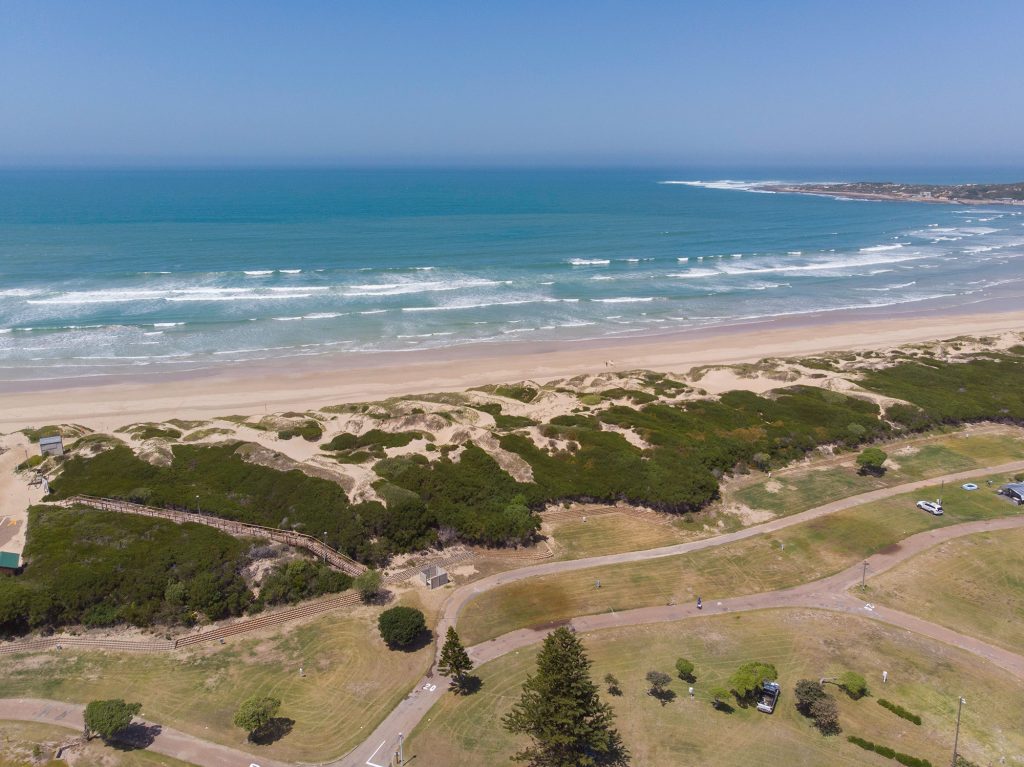
In Cape St. Francis, there are growing fears that the marina and properties bordering the canals from the Krom River could be flooded if the dune system protecting them from the ocean collapses. This erosion results largely from human interventions that disrupted large scale natural dune movement, leaving dune systems exposed and unable to perform their protective function.
Different approaches have been tried along the coast. Langebaan required hard engineering interventions, while in Buffels Bay, softer methods like heavy sandbagging have shown some success. Despite these efforts, landowners with sea-front properties remain at risk, and unregulated attempts to protect property can worsen erosion on neighbouring land due to the shifting of kinetic energy of surging waters.
The problem extends beyond property damage. Sand build-up in river mouths such as the Touw river and estuaries disrupts ecosystems, while ongoing drought conditions in 2025 have reduced freshwater flow, contributing to the water crisis in Buffels Bay.
Looking ahead, municipalities and landowners face a complex challenge. More research, smart planning, and innovative engineering solutions are essential to manage the changing coastline.
The Garden Route Environmental Forum provides a public platform for landowners, managers, and climate change experts to share knowledge, explore solutions, and promote sustainable coastal management. (www.grefecsf.co.za)
Image: Unsightly hard intervention was the only option to save properties in Langebaan from flooding following aggressive storm surges
Media Release: R1 Million Safety Implementation Plan to help keep communities safe across the district
4 December 2025
Garden Route District Municipality (GRDM) recently approved its Safety Implementation Business Plan for 2025/2026. This is a commitment to improving community wellness, strengthening crime-prevention systems, and enhancing coordinated responses to social instability across the region.
According to Mayor Marais Kruger, “the budget of R1 million will be utilised for a whole-of-government safety approach aimed at supporting municipalities, law enforcement agencies, and neighbourhood watches”.
The funding forms part of a Whole-of-Society Approach (WOSA) Grant, which promotes integrated collaboration across the Criminal Justice System (CJS), provincial and local government departments, SAPS, Neighbourhood Watches, Community Police Forums (CPFs), NGOs, and other civil society partners.
Neighbourhoods across South Africa face complex societal issues, including poverty, substance abuse, crime, illegal shebeens, land invasions, and unfavourable socio-economic conditions and vandalism of municipal infrastructure. Many of these challenges divert municipal funds away from development toward repairing damaged properties.
To respond more effectively, GRDM has strengthened its District Safety Forum and Community Safety Forum (CSF) structures, which are platforms designed to coordinate rapid, targeted interventions that prevent social unrest, land invasions, and localised other crime.
This collaborative model is supported by the Western Cape Provincial Department of Police Oversight and Community Safety (POCS).
Budget Breakdown: R1 Million Investment in District Safety
Project / Activity
Budget
Admin Support & Safety Plans for all Local Municipalities
R332 500
District Law Enforcement Officer Project
R300 000
16 Days of Activism & GRDM CSF Safety Summit
R70 000
District SAPS Partnership Projects
R80 000
Community Dialogues
R70 000
Rural Safety Project
R60 000
CPF Support
R30 000
District Safety Forum Operations
R20 000
ABT Support
R20 000
Garden Route District Safety Summit
R17 500
Total Budget:
R1 000 000
“This investment gives us the tools to coordinate more effectively, act faster, and support our municipalities in making communities safer,” said Mayor Marais.
GRDM Member of the Mayoral Committee for Community Services, Cllr Jobieth Hoogbaard, Chairs the District Safety Forum and added: “Through WOSA, we continuously do our best to bring together government, South African Police Services, civil society, and communities to create lasting, sustainable safety solutions”.
Media Release: Garden Route District Municipality Firefighters ready and on standby for holiday season
2 December 2025
Due to the region’s high-risk summer fire season, the Garden Route District Municipality (GRDM) has enhanced its firefighting capacity.
“We’ve already noted the extremely dry vegetation, coupled with lower than usual rainfall and declining dam levels, and persistent hot and windy conditions. It is for this reason that the GRDM Firefighters have again increased their operational readiness across the district,” said Deon Stoffels, Chief Fire Officer.
According to Executive Mayor Marais Kruger, “the GRDM employs 32 full-time firefighters across its three fire stations located in George, Riversdale, and Ladismith. During the peak summer period, an additional 30 seasonal (temporary) firefighters are brought on board in from December 2025 until end of March 2026.”
The district’s firefighting fleet is equipped to respond rapidly across diverse and often challenging terrains. Resources include:
4×4 off-road LDV skid units designed for rugged terrain and first-response deployment.
4×4 off-road fire trucks for mountain and veld firefighting.
Water tankers to support operations in water-scarce areas or in locations where hydrants are unavailable.
GRDM also has a chemical fire (otherwise known as hazmat) responsibility and has a fully equipped hazmat response unit at its regional station. Additionally, a first response equipped mobile trailers at the Riversdale station and at the Knysna Fire Department for similar purposes in the Bitou and Knysna area. The procurement process is in an advanced stage for a 3rd First Response mobile trailer for the Kannaland and Oudtshoorn areas.
Aerial resources for first hour deployment to high-risk fires, are funded through the Western Cape Government’s Fire and Rescue Services and Disaster Management Directorate as well as from the Department Forestry’s, Fisheries, and the Environment. Five aircraft is planned for this purpose, and will be positioned at Denneoord, comprising of Command-and-Control aircraft, helicopters and a fixed-wing bomber plane. Additionally, ad-hoc resources are stationed at George Airport, and Still Bay, comprising of a bomber plane and helicopter respectively.
GRDM Firefighters maintain round-the-clock readiness. All three stations operate 24/7, with Riversdale and Ladismith functioning on an after-hours standby system.
GRDM’s Mandate
Veld and mountain fires.
Chemical and hazardous materials incidents.
Support during major emergencies through Mutual Aid Agreements with all municipalities, including with PetroSA.
Within Kannaland, GRDM performs the full firefighting function, including:
Structural fires.
Motor vehicle incident response.
Hazardous materials.
Highly prevalent snake removal call-outs during summer.
The following fire safety measures are essential for residents, businesses, and visitors:
Protect homes and structures by maintaining a safe, clear, defendable space.
Fires can be reduced by reducing the burn of materials that are flammable, such as dry wood, biomass, and excessive debris.
Make sure firebreaks are properly maintained and compliant.
Immediately report illegal burning, smoke, or suspicious activity.
Local municipalities issue burning permits that must be strictly adhered to. From 1 December to 28 February 2026, controlled burns are not permitted.
Stay informed by following official alerts and communicating with the appropriate authorities.
Keep outdoor braai fires supervised, ensure they are fully extinguished, and use only designated braai areas.
Campsite and resort owners must enforce strict oversight of visitor braai fires.
For emergencies, residents are encouraged to contact their local fire station or the GRDM Emergency Call Centre on 044 805 5071 or WhatsApp 081 709 5193.
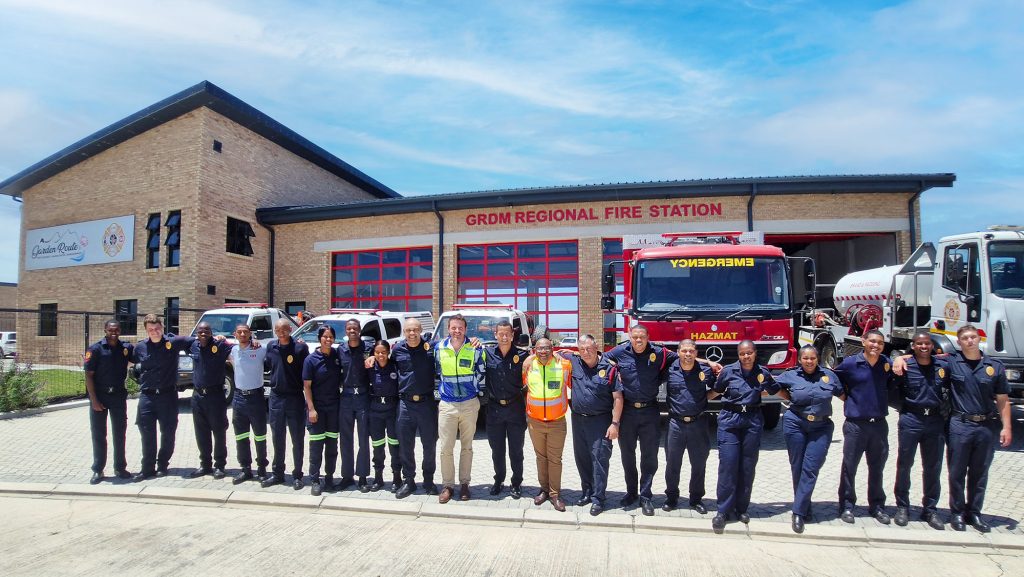
Feature Image: Executive Mayor, Marais Kruger and his MMC for Community Services, Cllr Jobieth Hoogbaard, visited the GRDM Regional Fire Station on 1 December to touch base with the GRDM Fire Chief and to meet-and-greet the 20 newly appointed seasonal firefighters.
Media Release: Comprehensive Seasonal Municipal Health Safety Plan ready as Holiday Season approaches
21 November 2025
The Garden Route District Municipality (GRDM) has developed its Seasonal Municipal Health Safety Plan to ensure that residents and holiday visitors enjoy a safe and healthy environment during the peak holiday season.
According to Executive Mayor Marais Kruger, “every year, the region experiences a significant increase in food handling activities, temporary events, large tourist volumes, and higher temperatures. All of which heighten the risk of foodborne illnesses, water contamination, and general public health hazards”.
“In response to the influx of tourists, GRDM Environmental Health Practitioners (EHPs) will intensify their proactive inspections, monitoring and awareness operations across all seven local municipal areas from now to January 2026.”
Protecting public health during the busiest season
The plan is to ensure extensive monitoring of food premises, accommodation facilities, water quality, and hygiene compliance across the district. Activities will include blitz operations, joint enforcement actions, sampling programmes, community awareness campaigns, and extended standby coverage by EHPs.
Health and hygiene awareness sessions will continue to take place over the holiday season.
Water sampling remains a priority throughout the region for EHPs to ensure that those using it for recreational or consumption, remain safe.
“EHPs play a vital role in safeguarding lives, especially during the festive season when food consumption, mobility, and public interaction significantly increase,” said Mayor Marais Kruger.
“This plan strengthens our region’s resilience to prevent food poisoning, disease outbreaks and environmental contamination.”
Key activities will include:
Food Safety, Hygiene and Compliance Monitoring
Conduct inspections at spaza shops, formal food premises, informal food traders, mobile vendors, restaurants, accommodation establishments, school feeding schemes, soup kitchens, wholesalers, ECD centres, markets, festivals and event-based food stalls.
Monitor food handling practices, prevention of cross-contamination, temperature control, personal hygiene, structural compliance, sanitation practices, pest control and chemical safety.
Enforce compliance with Certificates of Acceptability (COA), including issuing fines or closing non-compliant shops.
Ensure labelling, supplier verification and safe storage of foodstuffs.
Sampling and Laboratory Testing
Take surface swabs and bacteriological food samples during November and December.
Conduct ongoing chemical and bacteriological food sampling.
Complete water and food-related samples during November and December across drinking water, river water, beach water, sewerage, final effluent and perishable food items.
Conduct monthly bacteriological sampling of the Knysna Estuary.
Collect bacteriological samples from foodstuffs and water samples
Awareness, Education and Community Engagement
Deliver weekly health and hygiene awareness sessions.
Conduct outreach and education with informal traders, schools, clinics, ECDs, the food industry, and the general public.
Provide hygiene training to food handlers before major holiday events.
Monitor community complaint platforms and respond to public health concerns.
Enforcement and Joint Operations
Undertake collaborative blitz operations with Law Enforcement, SAPS, Fire Services, Immigration, Electricity and Planning Departments.
Conduct compliance monitoring during roadblocks and at accident scenes involving foodstuffs or potential water contamination.
Administrative and Seasonal Support
Ensure administrative staff issue Certificates of Acceptability, COC Certificates and Health Certificates until 19 December 2025.
Implement a strengthened standby programme with Environmental Health Practitioners (EHPs) on duty across all regions between 12 December 2025 and 5 January 2026. “Our responsibility is to prevent avoidable harm.
This plan ensures we remain vigilant, responsive, and committed to protecting public health during the busiest season of the year,” said Compion.
For more information or to report unhygienic practices by food handlers, contact the following GRDM offices within the Garden Route:
Johan Compion Senior Manager: Municipal Health, Solid Waste Management and Air Quality E-mail: info@gardenroute.gov.za Tel: 044 803 1300 / Cell: 082 803 516
Klein Karoo & Kannaland Desmond Paulse – Manager: Municipal Health (Klein Karoo)
94 St John Street, Oudtshoorn
Tel: 044 272 2241 / Cell: 083 678 6530
Mossel Bay
Rinay Cloete – Acting Chief: Municipal Health
C/O Sampson & Marling Street, Ext 23, Mossel Bay
Tell: 044 693 0006 / Cell: 083 530 3709
George Outeniqua
Emmy Douglas – Chief: Municipal Health (Outeniqua)
Mission Street, Industrial Area, George, 6530
Tel: 044 803 1501 / Cell: 078 457 2824
George & Wilderness Lusizo Kwetshube – Acting Chief: Municipal Health
Mission Street, Industrial Area, George, 6530
Tel: 044 803 1599 / Cell: 081 555 6992
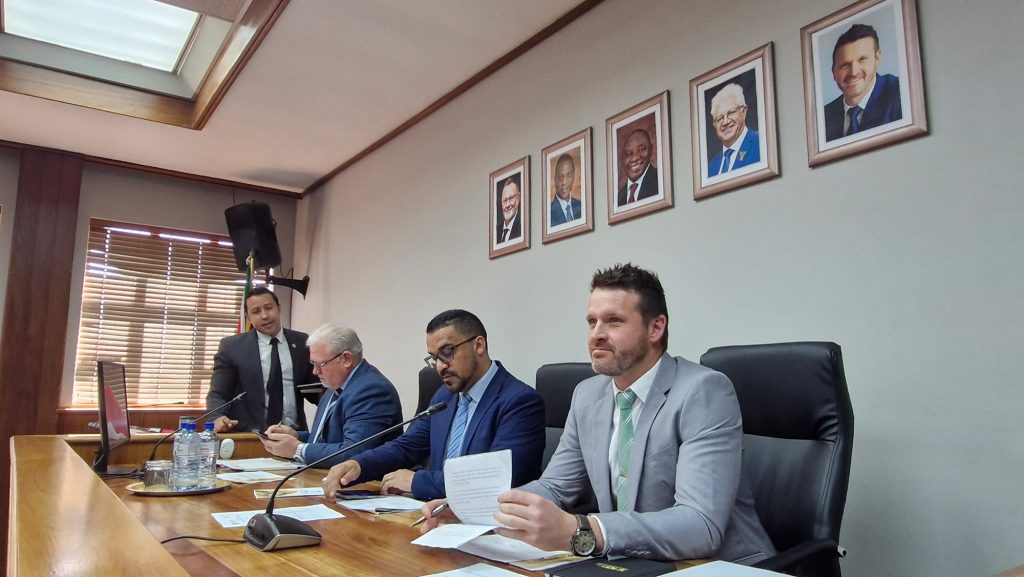
Members of the Western Cape Provincial Parliament,
MECs, Councillors, Municipal Managers,
Distinguished guests, officials, and stakeholders,
Ladies and gentlemen, a very warm welcome to the Garden Route District Municipality.
It is an honour for us to host this important engagement as part of the NCOP Provincial Week 2025. On behalf of the Garden Route District Municipality, I extend a sincere word of welcome to every delegate and stakeholder who has travelled to our beautiful region to participate in this crucial programme.
This week’s engagements remind us of the importance of cooperation between all spheres of government, National, Provincial, and Local, to address the service delivery challenges that directly affect the lives of our residents. Together, we share one goal: to strengthen municipalities so that every household in our province can experience reliable, efficient, and dignified basic services.
The Garden Route District is a region of great potential, blessed with natural beauty, vibrant communities, and economic promise. Yet, like many other regions, we face challenges that require partnership, innovation, and accountability. I am encouraged that this Provincial Week provides a platform for honest reflection, practical solutions, and shared learning between municipalities and government departments.
Today’s discussions will focus on how we can collectively improve the state of municipalities, strengthen leadership and governance, and accelerate the delivery of essential infrastructure such as water, sanitation, housing, and roads. These are not just service delivery targets, they are the building blocks of hope, opportunity, and stability in our communities.
As the Garden Route District Municipality, we remain fully committed to working hand in hand with our local municipalities – George, Knysna, Mossel Bay, Bitou, and others, as well as with our provincial and national partners to ensure that our residents experience tangible improvements in their daily lives.
Let us approach today’s session with openness, collaboration, and a shared sense of purpose. Together, we can continue building a stronger, more resilient, and inclusive Garden Route and Western Cape.
Once again, welcome to the Garden Route, where we strive to serve with integrity, inspire progress, and deliver results for our communities.
Media Release: Nineteen Garden Route Beaches Awarded Blue Flag Status for 2025 Holiday Season – again the most for a region in South Africa
11 November 2025
Nineteen (19) beaches across the Garden Route coastline have been awarded Blue Flag Status for the upcoming holiday season by the Wildlife and Environment Society of South Africa (WESSA) There are 50 Blue Flag Beaches in the country and 20 Pilot Status beaches.
GRDM Executive Mayor, Marais Kruger said: “The municipalities in our region who received consistent Blue Flag Status and related awards, reflect their commitment to excellent water quality, safety, security, sound environmental management, and accessibility. Thank you for the local municipalities of Hessequa, Bitou, Mossel Bay and George, for once again helping us collectively secure our top spot on South Africa’s preferred tourism destination map.”
Lappiesbaai in the Hessequa Municipal area has maintained Blue Flag status for 20 consecutive years, while Witsand, also in Hessequa, celebrates its 10th consecutive year of accreditation.
Witsand, also in Hessequa, celebrates its 10th consecutive year of accreditation (Supplied: Hessequa Tourism)
More exciting statistics include the following:
Four of the Garden Route beaches were awarded pilot Blue Flag status (South Africa has 20), these include Santos Beach, Suiderkruis, Tweekuilen and Leentjiesklip.
Three out of 15 Green Coast sites (15 sites in South Africa), these include Nature’s Valley Beach, Swartvlei Beach and Gwaiing Beach.
Two Blue Flag Marinas (5 Blue Flag Marinas in South Africa), these include Thesen Harbour Town Marina and Thesen Island Home Owners’ Marina.
Two Sustainable Tourism Boats (7 in total in South Africa), these are from Offshore Adventures (Robberg Express and Oceanic).
Garden Route beaches with successful Blue Flag accreditation include the following:Hessequa (6): Witsand Beach, Preekstoel Beach, Lappiesbaai Beach, Jongensfontein Beach, Gouritsmond Beach and Still Bay West Beach.
Plettenberg Bay (6): Robberg 5, The Waves, Nature’s Valley, Lookout Beach, The Dunes and Singing Kettle Beach.
Mossel Bay (4): De Bakke Beach, Hartenbos Beach, Little Brak Breach and Glentana Beach.
George (3): Herold’s Bay, Victoria Bay and Wilderness.
South Africa has proudly participated in the Blue Flag Programme for 24 years, since 2001.
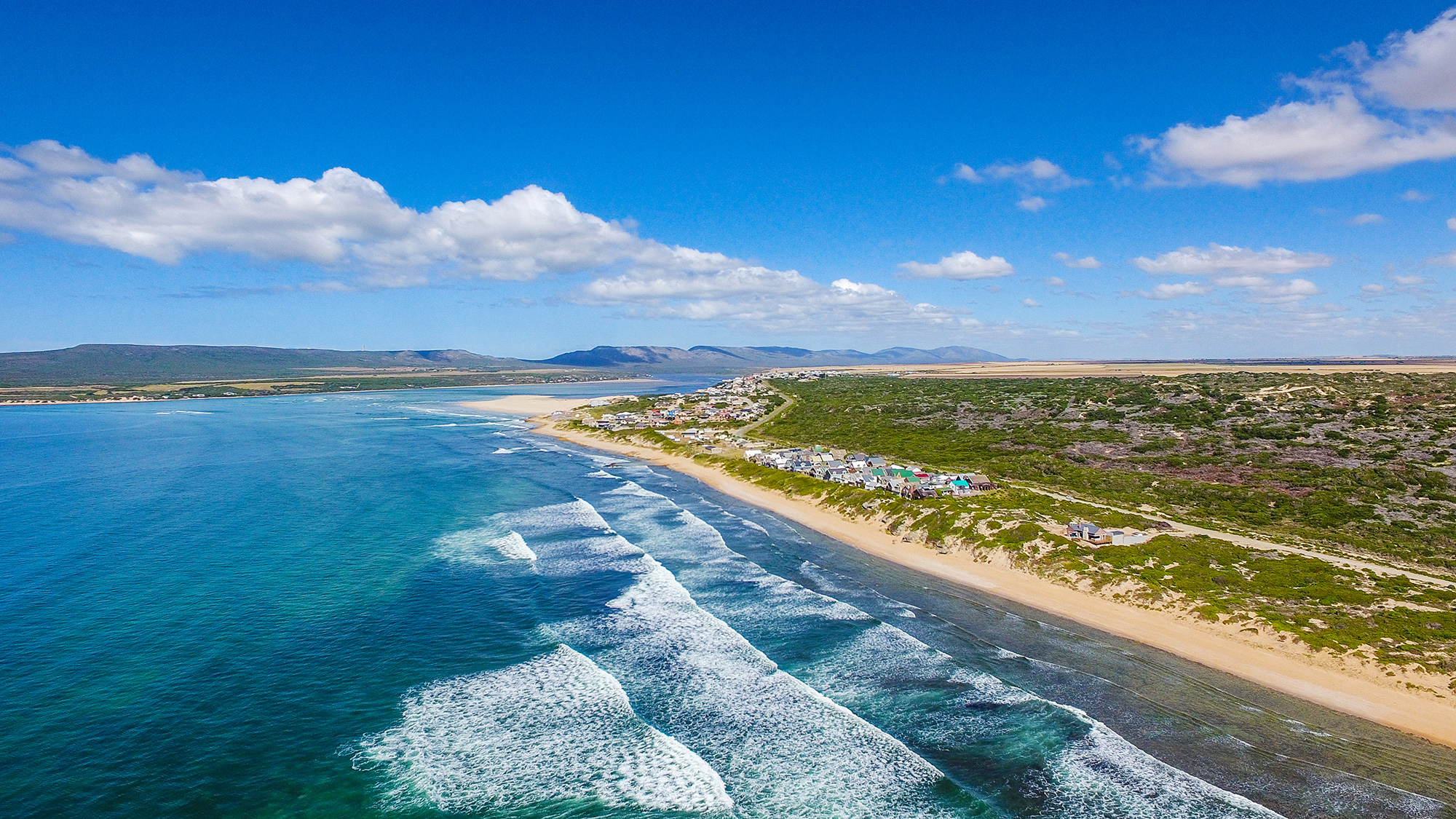
Feature image caption: Lappiesbaai in the Hessequa Municipal area has maintained Blue Flag status for 20 consecutive years (Supplied: Hessequa Tourism).
Media Statement: Garden Route District Municipality elects new Executive Mayor, Marais Kruger
11 November 2025
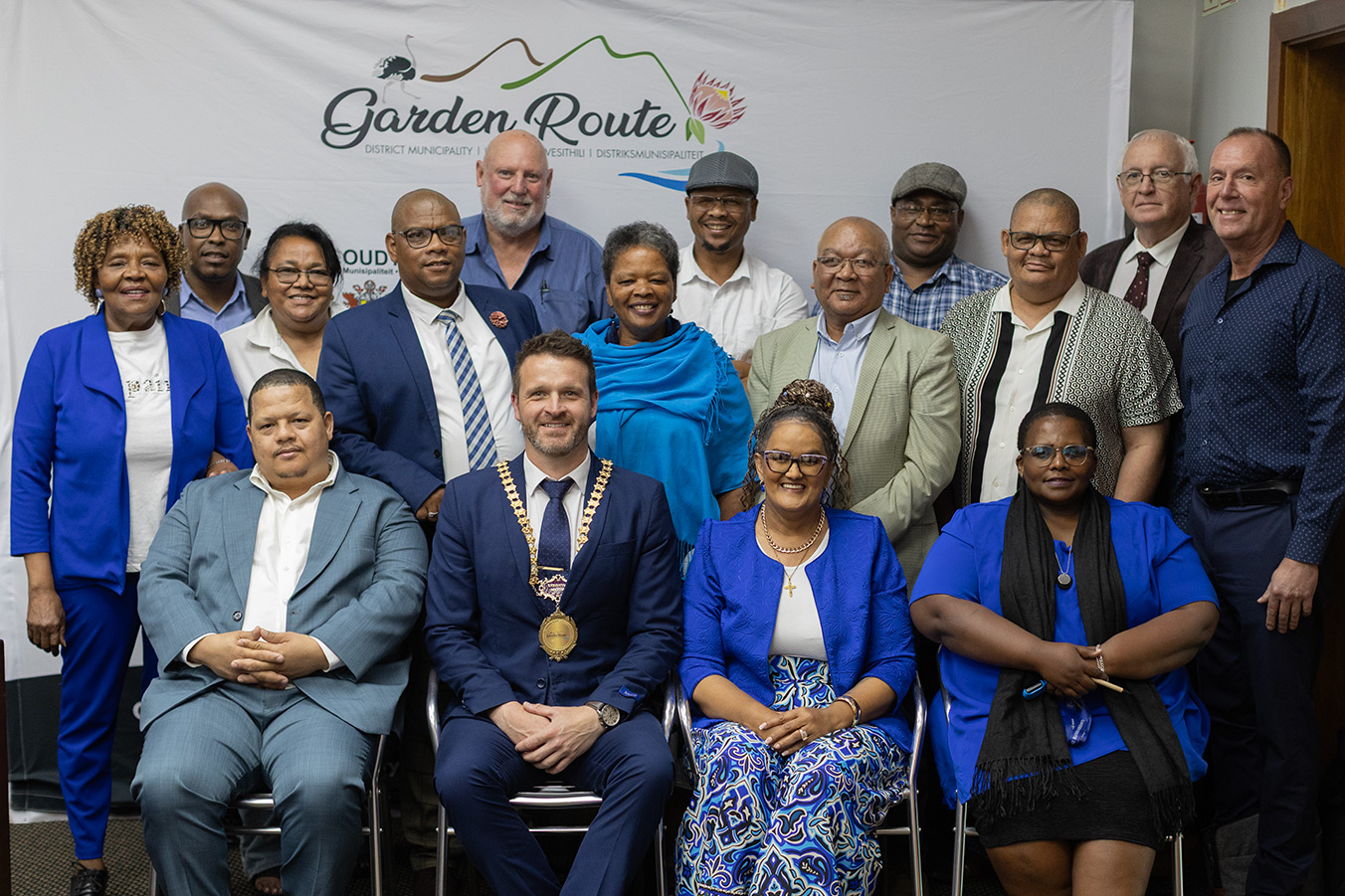
The Garden Route District Municipality (GRDM) Council has elected and sworn in Alderman Marais Kruger as the new Executive Mayor during a Special Council Meeting held on 11 November 2025. Mayor Kruger succeeds the former Executive Mayor, Ald. Andrew Stroebel, who vacated the office on 31 October 2025.
Kruger was nominated by Cllr Jobieth Hoogbaard and seconded by Ald. Nompumelelo Ndayi from the Democratic Alliance (DA). Councillor Christopher Taute (ANC) nominated and Cllr Vinolia Gungubele (ANC) seconded the nomination of Ald. Stephen de Vries as Executive Mayor.
The two nominations required votes to be cast by all Councillors present. Subsequently, the votes recorded were 19 in favour of Ald. Kruger and 7 in favour of Ald. De Vries; three Councillors abstained from voting.
During his acceptance speech, Ald. Kruger focused on his commitment to strengthening regional cooperation, supporting economic development, enhancing disaster management and fire services, and prioritising the well-being and future of all communities within the Garden Route District.
“To the people of the Garden Route, we are here to serve you. Your needs, your voices and your dignity remain at the centre of our work. Let us move forward together, building a district that is safe, resilient, inclusive and full of opportunity for all who call the Garden Route home”.
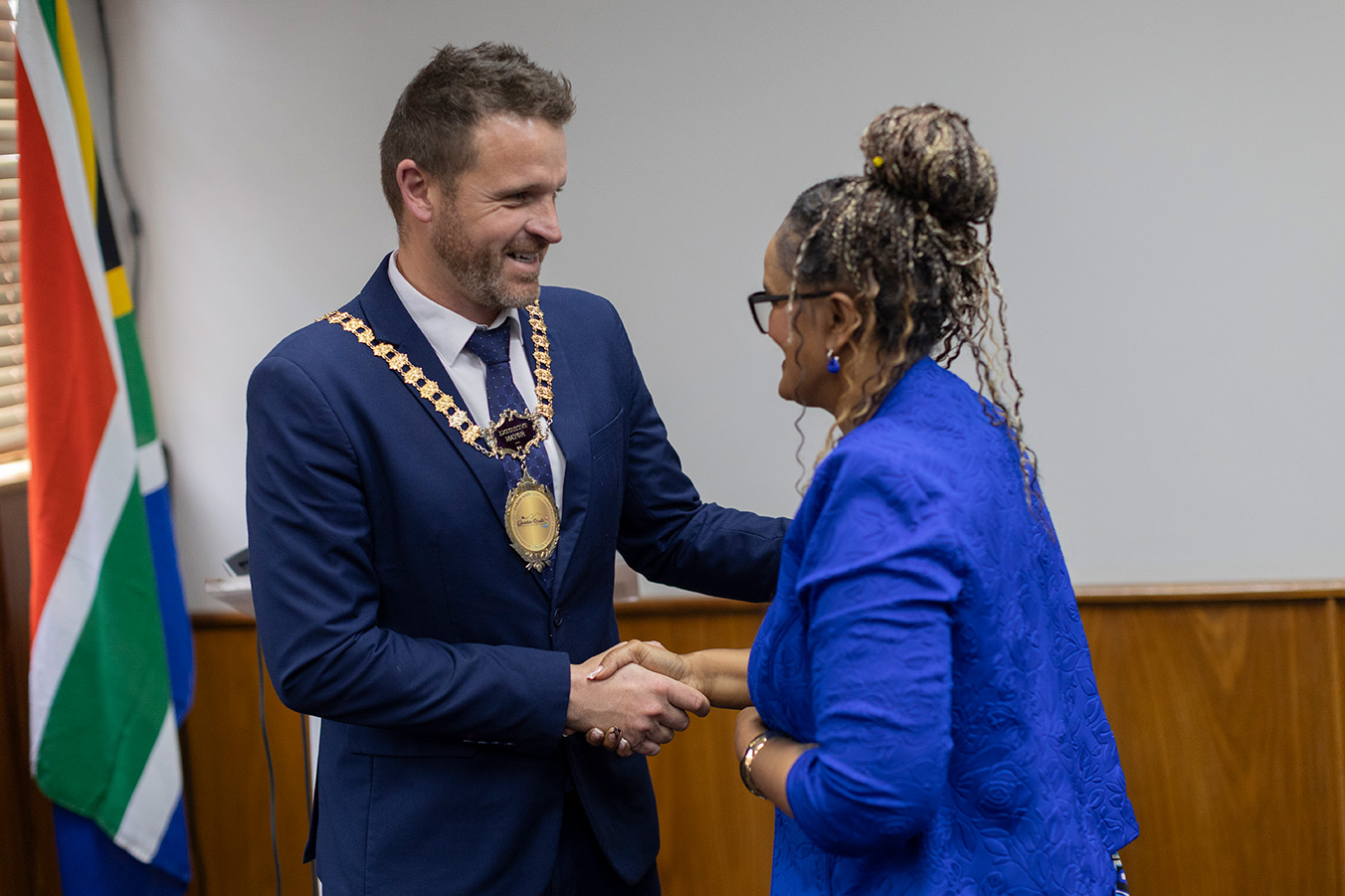
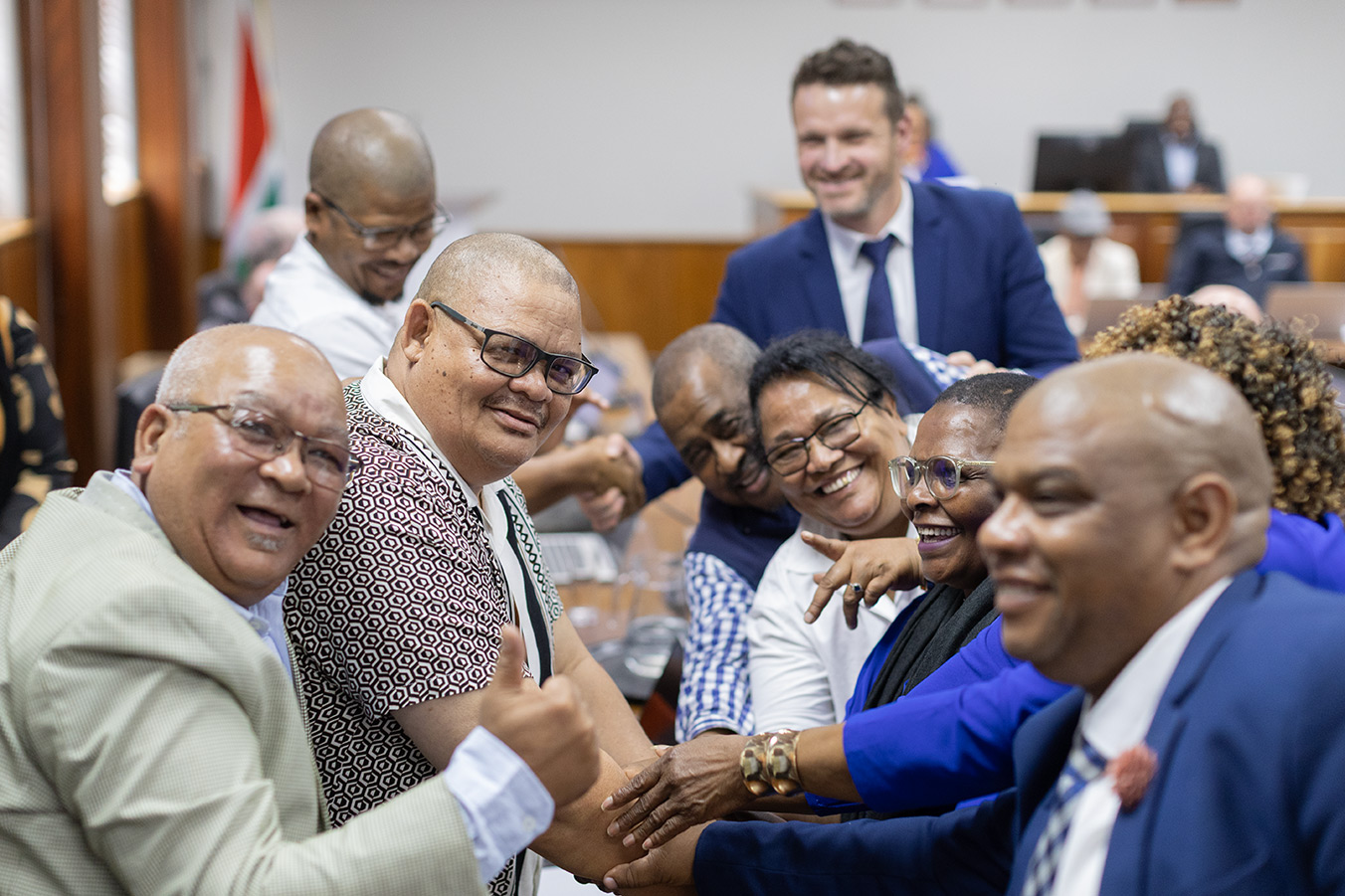
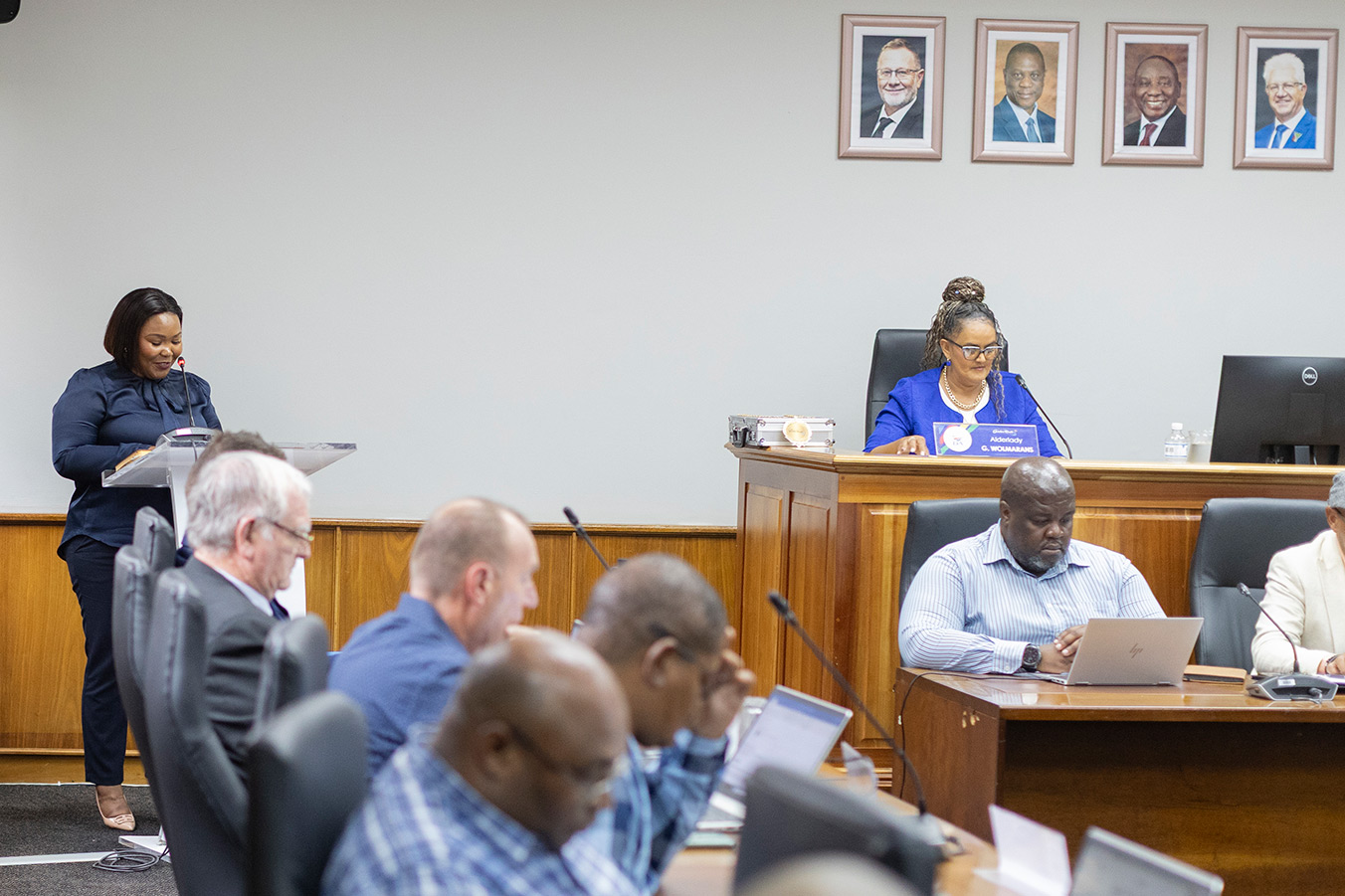
Ald. Georlene Wolmarans (Speaker), congratulating the newly elected Executive Mayor, Ald. Marais Kruger.
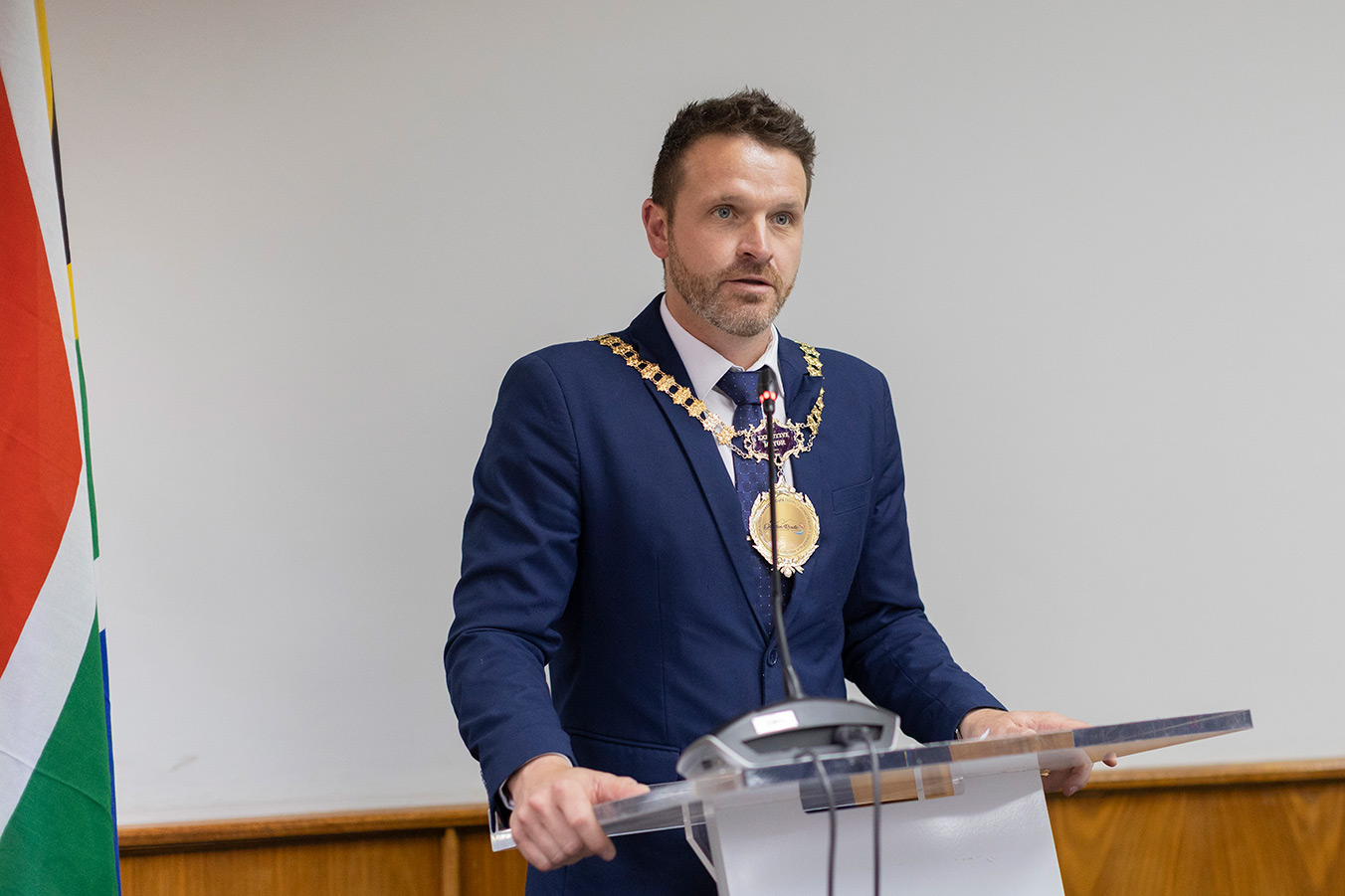
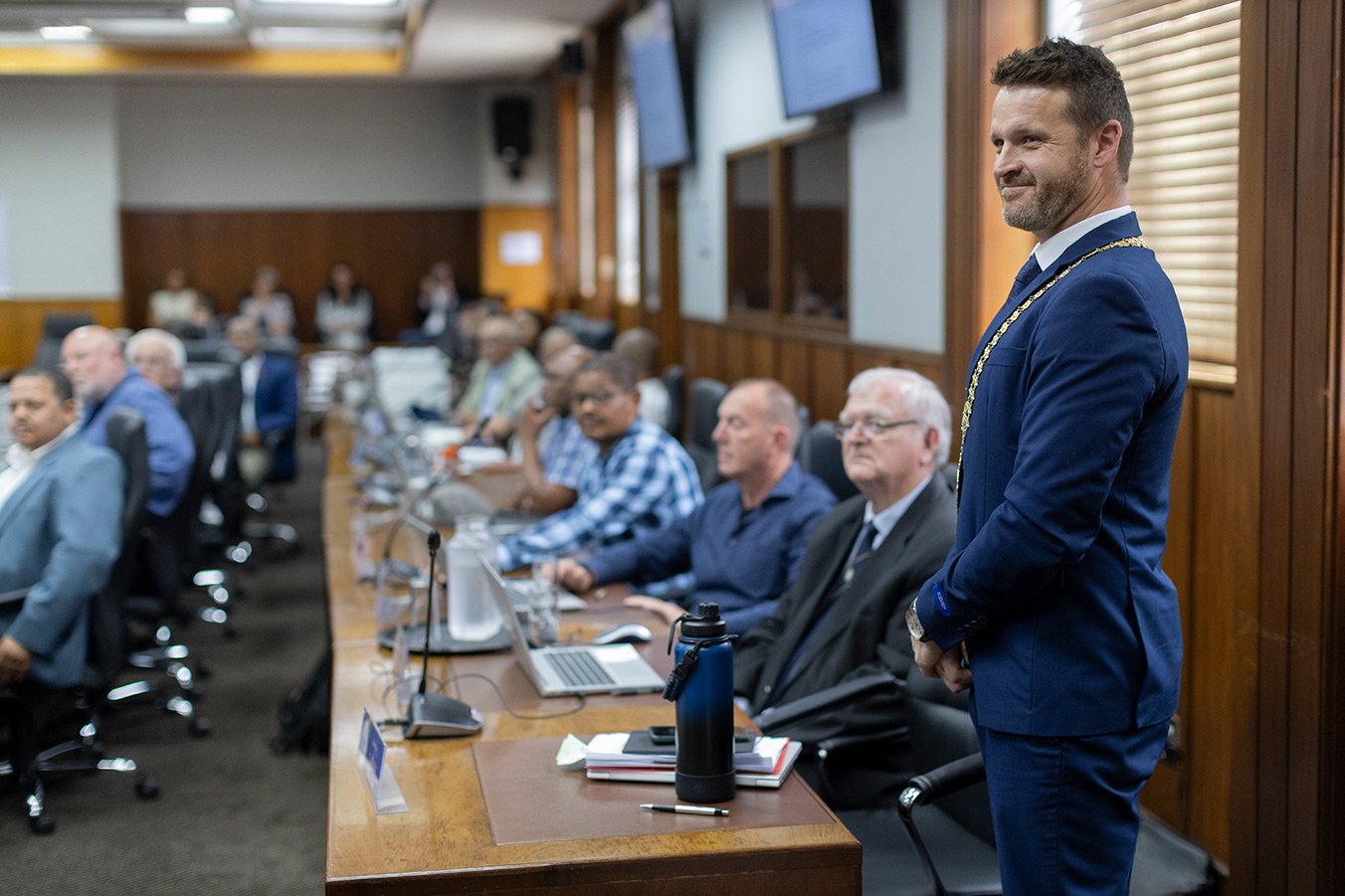
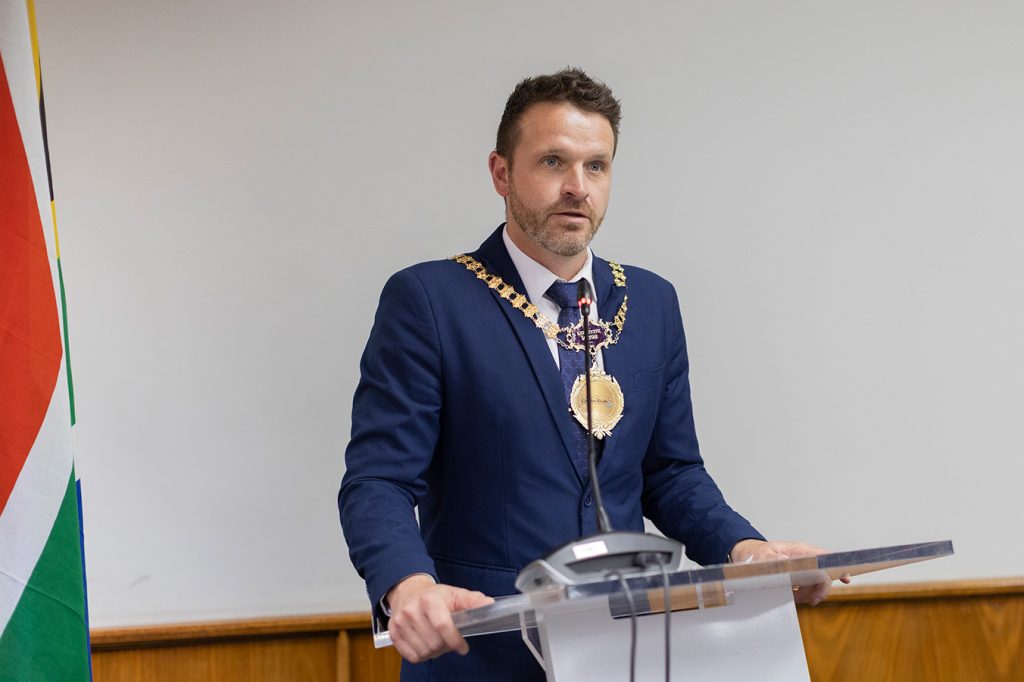
Executive Mayor, Ald. Marais Kruger during his acceptance speech.
Ald. Stephen de Vries from the ANC congratulating the newly elected Executive Mayor, Ald. Marais Kruger.
GRDM Municipal Manager, Monde Stratu, congratulated the Executive Mayor and pledge his and the administration’s full support.
MAYOR MARAIS BACKGROUND
Mayor Marais Kruger (see profile here) hails from George. He matriculated at Outeniqua High School, holds a diploma in finance obtained from Moonstone Business School and is currently enrolled doing his MMC through Stellenbosch University School of Public Leadership. He entered politics in 2021 and currently serves as the Ward 22 Councillor in George. Until February 2025, he served as the Mayoral Committee Member (MMC) for Community Safety and Financial Services at George Municipality.
Prior to his election as Executive Mayor, he also held the position of Council Whip at GRDM.
At the same Special Council Meeting, Cllr Koos Malooi was nominated and elected as the new Council Whip. Ald. Clodia Lichaba was also nominated. Votes were subsequently cast and Cllr Malooi had 19 votes in his favour, Ald. Lichaba had 7 and 3 people abstained from voting.
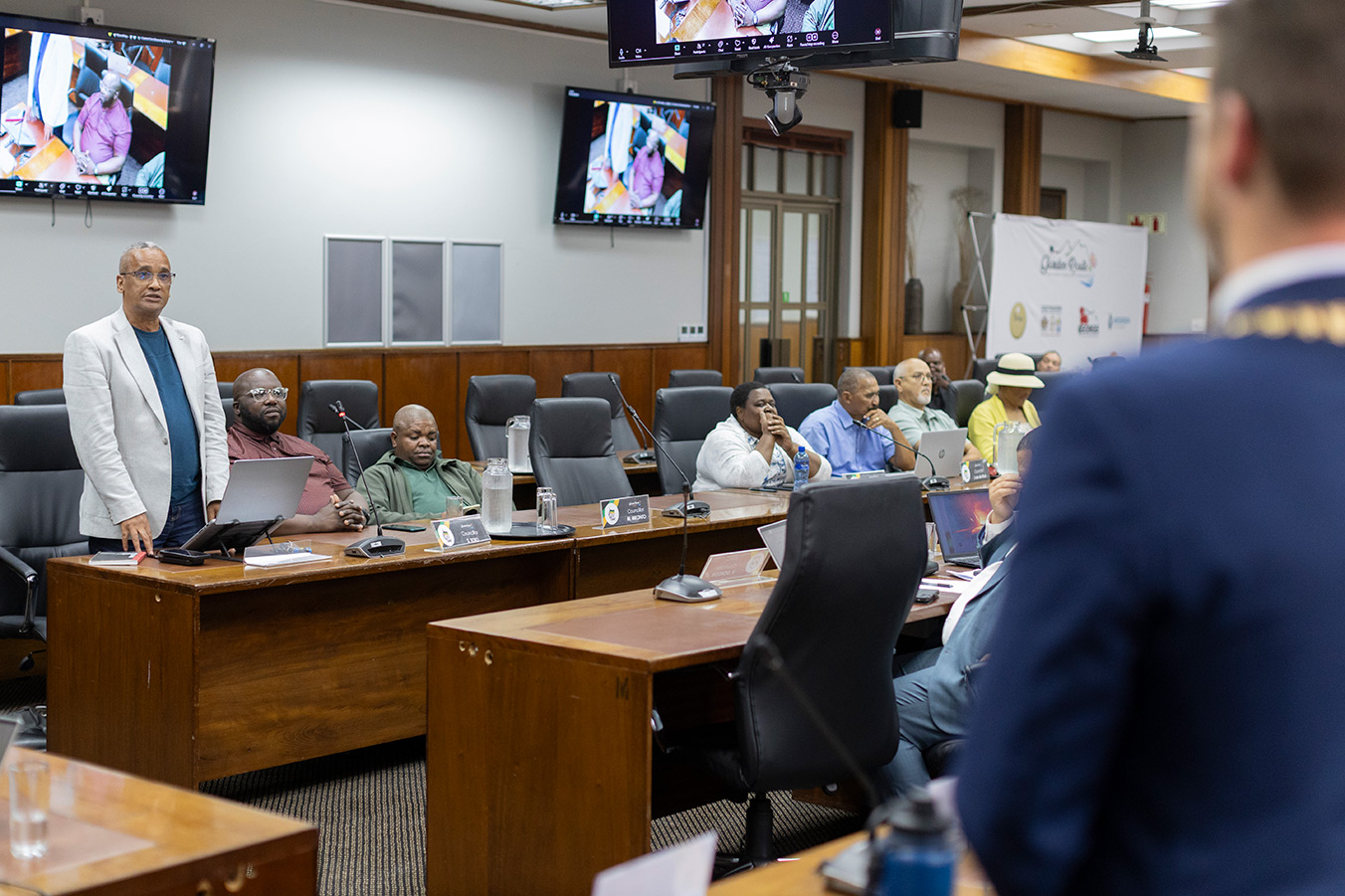
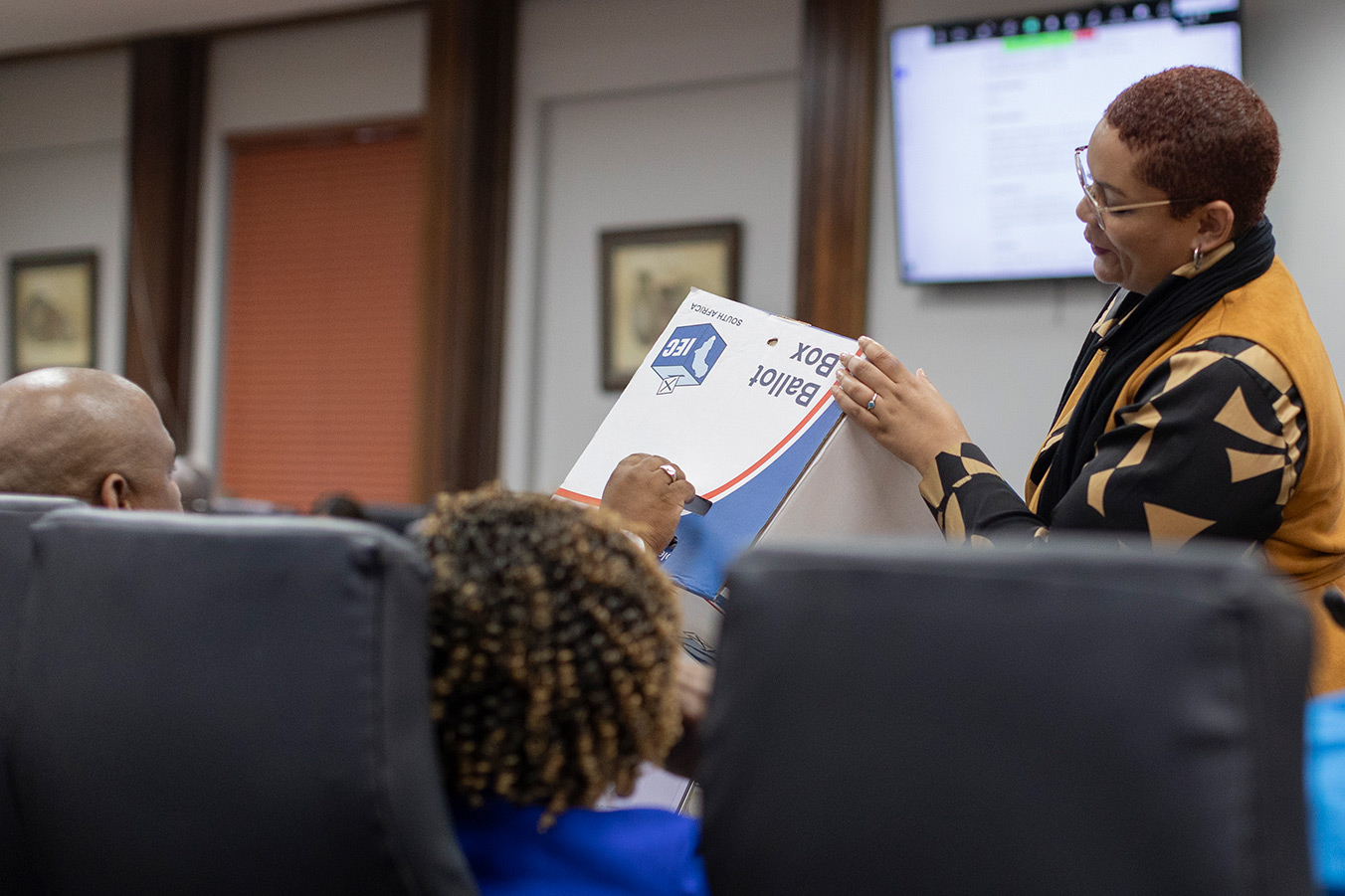
Votes were cast for the new Executive Mayor and the Council Whip.
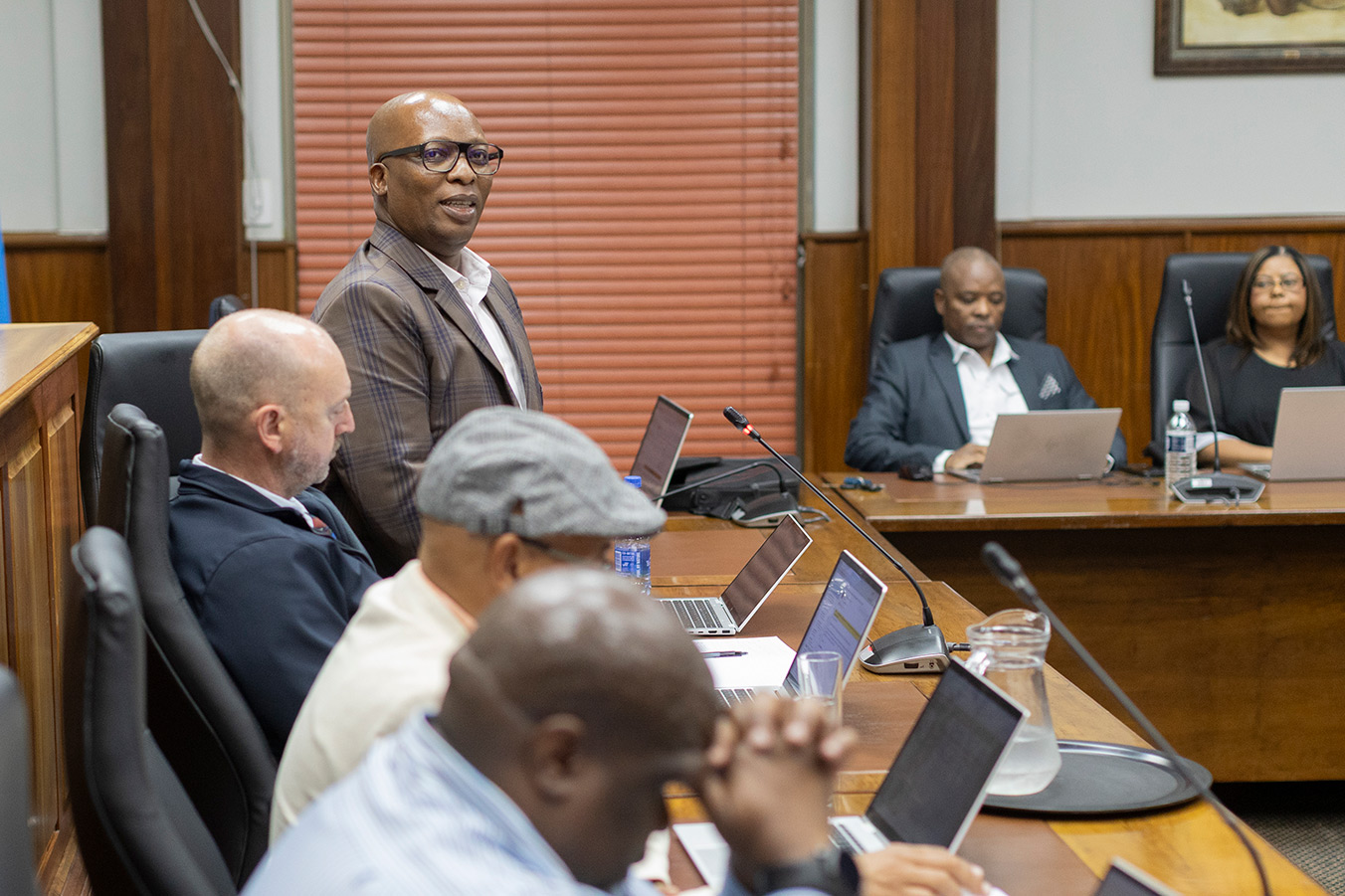
Ald. Werner Meshoa said amongst others that “From the coastal towns, farms and townships, the people expect fairness, transparency and bold action. In your hands lie the opportunity to unite us”.
Ald. Stephen De Vries (ANC), stated that the ANC looks forward to working with the Mayor for the betterment of communities. He also said he “looks forward to robust and respectful debates”.
Cllr Rosa Louw from GOOD said she trusts that Ald. Marais will uphold the highest standards in the public office. “We know the journey is not always easy, but we are looking forward to working with you to serve communities”.
Cllr Alberto Marbi from PBI, congratulated Ald. Marais on his significant achievement as Mayor and stated that “your leadership comes at a critical time and we trust that you will inspire positive change going forward”.
Monde Stratu, Municipal Manager conveyed his messages of support from the administration and said “we pledge our support and solidarity”. “We will avail our capacity and expertise to help you succeed in your vision. We stand with our professional ethics to deliver on the madate you require us to deliver on.” “Congratulations Executive Mayor, he condluded”
The GRDM remains committed to transparent governance, stability, and service excellence under the leadership of Executive Mayor Marais Kruger and the Council as a collective.
Acceptance Speech by Ald. Marais Kruger, newly elected Executive Mayor
11 November 2025
Good morning,
Honourable Speaker,
Deputy Executive Mayor,
Councillors,
Municipal Manager,
Senior Management,
Representatives from our Local Municipalities,
Community partners, the media, and all guests present, all protocol observed.
Thank you for being here today. Stepping into this role within the Garden Route District Municipality is both an honour and a responsibility. Our district spans over seven Local Municipalities, each with unique communities, strengths and challenges. Yet, we are united by one shared commitment: to work for the wellbeing and development of the entire Garden Route region.
The work of a district municipality is sometimes not always seen directly at community level, but it is deeply impactful. We support, coordinate and strengthen service delivery across the region. We plan for what lies ahead – for economic development, tourism growth, environmental protection, regional infrastructure, and municipal support. And importantly, we carry a critical role in disaster management and fire services, especially in a region prone to wildfires.
Our Fire & Rescue teams work day and night to protect lives, homes, farms, and natural habitats. Their bravery and dedication remind us what service truly looks like and they deserve our full support as we continue building resilience and readiness across the district.
As we begin this new chapter, our focus remains practical and people-centered:
• To work collaboratively with all our local municipalities
• To strengthen and resource regional disaster management and fire services
• To improve long-term planning and sustainability in our environment and infrastructure
• To support economic development and job creation that brings dignity to households
• And to invest in opportunities for our youth across communities, towns and rural areas.
We may come from different political backgrounds, but our responsibility is shared. The people we serve expect us to work together, respectfully, constructively and with purpose.
To our administration, thank you for your continued commitment. The district relies on your professionalism every day.
To our partners, community organisations, businesses, education, tourism, safety structures, traditional and faith leaders, your work strengthens our region, and we value your collaboration.
And to the people of the Garden Route, we are here to serve you. Your needs, your voices and your dignity remain at the centre of our work. Let us move forward together, building a district that is safe, resilient, inclusive and full of opportunity for all who call the Garden Route home.
I also want us to urge everyone focus not on who is important, but rather acknowledge ‘what is important’.