Skip to content Skip to left sidebar Skip to footer

Author: Herman Pieters

Public Notice: Closure of Offices on Thursday, 2 April 2026 at 12h00

CLOSURE OF OFFICES: THURSDAY, 2 APRIL  2026

Notice is hereby given that all the offices of the Garden Route District Municipality will be closed on Thursday  2 April  at 12:00 and re-open on Tuesday, 7 April 2026 at 07:30.

All emergency services will continue to be rendered during this period. The number 044 805 5071 / 081 709 5193 (WhatsApp too) can be contacted at all hours for such services.

MG Stratu
Municipal Manager
54 York Street
P.O. Box 12
GEORGE
6530

Tel:   044 803 1300
Notice number 27/2026

SLUITING VAN KANTORE: DONDERDAG,2 APRIL  2026

Kennisgewing geskied hiermee dat die kantore van die Tuinroete Distriksmunisipaliteit op Vrydag, 2 April 2026 om 12:00 gesluit sal wees en op Dinsdag 7 April 2026 om 07:30, sal heropen.

Alle nooddienste sal steeds gedurende die tydperk gelewer word.  Indien nodig, kan die nooddiensnommer 044 805 5071 / 081 709 5193 (WhatsApp ook) te enige tyd geskakel word.

MG Stratu
Munisipale Bestuurder
Yorkstraat 54
Posbus 12
GEORGE
6530
Tel: 044 803 1300
Kennisgewing nommer 27/2026

UKUVALWA KWEEOFISI: NGOLWESINE, 2  APRIL 2026

Kunikwa isaziso sokuba zonke iiofisi zeGarden Route District Municipality ziza kuvalwa ngoLwesine, umhla wesi-2 kuApril 2026 ngo-12:00 kwaye zivulwe kwakhona ngoLwesibini, umhla wesi-7 ku April 2026 ngo-07:30.

Zonke iinkonzo zongxamiseko ziya kuqhubeka zinikezelwa ngeli xesha. Inombolo 044 805 5071 / 081 709 5193 (nakwi-WhatsApp) inokuqhagamshelwa ngamaxesha onke ukuze ufumane ezo nkonzo.

MG Stratu
UMphathi kaMasipala
54 York Street
P.O. Box 12
GEORGE
6530

Umnxeba: 044 803 1300
Inombolo yesaziso 27/2026
31 March 2026 Media Statement: Garden Route District Municipality concludes Human Settlements Unit after delivering key housing milestones

Media Statement: Garden Route District Municipality concludes Human Settlements Unit after delivering key housing milestones

31 March 2026

The Garden Route District Municipality (GRDM) formally concluded the work of its Human Settlements Unit today, 31 March 2026.

According to Lusanda Menze, the GRDM Executive Manager for Integrated Planning and Economic Development: “The Unit was established in 2021 through a Memorandum of Agreement with the provincial government to strengthen the delivery of affordable housing programmes across the Garden Route district. Over its operational period, the GRDM was able to strategically coordinate and support seven local municipalities, focusing on long-term planning, partnerships, and unlocking housing opportunities.”

Over the past five years, the Human Settlements Unit achieved several important milestones that will continue to benefit the region:

  • The development and adoption of an Integrated Human Settlements Strategic Plan, including annual reviews and alignment across municipalities.
  • Approval of the Human Settlements Sector Plan, providing a comprehensive pipeline of housing programmes and projects across the district.
  • Submission of an Accreditation Business Plan aligned to national frameworks, supported by several local municipalities.
  • Development and Council approval of an Incentives Policy Framework to support affordable housing delivery by local municipalities.
  • Contribution to the review and amendment of the district’s Spatial Development Framework.
  • Creation of a district-wide housing demand database, with over 1 500 applicants registered for social housing and home ownership opportunities.

Transition and continuation of work

“The Human Settlements Sector Plan and Incentives Policy Framework will be handed over to the WCG DOI to ensure continued implementation. The Spatial Development Framework will remain with GRDM as part of its ongoing planning mandate,” said Menze.

Commitment to sustainable human settlements

According to Mayor Marais Kruger, the establishment of the Human Settlements Unit marked an important step in positioning the Garden Route as a proactive partner in addressing housing challenges, particularly within the affordable housing market segment, which has historically been under-served.”

“The conclusion of the Unit’s operational phase does not mark an end, but rather a transition,” he said. “The solid foundation built by the GRDM with regards to strategic planning, strong partnerships, and progressive policy development, will continue to guide and support housing delivery across the Garden Route.”

Kruger added that GRDM remains committed to working hand-in-hand with provincial and local stakeholders to expand access to housing opportunities and build more inclusive communities for all residents.

ENDS

30 March 2026 Media Release: Garden Route Mountains Key to SA’s Water Future

Media Release: Garden Route Mountains Key to SA’s Water Future

30 March 2026

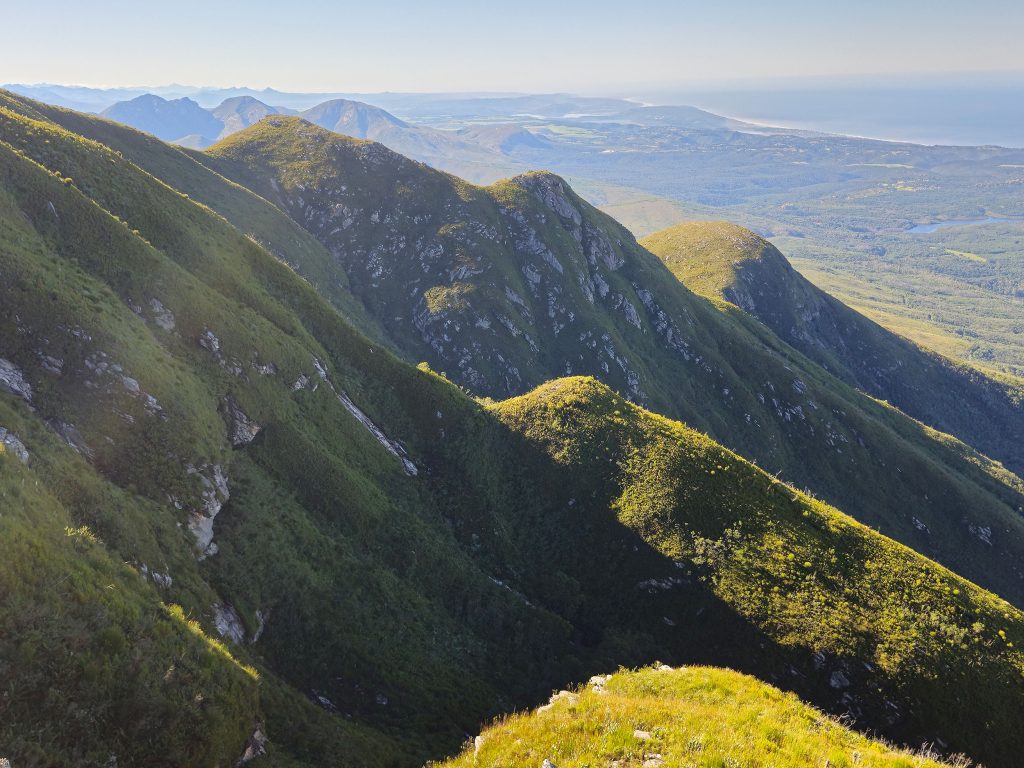
During a recent workshop hosted by the World Wildlife Fund (WWF), South Africa has once again highlighted the importance of the Outeniqua and Tsitsikamma Mountains as critical water-producing landscapes for the Southern Cape.

These mountain catchments form part of South Africa’s Strategic Water Source Areas (SWAs) often called the country’s “natural water factories”. Although these areas cover less than 10% of the country’s land surface, they generate around half of the water that ends up in rivers and dams.

“For farmers, the message is clear: without healthy mountain catchments, there is no long-term water security,” says Cobus Meiring of the Garden Route Environmental Forum (GREF).

According to GREF, almost every catchment in the Garden Route is negatively impacted by invasive alien plants. These invasives reduce streamflow, damage soil health and weaken the ability of rivers to recover after drought.

The situation is made more challenging because of geography. Most coastal catchments in the Garden Route are short and flow quickly from the mountains to the Indian Ocean. This means there are very few opportunities to build large dams, making the protection of natural catchments even more important for agriculture.

South Africa is already a water-scarce country, and climate change is expected to bring hotter and drier conditions to many farming regions. However, the country still has a major advantage: a well-defined network of SWSAs that, if protected, can secure water supply for the future.

Over decades, South African engineers built world-class dams and inter-basin transfer schemes. But infrastructure alone cannot solve the problem. Without healthy mountain ecosystems, the system simply cannot function optimally.

The focus now is on cooperation between farmers, municipalities, conservation organisations and landowners to protect these vital catchments before further damage is done.

For the Garden Route and the wider agricultural sector, the message from the workshop was simple: protecting water source areas is not only an environmental priority – it is an economic one.

The Garden Route Environmental Forum (GREF) is a public platform for environmental managers and a climate change think- tank – www.grefecf.co.za  

Picture Caption: A view of the Outeniqua Mountains (Photo: Herman Pieters)

ENDS

25 March 2026 Media Release: Garden Route land restoration

Media Release: Garden Route land restoration

25 March 2026

An enormous number of farms along the Garden Route drylands have over time become barren due to drought, over grazing, climate change and historical negative land use practices.

Persistent drought is forcing farmers off the land as it is no longer feasible to farm in dry areas. Degraded soils and large scale sheet erosion have had a massive impacts on the carrying capacity and water security on farms in the Klein-and Groot Karoo over past decades, and it is on the increase.

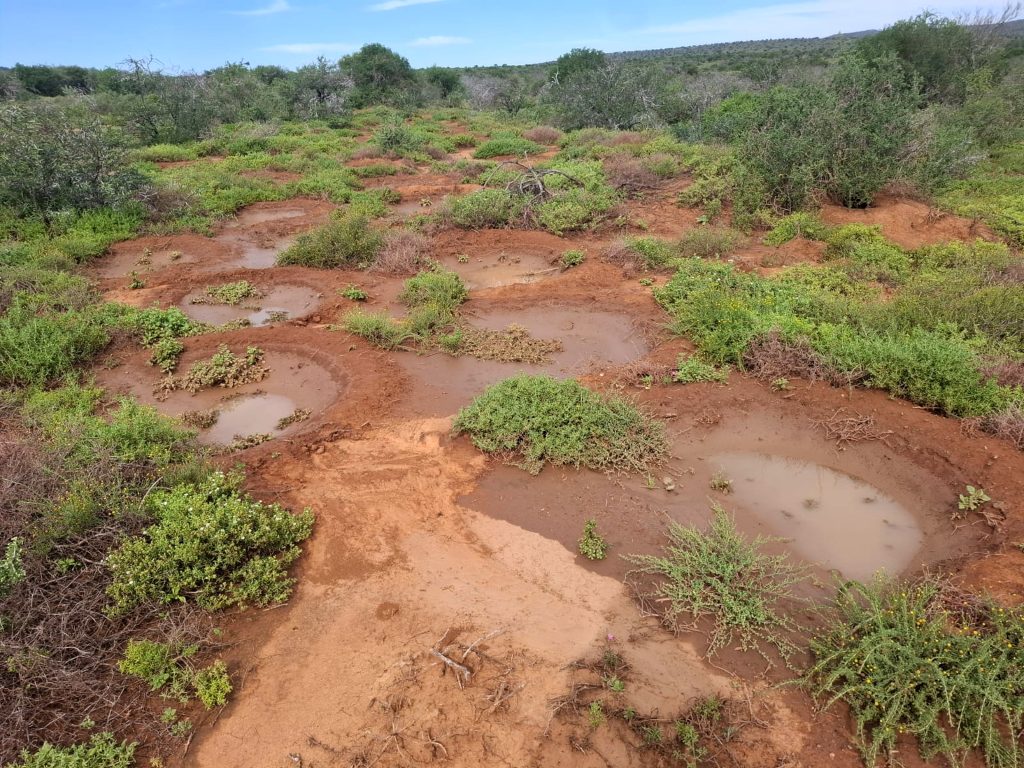
On a positive note, many farmers are using tried and tested methods of land restoration to great effect. “One of the most effective ways to bring back life to barren soil is through a practice named ponding”, says Cobus Meiring of the Garden Route Environmental Forum (GREF).

Shallow ponds scattered throughout barren zones where no grass nor plants can take root, forms very effective water and soil retention traps. Multiple ponds allows plant recovery and surface water to soak into the earth and replenish the water table below. In the rain shadow of the Outeniqua and Swartberg Mountains, land restoration is a painfully slow process, but eventually it does yield positive results from a resilient environment and nature bounces back spectacularly.

Thunderstorms and floods over the Garden Route and Karoo interior presents much relief to farmers and towns alike. Still, episodic rains inflict much harm to the land where degraded surface areas cannot retain top soil and run-off water, leaving behind ever more erosion and further degradation. Through interventions such as ponding these rainfall events can make a huge difference in land restoration and water security.

As the changing climate brings about uncertainty in terms of rainfall and rainfall patterns, it is more important than ever that land managers adapt and allow land recovery initiatives to their own benefit and in the process create a high quality environment.

The Garden Route Environmental Forum (GREF) is a public platform for environmental managers and serves as a climate change think tank. For more information visit grefecsf.co.za and info@hiveenergy.co.uk.

Picture: Ponding on barren landscapes is a simple but very effective method to allow barren land to recover and replenish water tables.

ENDS