Garden Route District Municipality wishes to invite the public to review and provide comment on the 3rd Generation Integrated Waste Management Plan (IWMP).
The IWMP covers the period 2020 – 2025 and defines the municipality’s vision, objectives and targets for waste management.
The reports will be made available for review at the following locations:
Garden Route Municipal Offices (during office hours)
Hard copies of the GRDM IWMP will be made available at the following locations:
The IWMP will be available for a period of 21 days from 18 October 2019 to 08 November 2019 for the public to review and provide comment on. All comments received will be included in the final IWMP.
Submission of comments
Comments on the IWMP can be submitted using the contact details listed below
GIBB Public Participation Office
Mrs Kate Flood
Postal address: PO Box 63703, Greenacres, Port Elizabeth
Physical address: 1st Flood, St. George’s Corner, Central, Port Elizabeth
The Garden Route District Municipality, in terms of the provisions of Section 33 of the Local Government: Municipal Finance Management Act, No. 56 of 2003 hereby make public its intention to enter into a Municipal Public Private Partnership (Municipal PPP) with a private partner, willing to invest in the financing, design, construction, operation and management of the proposed Garden Route Regional Waste Management Facility including the provision of a hazardous waste cell, bulk transportation of waste, chipping of green waste, the crushing of building rubble and related works as well as alternative waste treatment technologies if such alternative waste treatment technologies can be incorporated on a no additional cost basis.
The proposed Municipal PPP Agreement and an information statement summarising the Municipality’s obligations in terms of the proposed contract can be inspected at the Municipality’s head and satellite offices during the official hours of operation of these offices from 03 October 2019 until 03 November 2019. The Municipal PPP Agreement and information statement will also be available, for the duration of the comment period on the Municipality’s website, www.gardenroute.gov.za.
Click here to download the full advert and click here to download all documents related to this notice.
The Municipal PPP Agreement will be considered for approval by the Municipal Council of the Garden Route District Municipality at its Council meeting to be held at the Municipality’s head-office in George during December 2019.
Members of the local community and other interested parties are invited to submit their comments or representations in respect of the proposed Municipal PPP Agreement to the Garden Route District Municipality before 12:00, 03 November 2019 in a sealed envelope clearly endorsed STAKEHOLDER COMMENTS ON THE PROPOSED AGREEMENT FOR A MUNICIPAL PUBLIC PRIVATE PARTNERSHIP FOR THE ESTABLISHMENT OF A REGIONAL LANDFILL FOR THE GARDEN ROUTE DISTRICT MUNICIPALITY IN THE MOSSEL BAY AREA” and addressed to: Municipal Manager, Garden Route District Municipality, P.O. Box 12, George, 6530, and to be deposited in the tender box in the foyer of the Garden Route District Municipal head office at 54 York Street, George.
The Information Statement contains more detail on the information requirements to be provided for individuals and/or organisations that are submitting comments.
Any person who wishes to submit comments or representations in respect of the proposed contract who cannot write will be assisted by the Garden Route District Municipality Communication Section at 54 York Street, George.
It must be noted that should the Garden Route District Municipal Council approve this Municipal PPP Agreement during their meeting to be held in December 2019, it will be implemented as soon as possible thereafter. The agreement as concluded would in terms of Section 84(3) of the Local Government: Municipal Systems Act, 32 of 2000 be made available at the municipal head and satellite offices during office hours for public inspection.
Enquiries can be directed to Mr Morton Hubbe at tel 044 693 0006 or to morton@gardenroute.gov.za.
M Stratu
Municipal Manager
Garden Route District Municipality
P.O. Box 12
George 6530
Mossel Bay Municipality in collaboration with Garden Route District Municipality (GRDM), on 17 September 2019, launched a Schools Composting Programme in Great Brak River. During the launch, a delegation from both municipalities handed over composting bins and worm farms to the Great Brak River Primary and Great Brak River Secondary Schools, respectively. The composting bins and worm farms were provided by Mossel Bay Municipality.
Mr Evor Muller, Acting Foreman: Refuse Removal – Mossel Bay Municipality, Mr Chester Arendse, Coordinator: Youth Community Outreach Programme, Department of Environmental Affairs, Ms Sizeka Monakali, Manager: Refuse Removal & Collections – Mossel Bay Municipality, Mr Peter Abrahams (“Uncle Jannie”), Caretaker – Great Brak River Secondary School, Mr Johan Gie, District Waste Management Officer – GRDM, Ms Angela Muller, Principal – Great Brak River Secondary School, Mr Sivuyile Mtila, Senior Manager: Waste Management & Pollution Control, Mossel Bay Municipality and Mr John Wildemans, Financial Clerk – Great Brak River Secondary School, during the handover.
The initiative followed after Mossel Bay and Garden Route District Municipalities met with five local schools in the Mossel Bay area with the aim to implement school composting programmes at their respective schools. Large amounts of organic waste is generated from schools e.g. vegetable and fruit peels etc. from school hostels and feeding schemes, as well as grass cuttings and garden waste from school and sport grounds. This initiative will furthermore create a perfect opportunity for awareness and education regarding composting, worm farms and organic waste diversion, for the learners at the schools.
According to Mr Johan Gie, District Waste Management Officer at GRDM, after the handover, workshops will be conducted by GRDM at the schools to educate the responsible educators and identified learners (champions) regarding the use of the bins and worm farms. “The workshops are scheduled to take place in October this year,” he said.
There are various easy methods published online on how to reduce food waste in households. One such a method is to reduce potential waste of food before it ends up in kitchen bins or at the Garden Route District Municipality’s regional or at local municipal landfill sites.
Where to from here?
When planning to purchase food, create a list of what is needed before purchasing any items. This will ensure that people buy absolutely necessary groceries. Avoid clutter in your fridge, pantry or freezer by moving older products to the front as a reminder to consume them first. When preparing a meal, there are usually some leftovers – incorporate these into your daily/weekly routine by taking some to work. Remember to store these and other foodstuffs at the correct temperatures to ensure that it lasts as long as possible. Proposing waste minimisation actions at work can also be a step towards changing the habits of those around you. It is also a great gesture to donate food to food banks, and food scraps or spoilt food to pig farms. Altogether, fruits and vegetables are perfect for composting.
A community who changed their habits
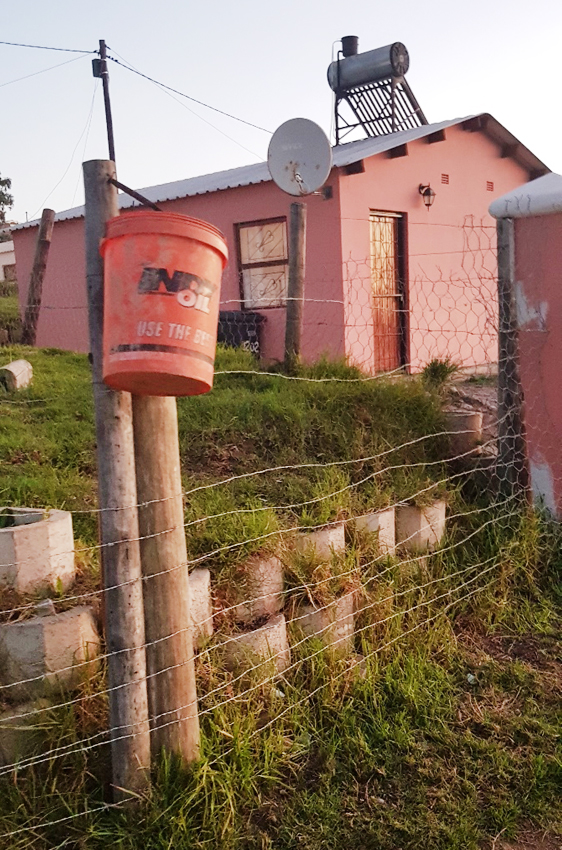
According to one of GRDM’s Bitou-based Municipal Health Officials, Ms Maxwelline Fatuse, there is an informal settlement named Bossiesgif in Bitou, who manages their food waste in a different, but clever way. This community made a collective and positive routine-change to their daily habits. They use re-usable 10- litre waste bins or paint bins, hang it outside to fencing poles, which are then filled with food scraps from their kitchens. The waste bins are picked up twice a week and used to feed six pigs farms situated near the community.
A community member of Bossiesgif, Mr Mqalo said: “Our community initiative has been conscious of waste minimisation for years and this community drive helps us to reduce the municipal bins from filling up too quickly. It also helps feed the pigs of farmers and in turn, reduces the waste that would usually be dumped at landfill sites.”
Mr Mqalu explained that community members know to only discard food scraps like vegetable and potato peels, cabbage, (organic waste) etc. in the bins.
“There has not been a single report of pigs getting sick due to this approach of discarding household scrap food,” Mr Mqalu confirmed.
Surrounding areas that include New Horizon, Kwanokutula, Pinetrees and Xolweni, have also adopted this method of discarding food waste. This method, over time, shifts a mountain of waste into feed for pigs. This initiative proves that when communities work collectively to change societal habits for the better, it can move mountains – in this case, mountains of waste.
One might assume that vegetable or fruit scraps can only be used for composting, but there are more ways to “kill a fly”.
Writer’s note:
Food waste is a worldwide epidemic; one-third of food on a global scale is either wasted or spoiled food. Food waste lying at dumpsites also result in methane gas build-up, which has been reported by the Canadian Broadcast Corporation as “25 times more damaging than carbon dioxide.” In the not too distant future, this will result in an additional increase in the effects of climate change.
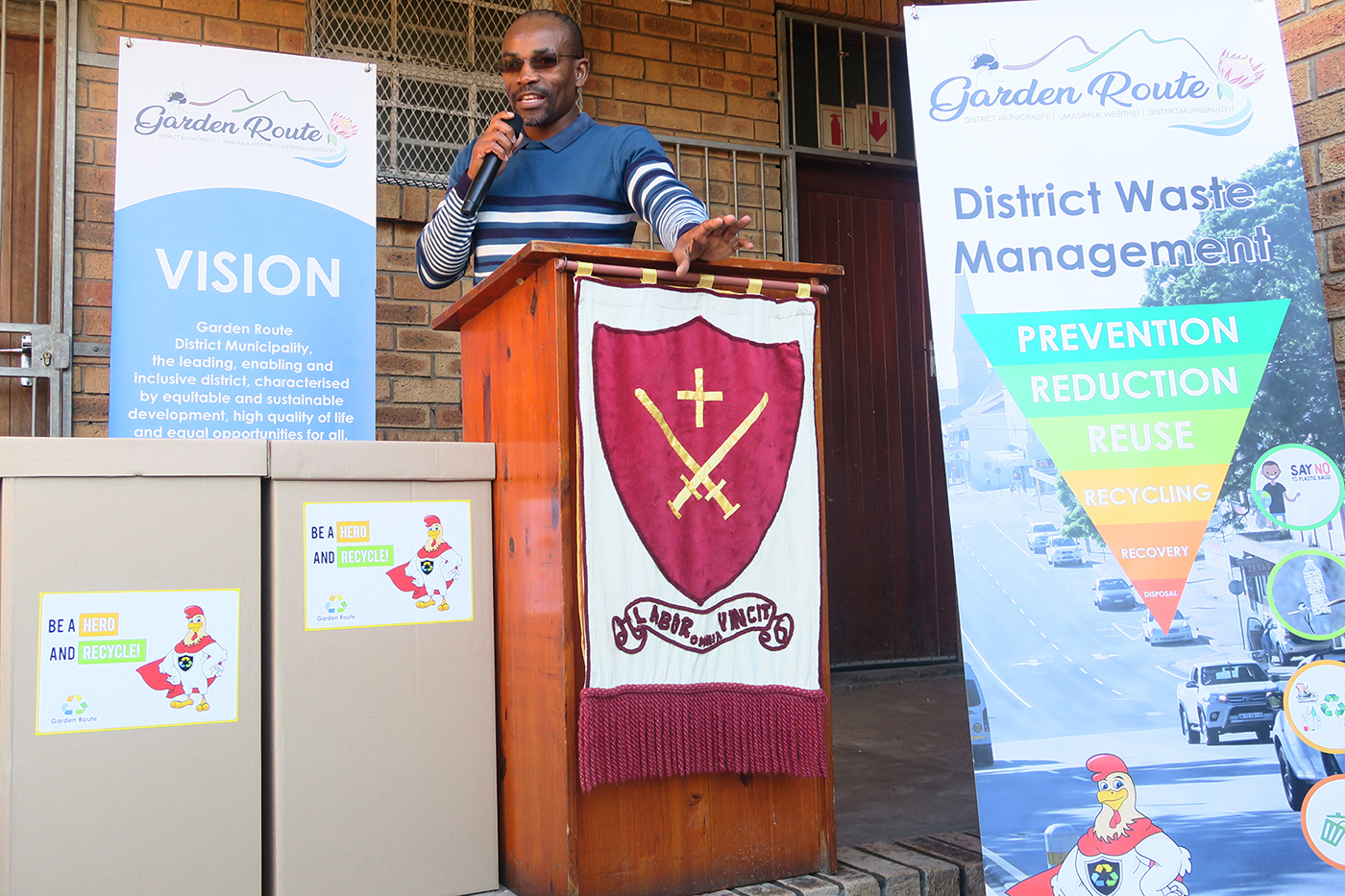
A pilot Primary School Recycling Programme has been launched at St. Paul’s Primary School in George today, 10 June 2019, by the Executive Mayor of Garden Route District Municipality (GRDM), Councillor Memory Booysen, in collaboration with the Waste Management Unit of GRDM and their recycling mascot known as ‘Rocky the Recycling Rooster’.
Executive Mayor, Cllr Memory Booysen, with Principal Calvert, teachers, learners and municipal employees at the end of the pilot Recycling Launch.
During the welcoming and opening of the programme, Principal Baron Calvert said: “Part of my teaching background is in the field of Environmental Science and I therefore understand the importance of the programme and welcome the Municipality’s project at our school. We are privileged to be the first primary school in the Garden Route to be identified to pilot this project.” Mr Calvert was appointed on 1 April 2019 as Principal of St. Paul’s Primary School and brings with him a wealth of experience and a passion for behaviour change.
‘Rocky the Recycling Rooster’ was introduced by Mr Johan Gie, Waste Management Officer at GRDM.
Through this Programme, learners will be more likely to carry recycling habits into their adult years, while sharing it with family and friends. They will also be able to become more aware of how their personal actions can affect the future of the environment.
Executive Mayor, Cllr Memory Booysen, with Principal Calvert, teachers, learners and municipal employees at the end of the pilot Recycling Launch.
Executive Mayor, Cllr Memory Booysen, urged learners to stop littering. He said the school would be able to make an income from recycling, if done effectively. “Recycling companies pay for recyclables and this should also be seen as an opportunity for the school to create an additional income stream.”
‘Rocky the Recycling Rooster’ was one of the highlights at the launch of the pilot Recycling Project which was rolled out by GRDM at St. Paul’s Primary School in George.
“From today, this school will have to set an example to other schools by being the cleanest. When we come back here to see how well you have implemented the project, we will award a prize to the learner who has demonstrated and committed to change his/her behaviour,” said Cllr Booysen.
St. Paul’s Primary School were provided with 25 cardboard recycling boxes to use in various classrooms, offices and copy rooms. The boxes are easily identifiable with clear signage indicating that they are meant for recycling. “If the project goes well, the district will also offer recycling bins made for outside use,” explained Cllr Booysen.
A similar pilot Programme was launched at Knysna’s Percy Mdala High School in May 2019 in which teachers and learners were introduced to the programme and the important impact recycling has on the environment.
TRAINING STAFF
It is essential to reach out to learners and teachers to inform them of recycling initiatives. An on-going education programme will inform all participants about their collaborative efforts to reduce the amount of waste produced, especially on what can and cannot be recycled.
COLLECTION
Schools often produce tremendous amount of waste with instructional materials, used electronics, and food. Collecting and separation of recyclables after a school has managed to play their role in the recycling cycle, is just as important. Local Municipalities will continue collecting all non-recyclable refuse from schools and the general public.
Carton boxes which will be used by learners for recycling purposes.
WASTE TYPES AT SCHOOL
The following types of recyclables are generally produced at schools, which include:
Paper;
Metal;
Plastic; and
Organic Waste.
WAYS TO RECYCLE AND REDUCE WASTE AT SCHOOL
Keep a cardboard recycling box in every classroom
Route memos electronically;
Reuse office and classroom supplies;
Hold recycling contests between classrooms or grades;
Use the front and back of copy paper for class assignments;
Encourage students to use recycled materials in their art projects;
Establish a recycling club that encourages recycling throughout the school.
Use old magazines for art projects;
Minimize the number of handouts used in classes;
Encourage the cafeteria to buy food in bulk which reduces paper and plastic waste;
Encourage students to bring their lunch from home in reusable containers; and
Encourage students to bring junk mail from home and place in recycle bins.
Rocky the Recycling Rooster’ requested a photo on his own with learners shortly after the pilot Recycling Programme was launched.
Samevatting in Afrikaans
‘n Herwinningsprojek is vandag, 10 Junie 2019, op proef-basis ingestel by St. Paul’s Primêr deur Garden Route Distriksmunisipaliteit (GRDM). Die projek is amptelik geloots deur Burgemeester Memory Booysen, die GRDM Afvalbestuurspan, in samewerking met ‘Rocky the Recycling Rooster”.
Die projek behels dat leerders gebruik maak van plastieksakke en kartonbokse om papier, metaal, plastiek en organiese materiaal/produkte te herwin.
Burgemeester Booysen het genoem: “Van vandag af moet julle ‘n voorbeeld stel vir ander skole in die streek. Wanneer ons julle weer besoek, beoog ons om ‘n prys aan die herwinnings-ambassadeur by julle skool te oorhandig.”
‘n Soortgelyke projek is in Mei-maand by Percy Mdala Hoërksool te Knysna geloots.
Die doel van die herwinningsprojek is om lig te werp op herwinningsgewoontes in skole en om gemeenskappe se denkwyse oor herwinning te verander.
Ms Desiree Liberty from the Expanded Public Works Programme (EPWP) Unit entertained learners with a well-known song to many, called: “This Little Light of Mine” by gospel singer and writer, Harry Dixon Loes. Behind her (fltr), are: Cllr Memory Booysen (GRDM Executive Mayor), Mr Richard Dyantyi (GRDM Manager: EPWP) and Principal Baron Calvert (St Paul’s Primary School)
1. Regional Waste Management Facility on Farm 419 Mossel Bay
The Development of a Regional Waste Management Facility on the property of the Garden Route District Municipality (GRDM), Farm 419, will be finalised by the end of 2019.
The facility will occupy +-70% of the 205-hectare property (approximate size of 143.5 hectares) belonging to GRDM. A private partner was selected by GRDM and a Public Private Partnership agreement will soon be entered into between the District Council and the company. Constructing and operating the facility for a period of ten years will be the responsibility of the appointed company.
Bitou, Knysna, George and Mossel Bay Municipalities will make use of the Waste Management Facility which will deal with domestic and hazardous waste disposal. Mobile chipping and crushing facilities will be included to assist the four Local Municipalities with Green Waste Management.
In addition to the Regional Landfill Facility, the following two proposals were received and are subject to all applicable legislation, application requirements and approvals. One proposal was received from Ikusasa Processing Engineering Consultants (PTY) Ltd and the other from Moumakoe-Geza Joint Venture. Sufficient land (+-30% of the 205 hectares of land) is available on Farm 419 for these developments.
The Garden Route Investment Conference, which was held in March 2018, stimulated the interest of two multi-national companies to invest in the Garden Route. One of the two, which is known as Ikusasa Processing Engineering Consultants (PTY) LTD, approached GRDM with a proposal stating their intent to erect a chemical plant that will support the wide variety of sectors in the region and outside portion of Farm 419 in Mossel Bay. The size will be determined once the necessary plans are finalised and presented to the Garden Route District Municipality and approved by Mossel Bay Municipality. Necessary studies i.e. EIA’s will also have to be undertaken for this proposed development.
3. Moumakoe-Geza Joint Venture
Moumakoe-Geza Joint Venture has recently requested to lease 10 hectares of GRDM land, which forms part of Erf 419, adjacent to PetroSA for the construction of lubricant oil or a lube oil blending plant. The plant will have the capacity of producing 20 800 000 liters of blended products per annum. Studies have revealed that South Africa has a lubricant demand of 2 million barrels per annum. This project is, therefore, a win-win solution for the Garden Route in terms of social and economic development. Necessary studies i.e. EIA’s will also have to be undertaken for this proposed development.
Public concern regarding the selling of “fake foods” compelled the National Department of Health to issue an urgent directive to investigate allegations made regarding the sale of food products, especially products not labelled in accordance with the REGULATIONS RELATING TO THE LABELLING AND ADVERTISING OF FOODSTUFFS, R146 OF 01 MARCH 2010.
According to Regulation 146:
No person shall manufacture, import, sell or offer any pre-packed foodstuffs for sale, unless the foodstuff container or the bulk stock, from which it is taken, is labelled in accordance with these regulations.
No person shall import, manufacture, sell, distribute or donate foodstuffs, unless a date marking is clearly indicated on the label or container of such foodstuff.
The date shall be preceded by appropriate words “best before” and/or “use by” and/or “sell by”, depending on the nature of the product; Provided thatbbreviations shall not be permitted, except “BB” for “best before”, but the preceding words shall be written out in full.
The date marking may not be removed or altered by any person.
During September 2018, the Garden Route District Municipality’s Municipal Health Section, in conjunction with the South African Police Services (SAPS) conducted successful operations at “Spaza Shops” in the Hessequa Region.
The purpose of these operations was to address the sale of food products which have reached their “sell by” and/or “use by” and/or “best before” dates, as well as products that were not labelled in English and/or one of the other official languages of the Republic of South Africa.
Inspections were conducted at eighty-one (81) “Spaza Shops” in Riversdale, Heidelberg and Albertinia collectively. During the operations, aspects regarding labelling and advertising of foodstuffs were explained to shop owners/managers, and products which were not labelled in accordance with this Regulation, especially those with no labels, inappropriate language presentation and no “sell by” and/or “use by” and/or “best before” dates, were confiscated and condemned.
When products that have reached their “sell by” and/or “use by” and/or “best before dates were found, shop owners/managers ere given the option to either return the products to the manufacturer or voluntarily surrender it for condemnation.
It is important to understand that date marking, is a best practice in the food industry, helping to protect both food quality and food safety. When the “sell by” and/or “use by” and/or “best before” dates of a food product has been reached, the risk of microbiological deterioration increases, which result in an increased health risk to the public.
In light of these events, the Municipal Health Section of the Garden Route District Municipality has decided to increase its monitoring programmes at all food premises, and to create greater public awareness.
Eden District Municipality has designed a recycling mascot which will be branded on all waste management and minimisation initiatives as decided by all municipalities in the district. The mascot will assist in creating awareness about waste minimisation matters and is also a means of encouraging younger generations to partake in waste minimisation.
Eden DM has procured a mascot to be used by all municipalities for any waste minimisation / management events. The mascot, Rocky (the Recycling Rooster / RRR / Alliteration Reduce Reuse Recycle) was designed with three different characters namely: ‘Cool’, ‘Superhero’ and ‘Boxer’.
Eden District Municipal Offices Recycling Programme
The Office Recycling Programme has been successfully implemented at all offices of Eden DM, in order to create waste minimisation awareness amongst employees. A thousand cardboard recycling boxes, branded with the Eden Waste Minimisation Mascot and fifteen wheelie-bins, were procured for this programme. These boxes were placed at all offices and emptied once a week into the wheelie-bins.
The objectives of the programme, include the following:
• The provision of recycling receptacles at all Council offices;
• Training of all Cleaners and responsible employees;
• Interaction with local recycling companies; and
• Awareness among employees about recycling.
Each office weighs and records their waste quantities on a weekly basis; these quantities will be published in Eden DM’s quarterly newsletter. Between January 2017 and April 2017 (4 Months) a recorded 5077,5kg (5 tons) of recyclable material was recovered from Eden DM’s satellite offices in Plettenberg Bay, Knysna, George, Mossel Bay, Oudtshoorn, Riversdale, Albertinia and Heidelberg and Eden DM’s Head Office in George. This is an average of 1,25 tons of waste diverted from landfill on a monthly basis.
Furthermore, the campaign is also driven with the aspiration to create awareness amongst the public that visits council’s offices, demonstrating Eden DM’s commitment towards waste minimisation by practising what they preach.
During an Eden district wide study, it became evident that municipalities lack information, regarding the different types and volumes of waste, featured in their Integrated Waste Management Plans. For this reason, Eden District Municipality (Eden DM) took the initiative, to procure the necessary equipment required to conduct waste characterisation studies. This was done with the prize money received from the Greenest District Municipality Awards that was won in 2015.
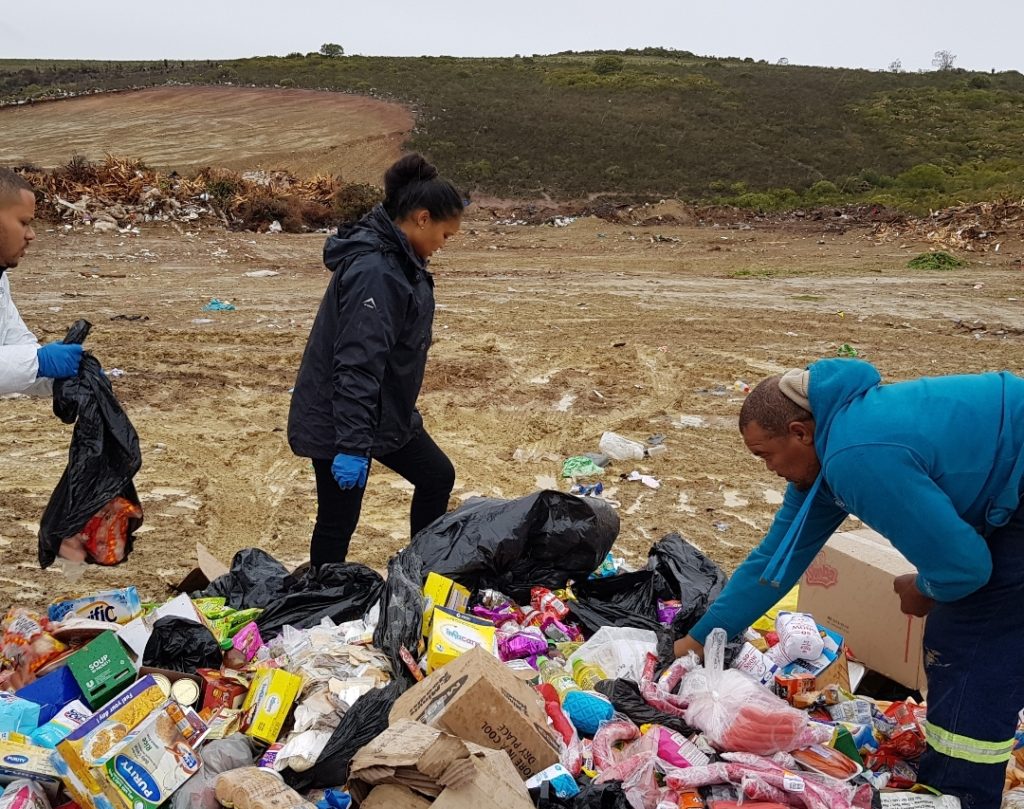
From August 2015, the Eden DM Waste Management Section conducted waste characterisation studies in the Bitou-, Mossel Bay-, Knysna-, Hessequa- and Oudtshoorn Municipal areas. The reason behind these studies has been to obtain and provide a breakdown of the composition and quantities of household and commercial waste collected from different outlets and disposed at landfill sites. This information is needed to ensure proper integrated waste management planning.
A representative sample, relative to the total number of households per sub-area, was collected, identified, sorted and weighed. The waste was categorised into 15 different waste types, namely:
Soft plastics;
Hard plastics;
Paper;
Cardboard;
Glass metal;
Food waste;
Garden waste;
Textiles;
Wood waste;
Inert waste;
Nappies;
E-waste; and
Hazardous waste and more (waste that does not fall under the aforementioned categories).
The results obtained from the different sub-areas within the different municipalities, illustrated different trends in waste generation. These trends will be significant in identifying and prioritising the type of waste minimisation areas and management initiatives to implement in the various sub-areas. For example, home composting initiatives should be implemented in the sub-areas where garden waste was the most prominent component of the waste sampled.
A waste characterisation study is planned for early 2017 in the George Municipal area; whereafter similar studies will follow in the other local municipalities within the Eden district. The abovementioned studies will be performed on a bi-annual basis, in order to determine the seasonal waste generation trends. The majority of waste currently reaching the landfill site are recyclable materials.