
Author: Marillia Veldkornet
16 February 2022 Media Release: Healthcare support for teenage pregnancies
 Media Release: Healthcare support for teenage pregnancies
For immediate release
16 February 2022
Teenage pregnancy, the use of emergency contraceptives, early bookings, and access to prenatal care is the focus of this year’s Pregnancy Education Week which is highlighted from 12 – 19 February.
Between April 2019 to December 2021, 3922 teenage pregnancies were recorded at public hospitals in the Garden Route District. This is 14% of the total deliveries for the district.
Sr Claudine Potts (Midwife at George Hospital) expresses her concern on the increasing number of teenage pregnancies amongst young girls between the ages of 12 and 19.
‘Mothers-to-be should visit their local clinic (preferably before 20 weeks) to seek medical care, book an antenatal visit and gather information. Mothers should also find out if there are any antenatal classes in your area at your closets clinic or hospital. The most important message to all pregnant mothers is to have a support system or partner throughout the duration of the pregnancy’, she said.
‘There are also various contraceptive methods available at healthcare facilities to avoid unplanned pregnancies. One is emergency contraception available at all healthcare facilities. Emergency contraception must be taken within 72 hours after sexual intercourse to avoid an unplanned pregnancy’, she said.
‘As a midwife, the highlight of my work is sending home a healthy baby and giving moms-to-be the best possible experience during pregnancy and labour’.
The Department has various support programs in place to assist pregnant teenagers who have social challenges as part of the First 1000 Days plan, where a child’s health is most vulnerable during the first 1 000 days of its life and the mother’s mental health is important for a healthy pregnancy and birth. This period, from conception until a child’s 2nd birthday, offers a unique window of opportunity to shape healthier and more prosperous futures.
Another form of support as part of the First 1000 Days program for young mothers is the MomConnect mobile platform which has three main objectives:
- To register each pregnancy at a government health facility.
- To send stage-based, personalised SMSes to each mom in the registry.
- To allow women to engage with the health system through help desk tools and services.
How To Register for MomConnect:
- Ask someone at a public health care facility to confirm that you are pregnant.
- Dial *134*550# from your cellphone to register.
- Answer a few simple questions about your pregnancy.
- You will then be registered – welcome to the family!
- Pregnancy is registered in the national database.
- The user receives weekly SMS messages to inform them of their pregnancy and baby health (up to when the child is one year old).
Young mothers are encouraged to take the first steps by booking early for antenatal pregnancy care with trained and professional midwives. Adhere to their appointments and ask the necessary questions about their pregnancy to feel empowered and aware of their health status and the health status of the unborn baby.
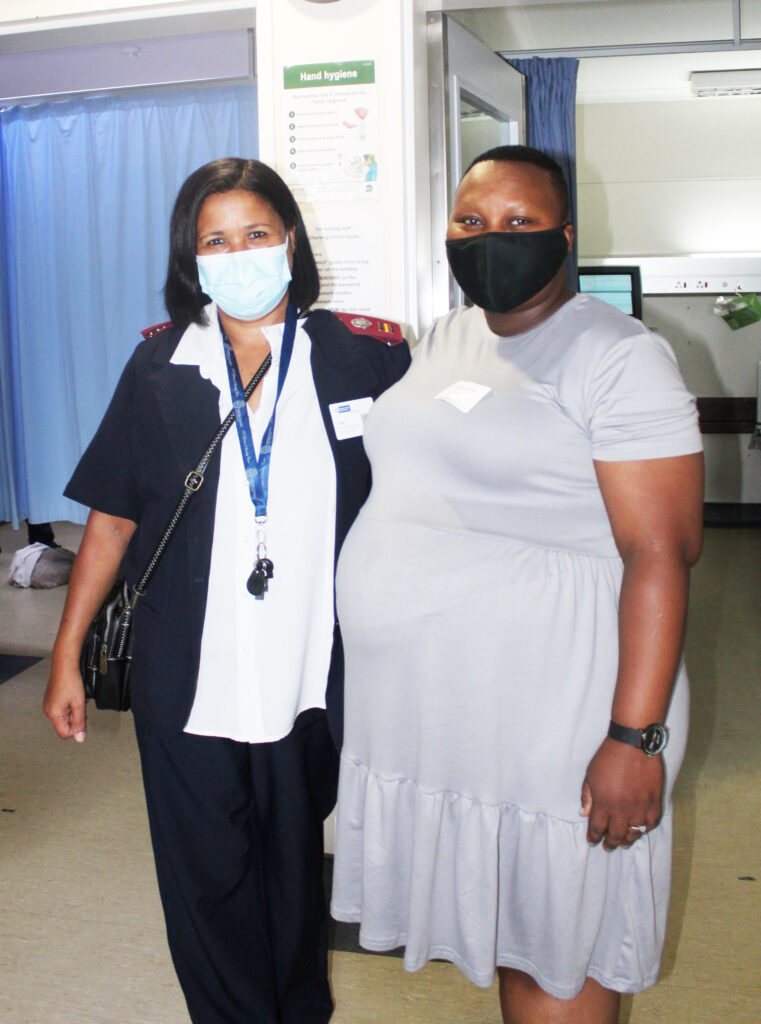
Caption: Sr Claudine Potts with soon-to-be mother Grace Khedama, who is in her final trimester of pregnancy.
Nadia Ferreira
Principal Communications Officer
Garden Route and Central Karoo Districts
Western Cape Government Health
Tel: 044 813 1831
Email: Nadia.Ferreira@westerncape.gov.za
Website: www.westerncape.gov.za
ENDS

Public Notice of a Council Meeting on 21 February 2022 at 11:00
 Members of the public are invited to follow the proceedings of the Council Meeting through the municipality’s YouTube channel at:
www.youtube.com/channel/UC66RBZT0_U2_L4-zSn7yXJQ
8 February 2022 Media Release: Saturday surgeries making a difference
Saturday surgeries making a difference
For immediate release
8 February 2022
George Hospital is currently busy with Saturday surgeries to help reduce the waiting time for patients who require surgery as a result of COVID-19. During the pandemic, elective surgeries had to be postponed to free up resources and personnel within the hospital for patients who contracted the virus and who needed urgent care. It was also necessary to prevent the risk of patients contracting COVID-19 during their travel time or hospital stay. As a result, many patients have been waiting a long time for their operations.
‘Saturday surgeries are a new initiative that has been implemented at the hospital and will run until March. We have received additional funding for this purpose, which allows additional doctors and nurses to be contracted to make these operations possible. Some of the staff have agreed to volunteer their Saturdays to make the project a reality and maximise the number of patients who are treated. Some patients who have been on the waiting list for two or more years can now receive their surgery, these include Orthopaedics, Gynaecology, general surgery, Urology and ENT,’ said George Hospital CEO, Michael Vonk.
According to Dr Chanelle Changfoot (general surgeon at George Hospital), Saturday surgeries take place from 8:00 until 17:00 and usually all health professionals try and do as many surgeries as possible. ‘These are elective operations that have a major impact on the patients’ quality of life,’ she said.
Percival Rossouw (37) from Riversdale has been waiting for quite a while for his operation. ‘At long last I also have the opportunity to get the procedure done with and move forward,’ he said.
Patients would usually wait six to nine months for their non-urgent procedure or surgery but due to COVID-19, some have been waiting for two years. The type of surgeries impacted by COVID-19 has been non-urgent cases such as hernias, gall bladder surgeries, non-cancerous lumps and bumps that are growing, and hip or knee replacements. ‘It’s difficult for patients to understand why they have to wait. As a doctor it can be frustrating because you want to help everybody but unfortunately for surgery, you have to work in a team,’ said Dr Changfoot.
Renier Alberts (63) is another happy patient who underwent surgery on Saturday 5 January 2022. ‘I am glad my turn has come, and also to be able to receive surgery during the weekend,’ he said.
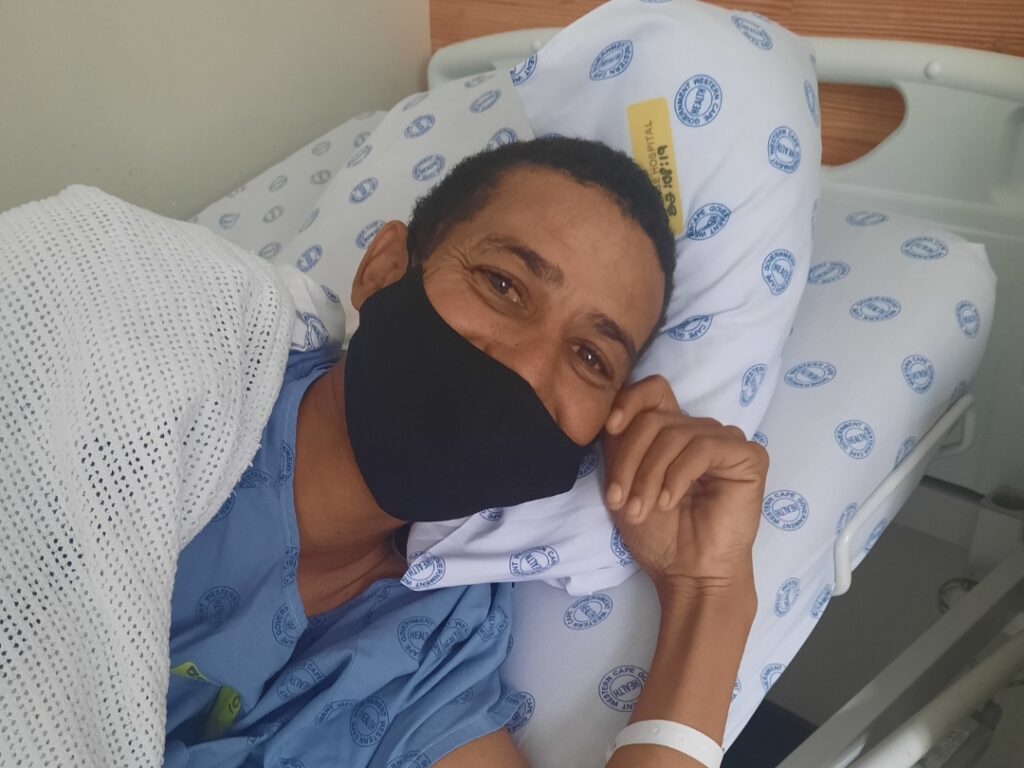
Caption: Percial Rossouw is one of many patients benefiting from the initiative.
END
Nadia Ferreira
Principal Communications Officer
Garden Route and Central Karoo Districts
Western Cape Government Health
Tel: 044 813 1831
Email: Nadia.Ferreira@westerncape.gov.za
Website: www.westerncape.gov.za

08 February 2022 Impact Based Warning: Veld Fire Conditions
The Cape Town Weather Office has issued an Impact Based Warning for the Western Cape and Namaqua Region of Northern Cape as follows:
Hazard: Veld Fire Conditions
Alert Level: FDI above 75
Affected Municipalities: Beaufort West, Cederberg, Hantam, Kamiesberg, Kannaland, Karoo Hoogland, Laingsburg, Langeberg, Oudtshoorn, Prince Albert, Witzenberg
Valid From (SAST): 08/02/22 – 11h00
Valid To (SAST): 09/02/22 – 18h00
Discussion: The warm temperatures, dry conditions and strong winds could result in the development of runaway and veld/bush fires.
Impact: Conditions are such that the FDI index is above 75. Under these conditions fires may develop and spread rapidly resulting in damage to property and possible loss of human and/or animal life.
Instruction:Fire teams, labour and equipment are to be placed on stand-by. A first sign of smoke, every possible measure should be taken in order to bring the fire under control in the shortest possible time.
_________________________________________
Legal notice:
“This warning from SA Weather Service must be communicated as received and may not be altered under any circumstance.
It must be forwarded or communicated in its entirety and no portion hereof may be replicated or copied and distributed.”

07 February 2022 Impact Based Warning: Veld Fire Conditions
The Cape Town Weather Office has issued an Impact Based Warning for the Western Cape and Namaqua Region of Northern Cape as follows:
Hazard: Veld Fire Conditions
Alert Level: FDI above 75
Affected Municipalities: Beaufort West, Cederberg, Hantam, Kannaland, Karoo Hoogland, Laingsburg, Oudtshoorn, Prince Albert, Witzenberg
Valid From (SAST): 07/02/22 – 01h00
Valid To (SAST): 08/02/22 – 19h00
Discussion: The warm temperatures, dry conditions and strong winds could result in the development of runaway and veld/bush fires.
Impact: Conditions are such that the FDI index is above 75. Under these conditions fires may develop and spread rapidly resulting in damage to property and possible loss of human and/or animal life.
Instruction: Fire teams, labour and equipment are to be placed on stand-by. A first sign of smoke, every possible measure should be taken in order to bring the fire under control in the shortest possible time.
_________________________________________
Legal notice:
“This warning from SA Weather Service must be communicated as received and may not be altered under any circumstance.
It must be forwarded or communicated in its entirety and no portion hereof may be replicated or copied and distributed.”

02 February 2022 Impact Based Warning: Level 2 Disruptive Rain
The Cape Town Weather Office has issued an Impact Based Warning for the Western Cape and Namaqua Region of Northern Cape as follows:
Hazard: Disruptive Rain Yellow
Alert Level: Level 2 (High likelihood of minor impacts)
Affected Municipalities: Beaufort West, Bitou, George, Hantam, Kannaland, Karoo Hoogland, Khâi-Ma, Knysna, Laingsburg, Mossel Bay, Oudtshoorn, Prince Albert
Valid From (SAST): 02/02/22 – 03h00
Valid To (SAST): 02/02/22 – 23h00
Discussion: Rain and thundershowers are expected from mid-morning persisting until the evening. Rainfall accumulation of 15-30mm are expected with up to 50mm in pockets within the cloud band are possible; some showers can have a quick and heavy downpour (15-20mm/h). The lightning associated with the thundershowers might cause some impacts.
Impact: Localised flooding/flash flooding of susceptible formal/informal settlements and roads may occur which can affect major routes contributing to longer travel times together with reduced visibility and slippery roads can also cause minor vehicle accidents. Isolated events of lightning can contribute to localised service disruption due to power surges.
Instruction: In buildings, move valuables to a safe place above the expected flood level. Switch off electricity at the supply point to the building. Be especially cautious at night when it’s harder to recognize flood dangers when driving. Listen to the radio or TV for warnings and obey the instructions from disaster management officers.
_________________________________________
Legal notice:
“This warning from SA Weather Service must be communicated as received and may not be altered under any circumstance.
It must be forwarded or communicated in its entirety and no portion hereof may be replicated or copied and distributed.”

02 February 2022 Media Release: Garden Route District Municipality Once Again Celebrating World Wetlands Day on 02 February
Garden Route District Municipality Once Again Celebrating World Wetlands Day on 02 February
For immediate release
2 February 2022
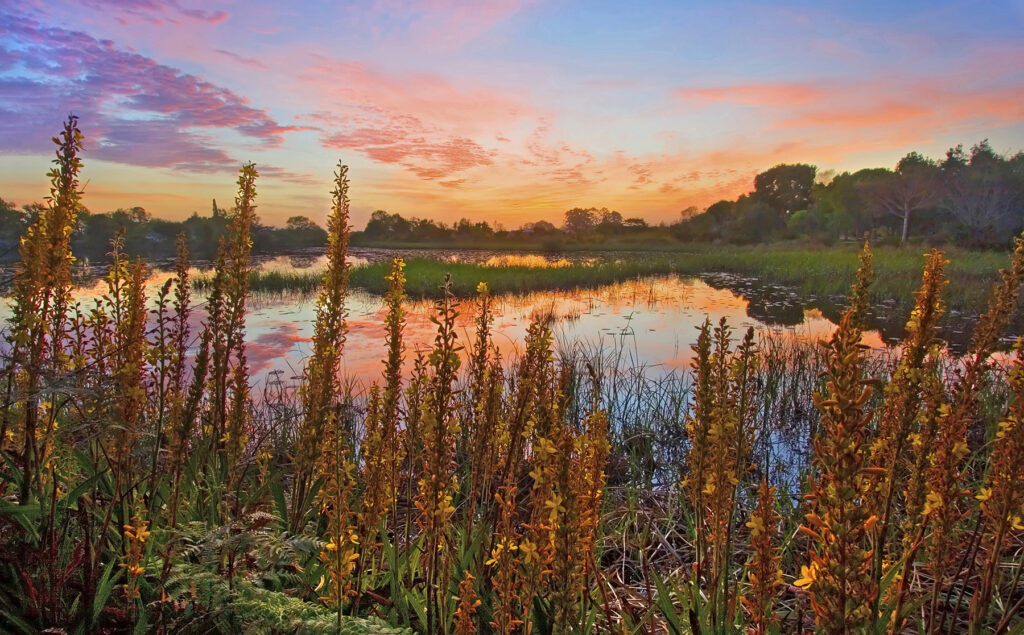
Today, 2 of February 2022, the Garden Route District Municipality (GRDM) is once again celebrating the World Wetlands Day. World Wetlands Day is celebrated annually and aims to raise awareness globally about the vital role of wetlands for humans and the entire world’s eco-system.
A significant number of wetlands can be found throughout the Garden Route, including one protected under the Ramsar Convention. The internationally known Wilderness Lakes Ramsar Site falls within the Garden Route National Park, covering an area of 1 300 hectares and includes estuarine lakes of Rondevlei, Langvlei and Eilandvlei, the Serpentine channel, and a dune system. A Ramsar site is a wetland site designated to be of international importance under the Ramsar Convention; an intergovernmental environmental treaty established in 1971 by the United Nations Educational, Scientific and Cultural Organization (UNESCO). The treaty provides for national action and international cooperation to conserve wetlands and to use their resources in a sustainable manner.
The wetlands within the Garden Route are considered to be high-value ecological infrastructure. They provide vital habitat for flora and fauna, which forms part of a larger critical ecosystem to the environment. These include flood attenuation, water filtration, erosion control and water storage (regulatory services), as well as food provision, supply of raw materials and clean drinking water (provisioning services). The wetlands within the municipal boundaries also play a pivotal role in disaster risk management, as well as reducing the impacts of climate change.
Dr Nina Viljoen, Head of Environmental Management at GRDM said: “Within the Garden Route however, a significant number of the wetlands are under threat, or have already been lost. This is largely due to historical degradation, deliberate draining of wetlands to make way for development and agriculture, inappropriate development within the close proximity to the wetlands, poorly regulated agricultural practices, contamination through chemical, sewage, effluent and stormwater seeps, sedimentation, water abstraction and the spread of invasive alien plants”. In light of this, Dr Viljoen added that there is an urgent need to increase awareness of wetland importance and to incorporate natural wetland resource considerations into municipal governance mechanisms and planning. She emphasised: “Careful management, and investing in the maintenance of healthy wetlands, as well as the rehabilitation and restoration of damaged or degraded wetlands, are needed. This will ensure the continued provision of these vital ecosystem services to the municipality”.
GRDM Wetlands Strategy (2017-2022)
The GRDM developed a Wetlands Strategy (2017-2022) in collaboration with, and support from, the Local Action for Biodiversity: Wetlands South Africa (LAB: Wetlands SA) programme, and the International Council for Local Environmental Initiatives, Africa Secretariat (ICLEI AS). Through the development of this Strategy, gaps in the support of wetland management within the district were identified, and improved wetland management strategies were therefore incorporated within the Strategy.
The GRDM Disaster Risk Assessment (2020-2021)
The GRDM recognises that wetlands are of immense value, especially when it comes to disaster risk reduction. According to a GRDM Disaster Risk Assessment (2020-2021), wetlands have the ability to contribute towards disaster risk reduction by means of its flood attenuation, water filtration and related water security functions. These functions are also extremely important in climate change adaptation, and needs to be conserved in order to assist in the mitigation of future climate change risks. The GRDM therefore seeks to enhance the conservation and management of the districts’ natural wetland resources. This is done by integrating biodiversity issues into its local government support, planning and decision-making processes.
As part of its disaster risk assessment, the GRDM identified a high flood risk in the coastal and lagoon areas of the district, particularly during the winter months. This impact is worsened by increasingly degraded wetlands.
According to the GRDM Climate Change Report (2018), most wetlands are classified as either ‘moderately modified’ (between 25% and 75% of the wetland land cover is natural) or ‘heavily to critically modified’ (less than 25% of the wetland land cover is natural). Wetlands within the district therefore face a significant number of threats, all of which have the ability to either destroy the wetland entirely, or severely compromise function and provision of ecosystem services.
In order to conserve wetlands in the Garden Route, and to reduce the number of threats they are facing, Dr Viljoen said: “The GRDM, its local municipalities within its area of jurisdiction, as well as all the stakeholders, need to adapt to a ‘new normal’. The complex interactions between society and wetland ecosystems need to be approached in an integrated way, she added”.
It is essential to increase the monitoring and regulation of new environmental authorisation applications that will impact wetlands. Through this, sustainability projects will be identified that will benefit the neighboring communities to identify community upliftment opportunities and products/services for sustainable wetland use. This will allow the prioritisation of wetlands and the implementation of innovative and internationally-used approaches to help reach sustainability goals and objectives. It is essential that the municipalities within the Garden Route district compile the best available spatial information on wetlands for inclusion in their Spatial Development Frameworks (SDF’s), as well as to include wetland management within their Integrated Development Plans (IDP’s).
The following related GRDM documents can be accessed on its website:
- Garden Route District Municipality Disaster Risk Assessment (2020/2021) – Link: GRDM Risk Assessment 2021 (gardenroute.gov.za)
- Garden Route District Municipality Wetlands Strategy (2017-2022)
- Garden Route Climate Change Adaptation Summary Report (2018) – Link: GRDM-Climate-Change-Adaptation-Summary-Report.pdf (gardenroute.gov.za)
ENDS

01 February 2022 Media Release – GRDM and stakeholders to install smoke detectors in Qolweni, Bitou
Media Release – GRDM and stakeholders to install smoke detectors in Qolweni, Bitou
For immediate release
01 February 2022
Early detection of home fires is critical in preventing deaths and injuries. These fires can smoulder for some time before bursting into flames, releasing deadly toxic gases. This is why the majority of fire-related deaths are associated with suffocation. Smoke disorientates people or incapacitates them so quickly that they cannot escape, in particular while sleeping. Studies have shown that the smell of smoke does not wake people up. However, if a potential fire is detected during the smouldering stage, it can reduce the risk of suffocating and provide enough time for people to escape a property.

For these reasons, the Garden Route District Municipality (GRDM) in collaboration with Bitou Local Municipality and the Provincial Disaster Management Centre have initiated an innovative smoke alarm installation programme for high fire risk areas. The first roll-out will be for communities of Qolweni, a township in Plettenberg Bay.
Smoke detectors or smoke alarms, as we know them, is a device that senses smoke and issue an audible or visual alarm from the detector itself to indicate a fire.
The project aims to:
– Reduce fire deaths, injuries and property losses;
– Educate residents about the importance of installing and maintaining smoke alarms;
– Assist residents to develop and practice an effective home fire escape plans;
– Assist municipalities in meeting its legislative requirements under the Municipal Structures Act, Disaster Management and Fire Brigade Services Act;
– And it would create improved community relations between the residents and municipal fire departments.
Gerhard Otto, Manager for Disaster Management at GRDM, said: “To commence with the project, GRDM together with its stakeholders will appoint a team to install the detectors. Also, training and awareness will be provided during the installation of the smoke alarms within the community”.
The launch of the project is envisaged to take place in February this year.
ENDS
Feature Image: Western Cape Government