
23 June 2025 Media Release: Garden Route estuaries monitored
Media Release: Garden Route estuaries monitored
23 June 2025
“From Witsand to Nature’s Valley, the Garden Route is custodian to some of the most unique estuarine and marine eco-systems on the African continent, and their well-being is closely monitored”, says Chairperson of the Garden Route Marine and Coastal Committee, Cobus Meiring.
Estuaries are known for the vital ecological functions they perform in terms of nurturing marine and riverine ecology. Serving as barometers to measure overarching environmental matters, the waters estuaries contain and release into the ocean closely reflect what is happening in upper catchments. Negative factors would typically include reduced fresh water flow as a result of upper catchments and rivers infested by invasive alien plants as well as urban and agricultural extraction .
The water quality of sensitive estuarine systems is further affected by pesticides and fertilizer flowing from commercial agriculture, as well as bad quality water emanating from surrounding human settlements.
Algae blooms which recently detrimentally affected Island Lake near Wilderness led to the poisoning of water fowl and fish, and the event was a direct result of an overload of chemicals used in agricultural practices in the upper catchments of the rivers and streams all feeding into Island Lake. Similarly, water quality in the Knysna Lagoon, flood plains and estuary are markedly deteriorating as a direct result of untreated sewage and run- off from illegal dumping sites and countless informal settlements.
The Department of Environmental Affairs and Forestry (DFFE), Garden Route District Municipality (GRDM), regional local municipalities, SANParks, CapeNature and numerous conservancies all play a vital role in monitoring the state of all regional estuaries. All these entities provide quarterly feed- back the Garden Route Estuaries Forum and the Marine and Coastal Committee.
Coastal communities are encouraged to report sewage spills and illegal dumping in estuarine areas to their local authorities, SANParks or CapeNature.
ENDS
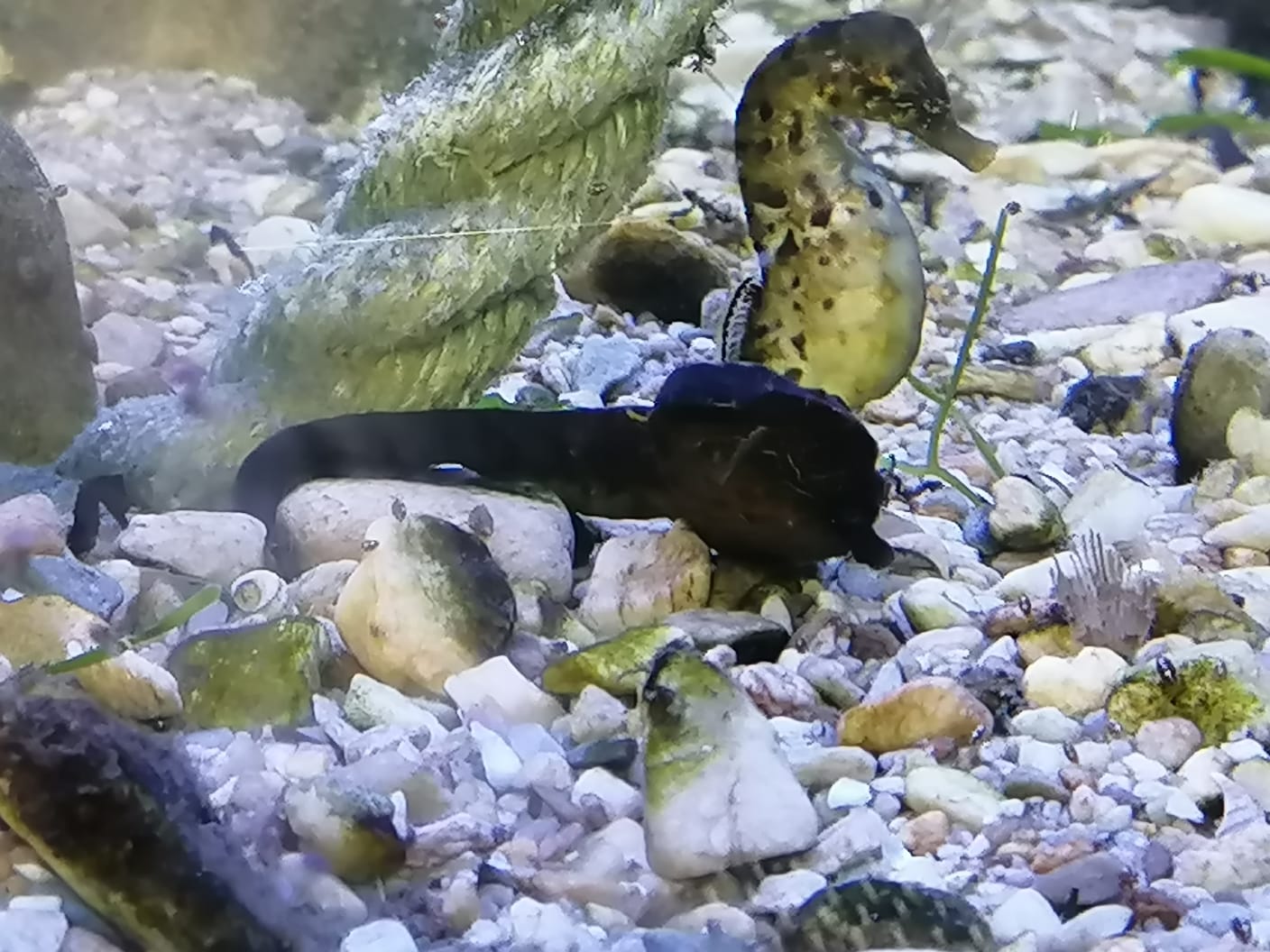
Photo: Knysna sea horse: The critically endangered Knysna sea horse is endemic to the Knysna and Sedgefield estuaries