
2 February 2026 Media Release: Garden Route Wetlands – A Climate and Biodiversity Imperative
Media Release: Garden Route Wetlands – A Climate and Biodiversity Imperative
2 February 2026
On 2 February World Wetlands Day is celebrated globally, and the theme for this year is “Wetlands and Traditional Knowledge: Celebrating Cultural Heritage”.
Wetlands are among the most valuable yet vulnerable ecosystems in the Garden Route, playing a critical role in water security, climate resilience and biodiversity conservation. As pressures from climate change intensify, the protection of these natural assets has become a strategic priority for the region.
“The Garden Route is home to several wetlands of international importance, including Ramsar-designated systems that provide essential ecosystem services. These wetlands act as natural sponges, absorbing floodwaters during extreme rainfall events, releasing water during dry periods, filtering pollutants and supporting a rich diversity of plant and animal life. In an era of increasing droughts, floods and temperature extremes, their role as natural climate buffers cannot be overstated”, says Cobus Meiring of the Garden Route Environmental Forum (GREF).
One of the most remarkable wetland systems in the region is Vankervelsvlei, located near Buffels Bay and nestled within the PG Bison plantations. This peat-based wetland is estimated to be one of the oldest on the African continent, having accumulated organic material over thousands of years. Vankervelsvlei is not only a biodiversity hotspot, but also a significant carbon store, locking away vast amounts of carbon and helping to mitigate climate change. Damage or degradation of such systems results in irreversible biodiversity loss and the release of stored carbon back into the atmosphere.
From a biodiversity perspective, Garden Route wetlands support numerous endemic and threatened species and form ecological corridors linking terrestrial, freshwater and marine environments. Their degradation has far-reaching consequences for ecosystems, agriculture and local livelihoods.
The Garden Route District Municipality (GRDM) has recognised this importance and has developed a wetland strategy aimed at identifying, protecting and sustainably managing wetlands across the district. This strategy provides a vital framework for coordinated action, but its success depends on effective implementation, adequate resourcing and strong collaboration between authorities, landowners, industry and civil society.
The Garden Route Environmental Forum (GREF) believes wetlands must be treated as strategic natural infrastructure. Protecting and restoring them is not only an environmental obligation, but a cost-effective investment in climate adaptation, disaster risk reduction and long-term regional resilience. Safeguarding these systems today is essential to securing water, biodiversity and livelihoods for future generations.
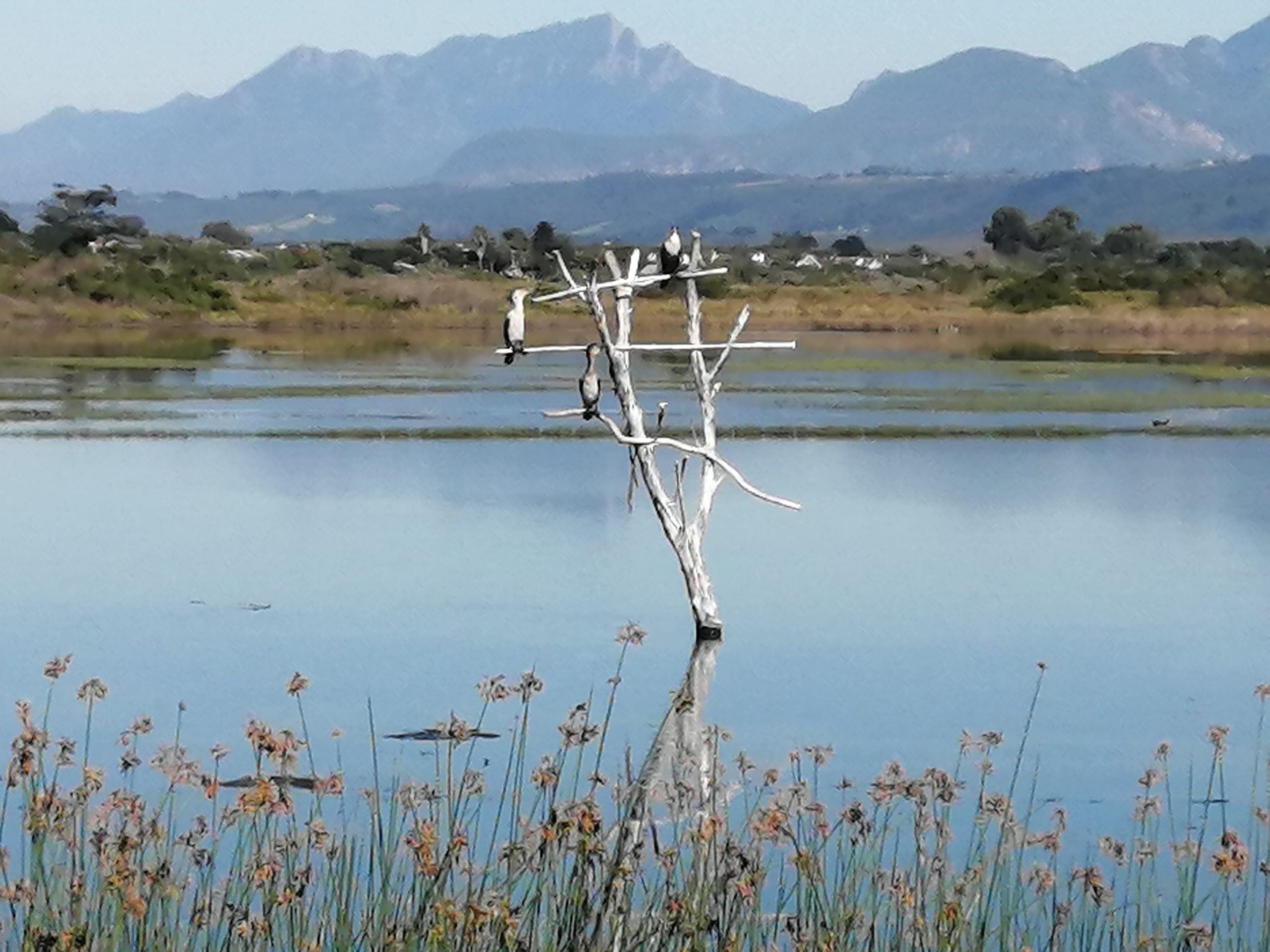
Photo: Great Brak Estuary
Caption: The Great Brak river and estuary is an important home to thousands of birds and acts as nursery to fish replenishing the Indian Ocean, but it’s fresh water supply is under threat due to invasive alien plants in its upper catchments and water extraction.
The Garden Route Environmental Forum (GREF) serves as a public platform for landowners and environmental managers and operates as a climate change think tank.(www.grefecsf.co.za)