
5 November 2025 Media Statement: Traces of a Greasy Residues Found Along Garden Route Coastline
Media Statement: Traces of a Greasy Residues Found Along Garden Route Coastline
5 November 2025
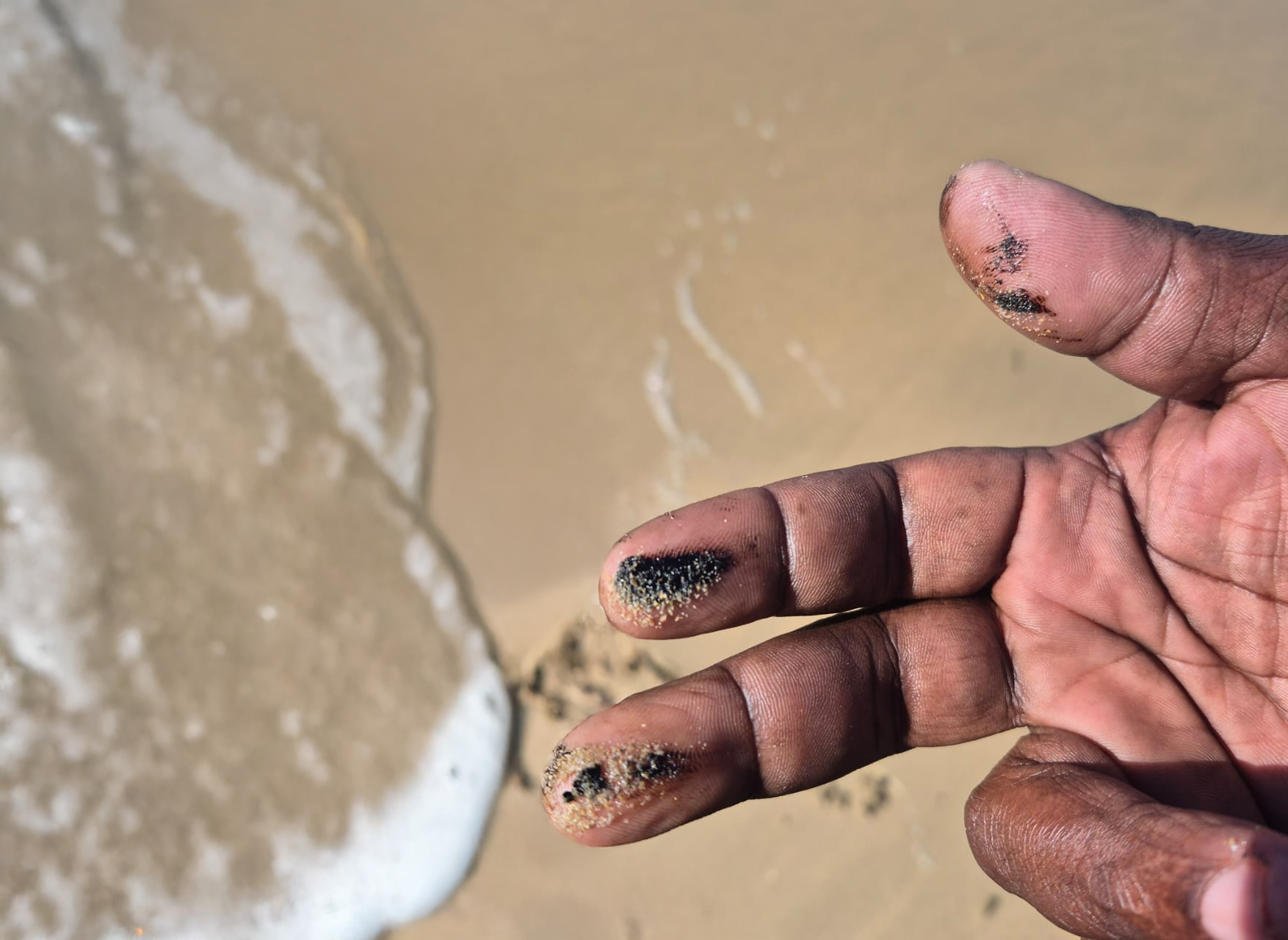
Minor traces of a smearable and sticky sheen-like dark substance have been found on a number of beaches along the Garden Route coastline in recent weeks. The exact source of it remains unknown. At a special JOC meeting called by the District Disaster Centre earlier today, Gerhard Otto, Garden Route District Municipality Manager: Disaster Management: indicated that
“Initial reports were received about traces of the substance found along the Bitou municipality coastline, with subsequent sightings gradually moving westward across the region up to Still Bay”.
“The substance typically dries out and breaks down within approximately 6 days,” says Otto.


Traces of small smearable and soft globule patches have been found on most beaches along the Garden Route coastline over the past few weeks with the exact source being unknown.
REPORT TRACES OF THE SUBSTANCE TO THE GRDM EMERGENCY CALL CENTRE
Some beachgoers have reported traces of the sticky patches of residue on their feet, surfboards, and strips of patches visible along the high and low tide marks.
Currently, there are no reports of any impact on wildlife.
Members of the public who spot traces of the residue are urged to contact the GRDM Emergency Call Centre via WhatsApp at 081 709 5193, and to include a location pin of where it was spotted. These pins help GRDM accurately map and track where patches have occurred and where clean-up operations are required.
An interactive map where residues have been discovered, will be published within the next week.
CLEAN-UP EFFORTS ONGOING
Ongoing assessment and clean-up operations are underway by local municipalities and stakeholders to remove any visible residue. It is important to note that when these incidents occur at sea, the National Department of Transport is responsible for responding to the spill and implementing the relevant contingency plan. Only once residue reaches the coastline above the high-tide mark do municipalities assume responsibility for clean-up operations.
WHERE IS THE WASTE ROUTED TO?
Approximately 30 bags have been collected during clean-up operations and will be transported to approved hazardous waste disposal sites located in Cape Town and Gqeberha.
WHERE DOES THE RESIDUE COME FROM?
Samples of the residue will be tested; however, there is currently no conclusive evidence linking it to any specific source. Investigations of this nature are complex and can take some time to conclude.
A follow-up update will be provided again on 19 November.
ENDS