
30 July 2026 Garden Route District Municipal Fire and Rescue Services’ new Fire Permit Process – from 1 August 2026
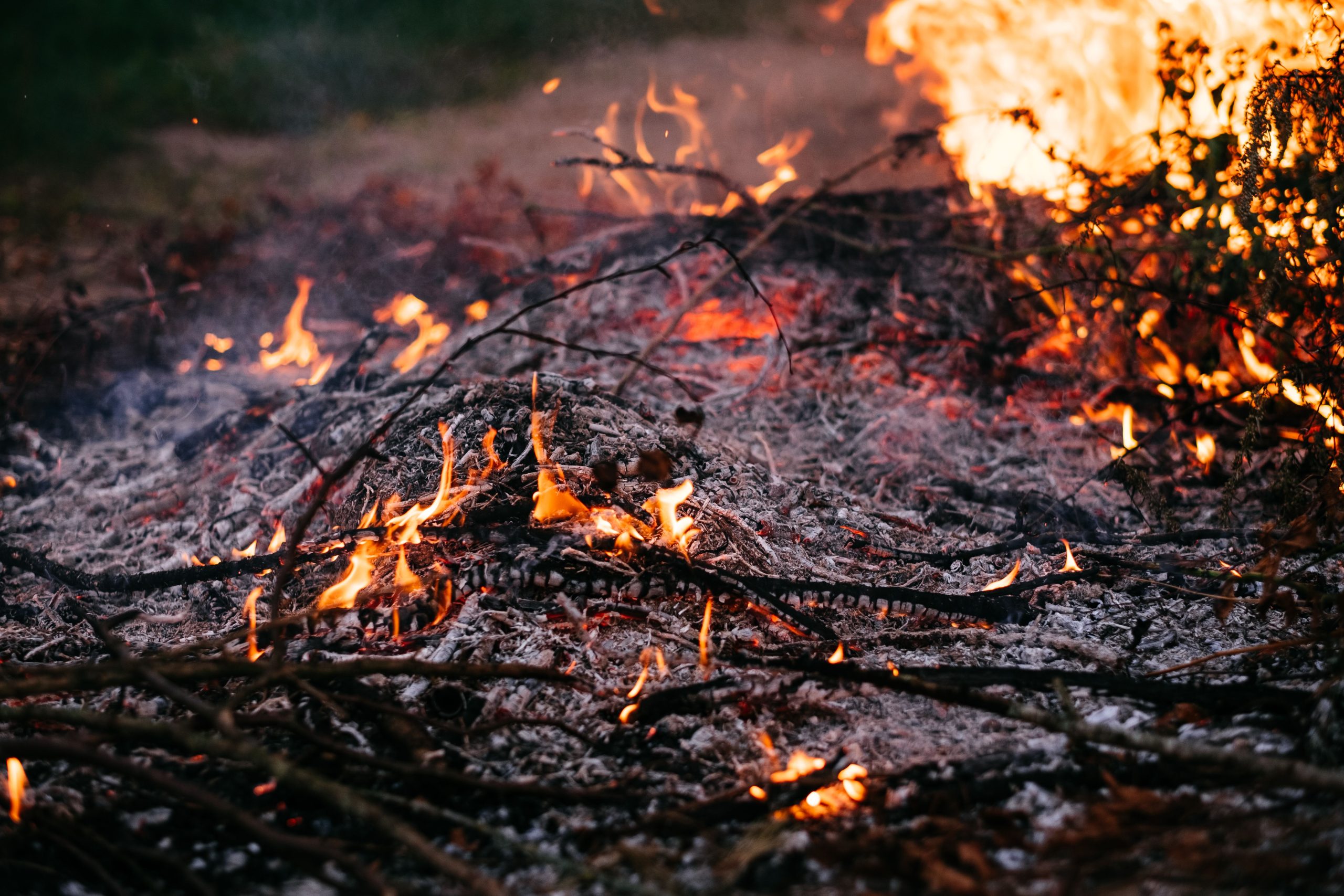
Garden Route District Municipal Fire and Rescue Services’ new Fire Permit Processes – Implementation from 1 August 2026
1. How do I apply for a Fire Permit?
Landowners may apply for a Fire Permit by contacting the Emergency Control Centre:
Telephone: 044 805 5071
WhatsApp: 081 709 5193
All applications will be acknowledged and followed by a physical site inspection, during which an assessment of fire preparedness, firebreaks, available resources, and compliance with applicable legal requirements will be conducted.
2. How long is a Fire Permit valid?
Fire Permits are valid during the period 1 April to 30 November of each year.
- Special Permits may be considered outside this period, from 1 December to 31 March, subject to special circumstances, adequate motivation, risk assessment, and approval by the Fire and Rescue Services.
- Landowners are advised that the normal summer fire season generally falls between 1 December and 31 March.
- During periods of exceptionally dry, hot, or windy conditions, the Fire Permit season may be temporarily suspended, including during the normal permit validity period. Such suspensions may be implemented when fire danger ratings indicate an elevated risk of wildfire occurrence or spread.
- The issuing of a Fire Permit does not guarantee that burning may proceed on any specific date. Permission to burn remains subject to prevailing weather conditions, fire danger ratings, and any restrictions imposed by the Municipality or other competent authorities.
3. Requirements for Landowners Prior to Conducting a Controlled Burn
All landowners are required to undertake adequate preparations before a Fire Permit will be issued or before any controlled burn may be conducted. Applications will be evaluated in accordance with prevailing weather conditions, fire risks, operational considerations, and applicable legislation.
Firebreaks and Control Lines
- Adequate firebreaks and/or control lines must be established around the proposed burn area, and at a minimum of 5 meters. Size requirements may be adjusted where terrain, vegetation type, fuel load, or operational considerations justify such deviation and where the associated risks can be effectively managed.
- Such firebreaks must be constructed and maintained along the perimeter of the intended burn area to minimise the risk of fire escape and spread.
- Firebreaks must comply with the requirements of applicable legislation and must be sufficient to prevent the spread of fire to adjoining properties.
Fences and Protective Fire Strips
- Fencelines must be adequately prepared and cleared prior to any burning operation.
- Protective fire strips on the inside of fence lines, and around infrastructure are required to reduce the risk of damage to fencing, infrastructure, neighbouring properties, and other assets.
Large Burn Areas
- Where large areas are proposed for burning, additional internal firebreaks or control lanes may be required.
- This measure assists in reducing fuel loads, improving operational control, and enhancing overall safety during burning operations.
- The extent and configuration of internal firebreaks will be determined based on site-specific risk assessments.
Brush Piles (stacked material), Windrows, and Burn Piles (stacked material)
Where brush piles, windrows, or burn piles are established, the following guidelines shall apply:
- Stack burning should be considered if the area from which the invasive alien vegetation is to be cleared is small or where the position of the vegetation is such that a prescribed burn would present too high a risk of uncontrolled fire spread.
- Burn piles (stacked material) should preferably not exceed 3 metres in circumference, unless otherwise approved following a site-specific assessment. Stacked material is also sorted as not to include logs/branches of more the 15 cm diameter.
- See also: The basal diameter of stacks should not be more than 2.5 m, must not be greater than 1.5m high and the distance between the stacks should be at least 5 times the basal diameter, especially for the wildland urban interface.
- Size requirements may be adjusted where terrain, vegetation type, fuel load, or operational considerations justify such deviation and where the associated risks can be effectively managed.
- Perimeter firebreak of at least 5 m needs to be prepared before any cutting of the material to be stacked takes place to prevent the possibility of runaway fires.
- Do not make stacks under trees, power and telephone lines, within 30 m of a firebreak or near water courses, houses and other infrastructure.
- In terms of the current burning permit stacks should not be positioned closer than 100 m from the urban edge.
- Tracer belts down to mineral soil of a minimum one-meter width must be placed around each stack. This belt can be raked and the combustibles placed on the stack.
- As a general guideline, windrows should not exceed 100 cm in width and should be adequately spaced to allow access for firefighting vehicles, water tankers, spray units, and other emergency equipment.
- Variations from these guidelines may be permitted where operational conditions necessitate such deviations and where appropriate risk mitigation measures are in place.
4. What is the cost of a Fire Permit inspection?
The prescribed fee for a Fire Permit Inspection is:
- R984.61 per permit for an individual landowner.
- Applicable fees are amended annually in accordance with the approved municipal tariff schedule.
Issued by:
Garden Route District Municipality Fire and Rescue Services
Implementation Date: 01 August 2026
Fire Permit Contact Details:
Telephone: 044 805 5071
WhatsApp: 081 709 5193
Also read: https://tinyurl.com/3rudrp52